Washington, D.C.: the federal capital and its free museums
Updated on
How long should you spend there?
At a glance
- Entrance fee
- Most visits are free: Smithsonian museums, memorials, the Capitol, the Library of Congress.
- Best time to go
- Late March and early April for the cherry blossom around the Tidal Basin (very busy, book early), or September and October. Summer is hot and humid.
- Getting around
- The centre and the Mall can be done on foot. The Metro covers the rest, from $2.25 to $6.75 a ride.
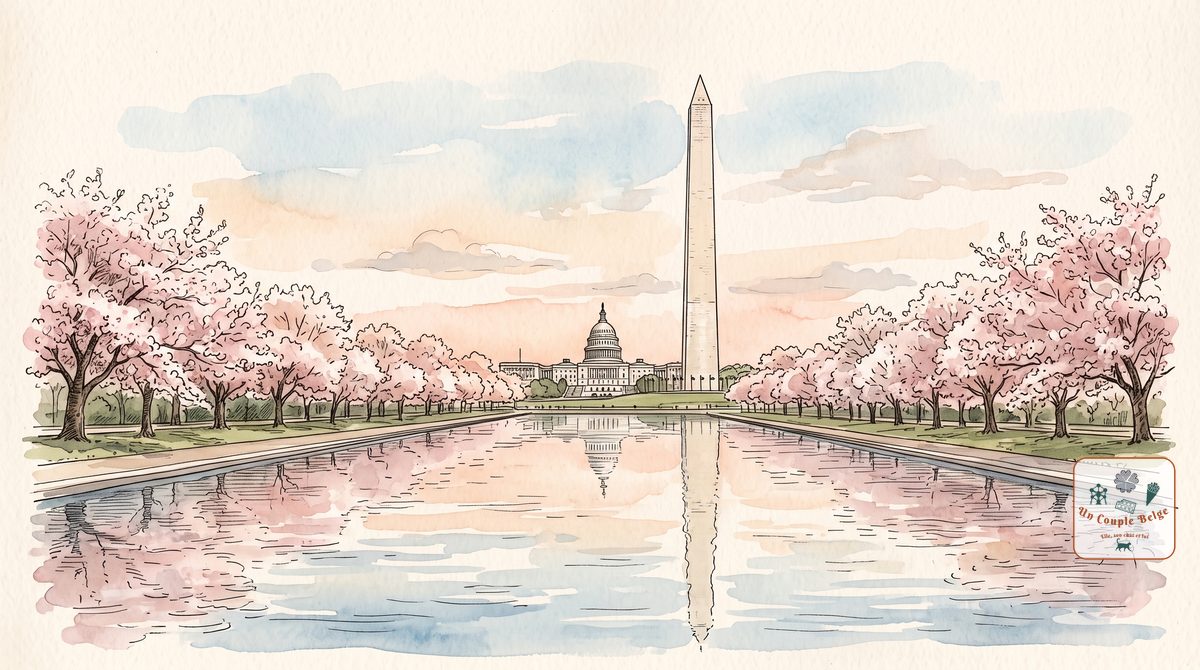
Washington did not grow out of a port or a trading crossroads like New York or Chicago. It was created from scratch to serve as a capital. You see it at once: wide avenues, no skyscrapers, official buildings on every corner and, in the middle, the National Mall with its monuments and free museums.
History and origins
It all goes back to a political compromise struck in 1790. Alexander Hamilton wanted the federal government to take on the states’ war debts. Thomas Jefferson and the Southern states agreed, on condition that the capital be placed further south, on the banks of the Potomac. Maryland and Virginia each gave up a piece of land to form a federal district belonging to no state.
That is why Washington, D.C. (the “District of Columbia”) is still not a state. Its residents have only voted in presidential elections since 1964, have only elected their mayor since the 1970s, and have just one non-voting delegate in Congress.
George Washington chose the site himself and entrusted the plans to a French engineer, Pierre Charles L’Enfant. In 1791 he drew a city of wide diagonal avenues (today they bear the names of the states), squares and long vistas, with the Capitol at the centre. His plan was only truly completed a century later: it was the McMillan Plan of 1901 that gave the National Mall its present shape.
What to do there
- The Capitol
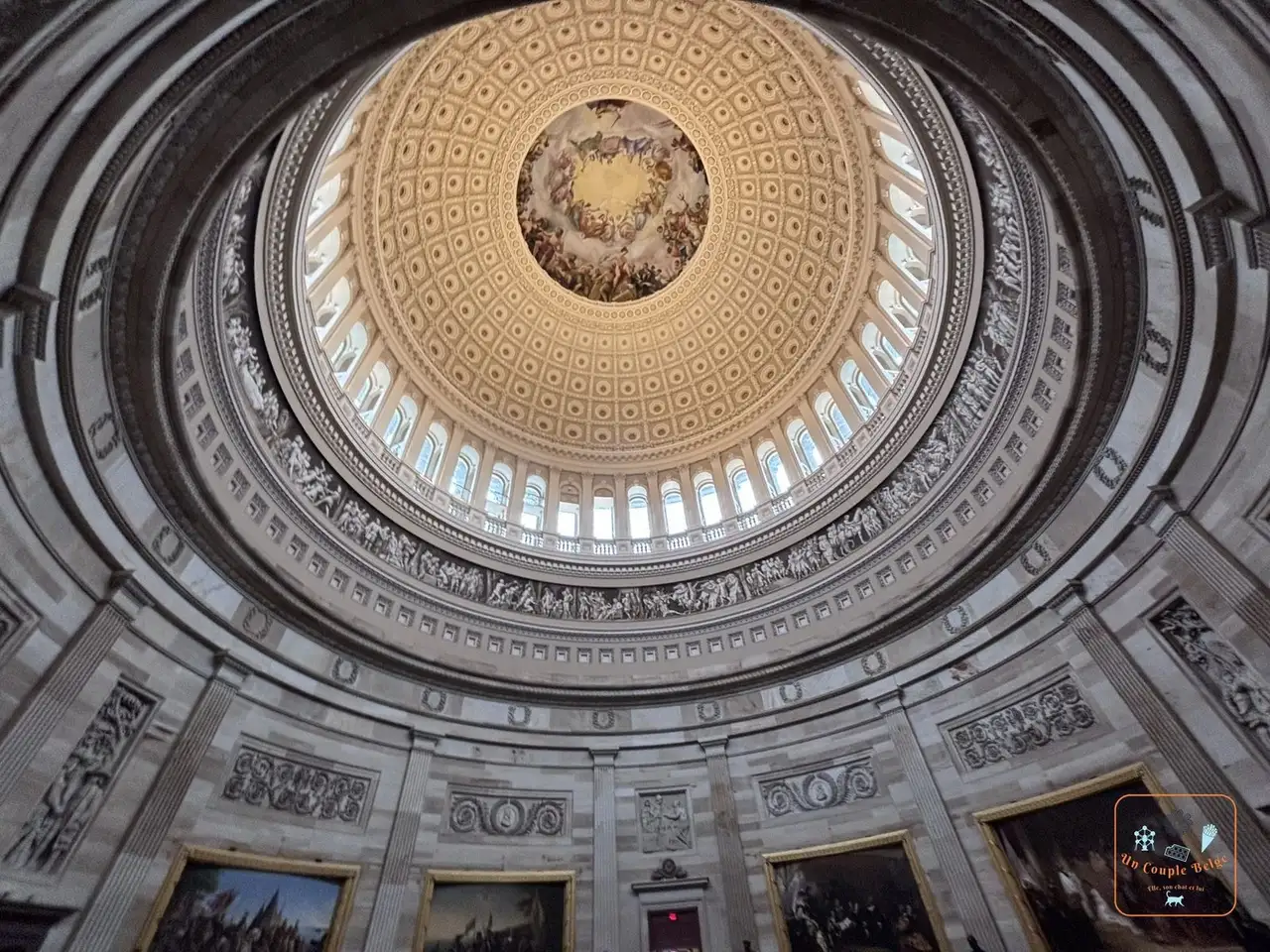 The dome of the Capitol Rotunda and the fresco of the Apotheosis of Washington: the seat of Congress can be visited free of charge, with a guide, through the Capitol Visitor Center. Book your slot on the official website and arrive well ahead of time: the queue at security can run to over an hour.
 - The Library of Congress
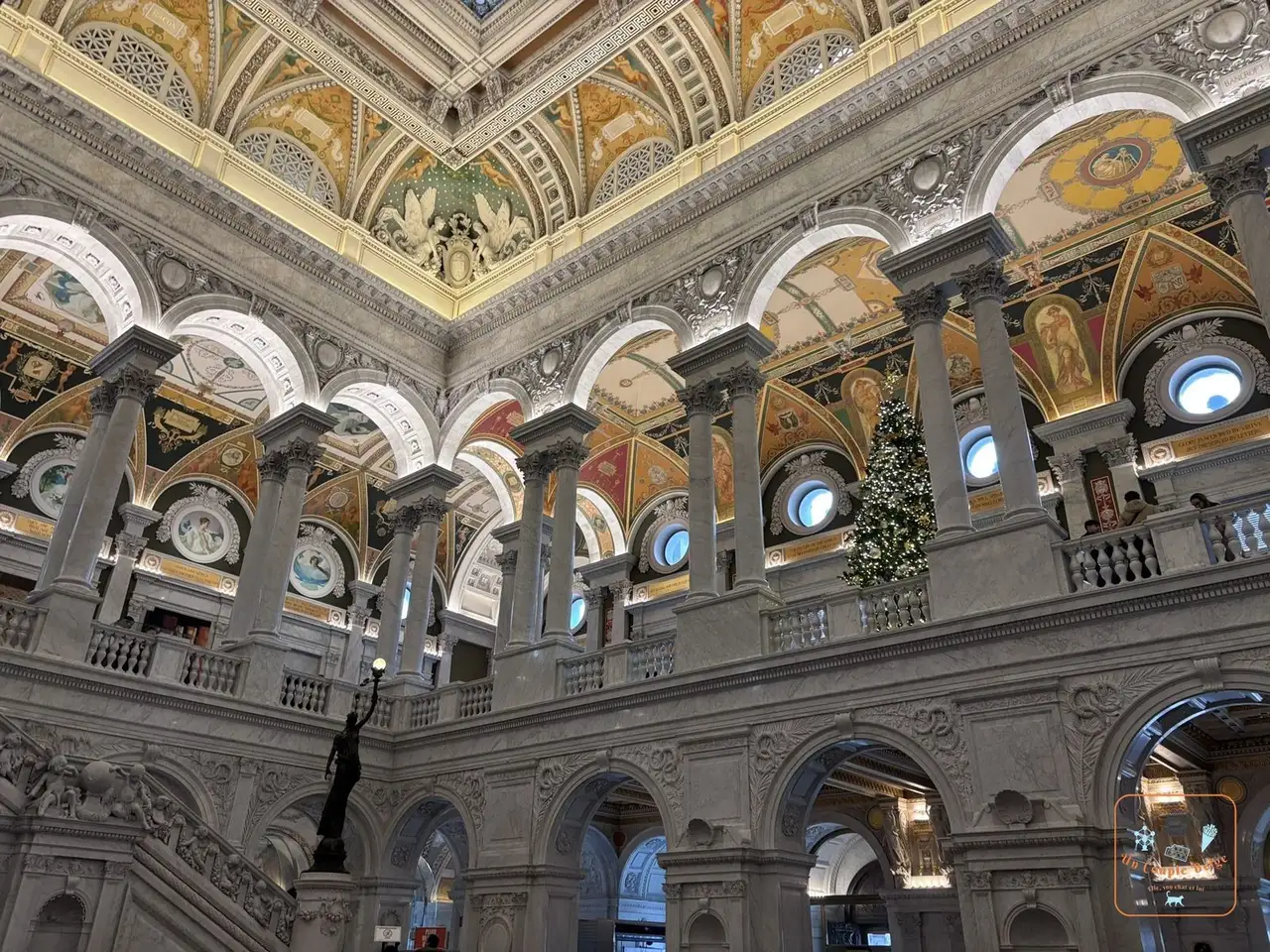 The Great Hall of the Library of Congress: just behind the Capitol, the Thomas Jefferson Building is one of the finest interiors in the city. Admission is free, with a timed-entry pass to book online up to 30 days ahead (a batch is also released online every morning at 9am).
 - The Washington Monument
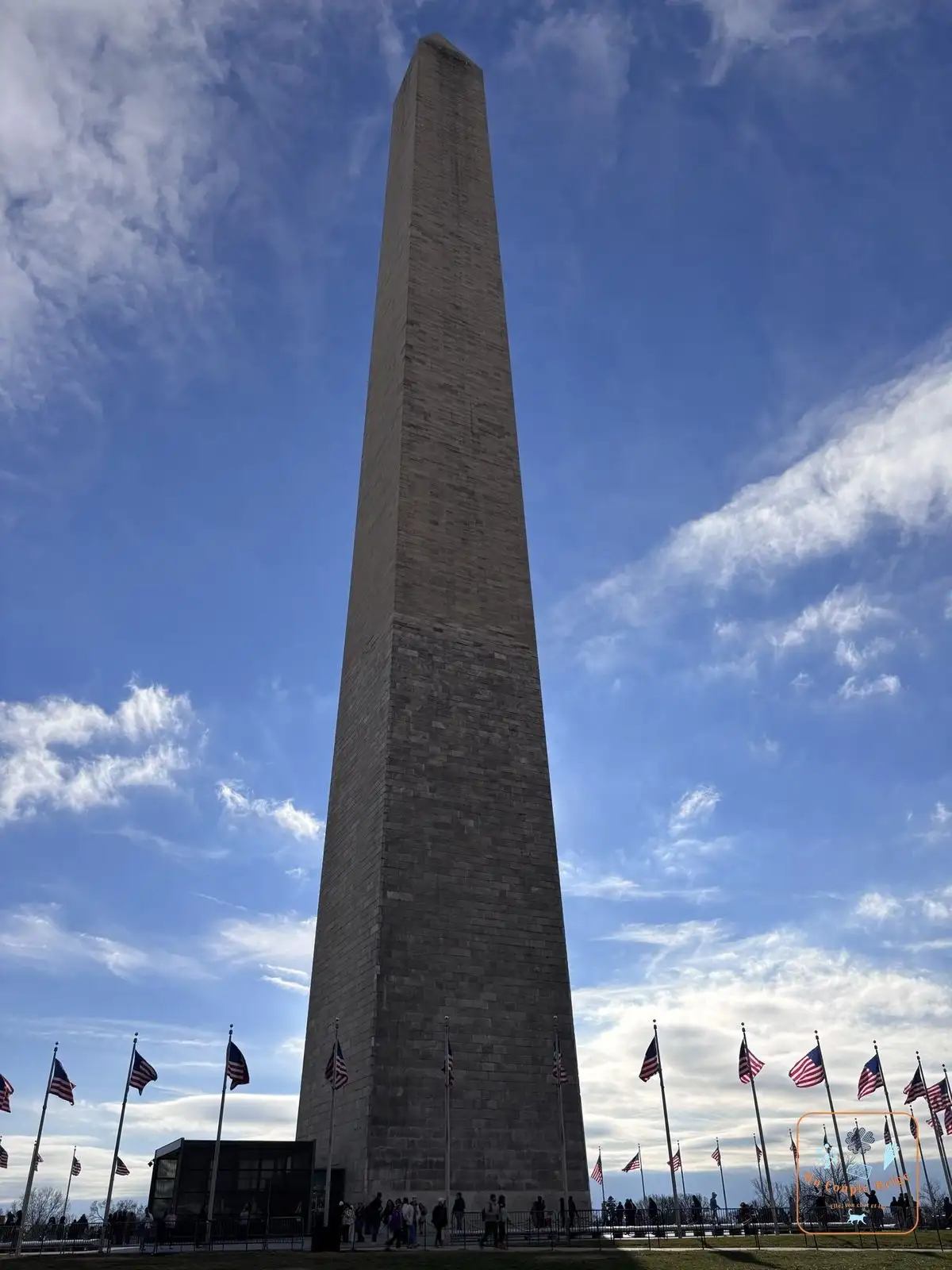 The Washington Monument ringed with American flags: the 169-metre obelisk in the middle of the Mall. The lift to the top is free, but you need a ticket: online at recreation.gov 30 days ahead ($1 fee), or on the day at the ticket window, which opens at 8.45am.
 - The Lincoln Memorial
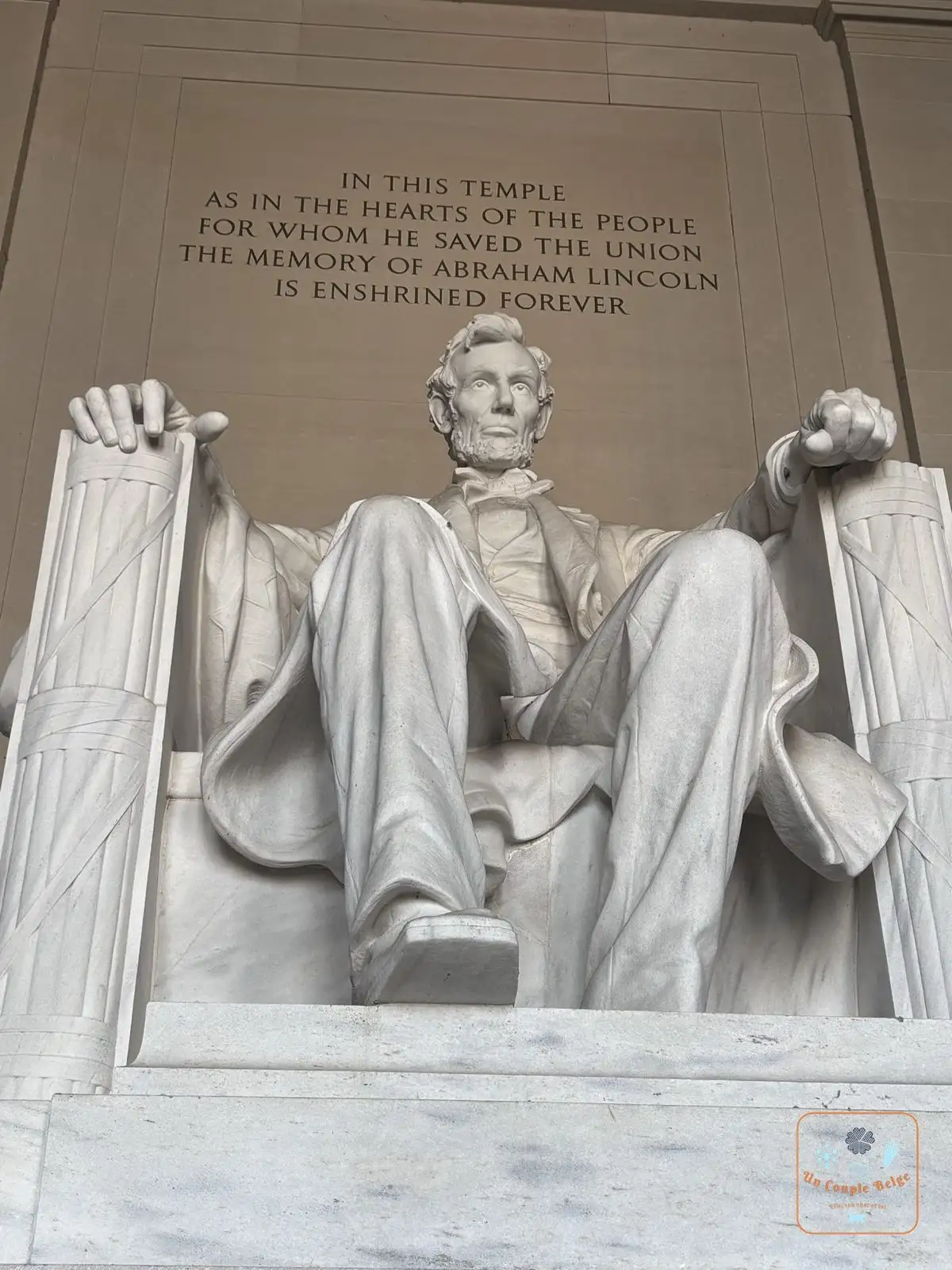 The statue of Abraham Lincoln in the Lincoln Memorial: at the end of the Reflecting Pool
 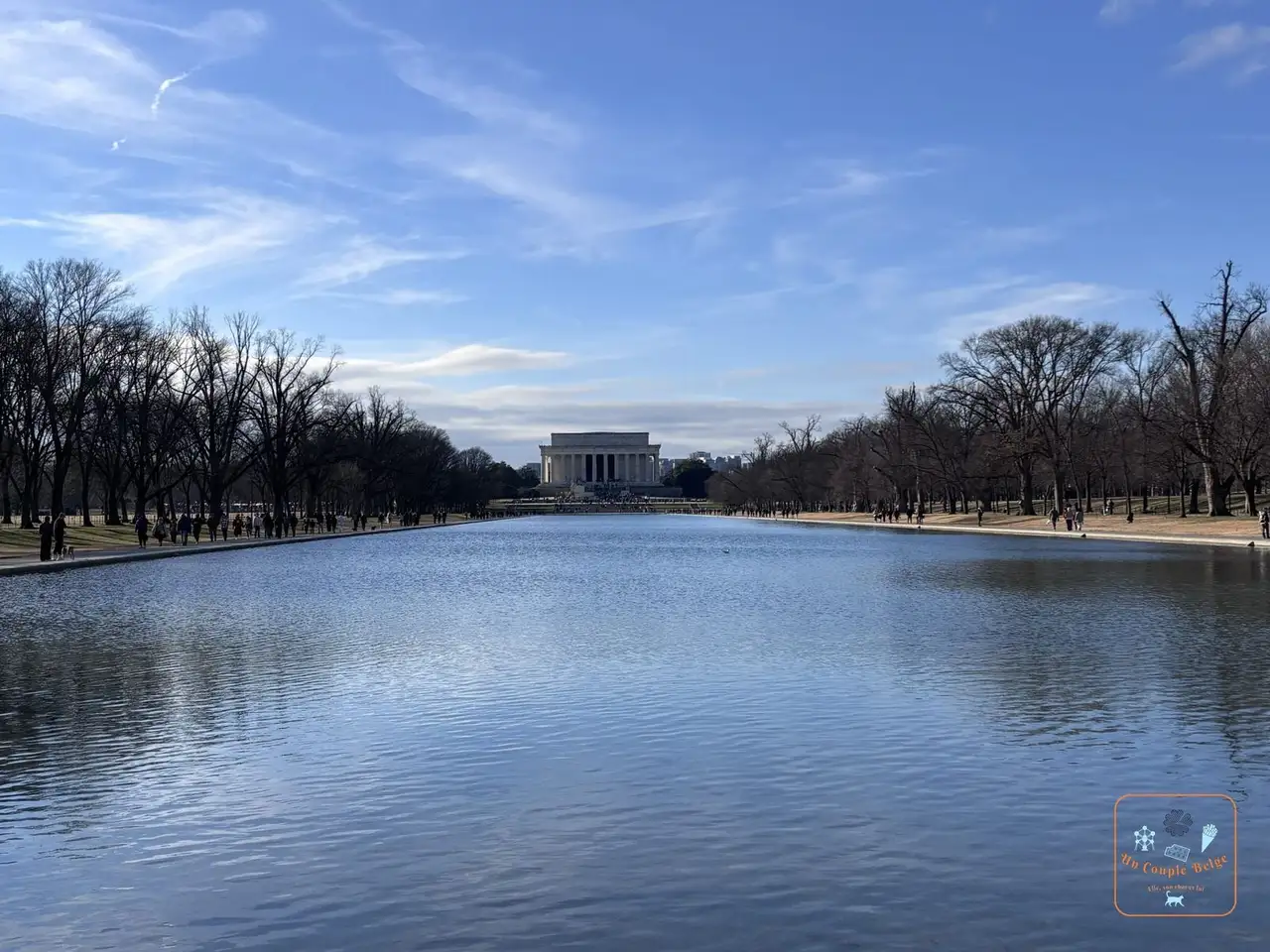 The Reflecting Pool and the Lincoln Memorial at the end of the National Mall, the statue of the seated Lincoln is nearly 6 metres tall. It was from these steps that Martin Luther King delivered “I Have a Dream” in 1963. Access is free, day and night.
 - The White House: you see it from Pennsylvania Avenue and Lafayette Square, behind the fence. Foreign visitors used to have to go through their embassy to tour it. Since Donald Trump’s return and the demolition of the East Wing in late 2025, that is no longer possible in practice. There is still the White House Visitor Center, close by, free and with no booking.
- The Smithsonian museums: 17 museums and galleries in Washington, the zoo included, all free. The best known are the Air and Space Museum, the Natural History Museum and the Museum of African American History and Culture. It’s like stepping into Night at the Museum: Battle of the Smithsonian 🎬.
- Arlington National Cemetery: across the Potomac, in Virginia, with the Tomb of the Unknown Soldier and its changing of the guard.
- Georgetown: the oldest neighbourhood in the city, with its cobbled streets and brick houses. It’s the place to go for a stroll and some shopping, away from the official buildings.
Stories and good to know
- If there are no skyscrapers in Washington, it is because of a 1910 law that limits the height of buildings according to the width of the street, with a maximum of about 40 metres. You often hear that no building may be taller than the Capitol: that is a myth.
- The National Gallery of Art, on the Mall, is free too, although it is not part of the Smithsonian.
- The Air and Space Museum is coming out of a long renovation: almost all the galleries have reopened, and the last ones are announced for autumn 2026.
- From the Capitol to the Lincoln Memorial, the Mall is about 3 km long. Wear good shoes, or take a shared bike (Capital Bikeshare).
Practical information for your road trip
- Getting there: three airports serve the city. Reagan National, the closest, handles almost only domestic flights and is 20 minutes from the centre by Metro. Dulles takes international flights, about 50 minutes away on the Metro’s Silver Line. Baltimore-Washington is the furthest, linked to Union Station by train. By rail, Union Station is on the Boston-New York-Washington line.
- Getting around: we did everything on foot. On the Metro you pay by tapping your contactless bank card at the gate, and the fare depends on the distance.
- Budget: as most visits are free, Washington works out considerably cheaper than New York. Accommodation is still big-city accommodation, but Washington is mostly a city people come to for work: outside working periods, you can find very luxurious hotels at more than affordable prices.
- Combine it with: Washington sits naturally between New York or Philadelphia to the north and the road to Florida to the south, as we did on our road trip 2 (see below).
Our experience in Washington
We spent two nights there in late December 2025, between New York and Florida, with one full day in the city:
Our day-by-day journals are coming soon.
Quick quiz
Question 1 / 3
Expert
Washington, D.C.: the federal capital and its free museums
Where to stay near Washington, D.C.: the federal capital and its free museums
Stay22 affiliate links: if you book through here, we earn a small commission at no extra cost to you. Thanks for your support!
On the ground

Sponsored by UnCoupleBelge
Follow us on Instagram
Box sponsored by a partner
Comments