Alaska: the last great American wilderness
Updated on
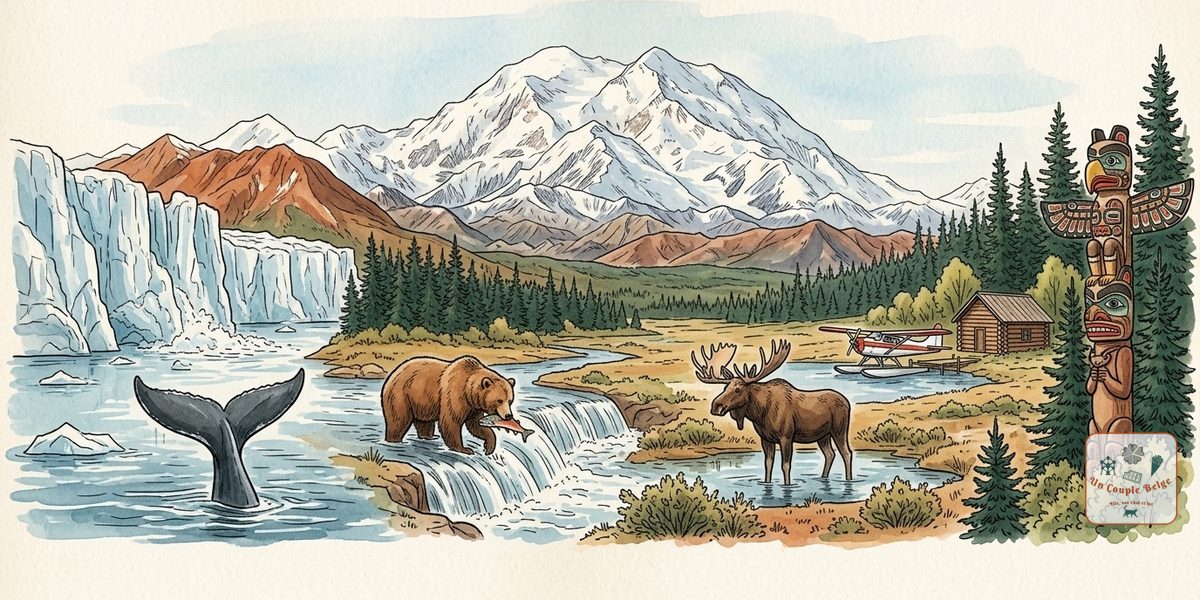
In Alaska, the numbers make your head spin. The state is two and a half times the size of Texas, roughly a fifth of the area of the United States, and yet it has fewer inhabitants than the Brussels-Capital Region. The capital, Juneau, isn’t connected to any road. And in the north, the sun doesn’t set for weeks in summer, then doesn’t rise at all in winter.
You don’t travel in Alaska the way you do elsewhere in the United States. The distances are enormous, the weather is in charge, and a good part of the territory can only be reached by bush plane or by boat. In return, you get glaciers collapsing into the sea before your eyes, bears fishing for salmon a few dozen metres away, and the fairly rare feeling of being truly far from everything.
Alaska at a glance
- Capital: Juneau
- Largest city: Anchorage (about 290,000 inhabitants)
- Population: about 730,000
- Area: about 1.7 million km², more than 55 times Belgium
- Joined the Union: 1959, 49th state
- Time zone: Alaska Time (10 hours behind Brussels); the Aleutian Islands are one more hour behind
- Nickname: The Last Frontier
- Highest point: Denali, 6,190 metres, the highest peak in North America
Geography: a state the size of a continent
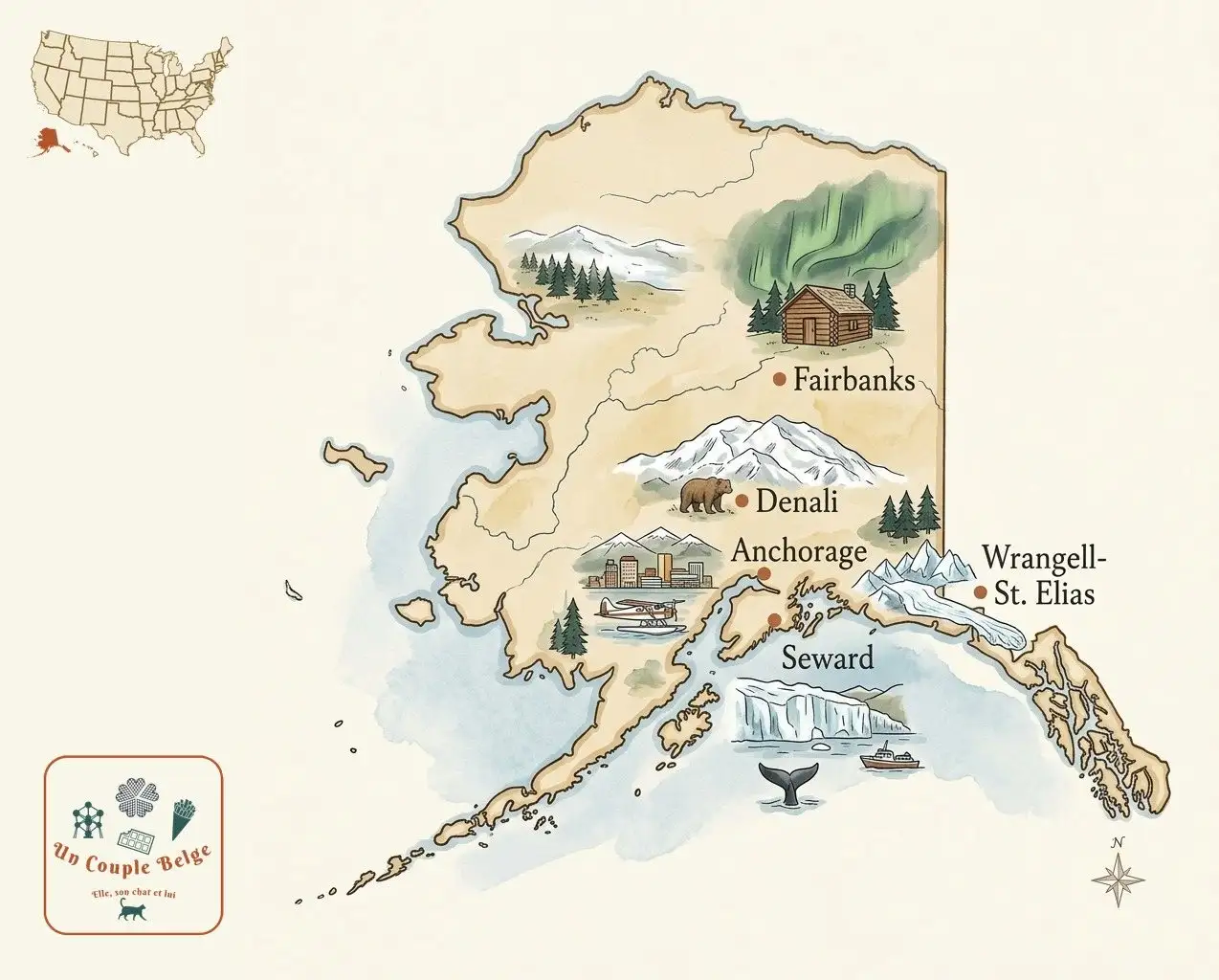
To find your way around, Alaska is generally divided into five main regions.
Southcentral is the most populated and most accessible part: Anchorage, the Kenai Peninsula, the Matanuska Valley, Prince William Sound. This is where the roads are concentrated, and therefore most trips.
The Interior runs from Denali National Park up to Fairbanks. Winters there are extreme (–40 °C is nothing exceptional), summers surprisingly warm.
The Southeast, or “Panhandle”, is a long strip of islands and fjords covered in rainforest, along the Canadian border. Juneau, Ketchikan, Sitka and Skagway are here. You get around by ferry or by plane.
The Southwest takes in the Alaska Peninsula, Kodiak Island and the arc of the Aleutian Islands. It’s the land of volcanoes, brown bears and fishing.
The Arctic, finally, beyond the Arctic Circle: tundra, caribou, Iñupiat villages and the northernmost town in the United States, Utqiaġvik (formerly Barrow).
Along the south coast and between the mountains, there are tens of thousands of glaciers. And unlike the rest of the United States, Alaska has no counties but “boroughs”, a huge part of which has no local government at all.
A bit of history
The first inhabitants arrived from Asia more than 10,000 years ago, across the Bering land bridge. Today Alaska has around twenty Indigenous languages, spread across large cultural groups: Iñupiat and Yup’ik in the west and north, Athabascans in the interior, Tlingit, Haida and Tsimshian in the south-east, Aleut in the islands.
In the 18th century the Russians settled there for the fur trade, with Sitka as their capital. In 1867 the United States bought the territory from Russia for 7.2 million dollars. The press mocked the purchase, nicknaming it “Seward’s Folly” after the Secretary of State who negotiated it. Thirty years later, the Klondike Gold Rush (1896-1899) brought in tens of thousands of prospectors, then Alaska played a strategic role during the Second World War: the Japanese even occupied two of the Aleutian Islands in 1942.
Alaska became a state in 1959. The discovery of oil at Prudhoe Bay, in 1968, then changed everything. Since 1982, every resident has received an annual dividend drawn from a fund fed by oil revenues, the “PFD”, whose amount is eagerly awaited every autumn.
The must-sees
Denali National Park
This is the park everyone wants to see, organised around the highest peak in North America. The Athabascans called it “Denali”, “the great one”. A prospector renamed it Mount McKinley in 1896, the name Denali was officially restored in 2015, and the federal government went back to “McKinley” in 2025. On the ground, the park is still called Denali, and that’s the name most Alaskans use.
The mountain makes its own clouds and stays hidden for a good part of the summer: only a minority of visitors are lucky enough to see all of it. A single road enters the park, and beyond the first 24 kilometres you can only travel it by bus. That’s where you come across grizzlies, caribou, Dall sheep and moose. A landslide cut the road around its midpoint, at Pretty Rocks, from 2021 to 2026. A bridge now spans it, and buses are due to run the full road again from the 2027 season: check where they turn around before you book.
To see the summit up close, the real option is a flight in a small plane from Talkeetna, sometimes with a glacier landing. It’s expensive, but unforgettable in clear weather. We have a full guide to Denali.
The Kenai Peninsula and the Seward Highway
The Seward Highway links Anchorage to Seward over a little more than 200 kilometres. Non-stop, it’s a 2 hr 30 drive. In practice, it takes the whole day. The road follows the inlet of Turnagain Arm, where you sometimes spot belugas on the rising tide, then crosses the mountains. A short detour is possible to Portage Glacier and to Whittier, a village reached through a single-lane tunnel shared with the train, open in alternating directions on a timetable.
At the end, Seward is the gateway to Kenai Fjords National Park. Half-day or full-day cruises sail past glaciers that drop straight into the sea. You hear the ice crack before you see a block break off and crash into the water. Humpback whales, orcas, sea otters and sea lion colonies are often seen. Further west, Homer, at the end of the peninsula, is the halibut capital and a starting point for bear-viewing trips.
The Southeast and the Inside Passage
This is cruise-ship Alaska, but you can also travel it at your own pace on the public ferries of the Alaska Marine Highway, which are cheaper and give you far more freedom.
- Juneau, the capital, with no road in. Mendenhall Glacier is twenty minutes from the centre.
- Sitka, the former Russian capital, with its Orthodox St. Michael’s Cathedral and a fine historical park devoted to the Tlingit.
- Ketchikan, salmon capital and town of totem poles.
- Skagway, preserved as it was in the gold rush, with its saloon fronts and the narrow-gauge White Pass train, which climbs towards the pass the prospectors used.
- And, for bigger budgets, Glacier Bay National Park, which is mostly visited by boat.
Fairbanks and the northern lights
Fairbanks is one of the best places in the world to see the northern lights, thanks to its position under the auroral oval and its often clear winter skies. The season runs from late August to mid-April. The nights from December to February are the longest, but also the coldest: –30 °C is nothing unusual. March is a good compromise, with nights that are still dark and more bearable temperatures.
Outside the city, Chena Hot Springs lets you watch the sky from an outdoor pool. In summer it’s the opposite: the midnight sun, a baseball game without floodlights on 21 June, and a city that lives outdoors until all hours.
Wrangell-St. Elias, the forgotten giant
It’s the largest national park in the United States, bigger than Switzerland, and yet it sees few visitors for lack of infrastructure. A dirt road of around a hundred kilometres leads to McCarthy, then you continue on foot (or by shuttle) to Kennecott, a former copper mine abandoned in the late 1930s, with its big red buildings clinging to the slope and a glacier just below. For those who want a truly wild Alaska without taking a plane. More details in our Wrangell-St. Elias guide.
The bears of Katmai
Every summer, in July especially, the brown bears of Katmai National Park take up position at the falls on the Brooks River to catch salmon in mid-air as they swim upstream. It’s one of the most famous wildlife scenes in the world, filmed by webcams followed live all season. The park can only be reached by floatplane, generally from King Salmon, Anchorage or Homer. You need to plan months ahead. Further north, Lake Clark National Park, also reachable only by plane, offers the same bears with far fewer people.
Anchorage
The city isn’t known for its looks, but it’s practical and more endearing than it looks. Moose regularly wander through the residential neighbourhoods, and a coastal trail lets you cycle along the water with the Chugach Mountains as a backdrop. The Alaska Native Heritage Center is the best introduction to the state’s Indigenous cultures, with reconstructed traditional houses, dance and crafts. One day is enough, often on arrival or just before the flight home.
The Arctic, for the adventurous
The Dalton Highway, a gravel road of more than 600 kilometres between Fairbanks and Deadhorse, follows the pipeline up to the Arctic Ocean. Most rental companies forbid driving their cars on it: you have to go through a specialist agency or an organised tour. For the most remote parks, such as Gates of the Arctic or Kobuk Valley, a bush plane is the only way in.
Itinerary ideas
10 days, the classic loop. Anchorage (1 day) → Seward and Kenai Fjords (2 days) → back via Anchorage → Talkeetna (1 day, flight over Denali) → Denali National Park (2-3 days) → Fairbanks (1-2 days), then a flight home from Fairbanks or the train back to Anchorage. About 1,000 kilometres by road.
Two weeks. The same loop, plus Homer, Valdez via the Richardson Highway, or a few days in the Southeast by ferry (Juneau, Sitka, Skagway).
In winter. Anchorage → train to Fairbanks → 3-4 nights for the northern lights, a dog-sled outing and Chena Hot Springs.
Worth remembering: the Alaska Railroad links Seward, Anchorage, Talkeetna, Denali and Fairbanks in summer. Its dome cars are a lovely way to travel without driving.
On the plate
Eating in Alaska mostly means fish and seafood:
- salmon in all its forms (sockeye, king, coho), grilled, smoked or as “candied salmon”, smoked and caramelised;
- halibut, often as fish and chips in the harbours;
- king crab, caught in the Bering Sea, served simply with melted butter. Delicious and expensive;
- reindeer sausage, sold at street stands in Anchorage;
- akutaq, sometimes called “Eskimo ice cream”, a traditional preparation made with fat and wild berries;
- and in summer, everything made with wild berries: blueberries, cloudberries, lingonberries…
Many residents spend part of the summer fishing and picking to fill the freezer for winter. In Native villages, subsistence hunting and fishing remain essential.
Culture and trivia
- The Iditarod, the most famous sled dog race in the world, starts in Anchorage in early March and reaches Nome, on the Bering Sea, after more than 1,500 kilometres.
- At the Palmer fair, in late August, gardeners from the Matanuska Valley show off giant cabbages weighing several dozen kilos. The almost permanent summer sun makes vegetables grow at a crazy speed.
- There are no snakes in Alaska. And no state-level sales tax, even though some towns apply one.
- Talkeetna is said to have inspired the series Northern Exposure 🎬. For years, the village’s honorary mayor was a cat, Stubbs.
- Denali also stands out for its height from its base: about 5,500 metres of visible rise, more than Everest seen from its base camp.
When to go
- Summer (mid-June to late August): this is the real tourist season. The roads, the Denali buses and the cruises are running, it’s often between 15 and 25 °C and daylight hardly stops. The flip side: mosquitoes, prices and sometimes wildfire smoke.
- Shoulder season (late May, early September): fewer people, gentler prices and, in September, autumn colours on the tundra and the first northern lights. Some services close from mid-September.
- Winter (November to March): for the northern lights, sled dogs and the deep cold. Many sites and secondary roads are closed.
Practical information
- Recommended length of stay: 10 days minimum, two to three weeks to combine several regions.
- Getting there: most flights arrive in Anchorage via Seattle, Chicago or Denver. In summer there are sometimes seasonal flights from Europe (Frankfurt, for example).
- Getting around: a rental car for Southcentral and the Interior, the train in summer, and ferries or planes for the Southeast and the remote regions. Read the rental agreement carefully: many forbid unpaved roads.
- Budget: high. Accommodation, boat trips and small-plane flights are expensive, especially in July. Book early.
- Things to watch out for: learn the basic rules around bears (make noise, never run, keep food stored away) and carry bear spray when hiking. Pack warm, waterproof clothes, even in summer.
- One more tip: keep a spare day. A flight cancelled because of fog or a boat that stays in port happens often in Alaska.
Our place guides in Alaska
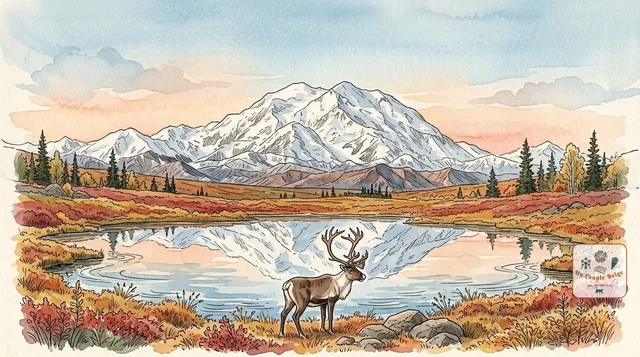
Denali: the highest peak in North America
The highest peak in North America, in the middle of an immense tundra where grizzlies, wolves and caribou live. You enter by bus, on a single road.
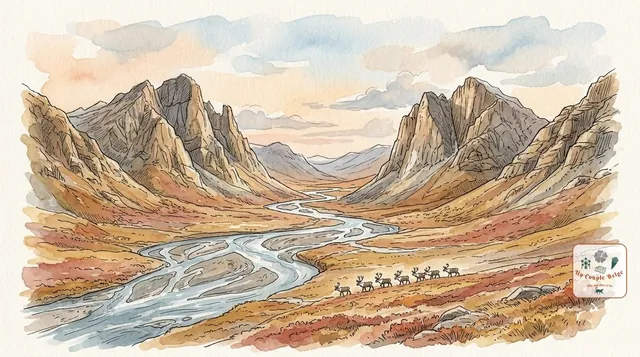
Gates of the Arctic: no roads, no trails, no visitors
The wildest and least visited national park in the United States: mountains and rivers north of the Arctic Circle, without a single road or trail.
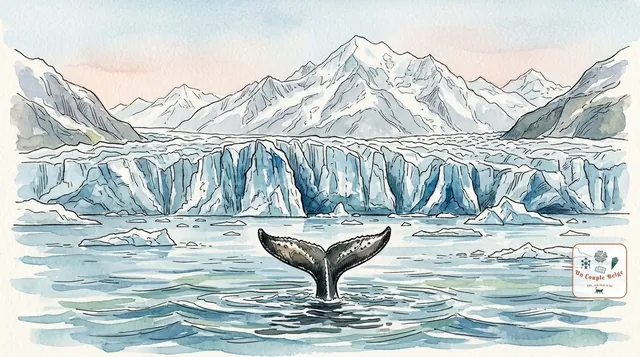
Glacier Bay: the best-documented glacial retreat in the world
An Alaskan fjord where giant glaciers drop into the sea, among whales and sea lions. Most visitors discover it from a ship.
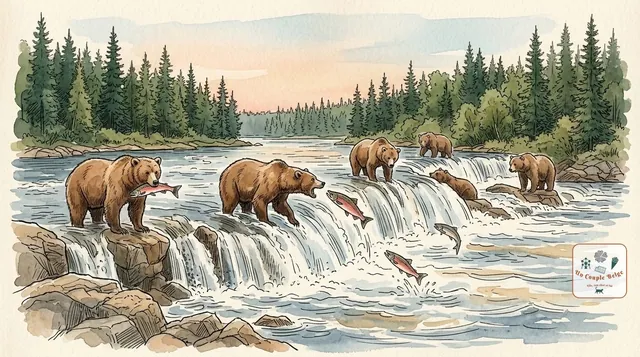
Katmai: the highest concentration of brown bears in the world
The park of Alaska's brown bears: at Brooks Falls, they catch salmon in mid-leap, a few metres from the boardwalks. You can only get there by floatplane.
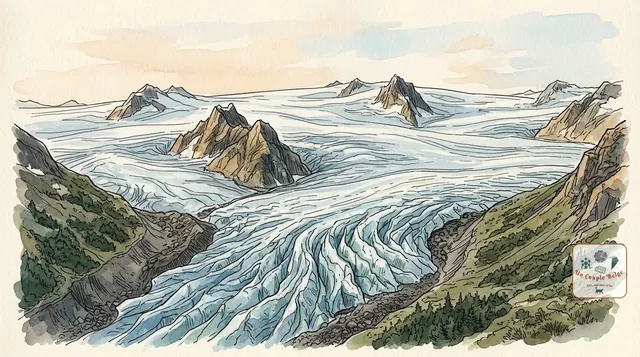
Kenai Fjords: the icefield that feeds 38 glaciers
A giant icefield spilling its glaciers into the sea, in southern Alaska. You approach it on foot via a glacier, or by boat among whales and puffins.
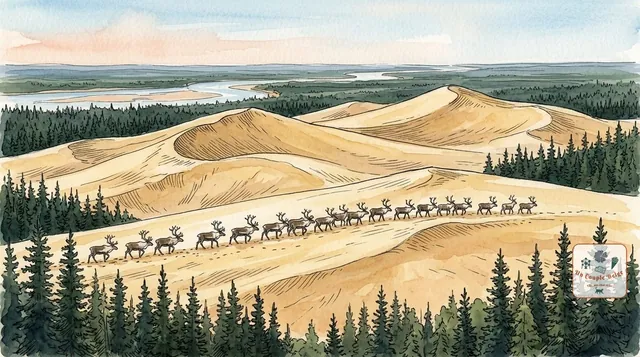
Kobuk Valley: sand dunes above the Arctic Circle
Sand dunes north of the Arctic Circle, a river crossed by tens of thousands of caribou, and no road to get there.
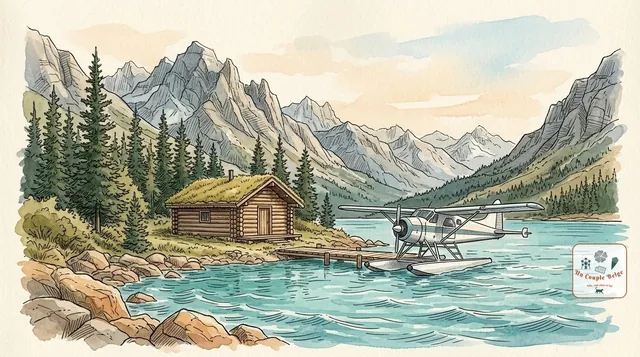
Lake Clark: Dick Proenneke's cabin, among volcanoes, glaciers and brown bears
Volcanoes, glaciers, turquoise lakes and brown bears on the beaches, an hour's flight from Anchorage. Alaska in a nutshell, with almost no visitors.
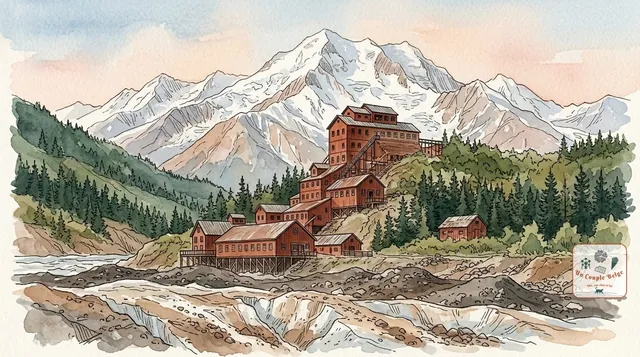
Wrangell-St. Elias: the largest national park in the United States
The largest national park in the United States, in Alaska: four mountain ranges, giant glaciers and a mining ghost town at the end of a 100 km gravel road.