Gateway Arch: the smallest (and most controversial) of the national parks
Updated on
How long should you spend there?
At a glance
- Entrance fee
- The park and the museum are free. The ride to the top costs from $15 per adult and $11 per child.
- Best time to go
- All year. Spring and autumn are the most pleasant; summer is hot and very busy.
- Book ahead
- The ride to the top, to be booked online in summer and at weekends.
- Getting around
- On foot from downtown St. Louis. Paid car parks around the park, or the MetroLink light rail.
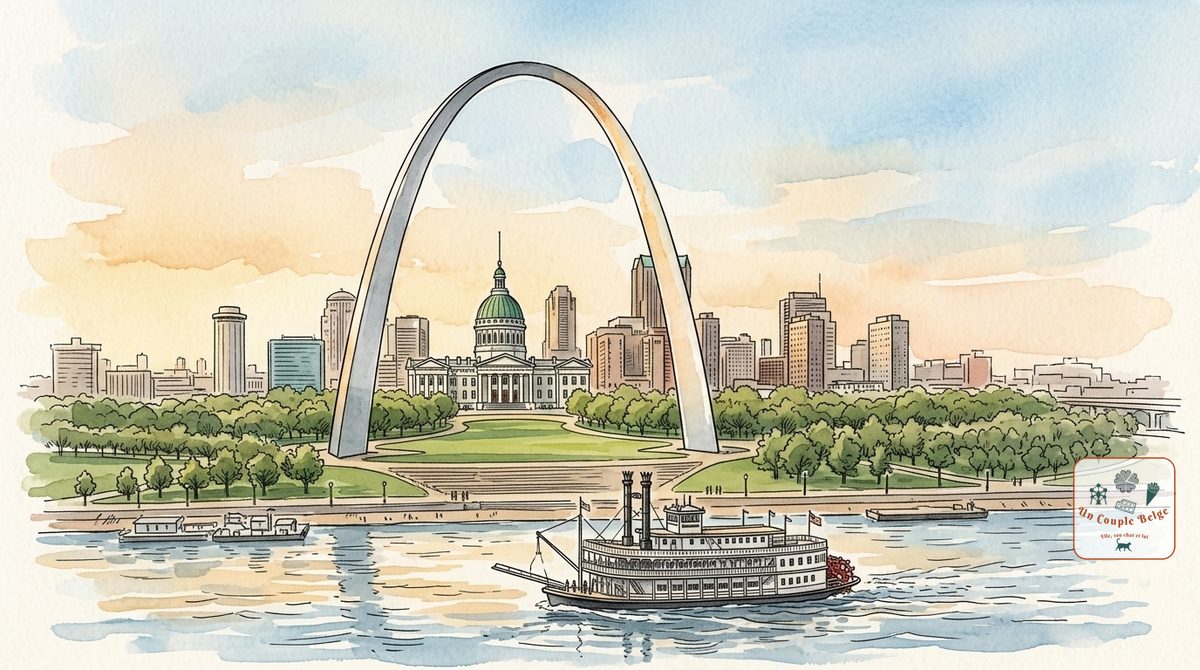
In St. Louis, beside the Mississippi, an arch of gleaming steel rises to 192 metres. It’s the tallest monument in the United States. It marks the place from which pioneers, trappers and explorers set out for the West. The park around it is the smallest of the US national parks: 37 hectares, right in the city.
History and origins
In 1803, the United States bought Louisiana from Napoleon, an immense territory west of the Mississippi. The country doubled in size. The following year, the Lewis and Clark expedition set out from the St. Louis area to reach the Pacific. The city became the “Gateway to the West”.
The arch commemorates that history. It was designed by the architect Eero Saarinen, who won the competition in 1948, and completed in 1965. For a long time the site was called a “national expansion memorial”. It took the name of national park in 2018, which many dispute: there’s nothing of a natural area about it.
What to do there
- The arch: as wide as it is tall. You can walk around it, touch it, lie down beneath it to watch the curve race up into the sky.
- The ride to the top: a train of small round capsules, with five seats each, climbs inside one leg of the arch in four minutes. At the top, small windows look out over the city on one side, and the river and Illinois on the other.
- The museum: beneath the arch, six galleries tell the story of the colonial town, the pioneers, the Native Americans driven from their lands and the building of the monument. It’s free.
- The Old Courthouse: a domed 19th-century building facing the arch, reopened in 2025 after two years of works. Admission is free. It’s where an enslaved man, Dred Scott, sued for his freedom, in the case that led to one of the most shameful decisions of the Supreme Court and hastened the Civil War.
- The river: paddle steamers offer one-hour cruises on the Mississippi, at the foot of the arch.
Stories and good to know
- The arch was designed to sway. In high winds, its top can move by several dozen centimetres.
- The two legs were built separately. On the day they were joined, the metal had to be sprayed with water to make it contract so that the last piece could fit.
- Saarinen died in 1961, before construction began. He never saw his arch.
Practical information for your road trip
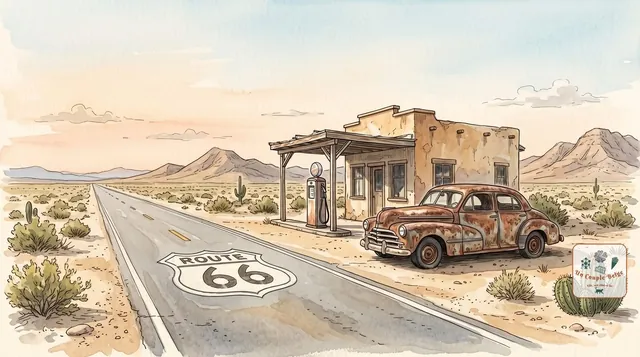
- Getting there: the park is in the centre of St. Louis, on the bank of the Mississippi. The city is on Route 66, between Chicago and Oklahoma.
- Parking: there’s no car park in the park. Use a downtown car park, ten minutes’ walk away.
- How long: allow an hour for the ride to the top, waiting included, and an hour for the museum.
- Where to stay: in downtown St. Louis.
- Combine it with: a stop on Route 66, or a journey down the Mississippi to Memphis.
Quick quiz
Question 1 / 3
Where to stay near Gateway Arch: the smallest (and most controversial) of the national parks
Stay22 affiliate links: if you book through here, we earn a small commission at no extra cost to you. Thanks for your support!
On the ground

Sponsored by UnCoupleBelge
Follow us on Instagram
Box sponsored by a partner
Comments