New Mexico: the Land of Enchantment
Updated on
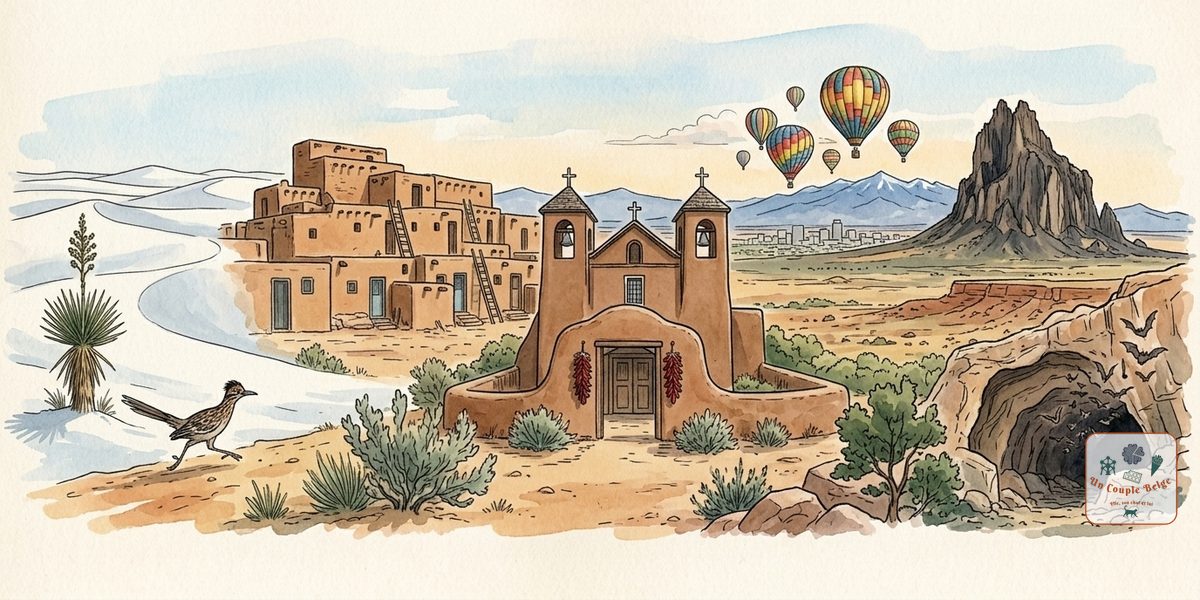
In New Mexico, when the sun skims the horizon, the mountains around Santa Fe turn pink, then red, then an almost electric purple. That’s what gave the Sangre de Cristo, “the blood of Christ”, their name, and it’s the light that has drawn generations of painters here, including Georgia O’Keeffe.
New Mexico is like no other state. Between Arizona and Texas, it mixes three cultures that have never really merged: Native American, with pueblos inhabited for nearly a thousand years, Hispanic, with Spanish colonial villages four centuries old, and Anglo-American. You’ll also find dunes of sand as white as snow, the first atomic bomb, aliens in Roswell and a chile pepper that serves as the official state question. Its nickname, “Land of Enchantment”, is well earned.
New Mexico at a glance
- Capital: Santa Fe
- Largest city: Albuquerque
- Population: about 2.1 million
- Area: about 315,000 km², more than ten times Belgium
- Joined the Union: 1912, 47th state
- Time zone: Mountain Time (8 hours behind Brussels)
- Nickname: Land of Enchantment
- Highest point: Wheeler Peak, 4,013 metres
- Good to know: Spanish is spoken by a large part of the population, and nearly one inhabitant in two is of Hispanic origin
Geography: mountains, plateaus and desert
The north is mountainous: the Sangre de Cristo, the southern end of the Rockies, with Santa Fe (at more than 2,100 metres), Taos and ski resorts.
The north-west belongs to the Colorado Plateau, with the Navajo lands, Shiprock, Chaco Canyon and the Bisti Badlands.
The Rio Grande valley crosses the state from north to south, with Albuquerque, Las Cruces and most of the population.
The south is desert: the Chihuahuan Desert, White Sands, Carlsbad Caverns and the Gila mountains to the west.
The east already belongs to the Great Plains, like neighbouring Texas, with Roswell and Tucumcari.
A bit of history
The Ancestral Puebloans built great towns here, such as Chaco Canyon, around the year 1000. Their descendants still live in the state’s 19 pueblos, alongside the Navajo and the Apache. The Spanish arrived in the 16th century and founded Santa Fe in 1610, today the oldest state capital in the United States. In 1680, the Pueblo Revolt drove the Spanish out for twelve years, a unique case in North America.
The territory became Mexican in 1821, then American in 1848. The railway arrived in 1880, followed by the artists at the beginning of the 20th century. During the Second World War, the scientists of the Manhattan Project designed the atomic bomb at Los Alamos, and the first nuclear test in history took place in the desert, at the Trinity site, on 16 July 1945.
The must-sees
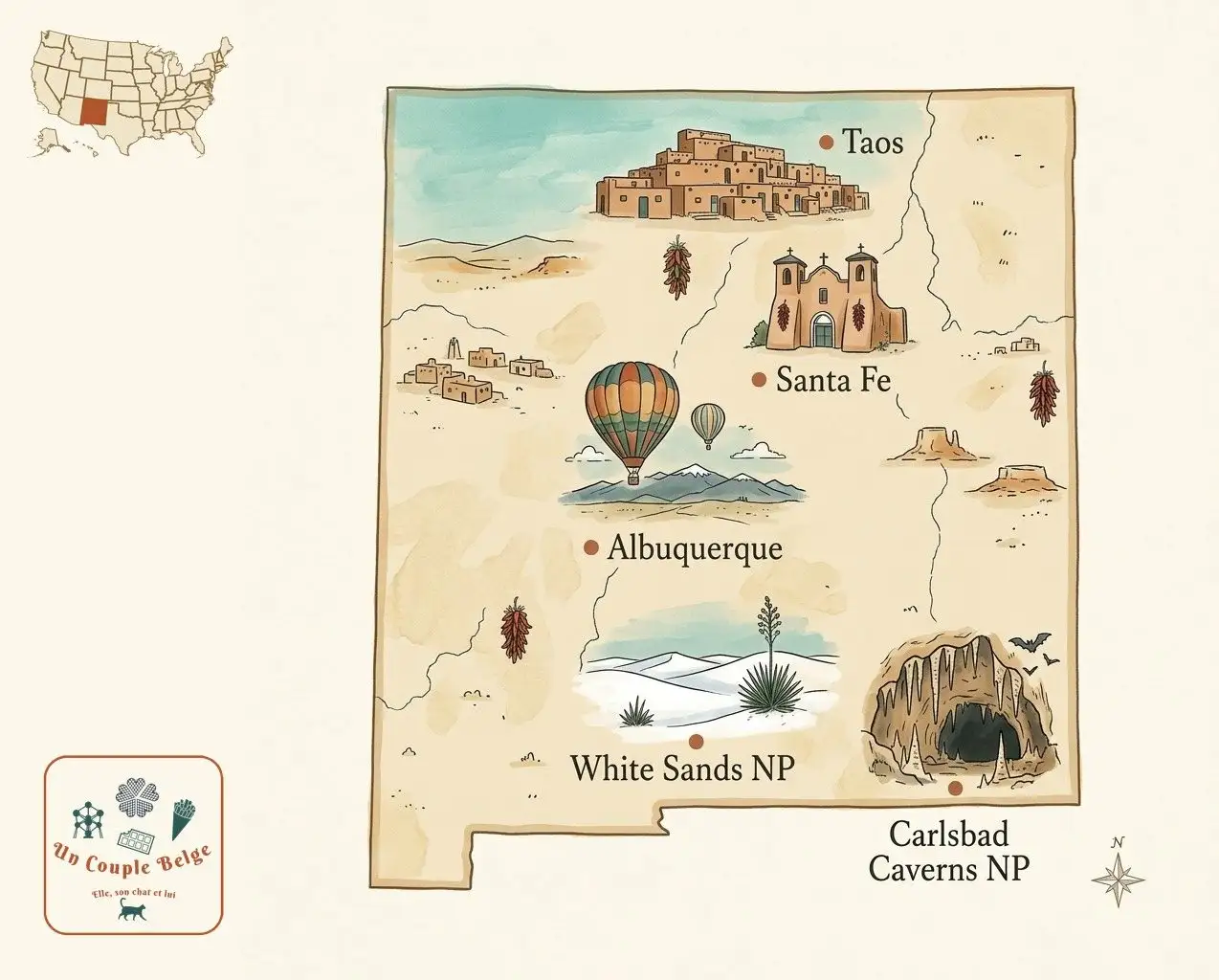
Santa Fe
Since the 1950s Santa Fe has imposed a unique planning rule: buildings in the historic centre must respect the adobe or Territorial style, with rounded, earth-coloured walls. As a result, the city looks like one big pueblo, with no tall buildings at all. Around the Plaza, the Palace of the Governors, the oldest public building in the United States still in use, shelters under its portal Native American artisans selling their jewellery. The Loretto Chapel and its “miraculous” spiral staircase, with no central support, and the Cathedral Basilica of St. Francis are worth the detour.
The city is also one of the art capitals of the United States: more than 100 galleries on Canyon Road, the Georgia O’Keeffe Museum, and Meow Wolf, a wild immersive installation where you enter through the fridge of a house to discover hidden worlds. A must, even for those who don’t like art.
Taos
Further north, Taos mixes an artists’ village, a renowned ski resort and above all Taos Pueblo, a group of multi-storey adobe houses inhabited for about a thousand years, a UNESCO World Heritage Site. Part of it can be visited, respecting the residents’ rules (no photos in certain areas, closures during ceremonies). Right nearby, the Rio Grande Gorge Bridge spans a canyon 200 metres deep, and the Enchanted Circle road loops around the mountains, golden with aspens in autumn.
Between Santa Fe and Taos, the High Road to Taos passes through old Hispanic mountain villages, such as Chimayó and its sanctuary, where people come for earth said to be miraculous.
The pueblos and the ancient sites
Bandelier National Monument, near Los Alamos, lets you climb ladders into cliff dwellings carved out of the volcanic rock. Acoma Pueblo, nicknamed “Sky City”, is a village perched on a 110-metre mesa, inhabited for more than 800 years, which you visit with a guide from the community. And Chaco Culture National Historical Park, a UNESCO World Heritage Site, protects the remains of a great ceremonial centre of the Ancestral Puebloans, at the end of a rough dirt road. A journey back in time.
In Abiquiú, Ghost Ranch, whose coloured cliffs were painted dozens of times by Georgia O’Keeffe, offers hikes and tours.
White Sands
In the south, White Sands National Park protects the largest gypsum dune field in the world: about 700 km² of sand as white as flour, which stays cool underfoot even in full sun. People go sledding on the dunes (sleds are sold at the visitor centre) and wait for sunset, when the sand turns pink and blue. The park is surrounded by a missile range: the road can be closed for a few hours during tests, so check before you set off.
Carlsbad Caverns
In the far south-east, Carlsbad Caverns National Park is one of the most beautiful cave systems in the world. The Big Room, about 230 metres underground, is an immense chamber of more than 3 hectares, covered in stalactites. You go down on foot through the natural entrance, a spectacular descent, or by lift. From May to October, at sunset, hundreds of thousands of bats spiral out of the cave: an unforgettable sight, with a ranger’s commentary.
Albuquerque
Albuquerque has a pretty Old Town of narrow lanes and a stretch of old Route 66 to stroll along (Central Avenue). Every early October, the Albuquerque International Balloon Fiesta, the biggest hot-air balloon festival in the world, sends hundreds of balloons up at sunrise. The Sandia Peak Tramway, one of the longest aerial tramways in the world, climbs to more than 3,000 metres for an immense view. Fans of Breaking Bad 🎬 will recognise many locations from the series, which was shot in the city.
The strange south
Roswell lives off the incident of 1947, when a mysterious object crashed on a nearby ranch: a UFO museum, street lamps shaped like alien heads and a festival every July. West of Socorro, the Very Large Array, 27 giant radio antennas lined up in the desert, served as a setting for the film Contact 🎬. The small town of Truth or Consequences took the name of a radio quiz show in 1950 and has hot springs. The Trinity Site, where the first atomic bomb exploded, is only open to the public one or two days a year.
Route 66
New Mexico has some fine stretches of Route 66: the neon motel signs of Tucumcari, the Blue Hole in Santa Rosa (a spring you can dive into), Albuquerque and Gallup, capital of the Native American trade.
Itinerary ideas
One week, the north. Albuquerque (1 day) → Turquoise Trail → Santa Fe (2 days) → Bandelier → High Road to Taos → Taos (2 days) → Abiquiú and Ghost Ranch.
10-14 days, the grand tour. The north, then southwards: Socorro and the Very Large Array → White Sands → Roswell → Carlsbad Caverns. About 2,000 kilometres.
In combination. New Mexico combines with Colorado (Mesa Verde and Durango are 3 hours from Chaco), Arizona via Route 66 or Texas (Big Bend and the Guadalupe Mountains, right next to Carlsbad).
On the plate
New Mexican cooking is unique, built around the chile of Hatch and of the north of the state.
- “Red or green?” is the official state question, adopted in 1996: on your enchiladas, your eggs or your burrito, do you want the red or the green chile sauce? Answering “Christmas” gets you both.
- The green chile cheeseburger, a burger topped with roasted green chiles. There’s even an official trail of the best ones.
- The breakfast burrito, filled with eggs, potatoes and chile.
- Sopaipillas, pillows of fried dough that you open to pour in honey.
- Carne adovada, pork marinated in red chile, and posole, a hominy stew.
- Frito pie, chili poured straight into a bag of corn chips, served in Santa Fe.
- Biscochitos, anise and cinnamon biscuits, the official state cookie.
Culture and trivia
- New Mexico has no official language: English and Spanish have always been used side by side.
- Santa Fe is the highest state capital in the United States, at more than 2,100 metres above sea level.
- Spaceport America, near Truth or Consequences, is the world’s first commercial spaceport.
- “Zozobra”, a giant 15-metre marionette representing gloom, is burned every early September in Santa Fe to drive away the year’s worries.
- Georgia O’Keeffe spent more than 40 years in New Mexico, fascinated by its landscapes.
When to go
- Spring (April-May) and autumn (September-October): the best times, with pleasant temperatures everywhere. October is ideal for the Balloon Fiesta, the golden aspens in the mountains and the smell of roasting chiles everywhere.
- Summer (June to August): hot in the south, pleasant at altitude in Santa Fe and Taos. Monsoon thunderstorms in the afternoon in July-August.
- Winter (December to March): skiing in Taos and Santa Fe, and Santa Fe lit by “farolitos”, paper lanterns, at Christmas. Cold and sometimes snowy in the north.
Practical information
- Recommended length of stay: 7 to 10 days for north and south, one week for the north alone.
- Getting there: Albuquerque airport is served by connecting flights. Denver and El Paso are alternatives.
- Getting around: a car is essential. A train, the Rail Runner, links Albuquerque to Santa Fe.
- Budget: fairly affordable, except in Santa Fe, where the boutique hotels are expensive.
- Things to watch out for: Santa Fe and Taos are at altitude, so drink plenty and gain height gradually. Respect the rules of the pueblos: no photos without permission, no entering houses or sacred places.
- One more tip: for the Balloon Fiesta in early October, book accommodation nearly a year ahead.
Our place guides in New Mexico
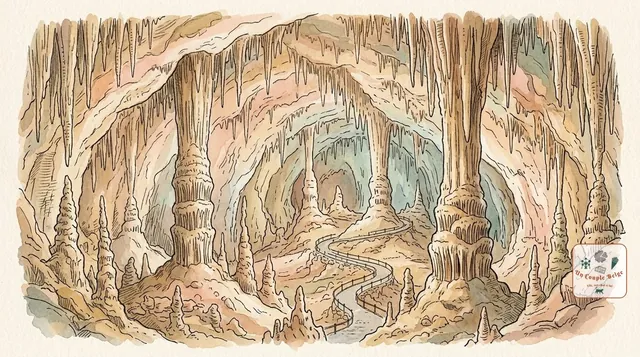
Carlsbad Caverns: an underground world and the flight of hundreds of thousands of bats
A gigantic cave beneath the New Mexico desert, which you walk down into to a depth of 230 metres, and hundreds of thousands of bats that fly out of it every summer evening.
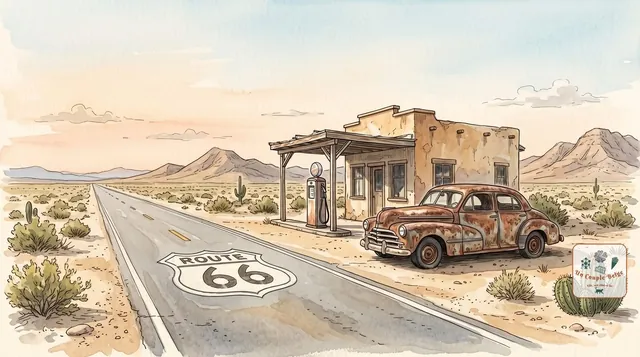
Route 66: from Chicago to Santa Monica, America's legendary road
The most famous road in the United States, from Chicago to Santa Monica: 3,940 km, eight states, neon-lit motels and villages that have stayed in the 1950s.
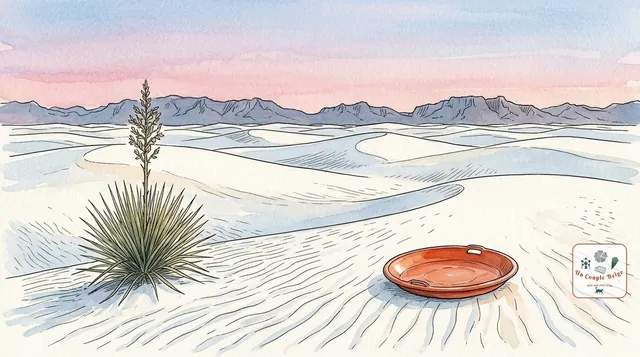
White Sands: sledding down the largest gypsum dunes in the world
A desert of dunes as white as snow, in southern New Mexico. The largest gypsum dunefield in the world, where you walk barefoot and go sledding.