Grand Canyon: the South Rim, from viewpoint to viewpoint
Updated on
How long should you spend there?
At a glance
- Entrance fee
- $35 per vehicle for 7 days, plus $100 per person for non-residents aged 16 and over, unless you hold the annual pass.
- Best time to go
- April-May and September-October. In summer it's crowded and very hot below the rim. Winter is quiet, with snow at times.
- Book ahead
- The park lodges, 6 to 12 months ahead. Phantom Ranch, at the bottom of the canyon, more than a year before.
- Getting around
- Free shuttle buses on the South Rim. Hermit Road is closed to cars from March to November.
| Walks and hikes | Distance | Time | Level |
|---|---|---|---|
| Trail of Time, from the Yavapai museum to the village | 2.1 km (one way) | about 45 min | easy |
| Rim Trail, from Hopi Point to the village | 3.5 km (one way) | about 1 hr 15 | easy |
| South Kaibab Trail to Ooh Aah Point | 2.9 km (round trip) | 1 to 2 hrs | moderate |
| South Kaibab Trail to Cedar Ridge | 4.8 km (round trip) | 2 to 4 hrs | strenuous |
| Bright Angel Trail to the first resthouse (1.5-Mile Resthouse) | 4.8 km (round trip) | 2 to 4 hrs | strenuous |
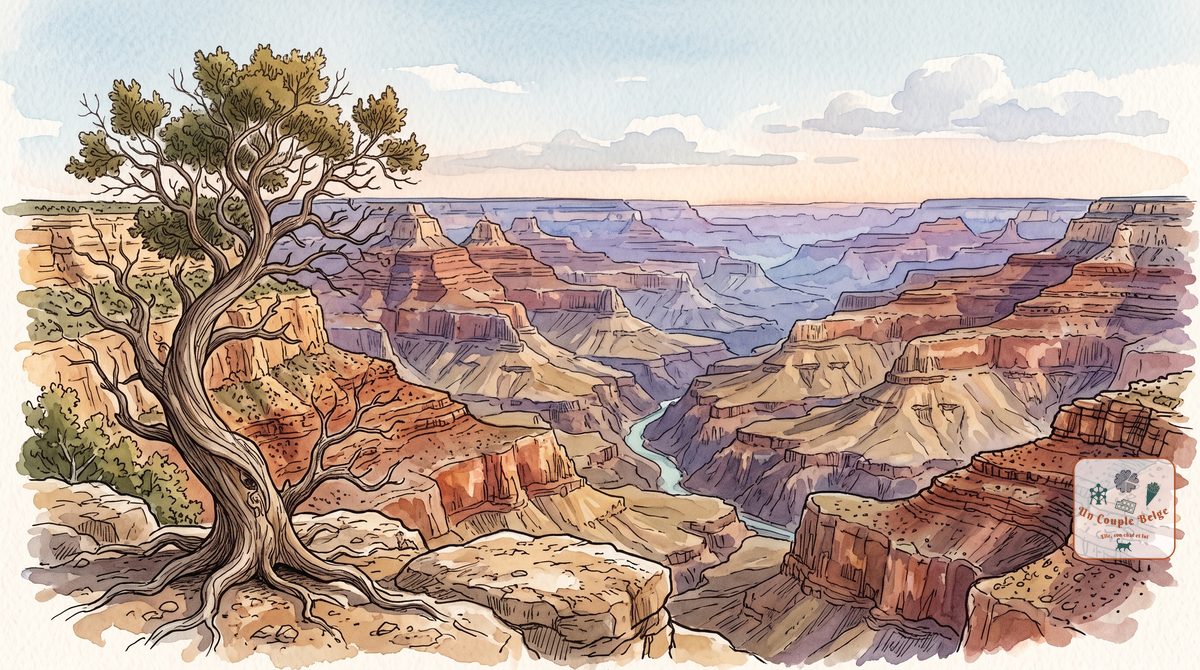
You may have seen it a hundred times in photos, but the first view of the Grand Canyon still takes your breath away. The canyon is 446 km long, up to 29 km wide and more than 1,600 metres deep. Most visitors discover it from the South Rim, where a road and a trail follow the edge from viewpoint to viewpoint.
History and origins
The Colorado carved the canyon in 5 to 6 million years. The layers of rock it laid bare tell the story of nearly 2 billion years: right at the bottom, the Vishnu Schist is among the oldest rocks visible on the Earth’s surface.
The region has been inhabited for more than 10,000 years. Eleven tribes maintain ties with the canyon today. The Havasupai still live inside it, in the village of Supai, near Havasu Falls.
The first European to see it was the Spaniard García López de Cárdenas, in 1540, guided by Hopis. He was looking for gold and left without lingering. Scientific exploration began in 1869, when John Wesley Powell travelled down the Colorado by boat.
The railway reached the South Rim in 1901, and the tourists with it. President Theodore Roosevelt made the site a national monument in 1908, and the Grand Canyon became a national park in 1919. It has been a UNESCO World Heritage Site since 1979 and receives more than 4 million visitors a year.
What to do there
- Mather Point
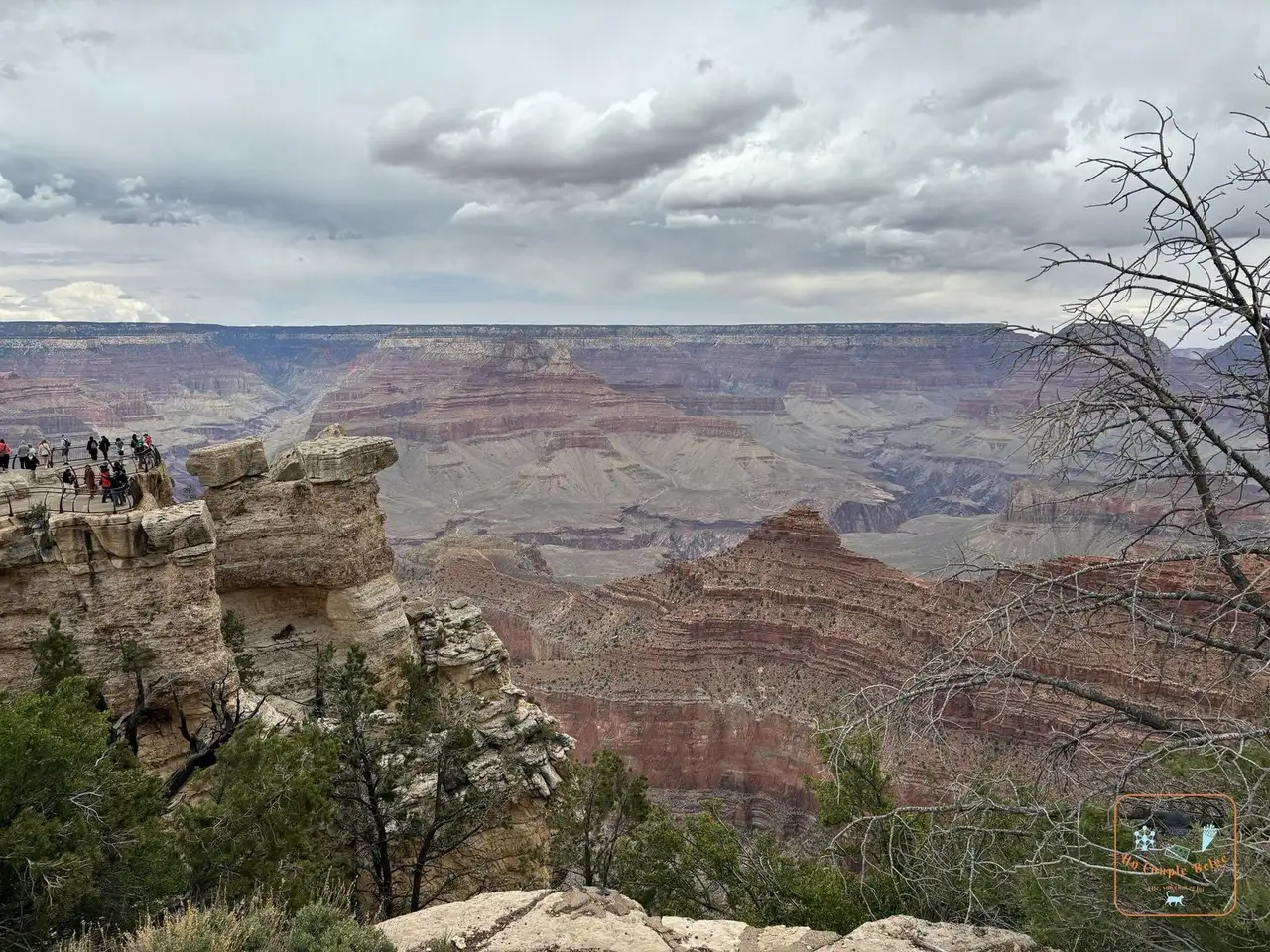 The viewpoint at Mather Point: the viewpoint nearest the entrance, and the first shock for almost everyone. It’s crowded, but the view lives up to it.
 - The Rim Trail and Hermit Road
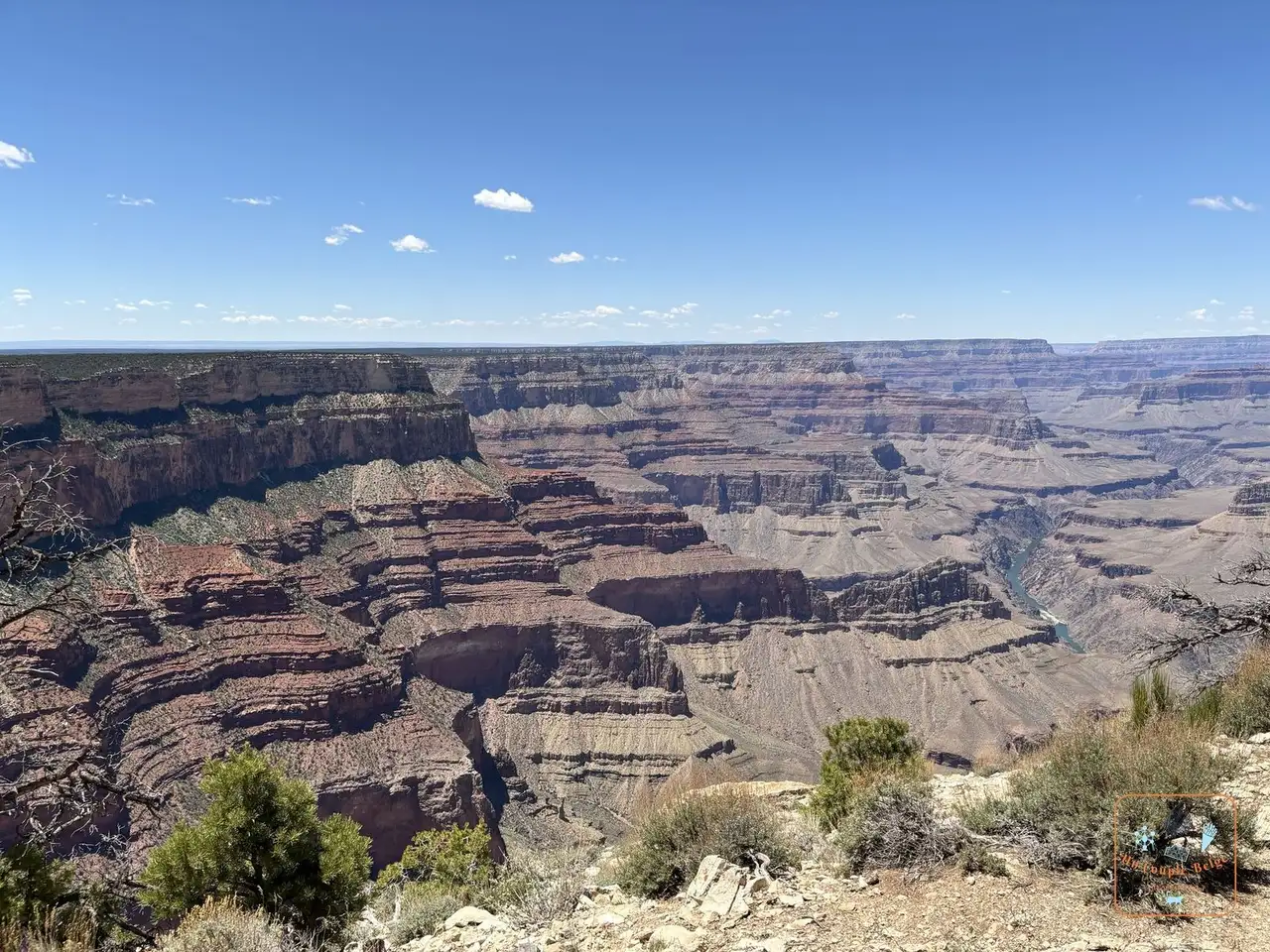 The Grand Canyon from a viewpoint on Hermit Road: an easy trail along the edge of the canyon. From March to November, Hermit Road is closed to cars: take the free shuttle to Hopi Point, then walk back towards the village past all the viewpoints.
 - The Trail of Time: between the Yavapai geology museum and the village, each metre of the trail represents a million years, with rock samples along the way.
- The South Kaibab Trail
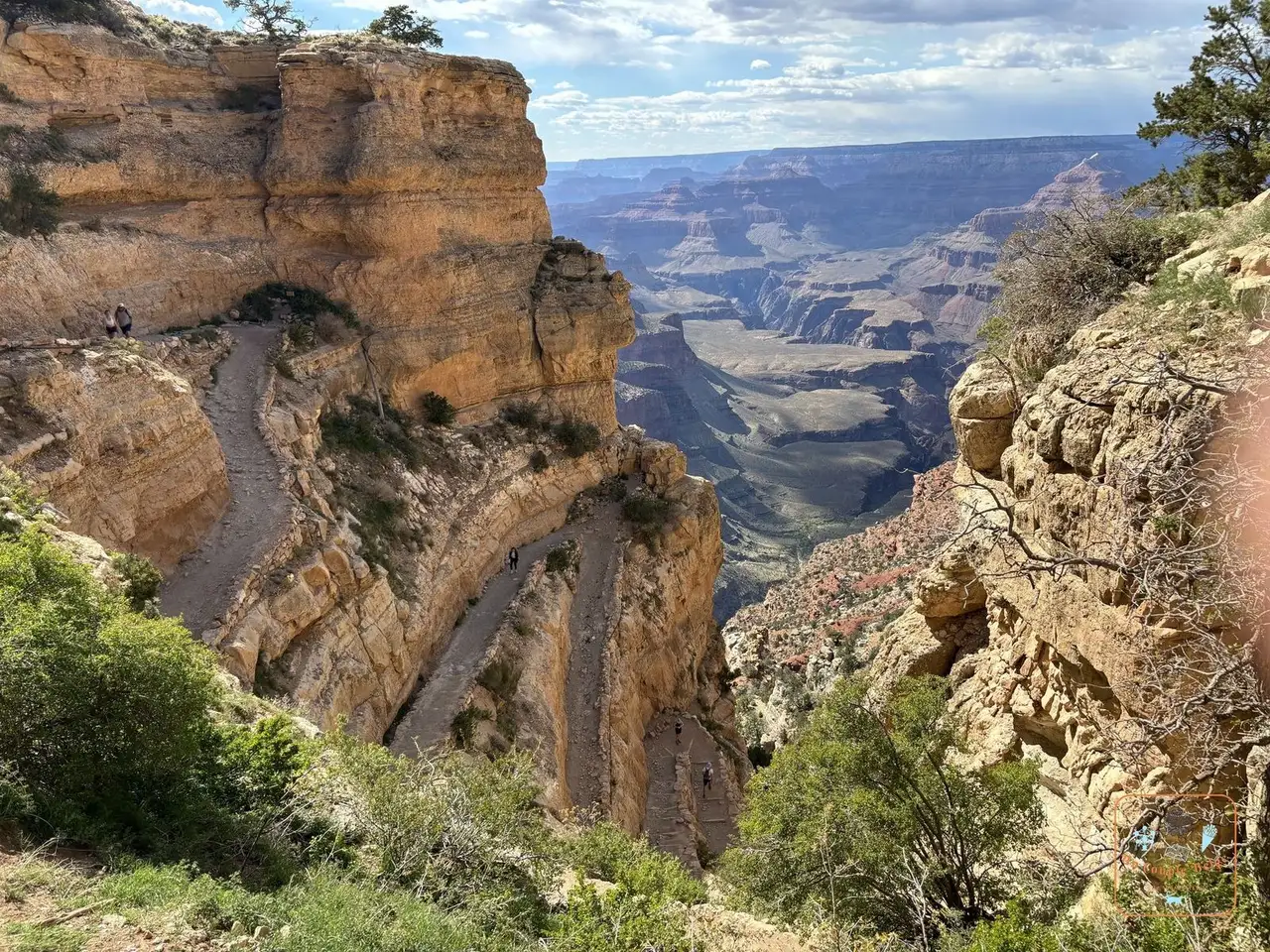 The switchbacks of the South Kaibab Trail, cut into the cliff: the trail into the canyon with the finest views. Ooh Aah Point
 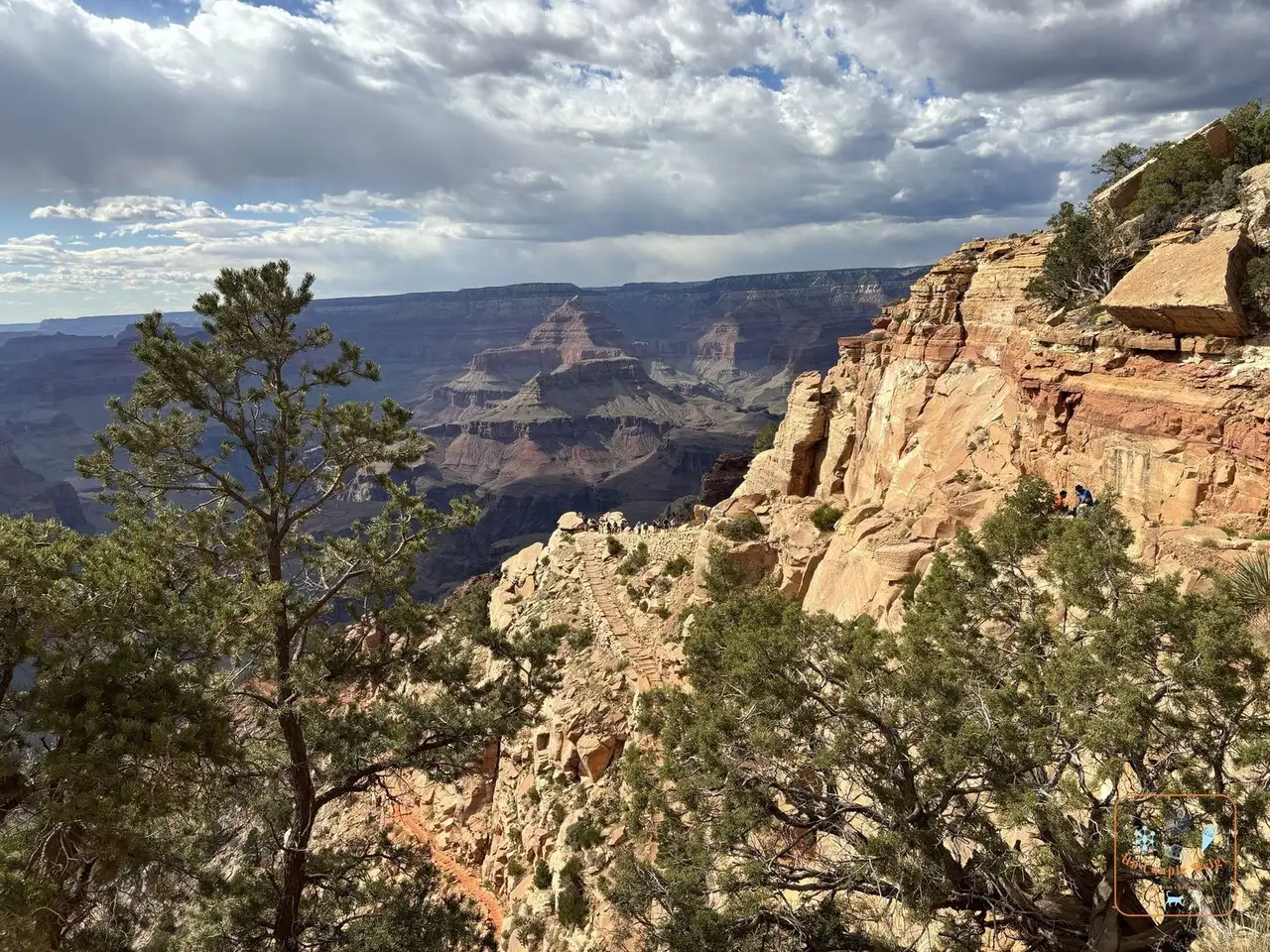 Hikers at Ooh Aah Point, on the South Kaibab Trail is a good goal for a short descent. There is no water and no shade.
 - The Bright Angel Trail
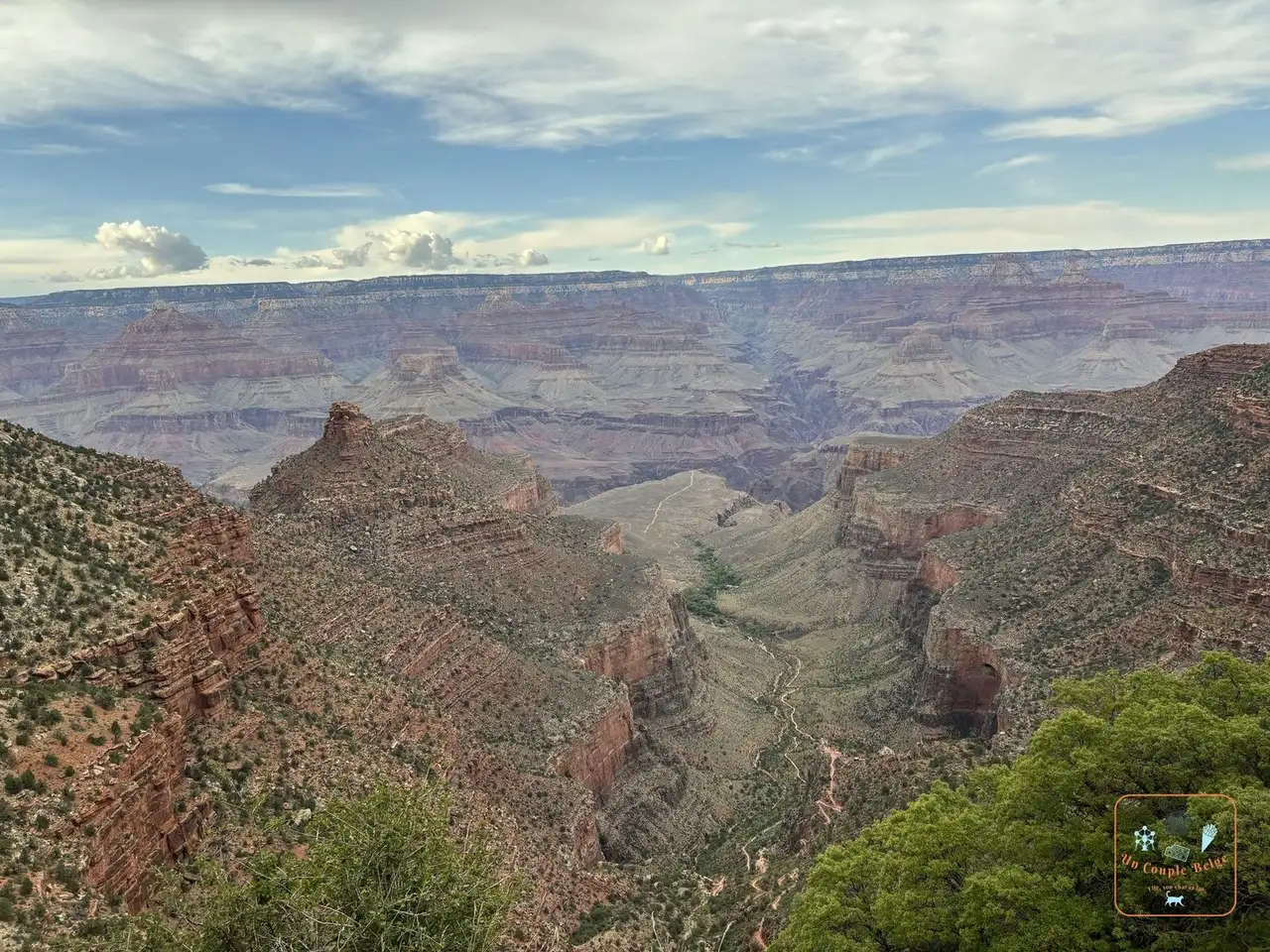 The Bright Angel Trail winding into the canyon: the other main trail, starting from the village. Going down a few switchbacks is enough to see the canyon from the inside.
 - Desert View Drive
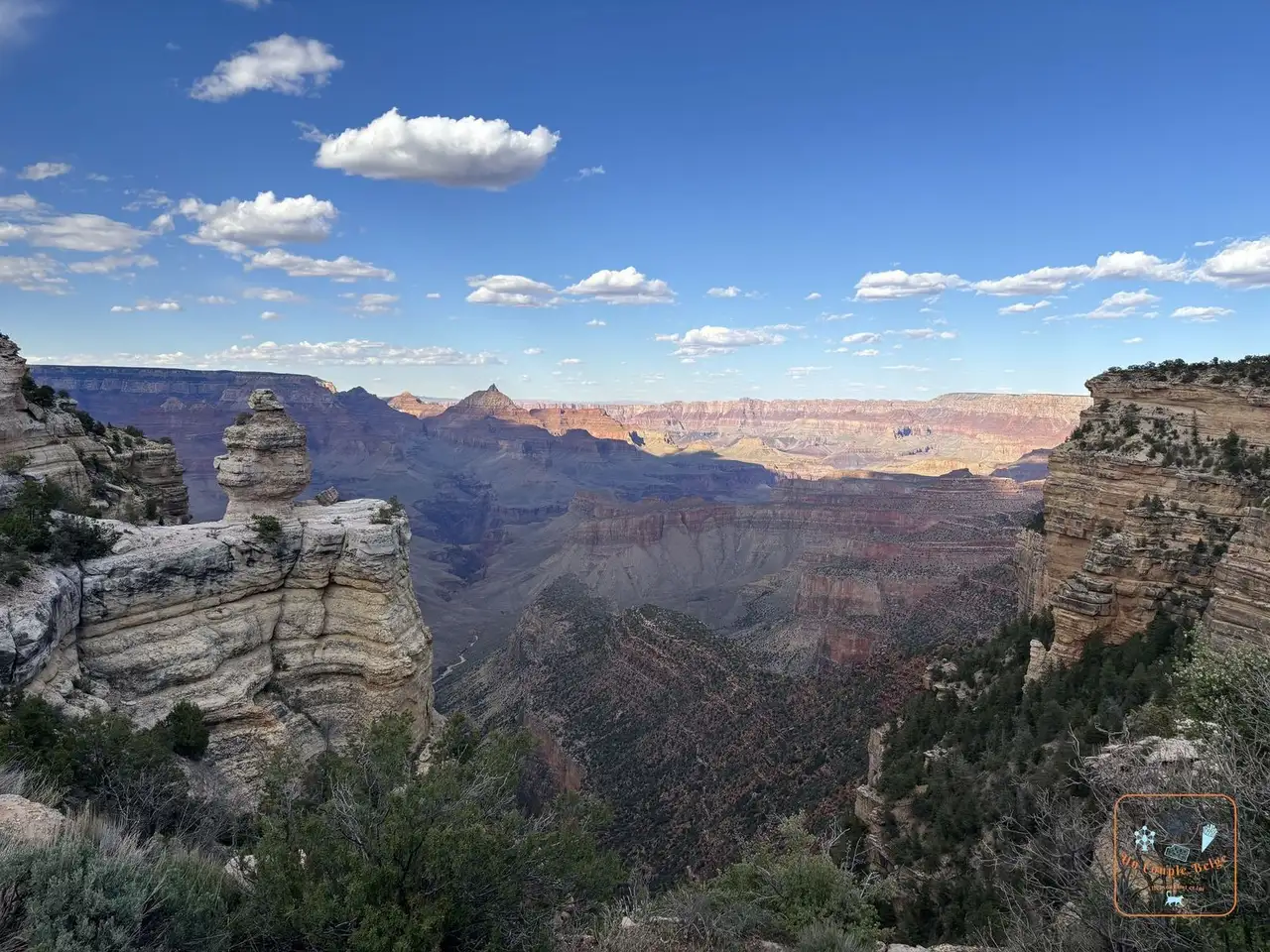 The Duck on a Rock formation: the eastern road, open to cars, with its viewpoints: Duck on a Rock, Grandview Point, Moran Point, then Navajo Point
 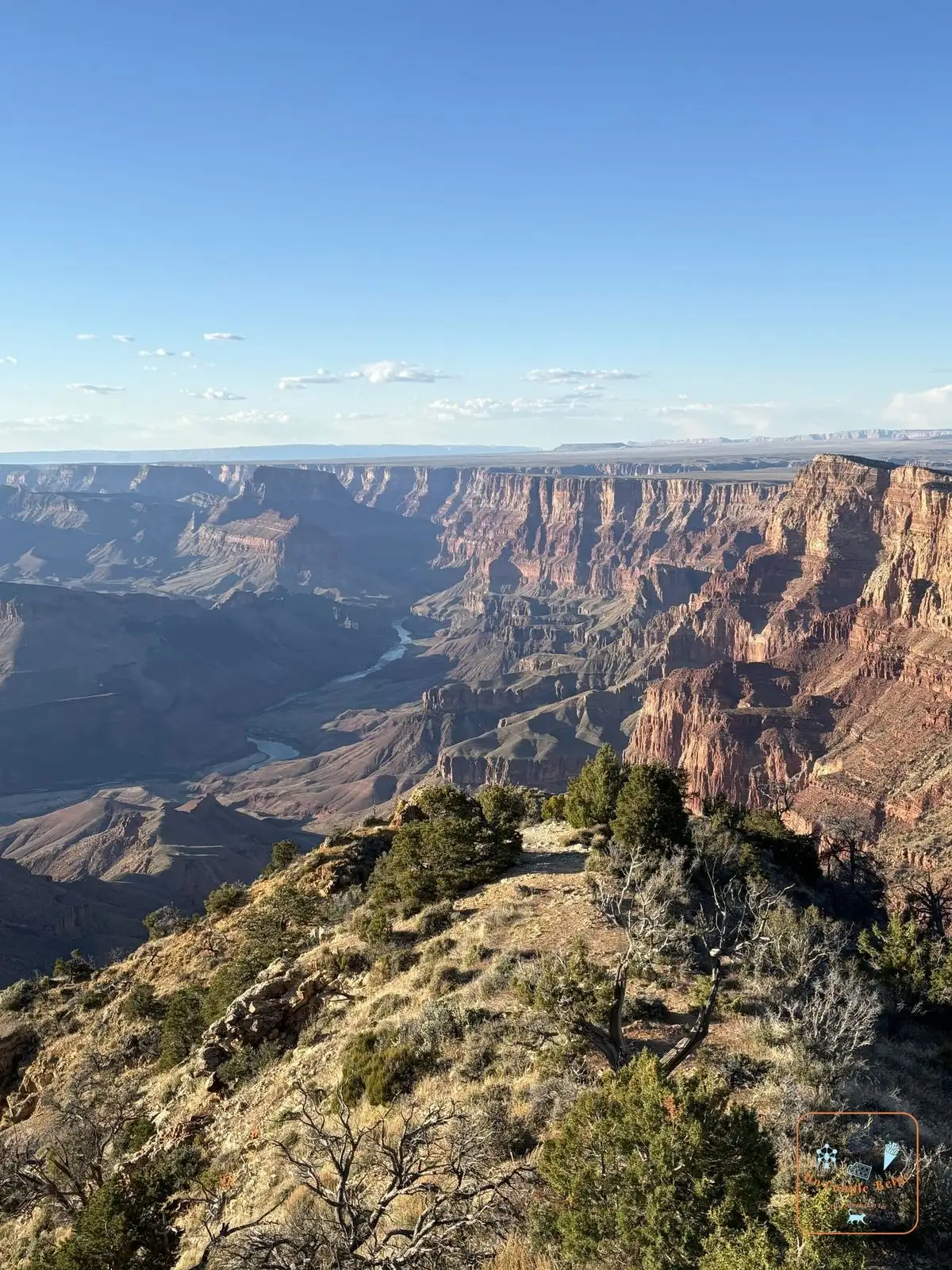 The Colorado from Navajo Point, late in the day, where you get a good view of the river.
 - The Desert View Watchtower
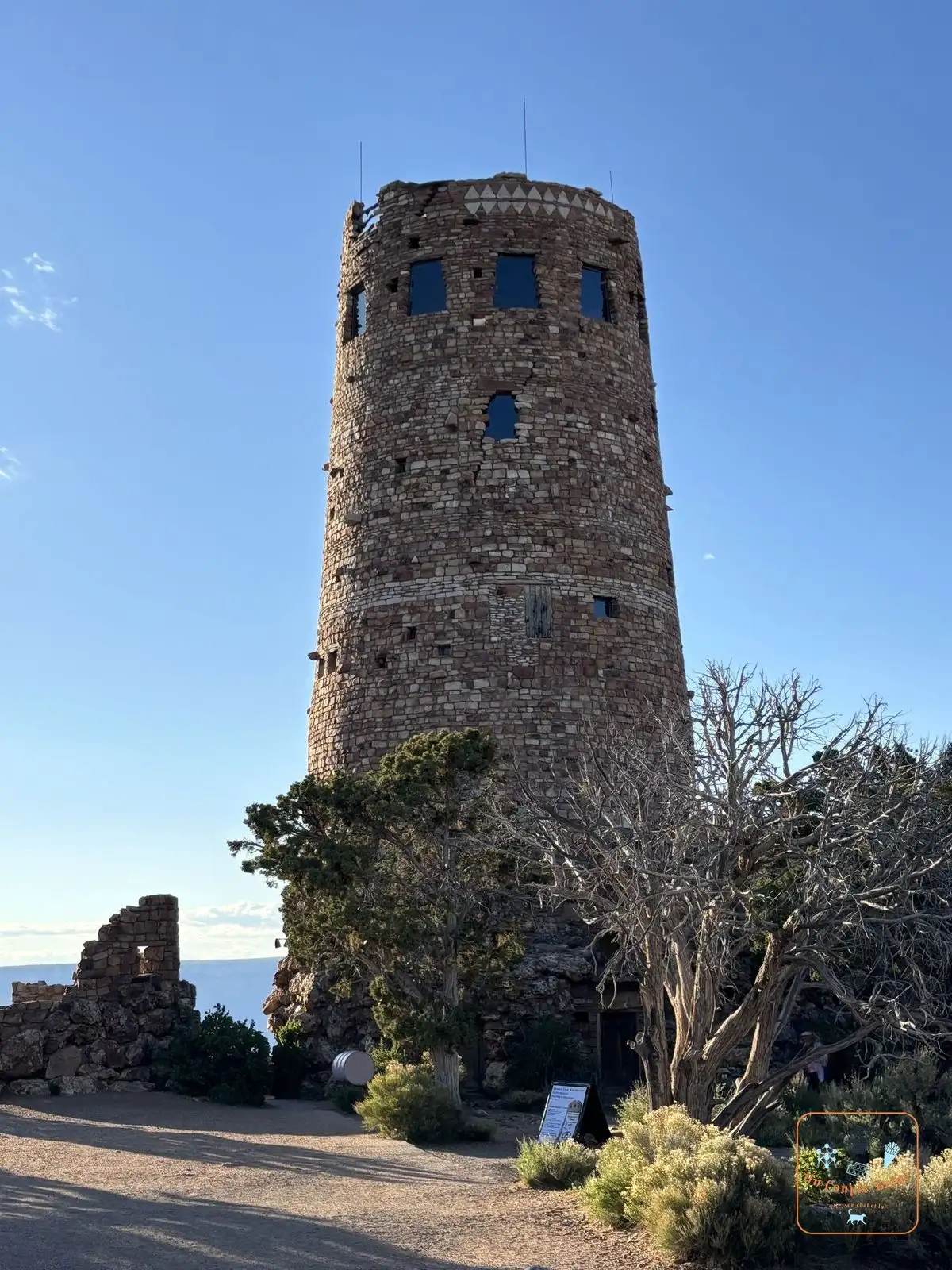 The Desert View Watchtower at sunset: a stone tower built in 1932 by the architect Mary Colter, at the end of the eastern road.
 - The North Rim: higher, cooler and much less visited, about 350 km and 4 hours 30 by road from the South Rim. It is only open from mid-May to mid-October.
- At the bottom of the canyon: hiking down with a night at Phantom Ranch, the only lodging beside the Colorado, is the dream of many hikers. Rafting on the river and the hike to Havasu Falls also need booking months, sometimes more than a year, ahead.
- Mule rides into the canyon: we don’t recommend them. To our mind, the canyon’s mules should only be used to carry the mail up and bring supplies down to Phantom Ranch. We are against the use of animals for tourism.
- The Skywalk: this glass walkway over the void is not in the national park but on the West Rim, on the land of the Hualapai Tribe, about five hours’ drive from the South Rim.
Stories and good to know
- The Grand Canyon is neither the deepest nor the longest in the world. It’s its size, combined with rock layers that are so easy to read, that makes it unique.
- Theodore Roosevelt said of it: “Leave it as it is. You cannot improve on it.”
- Colorado means “coloured red” in Spanish, because of the sediment the river used to carry. Since the Glen Canyon Dam was built upstream, its water has been clearer, often green.
- It can snow on the rim while it is over 40°C at the bottom, 1,500 metres below. We had snow ourselves when we arrived, in the middle of May.
- Elk wander around the car parks and along the roads
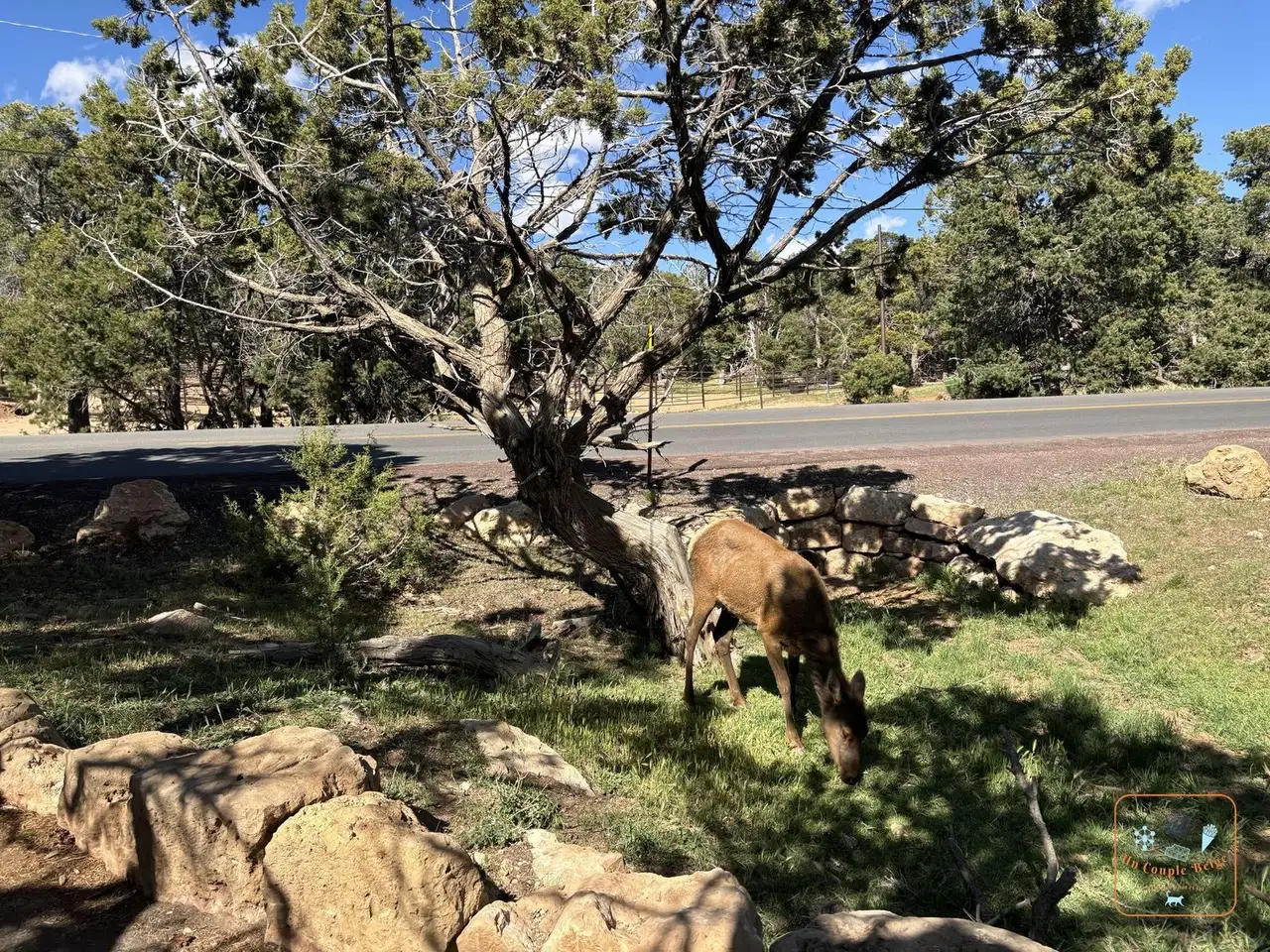 An elk at the roadside, near the South Kaibab Trailhead. The California condor, reintroduced to the region, sometimes soars over the canyon.
 - The park is a designated Dark Sky Park and holds a week of stargazing every year.
Practical information for your road trip
- Pass: we entered with our America the Beautiful pass. At the current price, it pays for itself with this park alone: it’s all explained in our guide to the national parks pass.
- Getting there: the South Rim is 1 hour from Williams, 1 hour 30 from Flagstaff, 4 hours 30 to 5 hours from Las Vegas and about 8 hours from Los Angeles. From Williams, a vintage train, the Grand Canyon Railway, also runs up to the park.
- Shuttles: they serve the village, the viewpoints and the South Kaibab Trailhead, where cars cannot park. Leave the car at the visitor centre or in the village.
- How long: half a day already gives you a good idea. With a full day, you can do Hermit Road in the morning, a short descent at midday and Desert View Drive until sunset.
- Water and sun: take far more water than you think you need for any descent, with a hat and sun cream.
- Where to stay: in the park lodges if you book early. Otherwise, Tusayan is at the park gate, Williams an hour away and Flagstaff an hour and a half.
- Combine it with: Route 66 at Williams and Seligman beforehand, then Page and Antelope Canyon, 2 hours 30 away via Desert View. Sedona is 2 hours to the south.
Our experience at the Grand Canyon
We spent a late afternoon and then a full day there in May 2024, during our road trip 1, staying in Williams:
Our day-by-day journals are coming soon.
Quick quiz
Question 1 / 3
Where to stay near Grand Canyon: the South Rim, from viewpoint to viewpoint
Stay22 affiliate links: if you book through here, we earn a small commission at no extra cost to you. Thanks for your support!
On the ground

Sponsored by UnCoupleBelge
Follow us on Instagram
Box sponsored by a partner
Other places nearby
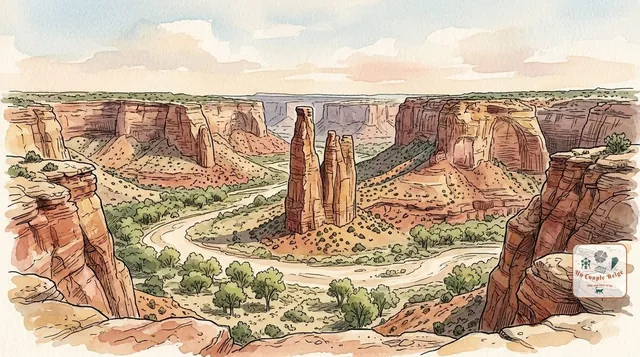
Canyon de Chelly: a Navajo canyon that is still lived in
A red sandstone canyon on Navajo land, inhabited for 5,000 years and still farmed today. You look at it from above for free, and go down into it with a guide.
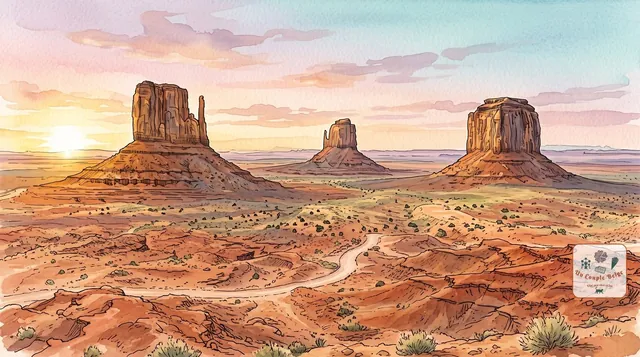
Monument Valley: the red buttes of Navajo country
Red sandstone buttes on a vast plain, on Navajo land: the Western backdrop everyone has in mind, best seen at sunrise.
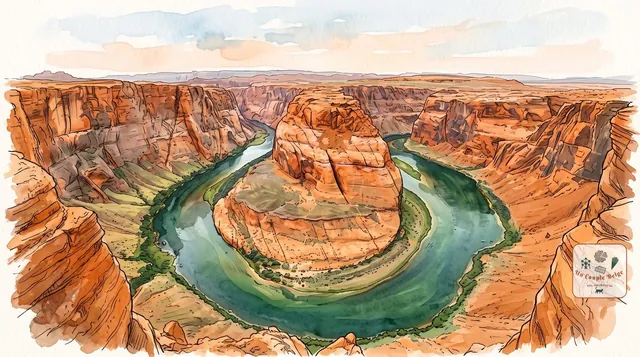
Page: Antelope Canyon, Horseshoe Bend and Lake Powell
A small Arizona town surrounded by sights we have all seen in photos: the orange walls of Antelope Canyon, the bend of Horseshoe Bend and Lake Powell.
Comments