Olympic: three radically different ecosystems in a single park
Updated on
How long should you spend there?
At a glance
- Entrance fee
- $30 per vehicle for 7 days, with no surcharge for non-residents. Card payment only.
- Best time to go
- From July to September, the driest months. It rains for the rest of the year, especially on the west side.
- Book ahead
- None to enter. The park's lodges have to be booked months ahead for summer.
- Getting around
- By car, on Highway 101, which circles the peninsula. Dead-end roads lead to each area.
| Walks and hikes | Distance | Time | Level |
|---|---|---|---|
| Hall of Mosses, in the Hoh Rain Forest | 1.3 km (loop) | 30 min | easy |
| Sol Duc Falls | 2.6 km (round trip) | 1 hr | easy |
| Marymere Falls, at Lake Crescent | 2.9 km (round trip) | 1 hr | easy |
| Hole-in-the-Wall, at Rialto Beach | about 5 km (round trip) | 2 hrs | easy |
The Olympic Peninsula forms the north-west corner of the contiguous United States. The park takes up its heart and its coast. It holds three worlds that have nothing in common: mountains covered in glaciers, a rainforest where everything is green and wet, and 100 km of wild shoreline on the Pacific.
History and origins
The clouds coming in from the ocean run up against the Olympic Mountains and empty themselves there. The western slope receives more than 3.5 metres of rain a year. That’s what feeds the forest, and the glaciers above it.
Eight Native American peoples live around the peninsula, from salmon fishing and, for some, whaling. At the end of the 19th century, loggers set about the great trees. President Franklin Roosevelt came to see for himself in 1937 and created the park the following year. It’s a World Heritage Site.
What to do there
- Hurricane Ridge: a road climbs from Port Angeles, at sea level, to a ridge at 1,600 metres. In fine weather you see the glaciers on one side and Canada on the other. Deer graze at the edge of the car park.
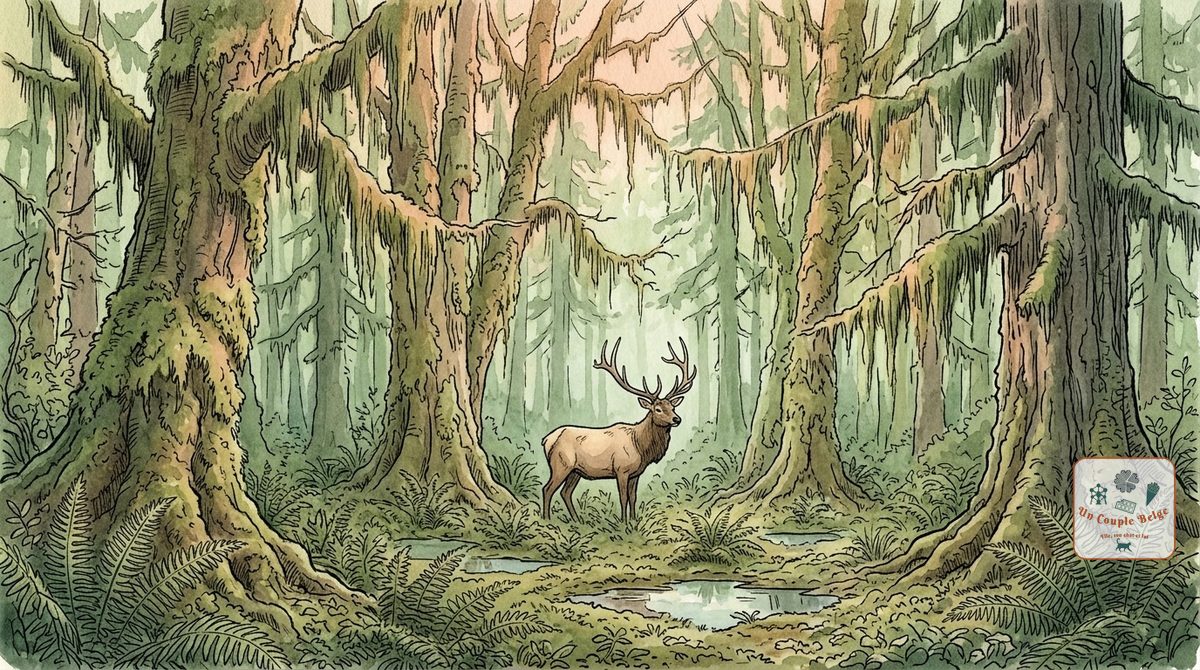
- The Hoh Rain Forest: the most famous of the temperate rainforests. Giant maples and spruces, draped in mosses that hang like curtains. The Hall of Mosses trail goes round it in half an hour.
- Lake Crescent: a deep lake, glacier blue, with the road running along it. An easy trail leads to a waterfall.
- Sol Duc: a fan-shaped waterfall at the back of a wooded valley, and a small hot springs resort.
- Rialto Beach and Ruby Beach: beaches of pebbles, bleached driftwood and rocks standing in the water. At low tide you can explore the tide pools full of starfish and anemones.
- Lake Quinault: to the south, another rainforest, quieter, around an old wooden lodge.
Stories and good to know
- Between 2011 and 2014, two dams were dismantled on the Elwha River. It’s the largest operation of its kind ever carried out. The salmon have come back.
- The park is home to the largest herd of Roosevelt elk in the country. It was partly for them that it was created.
- The small town of Forks, to the west, owes its fame to the Twilight saga 🎬, which is set there.
Practical information for your road trip
- Pass: the America the Beautiful pass covers the entrance fee. Everything is explained in our guide to the national parks pass.
- Getting there: Port Angeles is about 2 hrs 30 from Seattle, by ferry and then by road.
- Clothing: a good waterproof and shoes that don’t mind mud, in every season.
- Fuel: fill up in Port Angeles or Forks. Petrol stations are few on the west coast.
- Where to stay: in Port Angeles for the north, in Forks for the west. The park has four lodges, beside the lakes, the springs and the ocean.
- Combine it with: Mount Rainier and North Cascades.
Quick quiz
Question 1 / 3
Where to stay near Olympic: three radically different ecosystems in a single park
Stay22 affiliate links: if you book through here, we earn a small commission at no extra cost to you. Thanks for your support!
On the ground

Sponsored by UnCoupleBelge
Follow us on Instagram
Box sponsored by a partner
Other places nearby
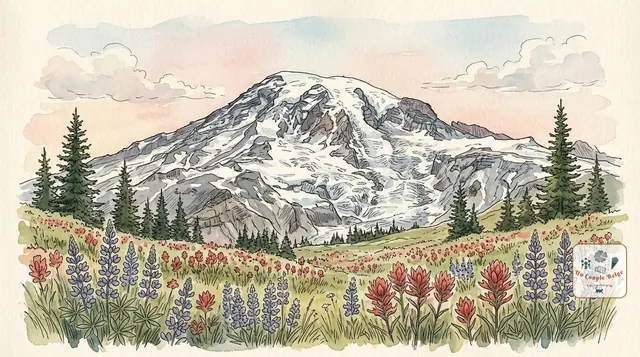
Mount Rainier: the giant volcano that towers over Seattle
A 4,392-metre volcano covered in glaciers, visible from Seattle, surrounded by flower meadows, waterfalls and old-growth forests.
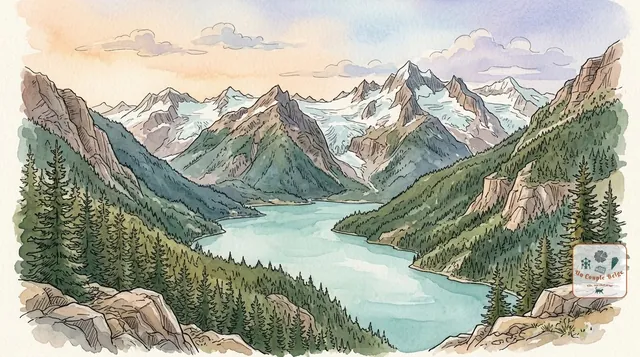
North Cascades: more glaciers than all the other US parks put together
Jagged peaks, hundreds of glaciers and lakes of a milky turquoise, three hours from Seattle. A wild, high-mountain park with almost no visitors.
Comments