Sedona: red rocks, trails and vortexes
Updated on
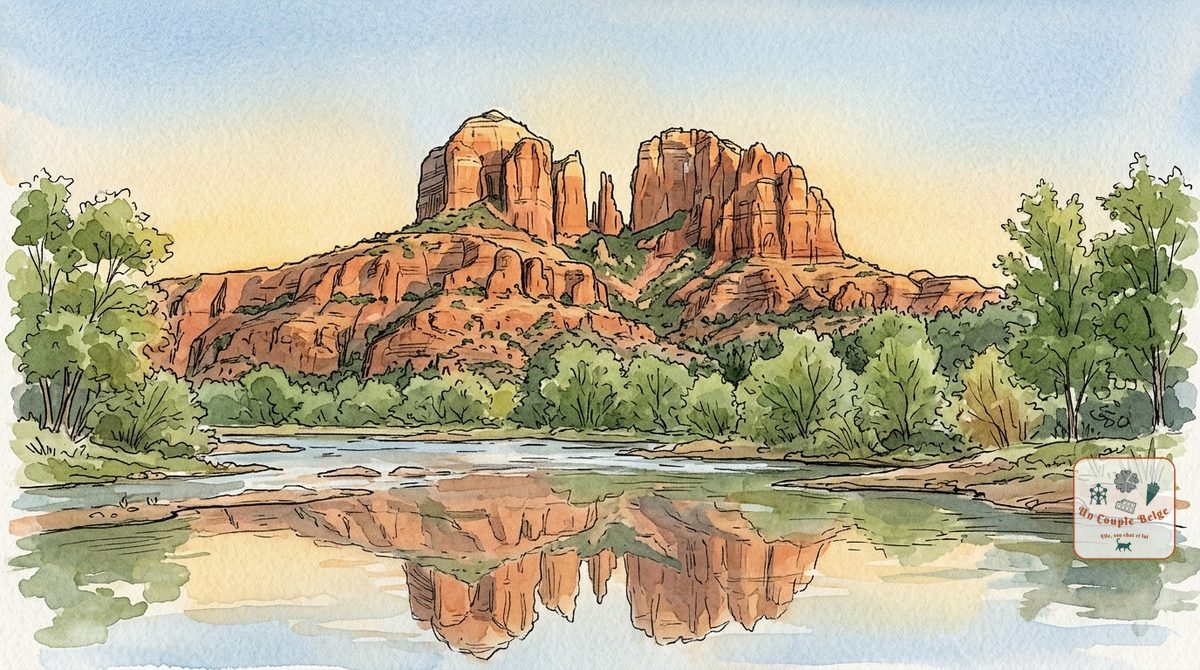
How long should you spend there?
At a glance
- Entrance fee
- The town is free. To park at the trailheads you need a Red Rock Pass ($5 a day, $15 a week) or the national parks pass.
- Best time to go
- From March to May and from September to November. Summer is very hot, winter cool and sometimes snowy.
- Book ahead
- Hotels, several months ahead in spring and autumn. Nothing else needs booking.
- Getting around
- By car, with a free shuttle to the busiest trails, where the car parks close when it's running.
| Walks and hikes | Distance | Time | Level |
|---|---|---|---|
| Bell Rock, to the foot of the rock | about 1.3 km (round trip) | 45 min | easy |
| Cathedral Rock | about 2 km (round trip) | 1 hr 30 | strenuous |
| Around Airport Mesa | 5.3 km (loop) | 2 hrs | moderate |
| Devil's Bridge, from Dry Creek or Mescal | about 6.8 km (round trip) | 2 hrs 30 | moderate |
Sedona is a small town in Arizona, between Phoenix and the Grand Canyon. It’s surrounded by buttes and cliffs of bright red sandstone, which begin at the end of the streets. People come to walk, for the sunsets and, for some, for its “vortexes”: places where the earth’s energy is said to be stronger than elsewhere.
History and origins
The red of the rocks comes from the iron in the sandstone: it’s rust, quite simply. The Sinagua people lived here between about 650 and 1400. They left dwellings under the cliffs and paintings on the rock, which can be seen at Palatki and Honanki.
The modern town dates from 1902. It bears the first name of Sedona Schnebly, the wife of the first postmaster. From the 1920s, Hollywood came to shoot dozens of westerns here. Painters and sculptors followed in the 1950s.
The vortexes are more recent. The idea appeared in the 1980s, with the New Age movement. There’s nothing scientific about it, but it has become a pillar of local tourism.
What to do there
- Cathedral Rock: the most photographed outline in Sedona. The trail is short but very steep, with sections where you use your hands, up to a saddle between the rock towers.
- Bell Rock: a bell-shaped butte, south of town. An easy path goes round it, and you can scramble up its flanks as high as you dare.
- Devil’s Bridge: the largest natural arch in the area. You can walk across it, and there’s often a queue for the photo.
- Airport Mesa: a plateau above the town, with a very popular viewpoint at sunset.
- The Chapel of the Holy Cross: a concrete chapel set into the red rock, with a great cross on the front. Admission is free.
- Oak Creek Canyon: Highway 89A to Flagstaff climbs a wooded gorge along a river. It’s superb in autumn.
- Slide Rock: a state park where the river has carved a natural slide in the sandstone. People swim there in summer.
- Palatki and Honanki: the cliff dwellings and paintings of the Sinagua, at the end of dirt tracks.
- 4x4 outings: several companies take visitors along rock tracks that can’t be reached in a normal car.
- Tlaquepaque: an arts and crafts village built like a Mexican town, with courtyards, fountains and galleries.
Stories and good to know
- The four best-known vortexes are Airport Mesa, Cathedral Rock, Bell Rock and Boynton Canyon. Whether you believe in them or not, they are beautiful places.
- The town limits the height of buildings and requires colours close to those of the rock. Even McDonald’s had to comply: its arches are turquoise, not yellow.
- Slide Rock isn’t covered by the Red Rock Pass: it’s a state park, at $20 or $30 per car depending on the season.
- Sedona’s sky is protected from light pollution. On a clear night, the stars are very easy to see.
Practical information for your road trip
- Getting there: Sedona is about 2 hrs from Phoenix, less than an hour from Flagstaff and a little over 2 hrs from the Grand Canyon.
- Parking: the car parks for the best-known trails are full early in the morning. Arrive before 8am, or take the shuttle.
- Heat: in summer it’s often over 35°C. Walk early, with plenty of water.
- Traffic jams: the town has only two main roads, which soon clog up at weekends and during the holidays.
- Budget: it’s one of the most expensive stops in Arizona for sleeping and eating. The Village of Oak Creek, to the south, is a little more affordable.
- Combine it with: the Grand Canyon to the north, or Route 66 via Flagstaff and Williams.
Our experience in Sedona
We went there on our road trip 3, and we’ll be telling you all about it soon. Until then, if you’d like more details, feel free to write to us by message or on Instagram.
The day-by-day account will be available soon.
Quick quiz
Question 1 / 3
Expert
Sedona: red rocks, trails and vortexes
Where to stay near Sedona: red rocks, trails and vortexes
Stay22 affiliate links: if you book through here, we earn a small commission at no extra cost to you. Thanks for your support!
On the ground

Sponsored by UnCoupleBelge
Follow us on Instagram
Box sponsored by a partner
Other places nearby
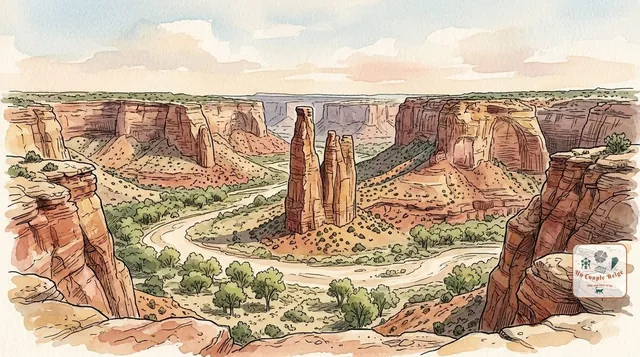
Canyon de Chelly: a Navajo canyon that is still lived in
A red sandstone canyon on Navajo land, inhabited for 5,000 years and still farmed today. You look at it from above for free, and go down into it with a guide.
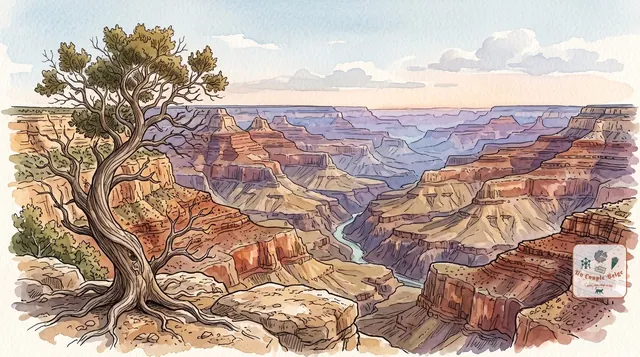
Grand Canyon: the South Rim, from viewpoint to viewpoint
A canyon 446 km long and more than 1,600 metres deep, which you discover from the South Rim, one viewpoint after another. Even half a day is enough to remember it for a long time.
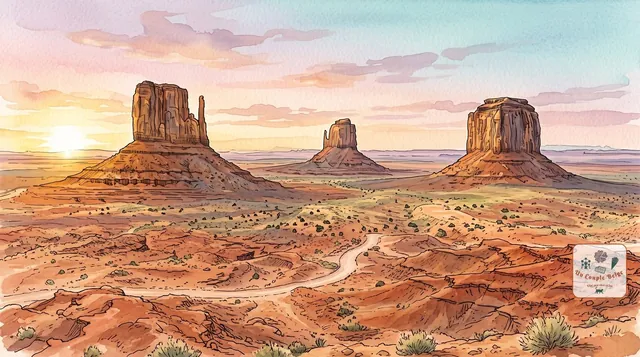
Monument Valley: the red buttes of Navajo country
Red sandstone buttes on a vast plain, on Navajo land: the Western backdrop everyone has in mind, best seen at sunrise.
Comments