RT2 – Day 12 – The Everglades: airboat and alligators at Shark Valley
After three nights in Miami Beach, we’re back on the road, this time heading inland. Destination: the Everglades, the immense wetland that covers the whole of southern Florida, and one of the places we were most looking forward to for watching alligators.
One last stroll on Lincoln Road
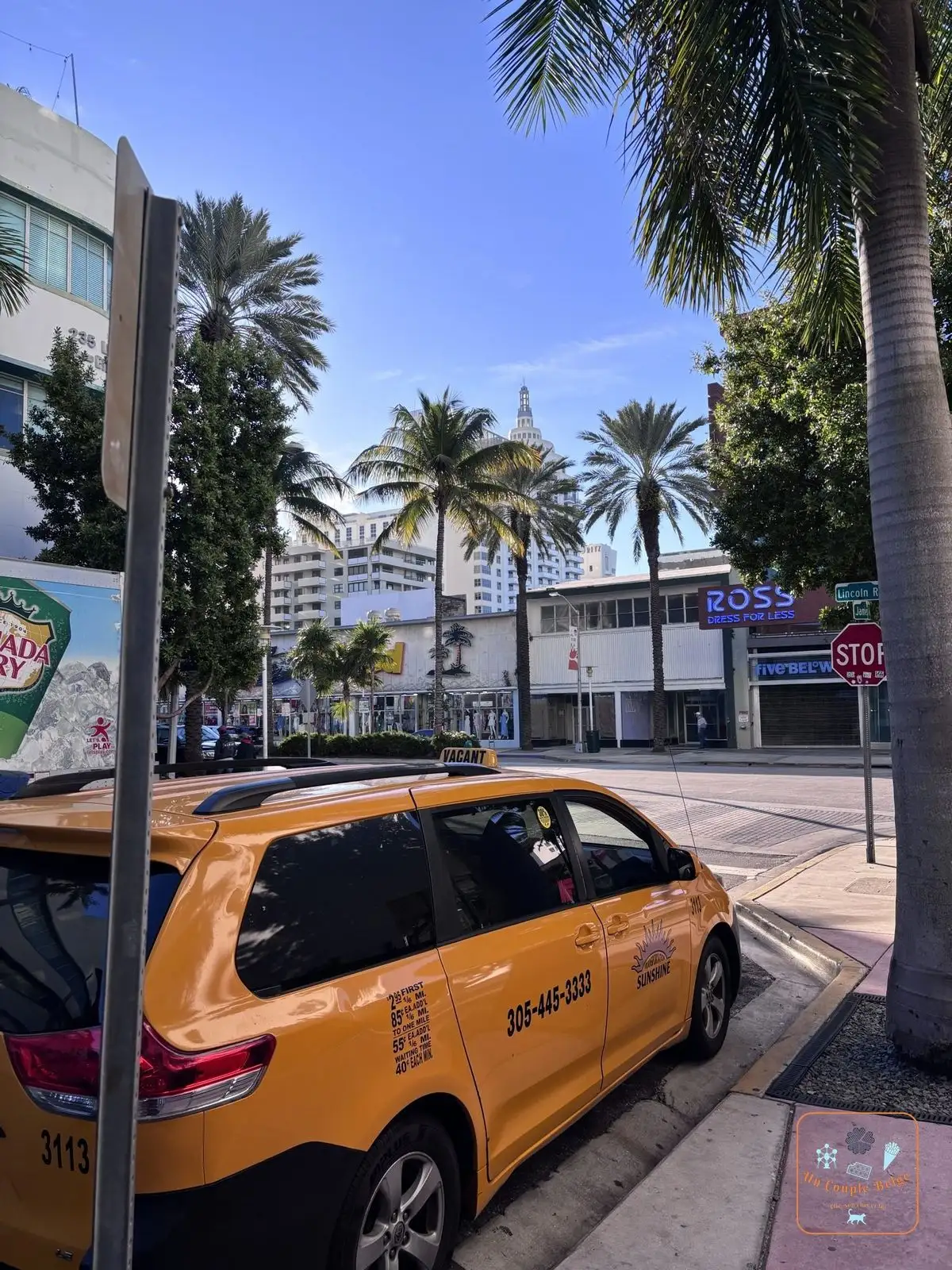
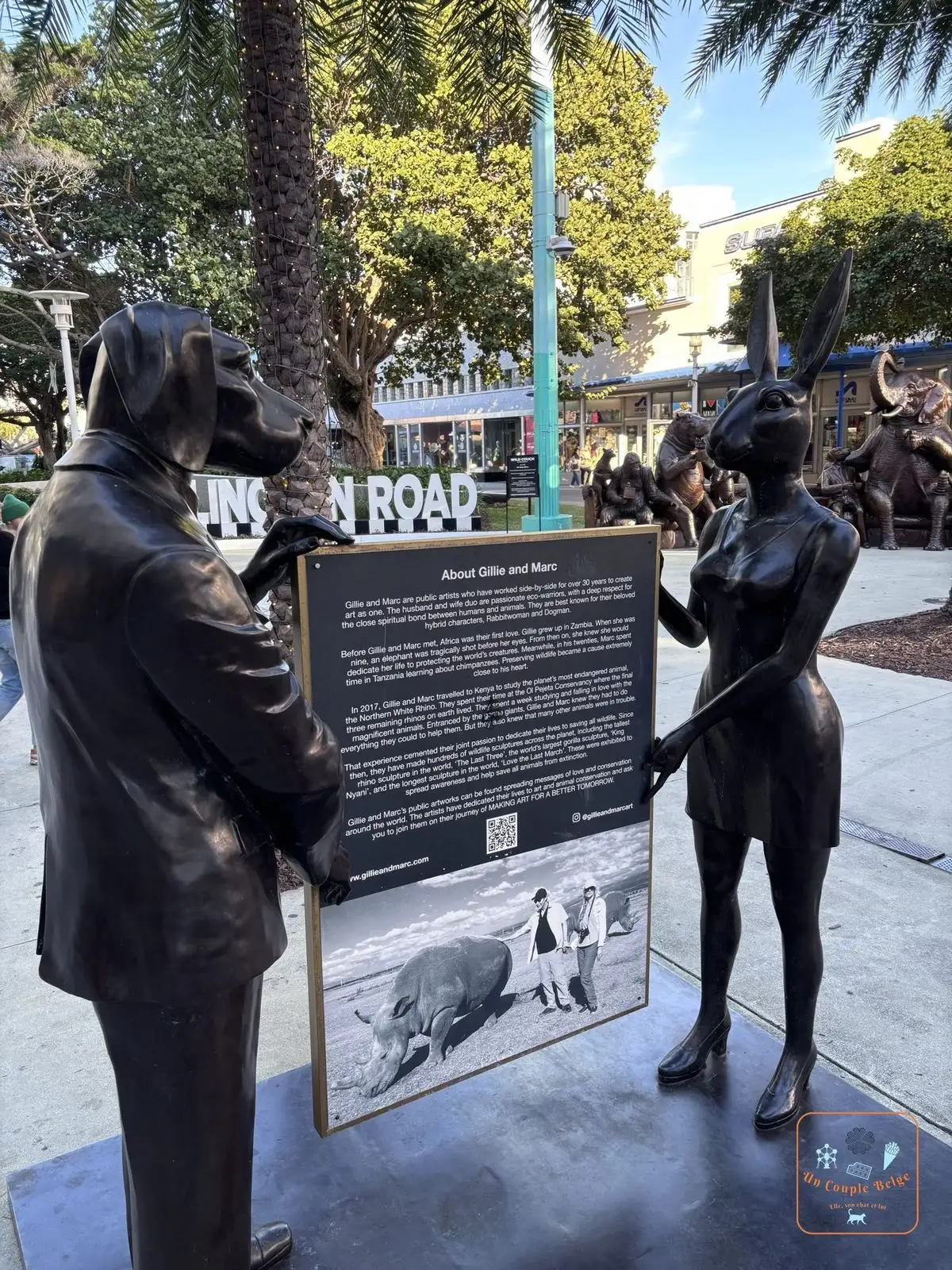
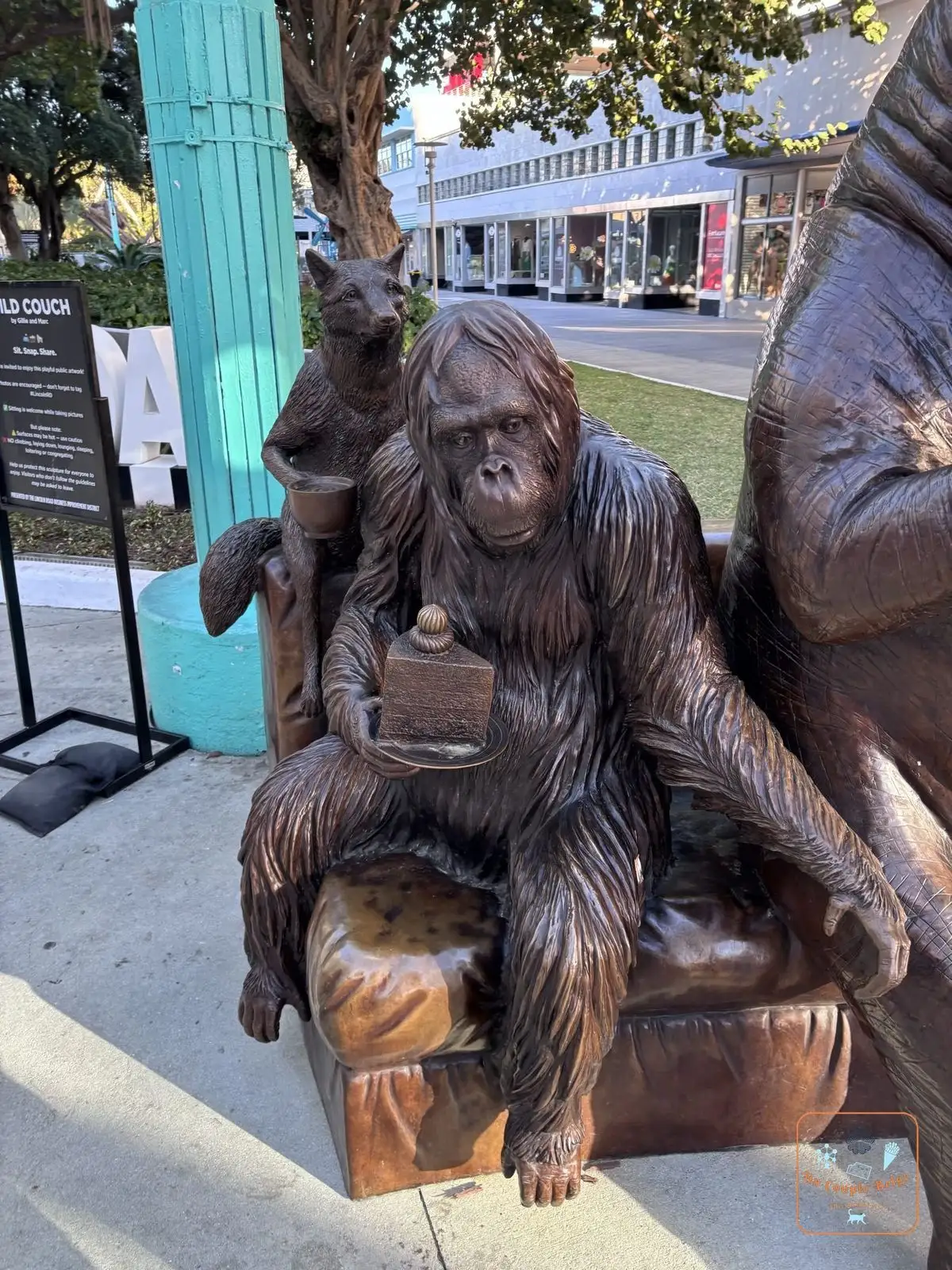
Before leaving Miami Beach, we went back along Lincoln Road, the pedestrian street where the day before we had discovered the sculptures of the Australian artist duo Gillie and Marc. Their signature characters, a dog and a rabbit dressed like humans, represent the artist couple themselves. Their works often speak about protecting endangered animals.
The Everglades, the “river of grass”
Leaving Miami westwards on the Tamiami Trail (Highway 41), the city disappears very quickly. You find yourself in the middle of an immense, flat plain, covered in tall grass and water as far as the eye can see. That’s the Everglades: not really a swamp, but rather a very wide and very slow river, flowing from Lake Okeechobee to the tip of Florida. Hence its nickname, the “river of grass”.
Part of it is protected by Everglades National Park, created in 1947. It’s the largest subtropical wilderness in the United States, and one of the only places in the world where alligators and crocodiles live side by side.
The airboat tour
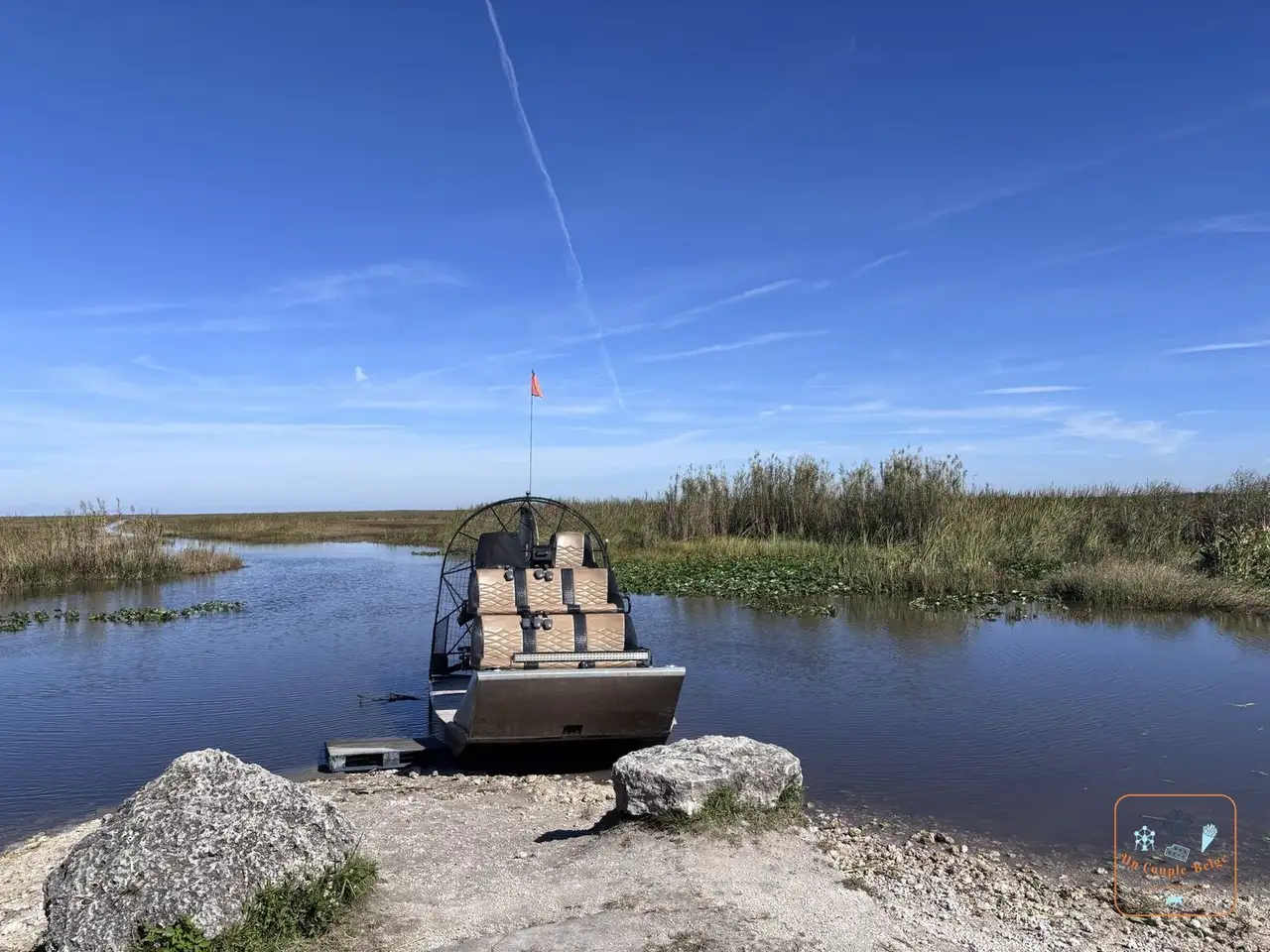
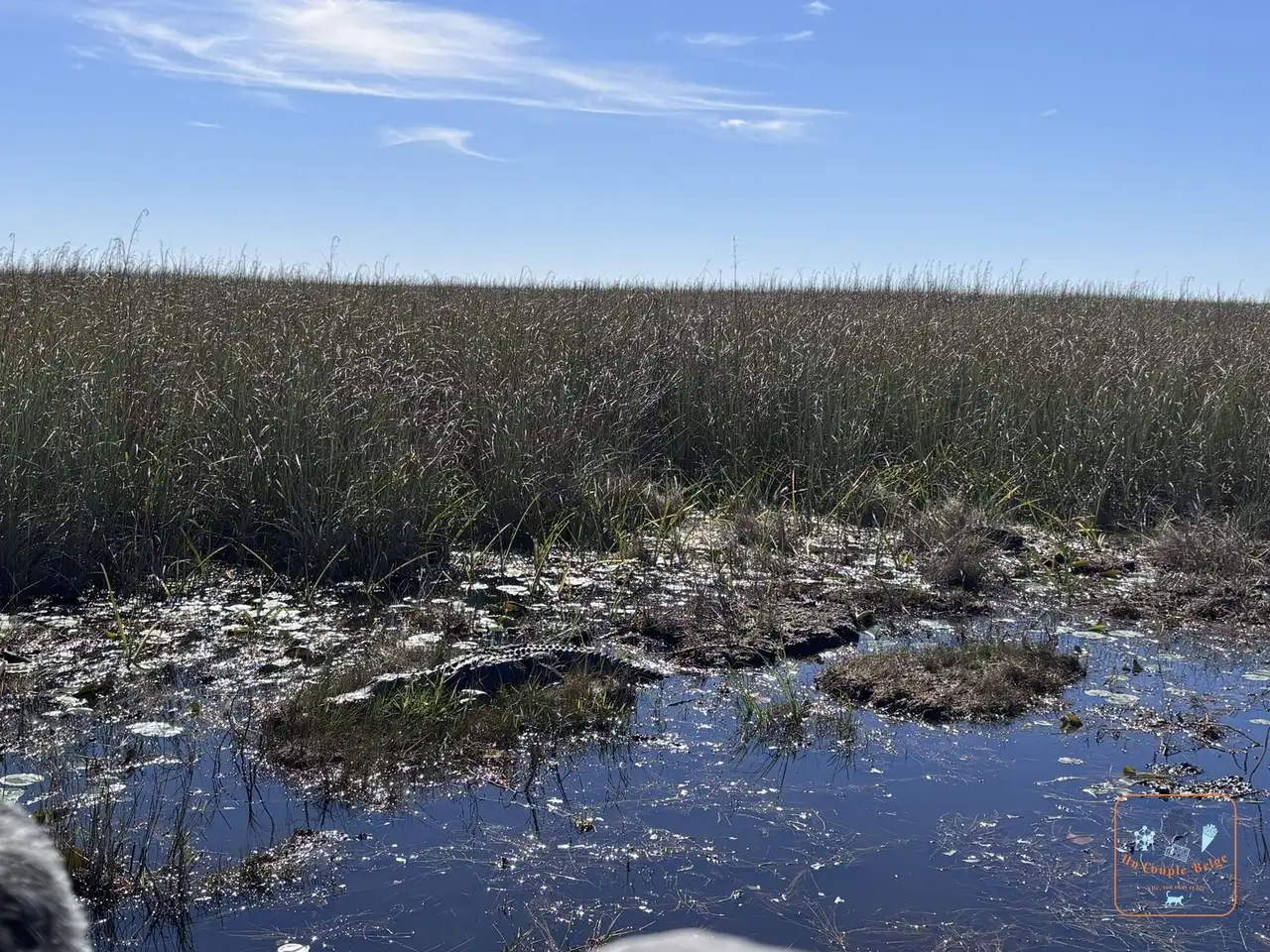
First activity: a tour by airboat, the flat-bottomed boats driven by a large propeller at the back, which skim over the shallow water and across the grass. It’s noisy and fast, but it’s the best way to get deep into the tall grass, where no road goes. And we didn’t have to wait long to see our first alligators, motionless in the sun among the water lilies.
We went out with Everglades Airboat Expeditions, a small outfit whose departure point doesn’t look like much. We had chosen it after a fair amount of research: it’s far more attentive to preserving the environment and to the animals’ welfare than the big companies. Here, they don’t feed the alligators to bring them in close, they don’t stay too long around the same animals, and the boats are smaller. It’s more intimate, far from conveyor-belt tourism. We paid $120 for two for a one-hour tour.
Be careful: do your research before booking. Some companies are unscrupulous and mistreat the animals, for example by tying their snouts shut so that visitors can have their photo taken with them. We’re against that kind of practice. We like coming to see animals in their natural environment, but without disturbing them.
Good to know: airboats are largely banned in the national park itself. The tours therefore mostly take place in private or state-managed areas, along the Tamiami Trail.
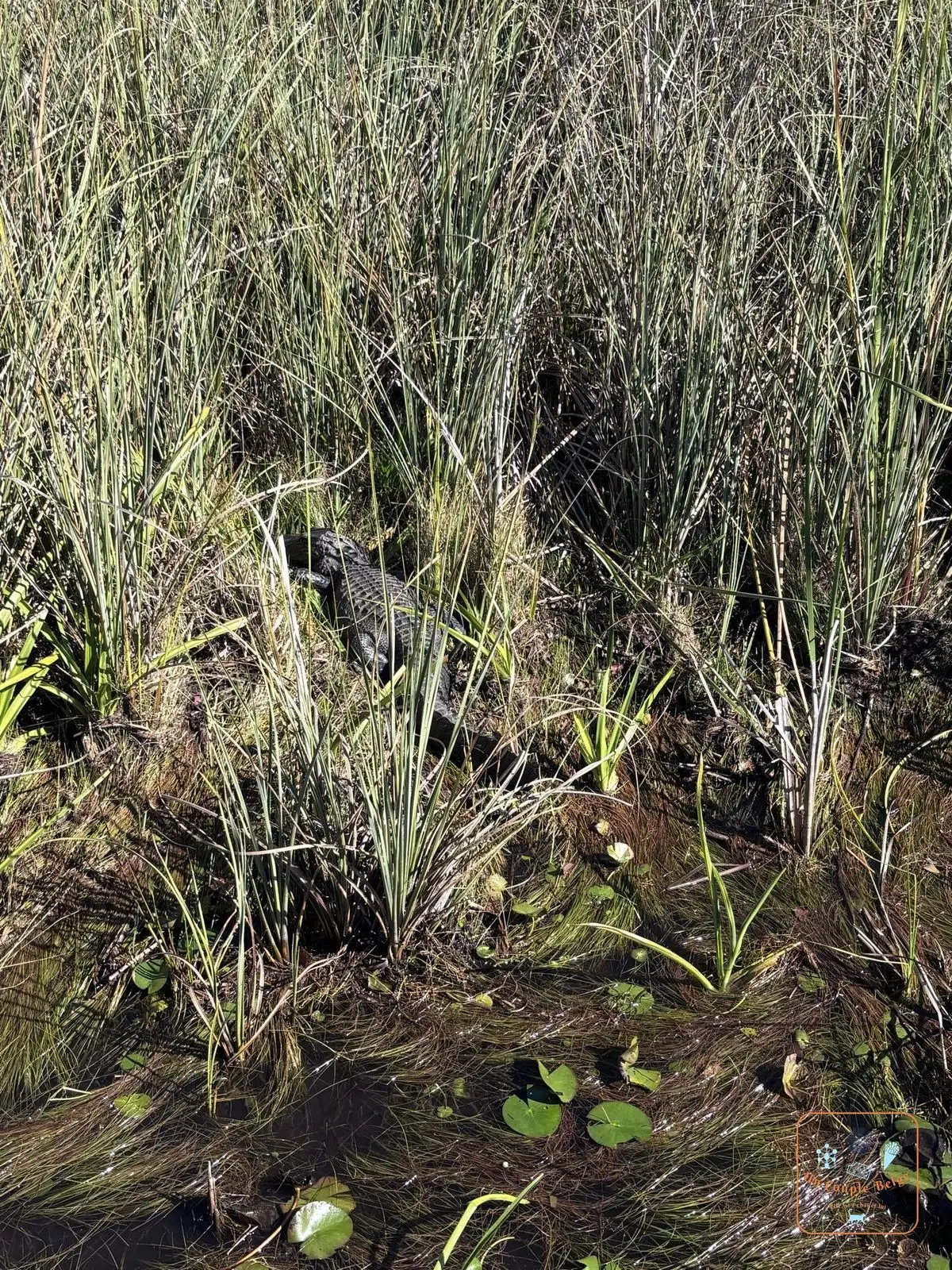
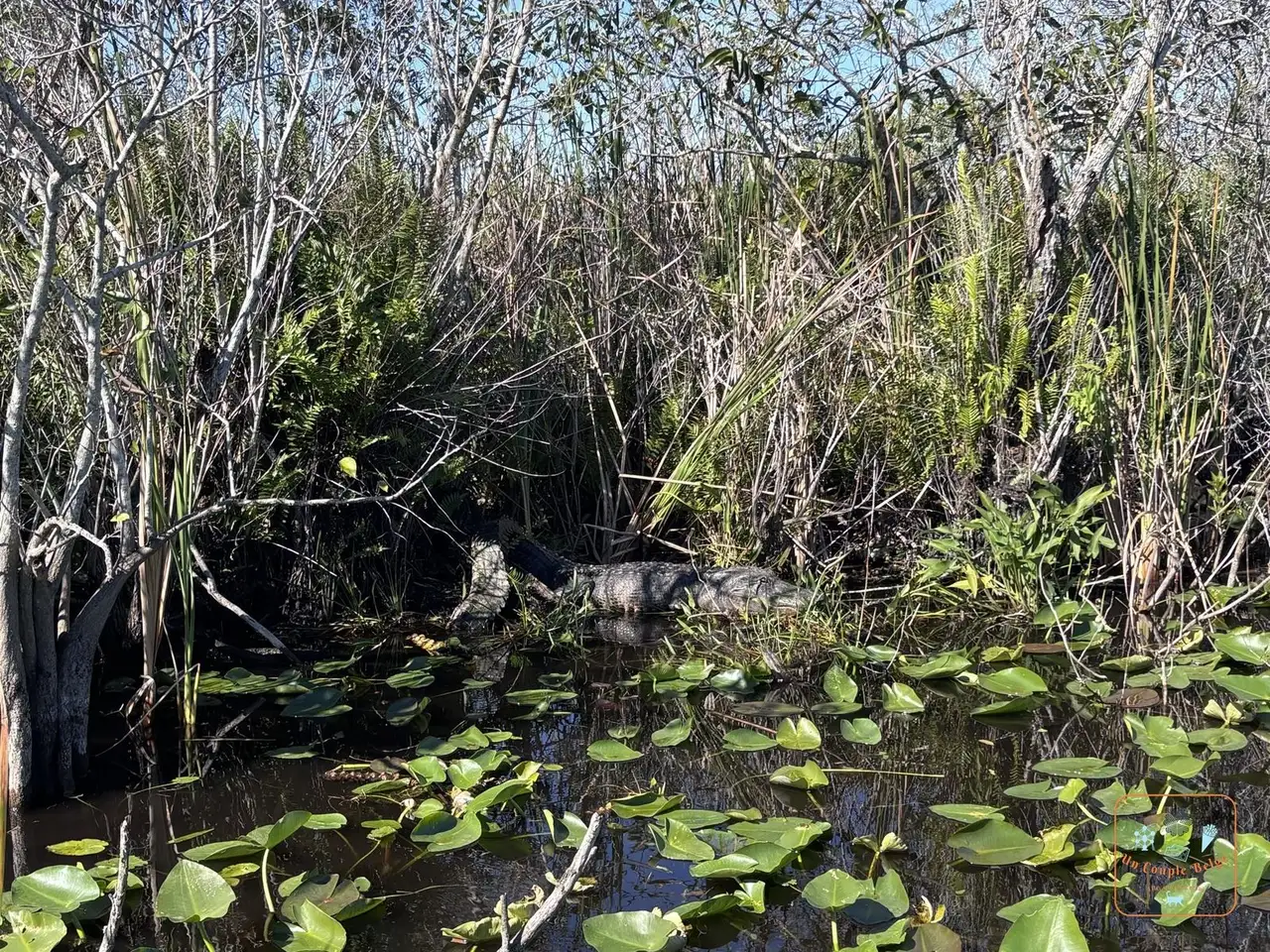
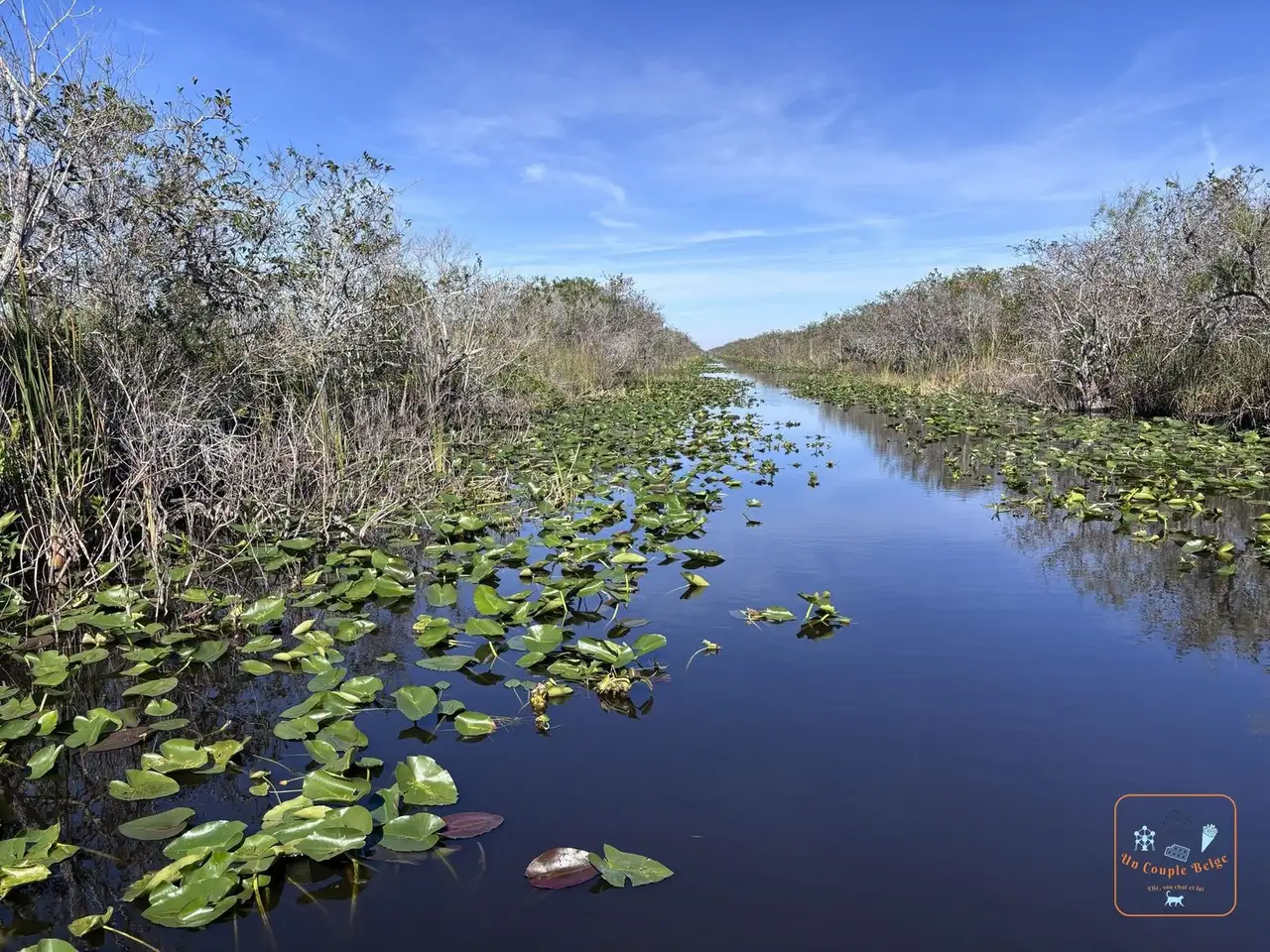
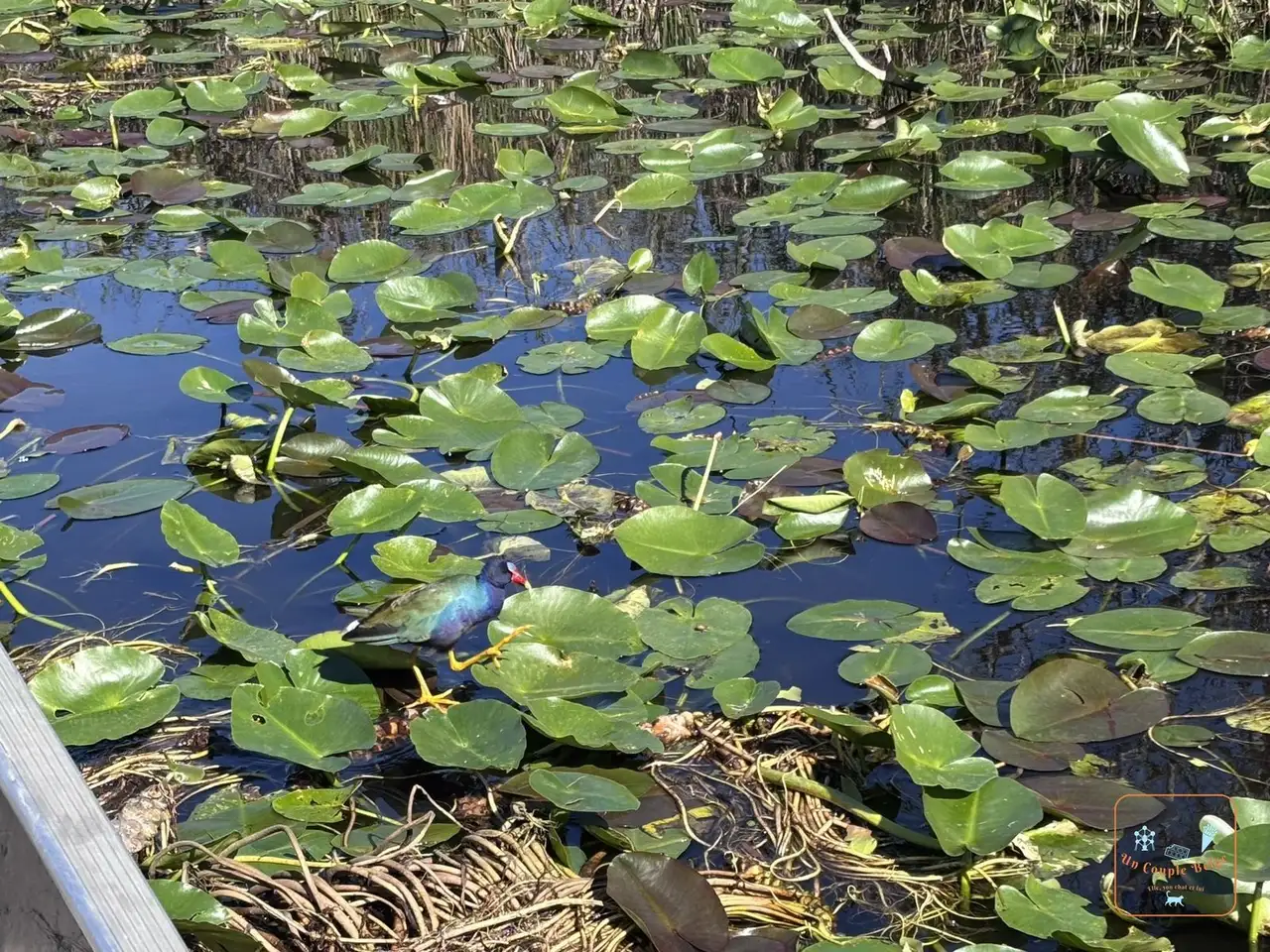
All around, the canals are covered in water lilies, and we were able to see a purple gallinule, a bird with blue and purple feathers that walks on the leaves thanks to its very long toes.
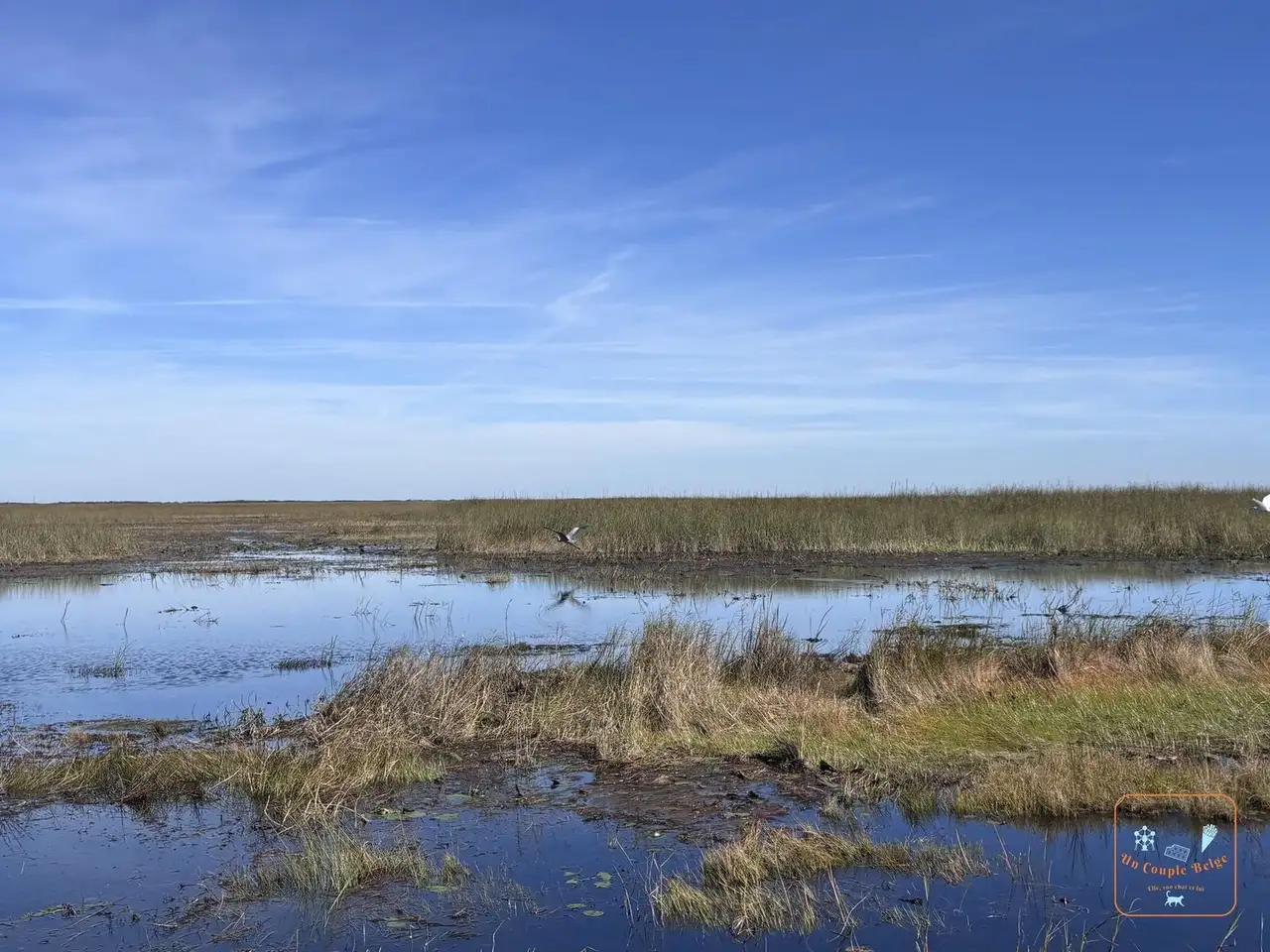
Shark Valley, among the alligators
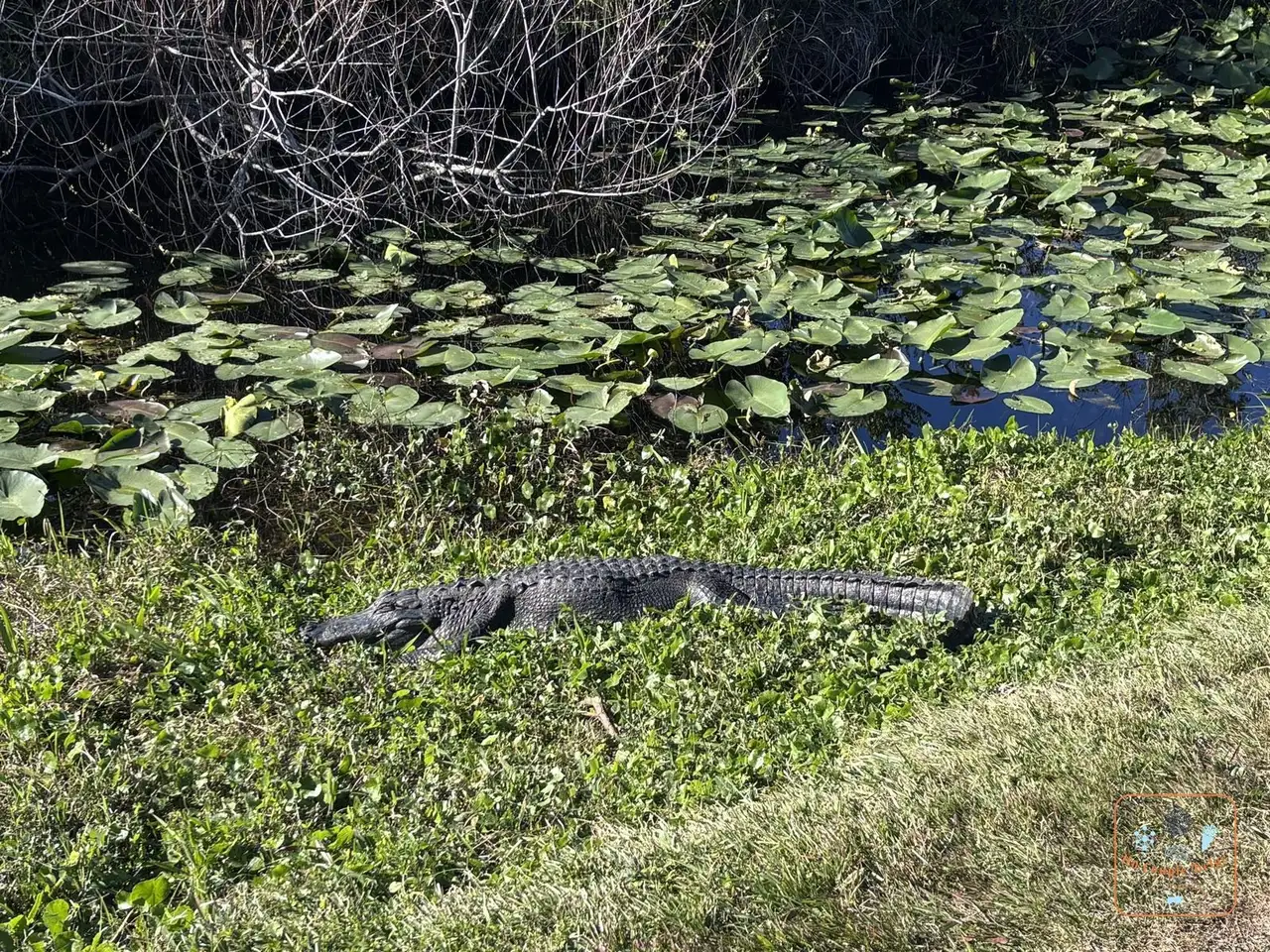
In the afternoon, we entered the national park at Shark Valley, one of the entrances along the Tamiami Trail. Here, a 24 km paved road makes a loop through the middle of the Everglades. It’s closed to cars: you travel it on foot, by bike (rental on site) or on a tram with a guide.
We rented bikes. Good to know: bikes can only be reserved for the morning, and the rate covers the whole day. In the afternoon, there are no reservations: you queue and wait for the morning’s visitors to bring theirs back.
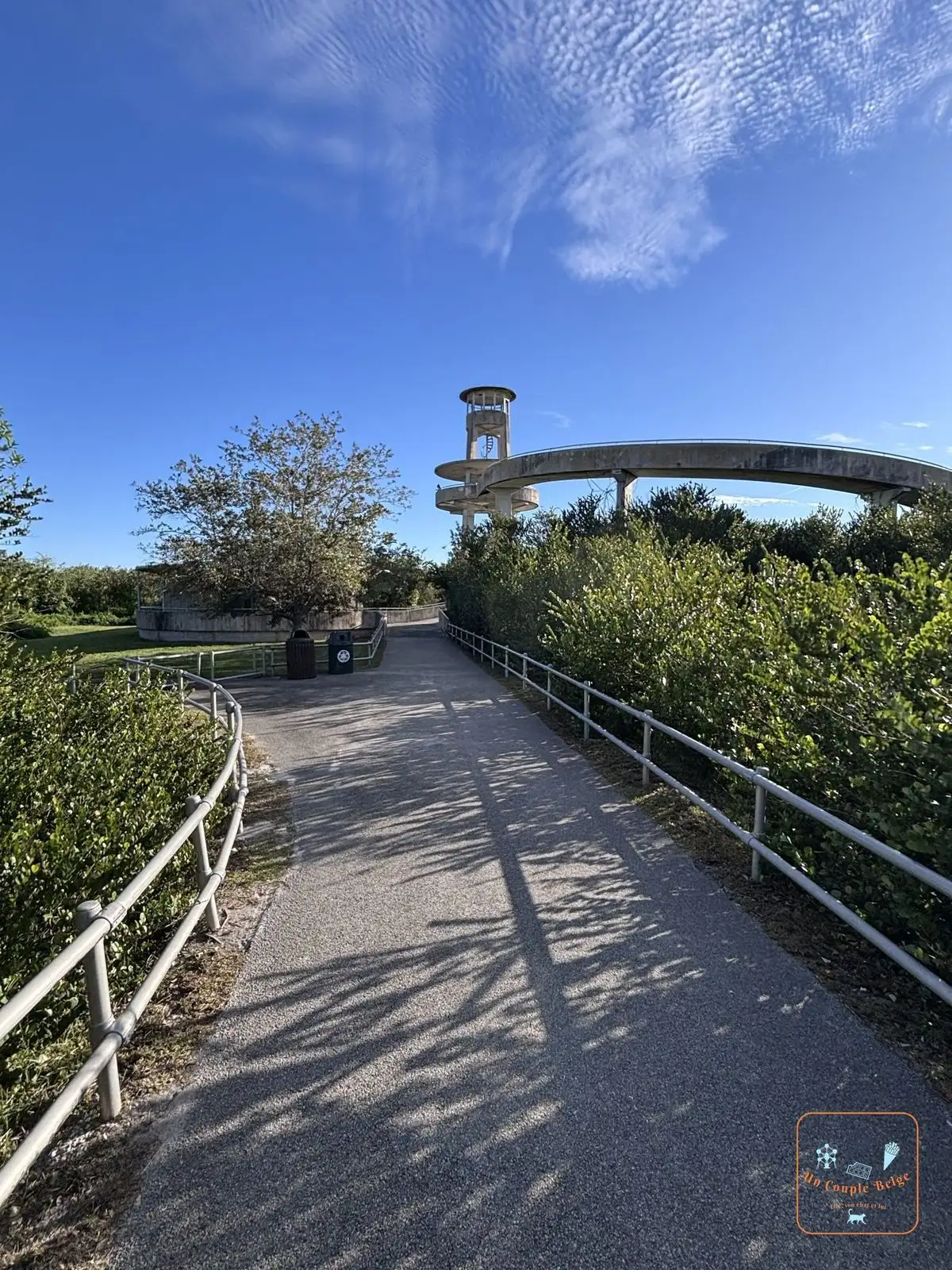
As we were a little short of time, we didn’t do the full loop. We took the long straight stretch to the observation tower, then came back the same way. That’s the side that runs along the canal, and it’s there, near the water, that you see the most animals.
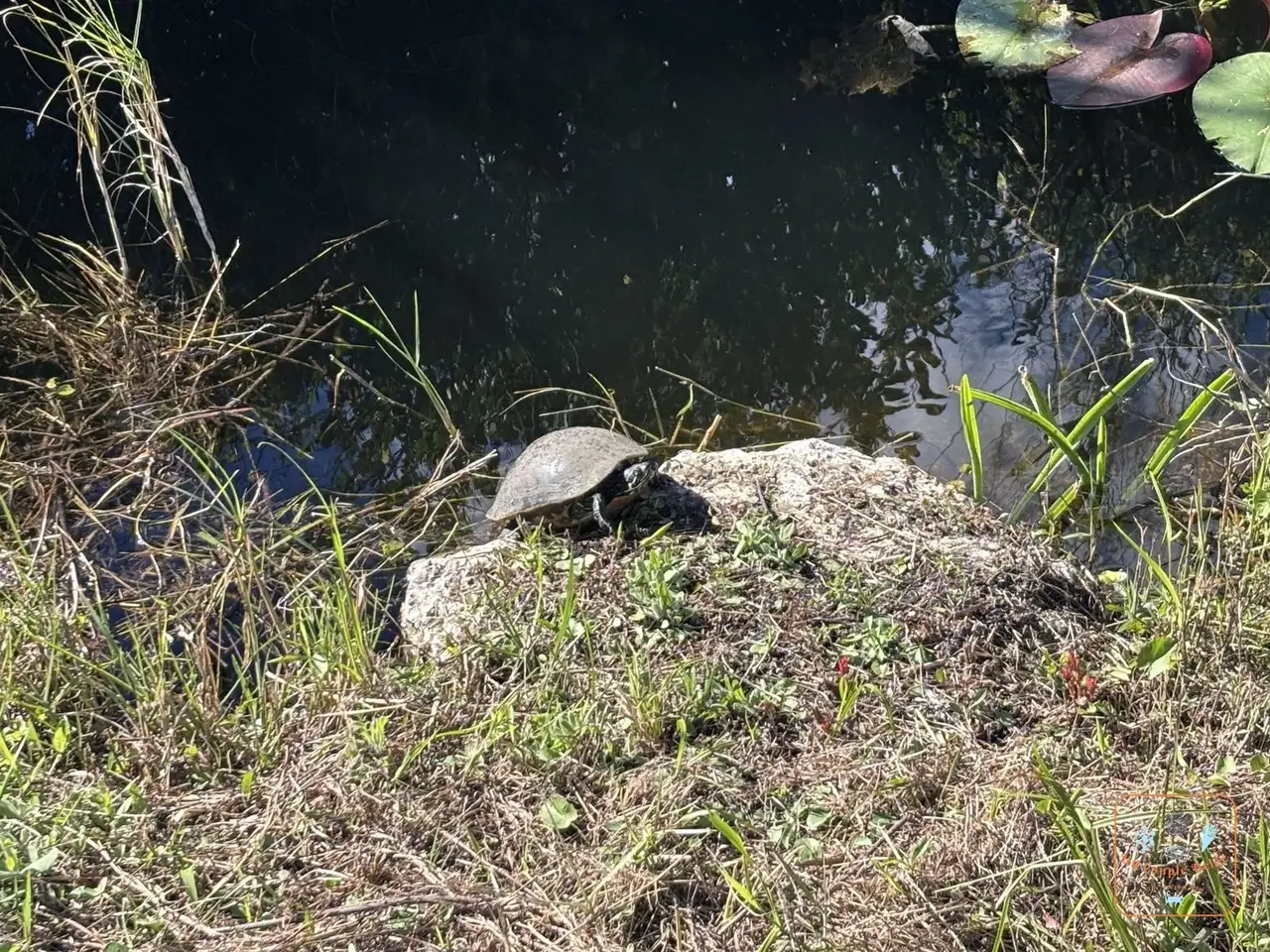
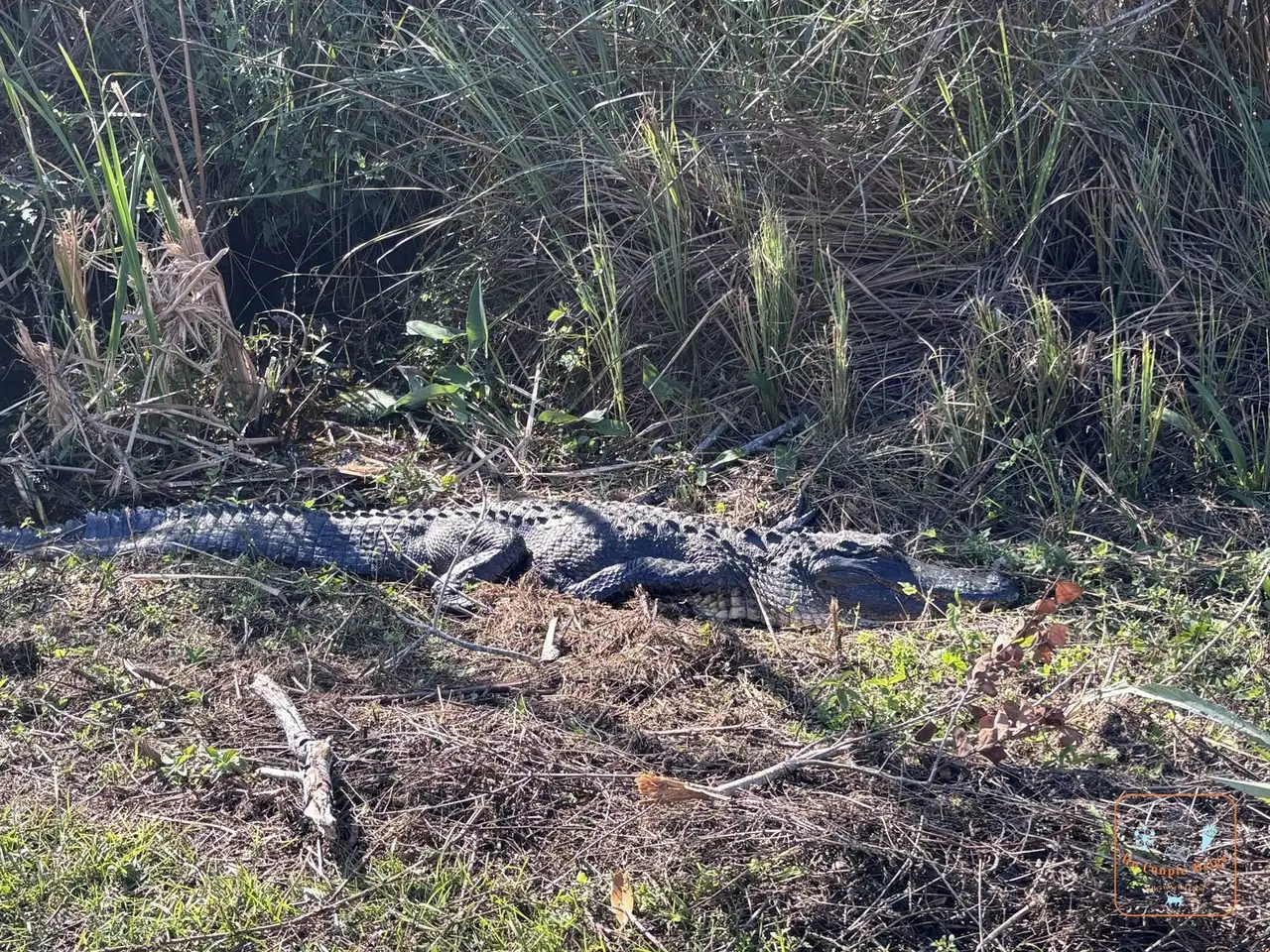
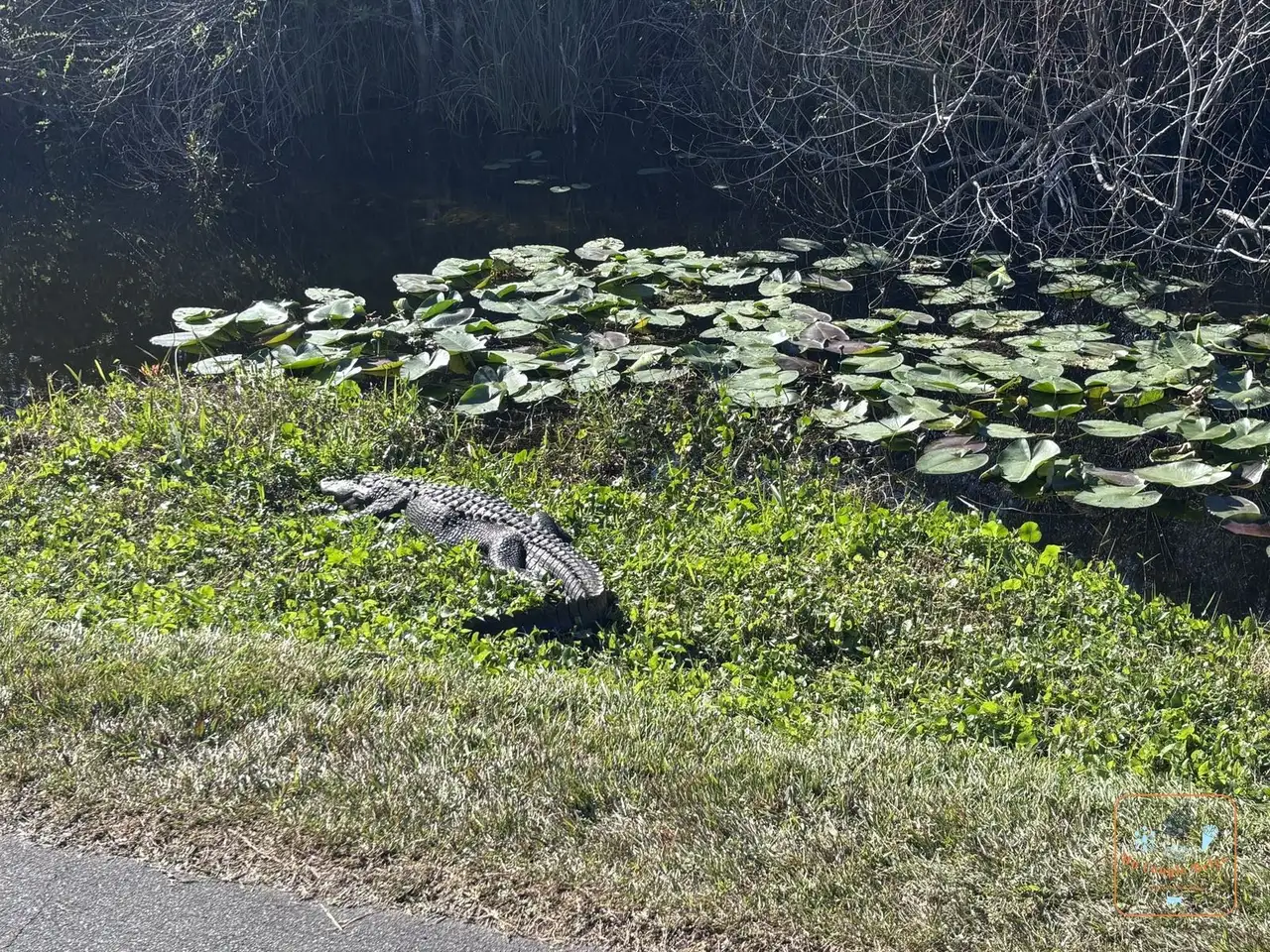
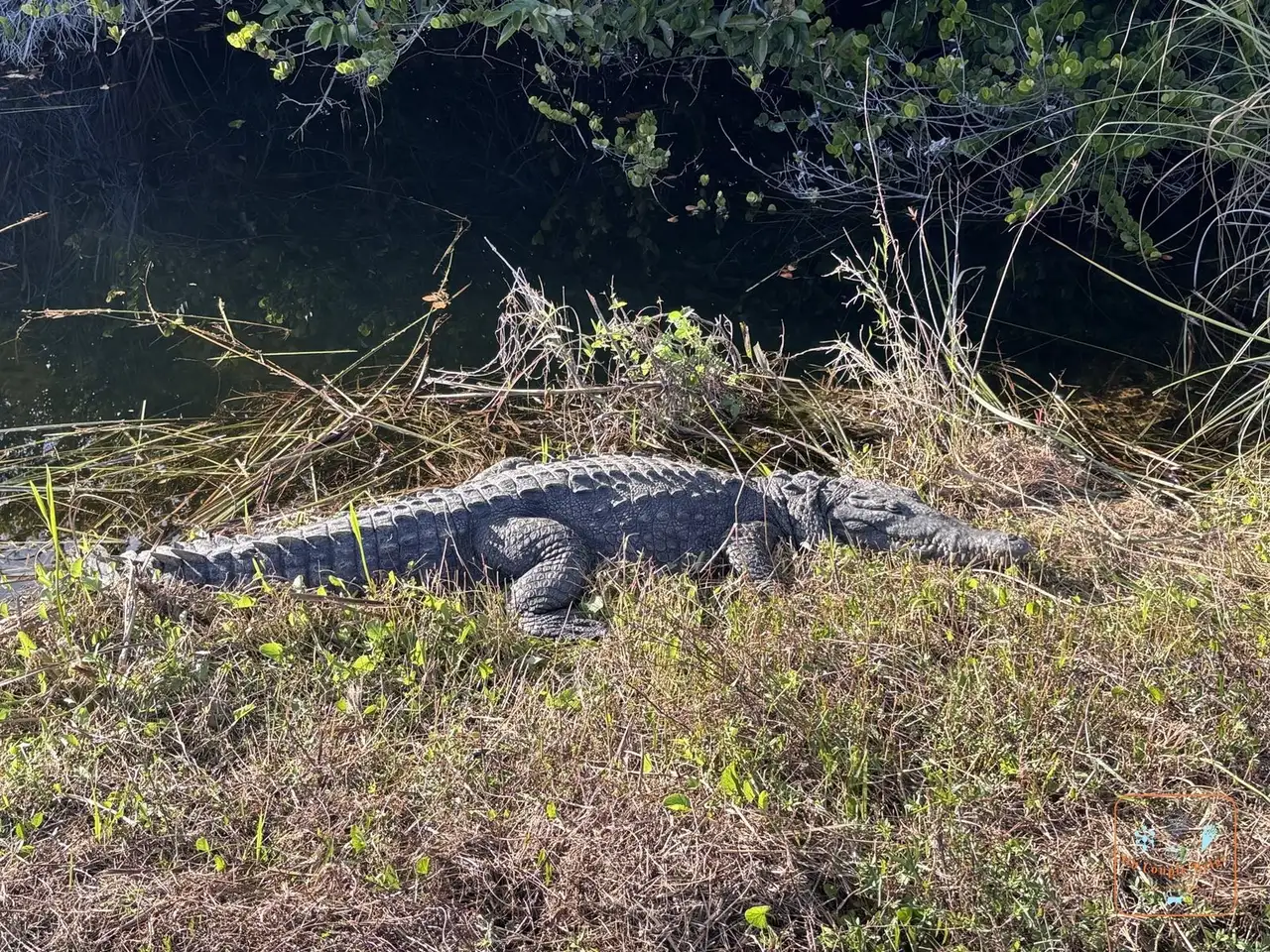
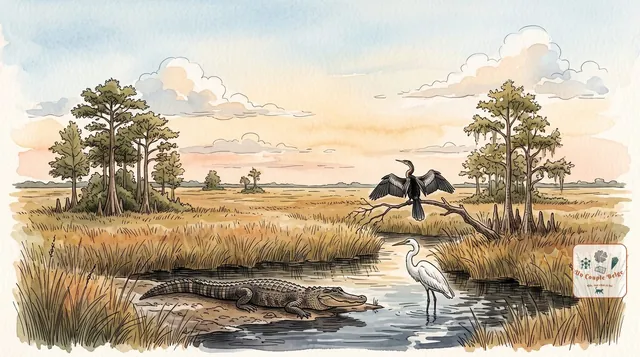
And there, it was incredible: alligators everywhere, lying in the sun on the banks, only a few metres from the path. In winter, when it’s cooler, they come out of the water to warm up and stay motionless for hours. We also came across a turtle on a rock and a lot of birds.
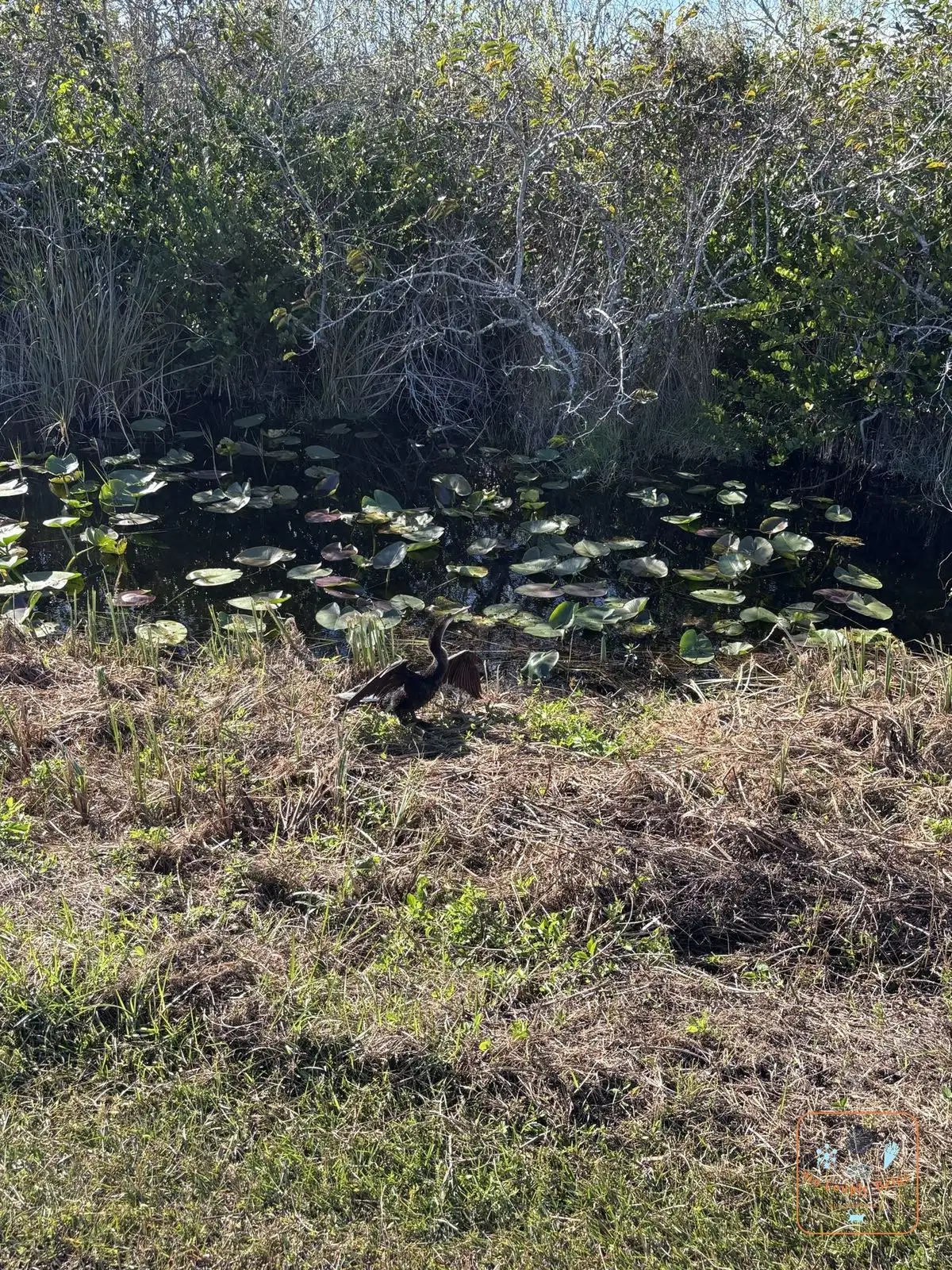
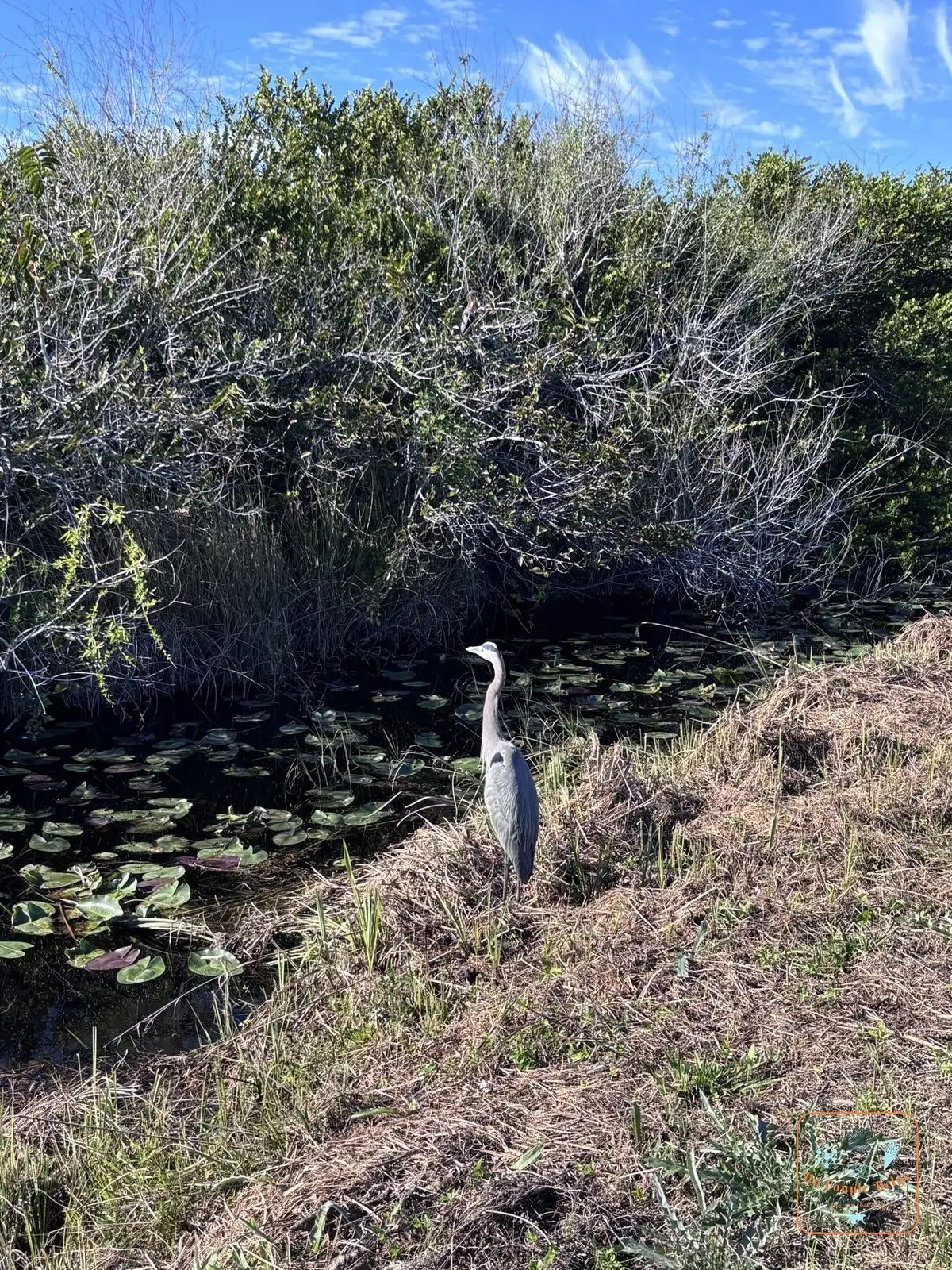
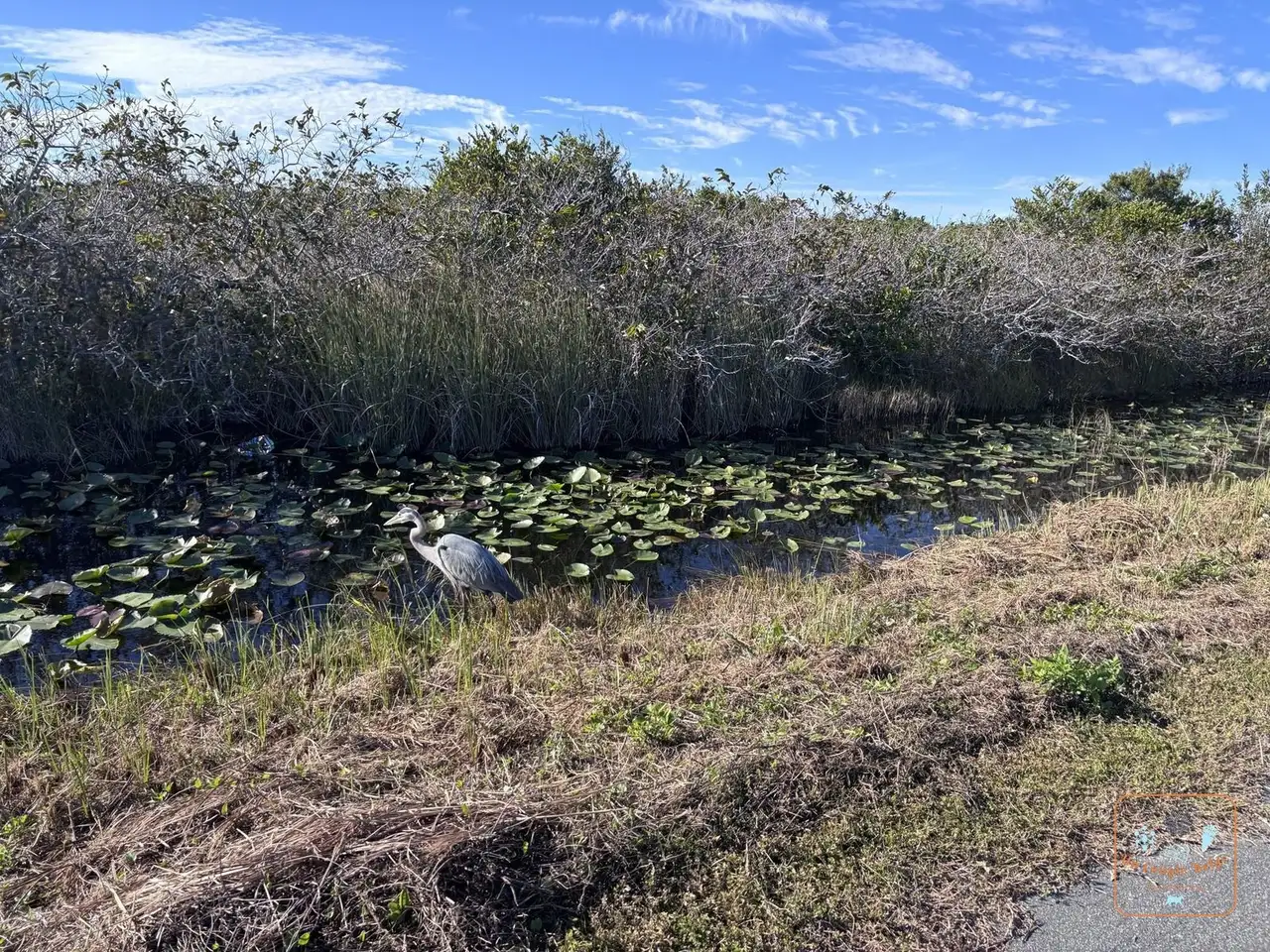
Among them were great blue herons, motionless at the water’s edge watching for fish, and other water birds such as the anhinga, which dries its wings in the sun after diving.
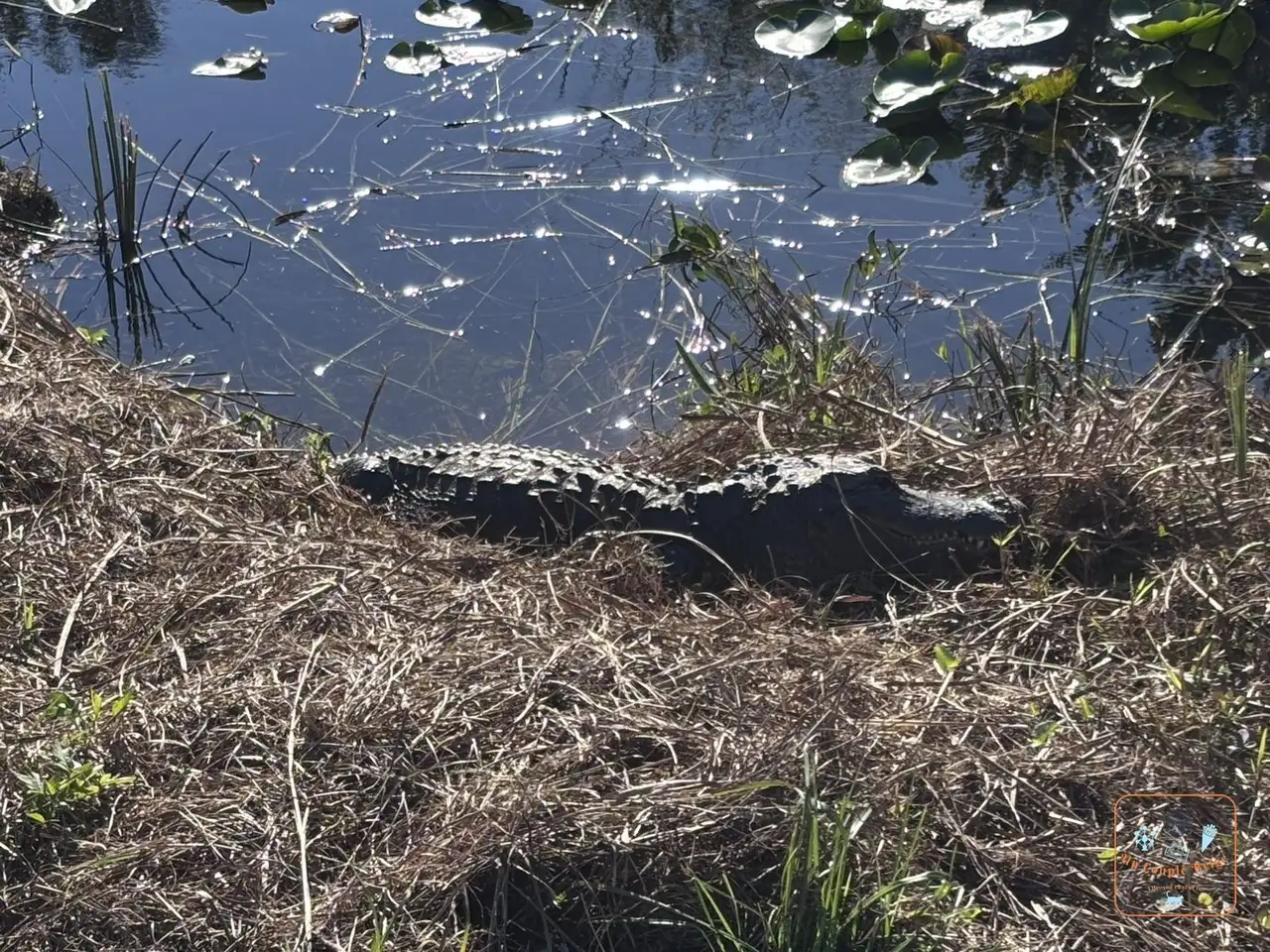
A quick safety reminder: even if they look asleep, alligators are still wild animals. The park asks you to keep a distance of about five metres, never to feed them and not to go near the water’s edge.
The Shark Valley observation tower
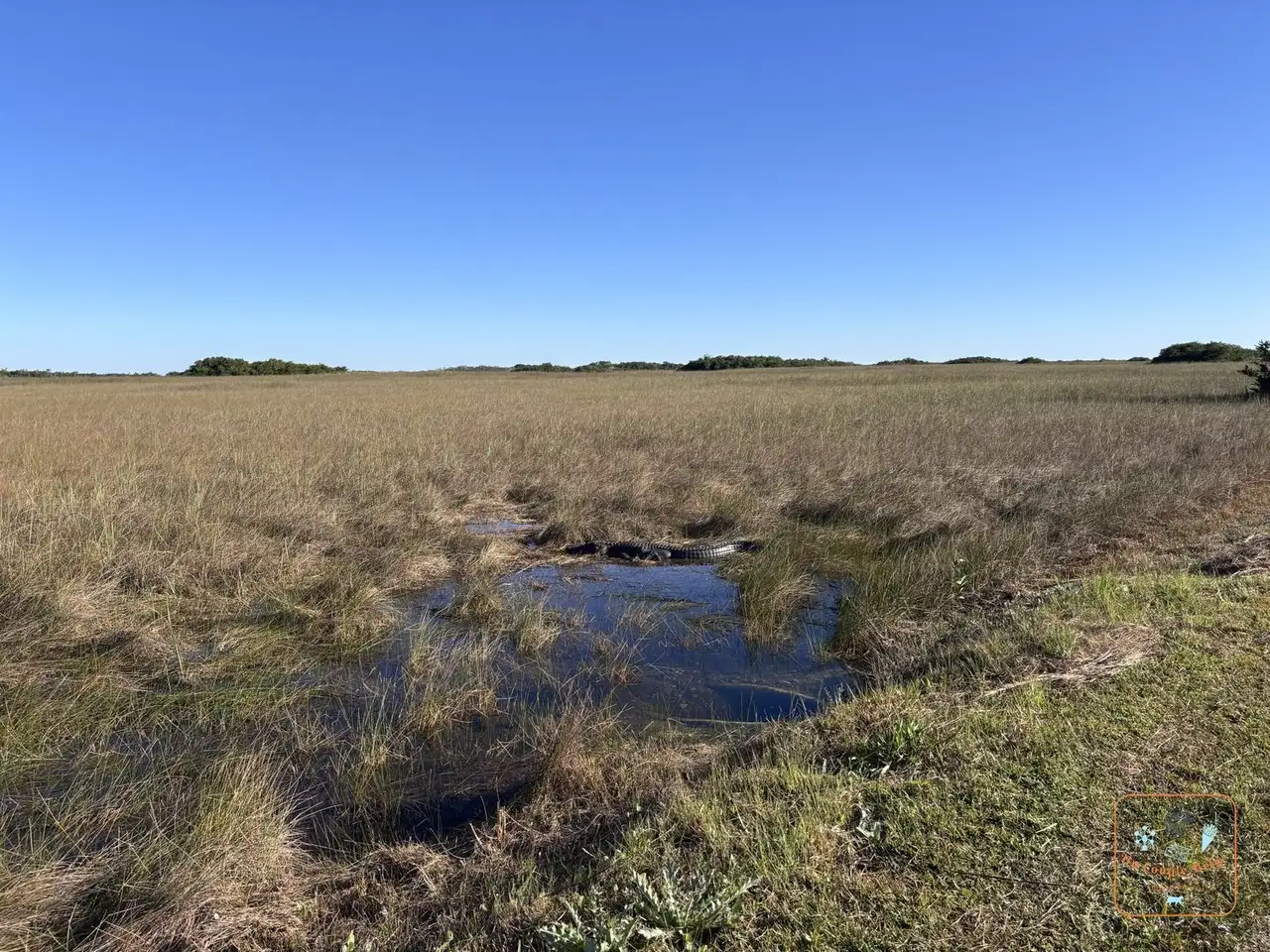
At the end of the straight stretch, halfway round the loop, you reach the observation tower, a tall concrete tower with a spiral ramp. We went up: from the top, you have a 360-degree view over the Everglades, and you realise the immensity of this plain of grass where the water can hardly be seen. Down below, we even spotted turtles swimming.
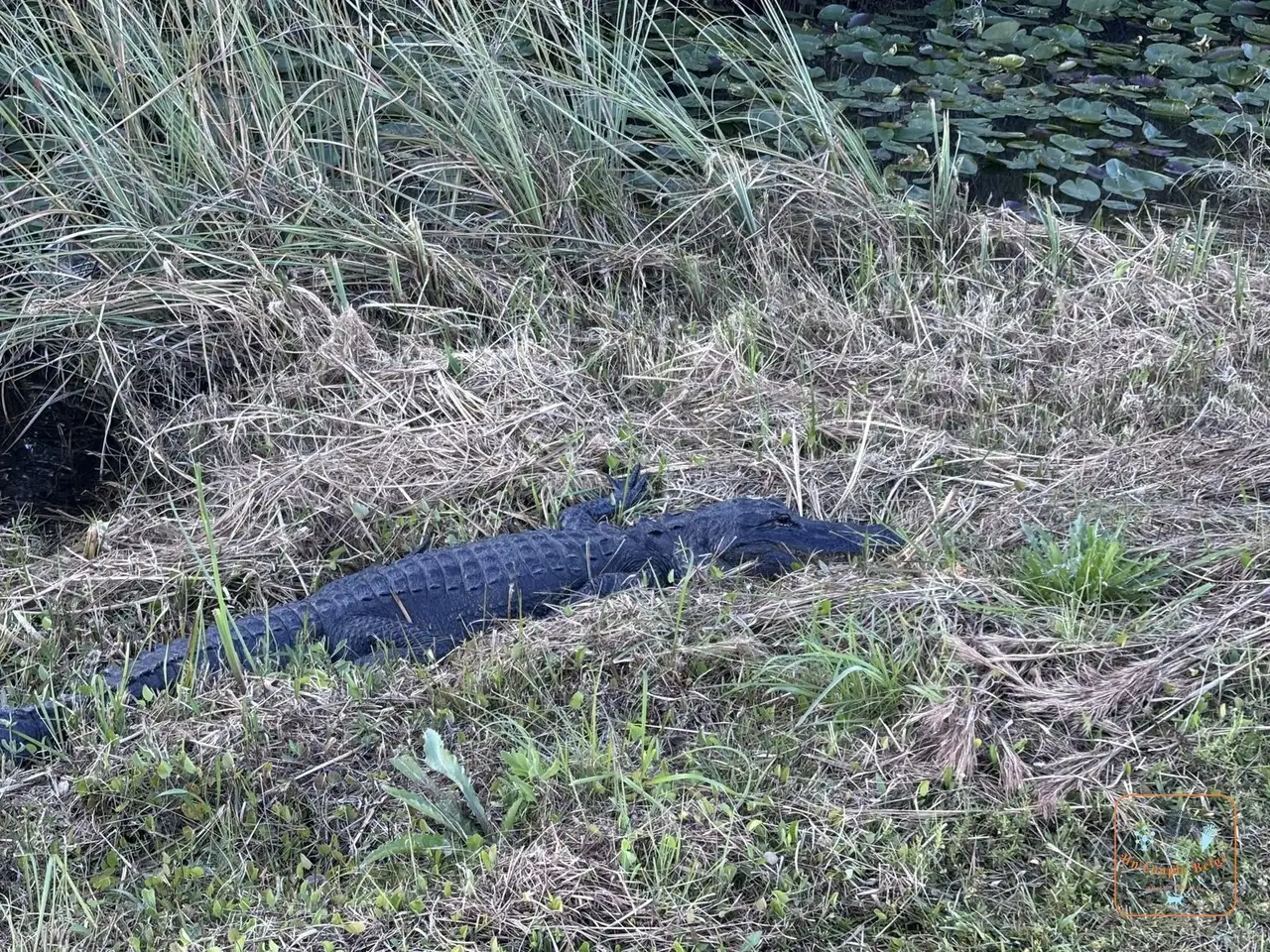
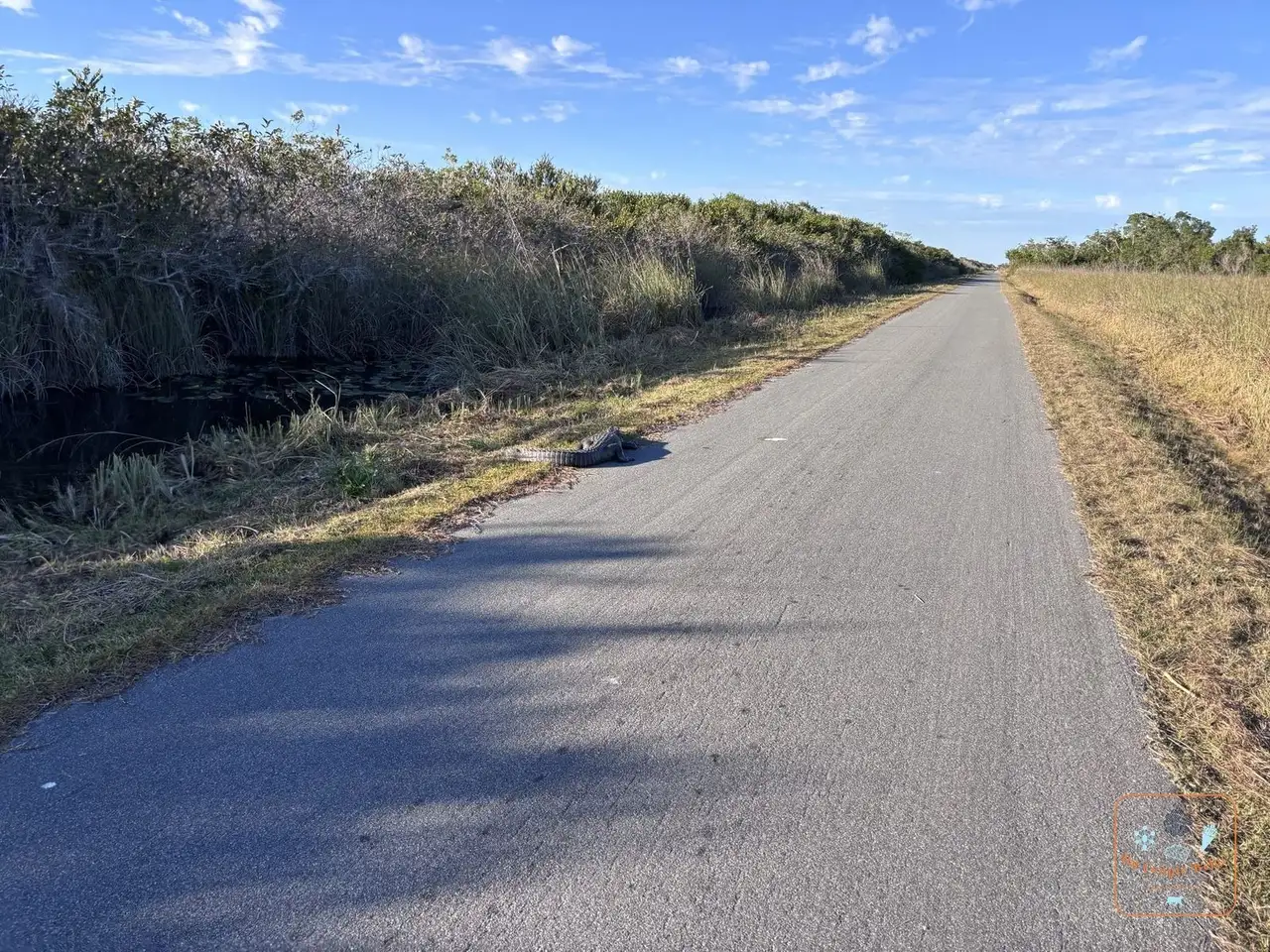
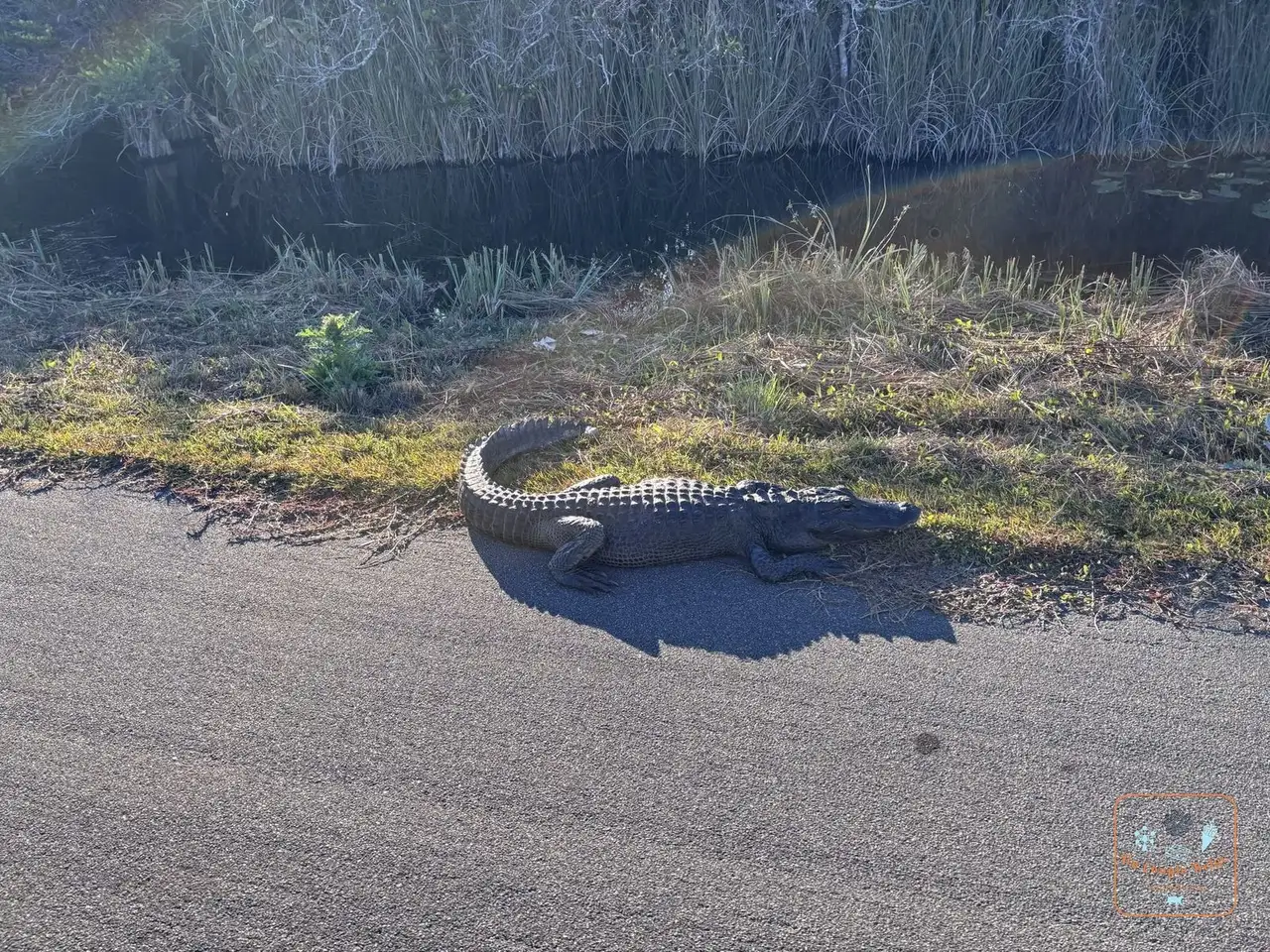
On the way back, in the late afternoon, an alligator had even settled at the side of the road to enjoy the warmth of the tarmac. The first time you have to pass an alligator, you don’t feel very confident. But you soon see that they take no notice of us: as long as you don’t disturb them and keep your distance, they get on with their lives. Don’t get too close all the same: an alligator that feels threatened can react.
A night in Florida City
We ended the day in Florida City, the last town before the Keys, so as to be ready to take the road to the islands the next day. Just an overnight stop at the Tru by Hilton, for $180 with breakfast, and it was good. The next part is on day 13 (coming out on November 26, 2026).

Sponsored by UnCoupleBelge
Follow us on Instagram
Box sponsored by a partner
Where to stay near Florida City
* Stay22 affiliate links: if you book through here, we earn a small commission at no extra cost to you. Thanks for your support!
Comments