Everglades: the "river of grass" where alligators and crocodiles live side by side
Updated on
How long should you spend there?
At a glance
- Entrance fee
- $35 per vehicle for 7 days, plus $100 per person for non-residents aged 16 and over, unless you hold the annual pass.
- Best time to go
- December to April, during the dry season: more wildlife to see and few mosquitoes. Summer is very humid, with thunderstorms almost every day.
- Book ahead
- Bikes at Shark Valley can only be reserved for the morning. The guided tram tour can be booked too.
- Getting around
- Three entrances that don't connect with each other: Shark Valley, Ernest F. Coe and Everglades City. A car is essential.
| Walks and hikes | Distance | Time | Level |
|---|---|---|---|
| Shark Valley loop, on foot, by bike or by tram | 24 km (loop) | half a day by bike | easy |
| Bobcat Boardwalk, at Shark Valley | 300 m | 10 min | easy |
| Otter Cave Trail, at Shark Valley | 500 m | 15 min | easy |
| Anhinga Trail, at Royal Palm | 1.3 km (round trip) | about 30 min | easy |
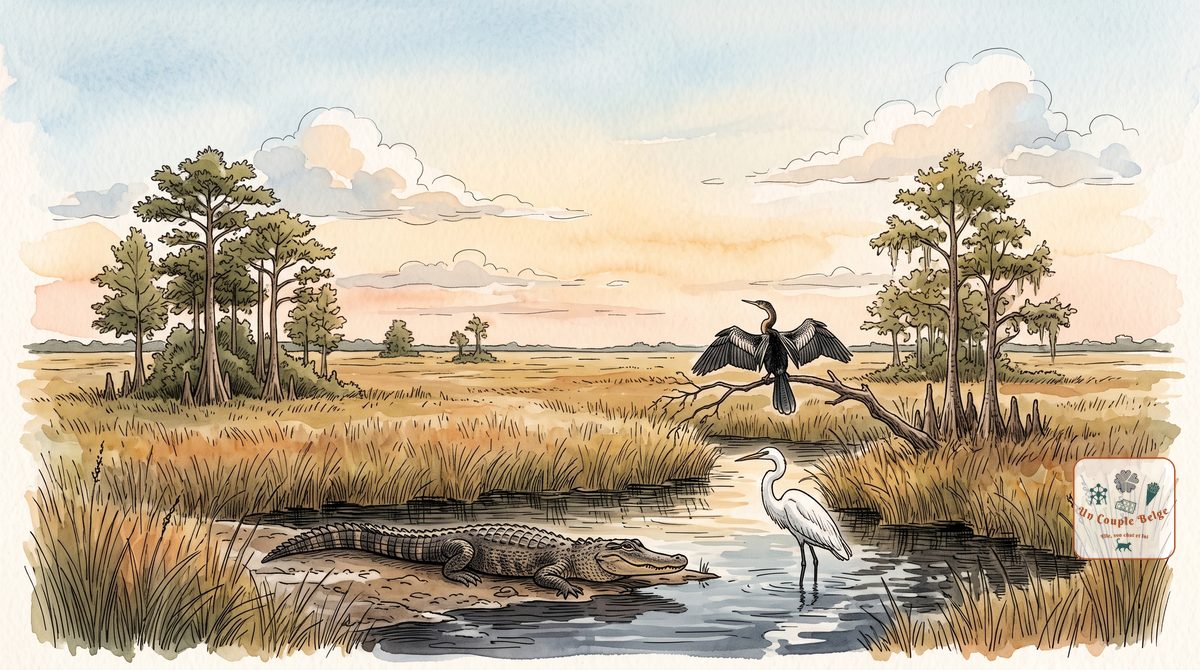
The Everglades are neither a swamp nor a river in the usual sense. They are a vast plain of tall grass, lying under a few dozen centimetres of water that slides very slowly southwards. Hence their nickname, the “river of grass”. People come mainly for the wildlife: alligators by the dozen, turtles and birds everywhere.
History and origins
For a long time the Everglades were seen as a worthless swamp, fit only to be drained and farmed. In the 20th century, drainage canals nearly wiped them out.
Two people changed things. Ernest F. Coe campaigned from 1928 for the creation of a national park, and the main entrance now bears his name. In 1947 the journalist Marjory Stoneman Douglas published The Everglades: River of Grass. Her book made people understand that this was not a dead swamp but a living river. On 6 December of that same year, President Harry Truman dedicated the national park.
The park protects about 610,000 hectares, but the original Everglades were far larger: they ran from Lake Okeechobee to Florida Bay. Protecting them is still a struggle, between the urban growth of South Florida and agricultural pollution. Major works have been under way since the 2000s to restore the flow of water.
What to do there
- Shark Valley
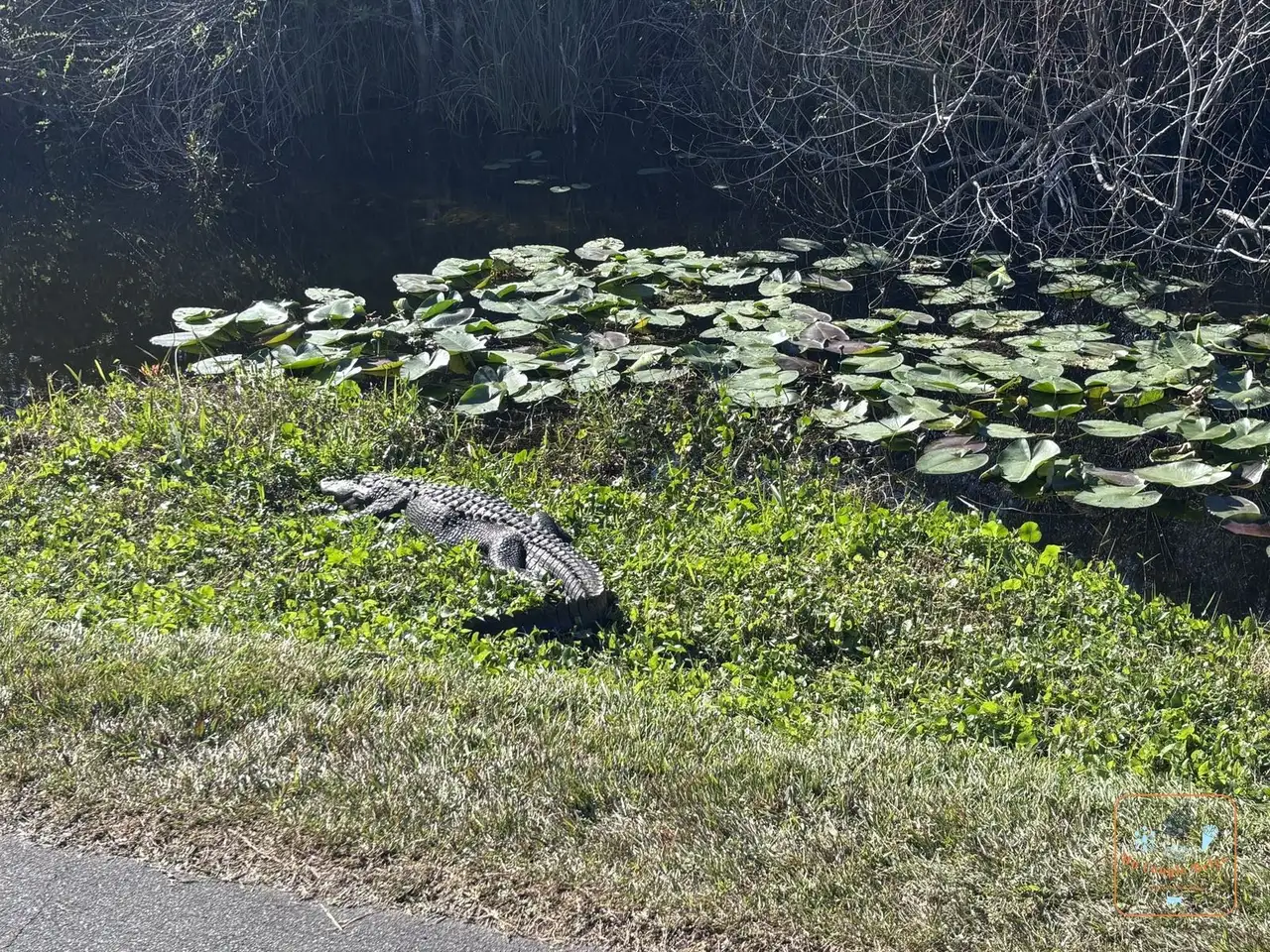 An alligator beside the path at Shark Valley: the northern entrance, on the Tamiami Trail, an hour from Miami. A 24 km paved loop, closed to cars, can be done on foot, by bike ($27 a day) or on a tram with a guide ($34 per adult). It’s the easiest place to see alligators up close. Halfway round, an observation tower
 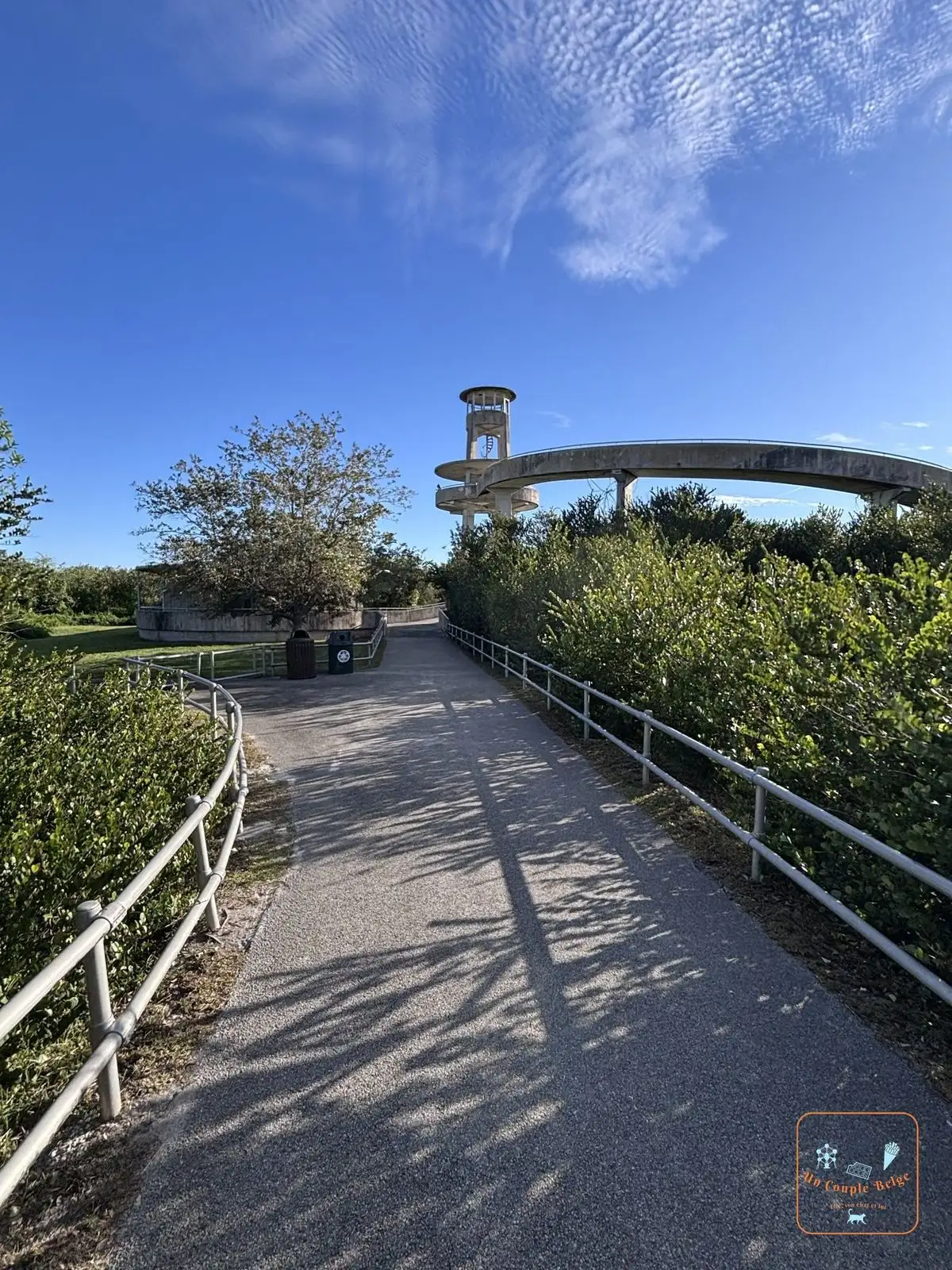 The Shark Valley observation tower and its spiral ramp gives a 360° view over the plain.
 - Ernest F. Coe and the Anhinga Trail: the main entrance, near Homestead. The Anhinga Trail, a very short path on boardwalks, is known for its alligators, turtles and birds. From there, a 61 km road leads to Flamingo, on Florida Bay.
- Everglades City and the Ten Thousand Islands: the western entrance, on the Gulf of Mexico side. You explore a maze of mangroves by boat or kayak, starting from the new Marjory Stoneman Douglas Visitor Center, opened in 2026.
- An airboat ride
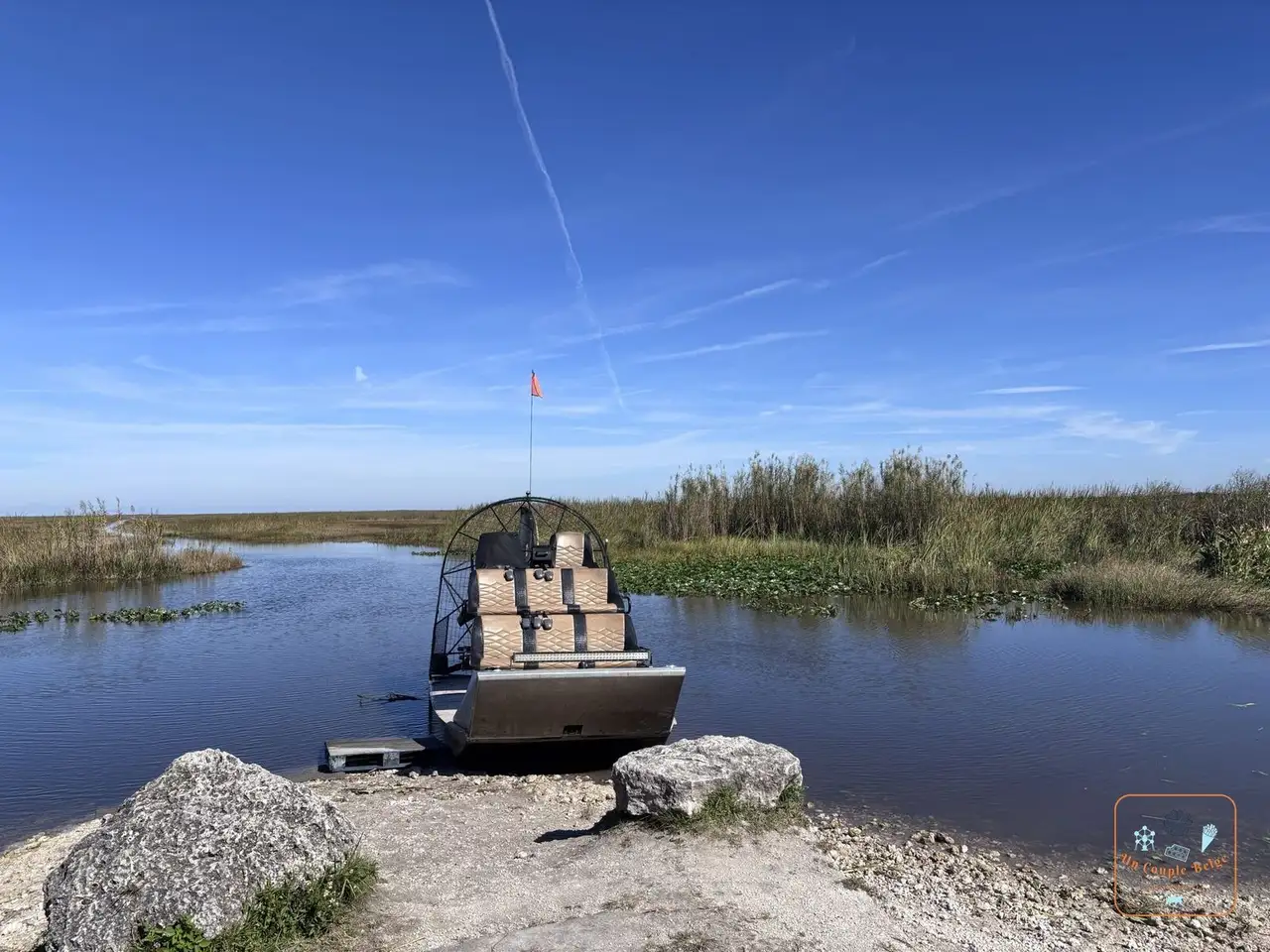 An airboat moored in the Everglades: these flat-bottomed boats pushed by a big propeller are banned almost everywhere in the park. The tours therefore leave from private sites along the Tamiami Trail.
 - The birds
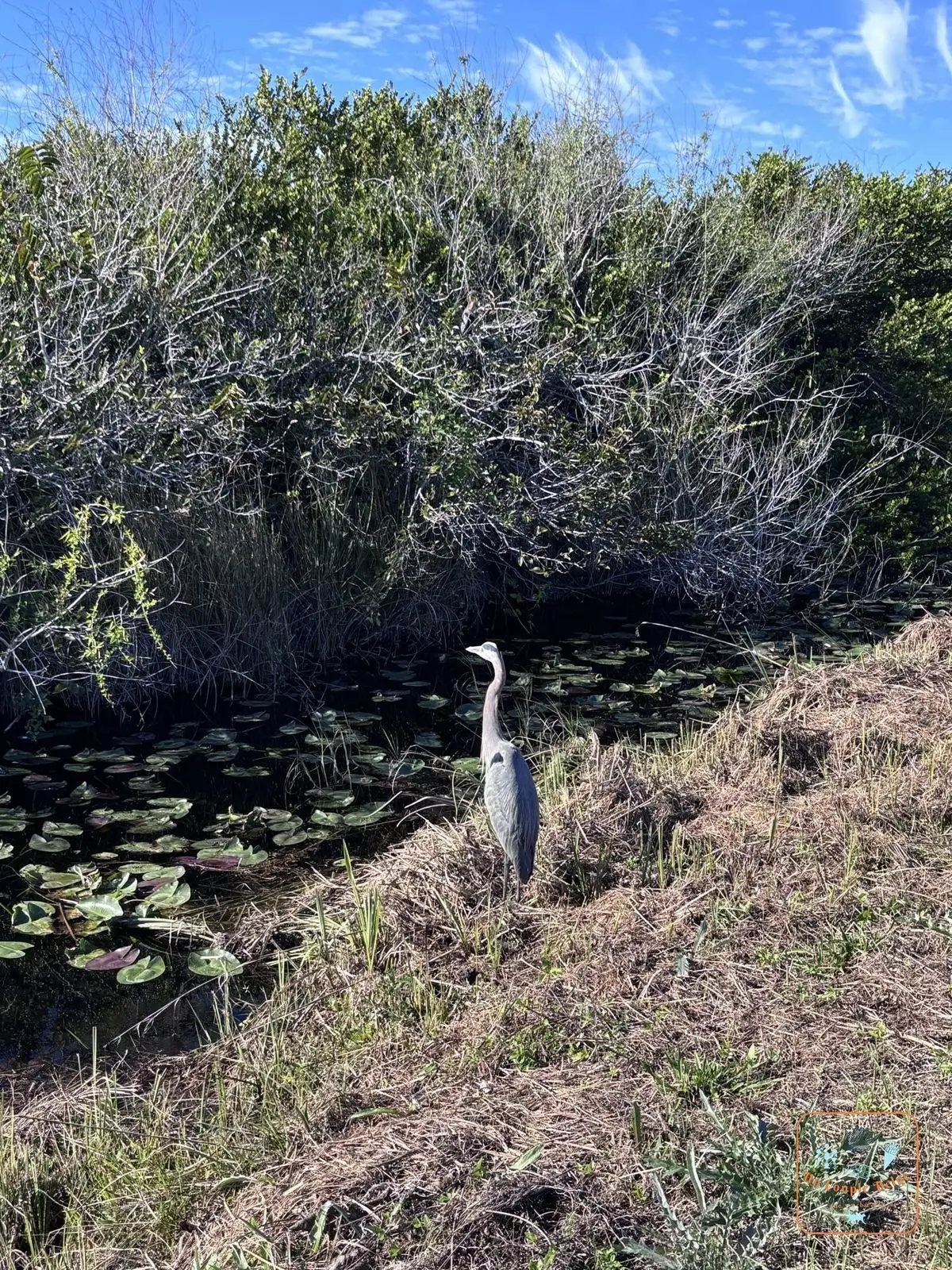 A great blue heron at the water's edge at Shark Valley: more than 360 species. You’ll easily see herons, egrets, ibises and anhingas, which dry their wings in the sun.
 - Big Cypress
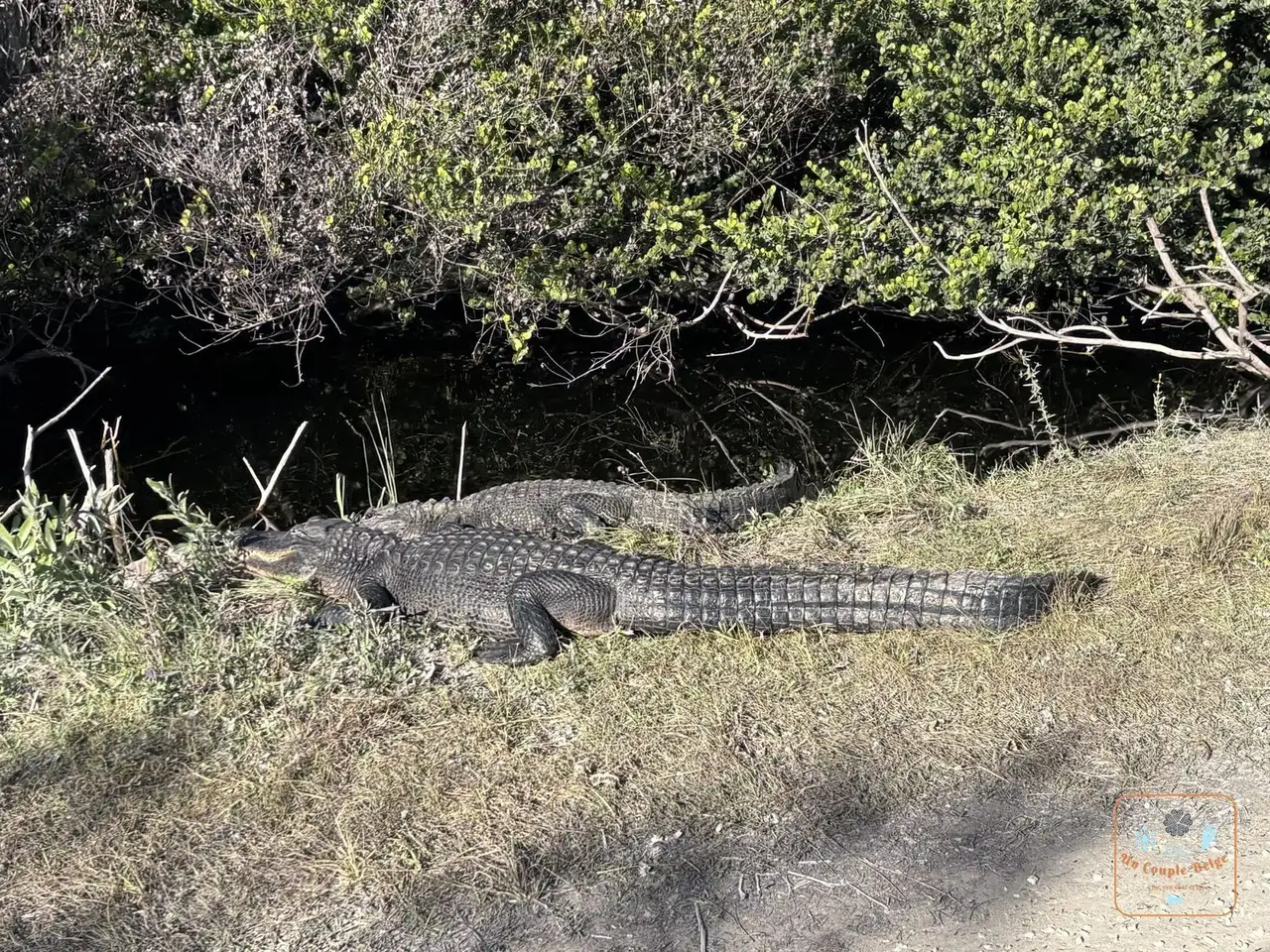 Two alligators in the sun beside a canal in Big Cypress: the neighbouring preserve, west of Shark Valley, is free. Stop at the Oasis Visitor Center, then take the Loop Road, a track that plunges into a cypress forest
 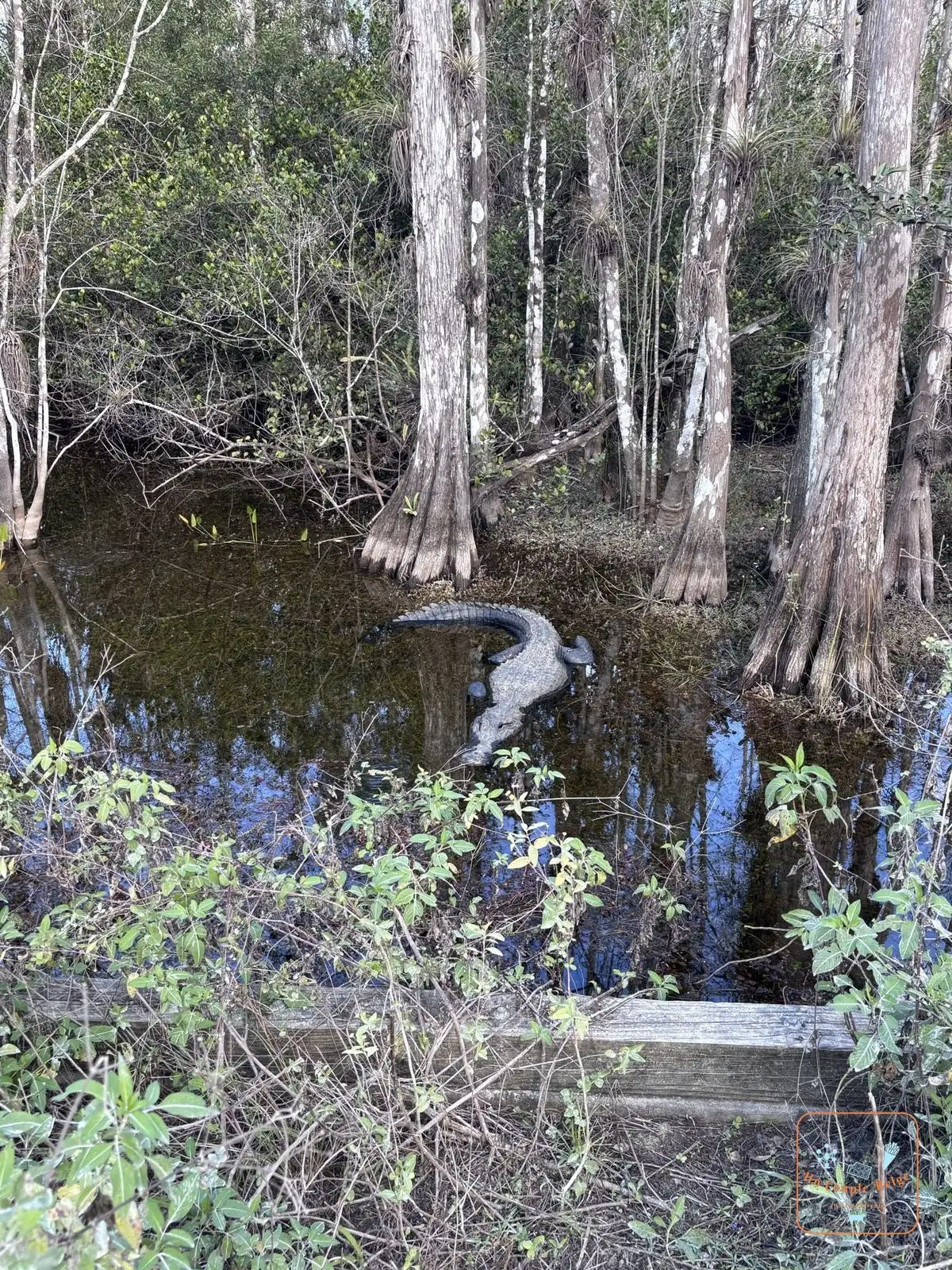 An alligator among the cypress trunks, along the Loop Road.
Stories and good to know
- The water moves so slowly that it looks still: about thirty metres a day in winter, up to a kilometre and a half a day in summer.
- It is the only place in the world where alligators and crocodiles live side by side, because fresh water meets salt water here. Alligators are everywhere in fresh water. The crocodiles, about 2,000 in South Florida, stay near the coast: they are often seen around the Flamingo marina.
- Even if they look asleep, alligators are wild animals. The park asks you to stay at least five metres away and never to feed them.
- Burmese pythons, released or escaped from captivity, have invaded the park. In the south, raccoons and opossums have almost disappeared since they arrived.
- The mosquitoes are fierce in summer. Bring repellent and long sleeves.
Practical information for your road trip
- Pass: the ticket is valid for every park entrance, and it cannot be paid for in cash. We entered at Shark Valley with our America the Beautiful pass: it’s all explained in our guide to the national parks pass.
- Getting there: Shark Valley is in the north, on the Tamiami Trail (US-41), an hour from Miami. Ernest F. Coe is in the south-east, near Homestead, also an hour away. Everglades City is in the west, about 1 hour 30 from Miami on the same Tamiami Trail. Choose according to your route.
- Bikes at Shark Valley: pick-up is between 8.30am and noon, and the price covers the whole day. In the afternoon there are no reservations: you wait for the morning visitors to bring theirs back.
- Combine it with: Shark Valley is an easy half-day from Miami, or on the way to the Keys. That’s what we did on our road trip 2 (see below).
Our experience in the Everglades
We went twice in January 2026, on the way to the Keys and then on the way back:
Our day-by-day journals are coming soon.
Quick quiz
Question 1 / 3
Where to stay near Everglades: the "river of grass" where alligators and crocodiles live side by side
Stay22 affiliate links: if you book through here, we earn a small commission at no extra cost to you. Thanks for your support!
On the ground

Sponsored by UnCoupleBelge
Follow us on Instagram
Box sponsored by a partner
Other places nearby
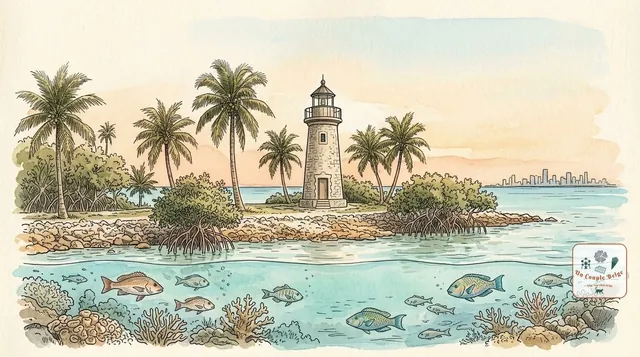
Biscayne: a national park that is 95% underwater, on Miami's doorstep
A national park almost entirely underwater, 45 minutes from Miami: a turquoise bay, mangroves, islands and the start of Florida's coral reef.
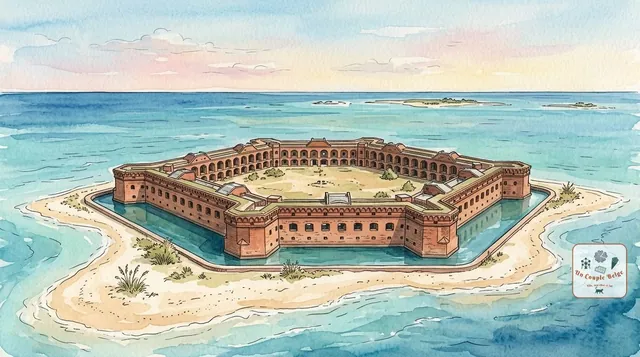
Dry Tortugas: a 19th-century fort alone in the open sea, 110 km from anything
A huge brick fort set on an islet, 110 km off Key West, in the middle of turquoise water. You can only get there by boat or seaplane.
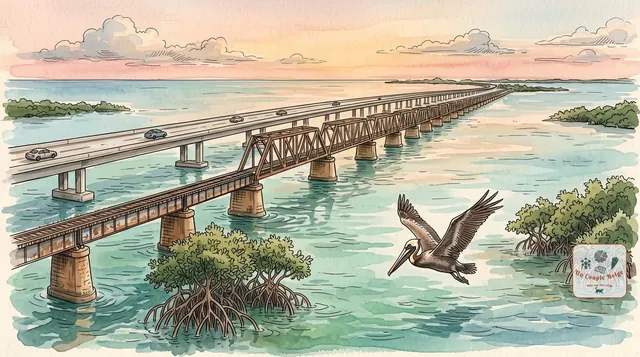
Florida Keys: 180 km of road above the ocean, all the way to Key West
One road, 42 bridges and the sea on both sides: the Overseas Highway hops from island to island, from the Seven Mile Bridge to the wooden houses of Key West.
Comments