Miami: Art Deco, Latin culture and Atlantic beaches
Updated on
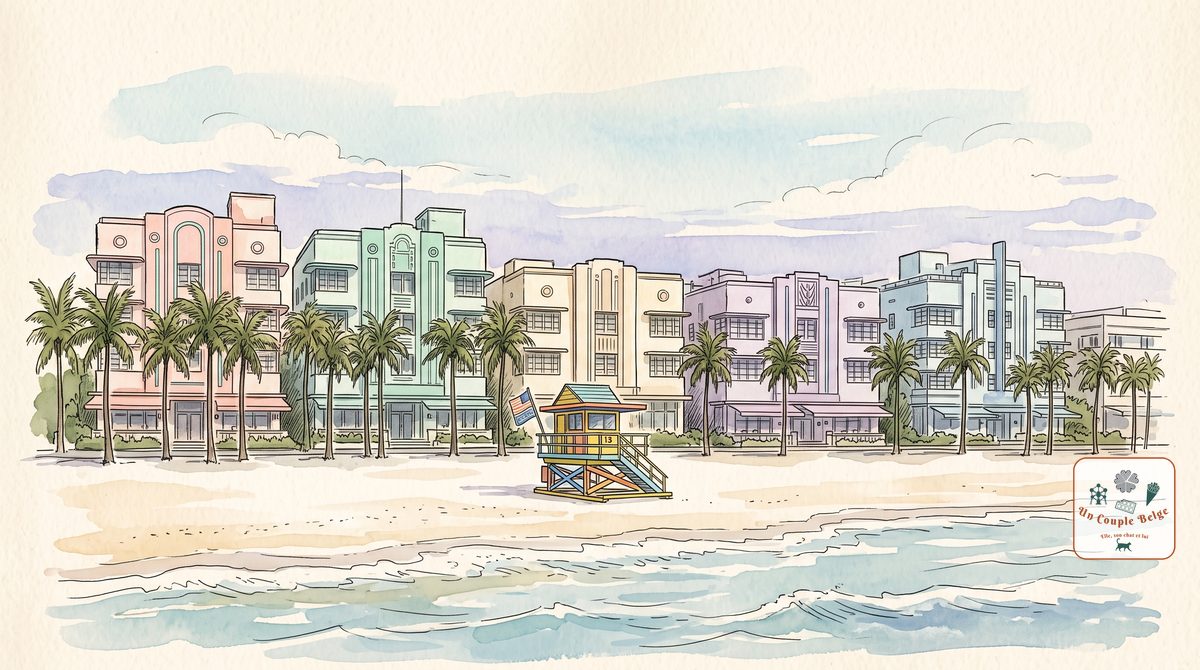
How long should you spend there?
At a glance
- Entrance fee
- The city and the beaches are free. Allow about $8 per car for Bill Baggs park, on Key Biscayne.
- Best time to go
- December to April: dry, between 20 and 27°C, outside hurricane season. Evenings can be cool. Summer is very hot and very humid.
- Getting around
- South Beach can be done on foot. A car is useful for Little Havana, Wynwood and Key Biscayne. Public car parks at $20 a day at most.
Miami is only 130 years old, which is very young even for an American city. In that short time it has been through several property booms and waves of immigration from Cuba, Haiti and all of Latin America. The result: Spanish is spoken as much as English, and the atmosphere is nothing like that of Florida’s other seaside resorts.
History and origins
Before Europeans arrived, the region was inhabited by the Tequesta. A trace of them remains right in the city centre: the Miami Circle, an archaeological site discovered in 1998 at the foot of the Brickell towers. The Seminole and the Miccosukee, who arrived later, still live in Florida.
Miami officially became a city in 1896, when Henry Flagler’s railway linked it to the rest of Florida. People poured in and the property market overheated for the first time. The Black neighbourhood of Overtown, founded in the same period, became a great music scene in the 20th century, nicknamed the “Harlem of the South”. Count Basie and Billie Holiday came to play there after their concerts in Miami Beach, where segregation barred them from staying the night.
The Cuban Revolution of 1959 changed the city for good. Hundreds of thousands of Cubans took refuge there and a whole neighbourhood became Little Havana. Other communities have followed since: Haitians, Colombians, Venezuelans.
In Miami Beach, the Art Deco hotels built from the 1920s to the 1940s were nearly razed in the 1970s. A local resident, Barbara Capitman, led the fight to save them. The district was listed in 1979 and today has around 800 protected buildings.
What to do there
- Ocean Drive and the Art Deco District
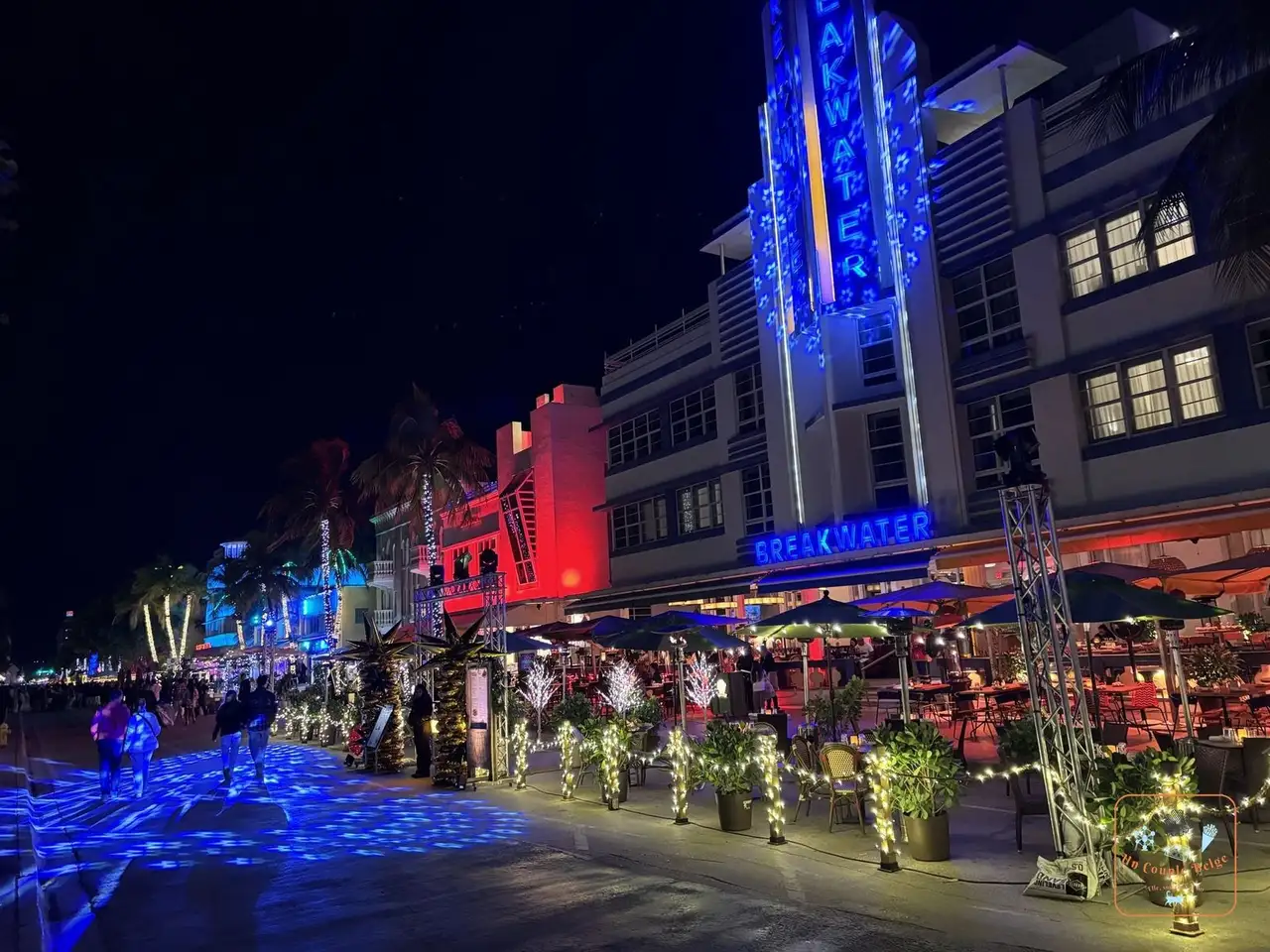 The Breakwater hotel and its blue neon lights on Ocean Drive: hundreds of pastel façades along the beach. Go twice, in the daytime for the colours and in the evening for the neon. The city wants to close the street to cars from late November to late March, between 5th and 15th Streets.
 - South Beach
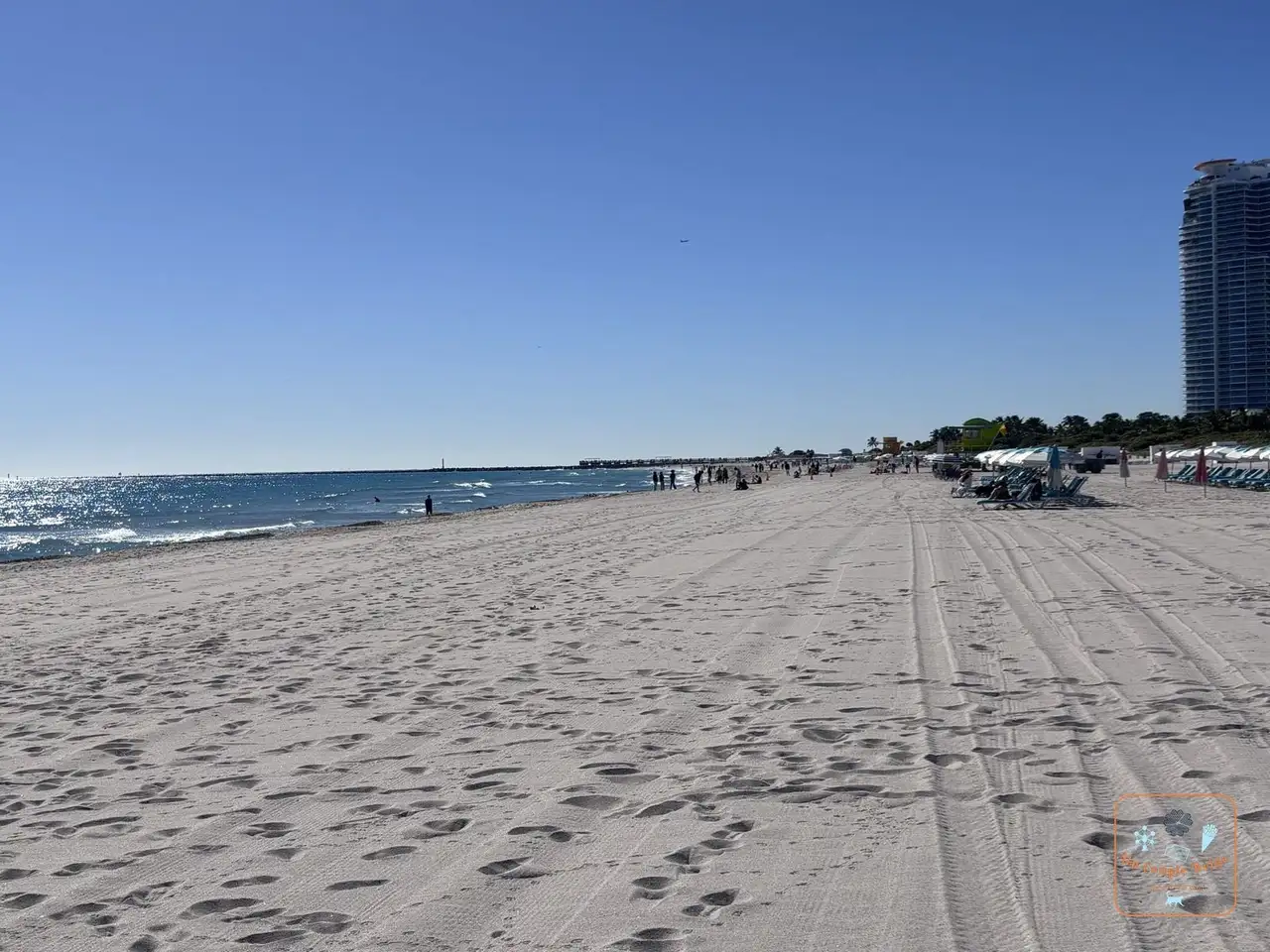 The wide white sand beach of South Beach: very wide, with white sand and around thirty lifeguard towers, no two alike
 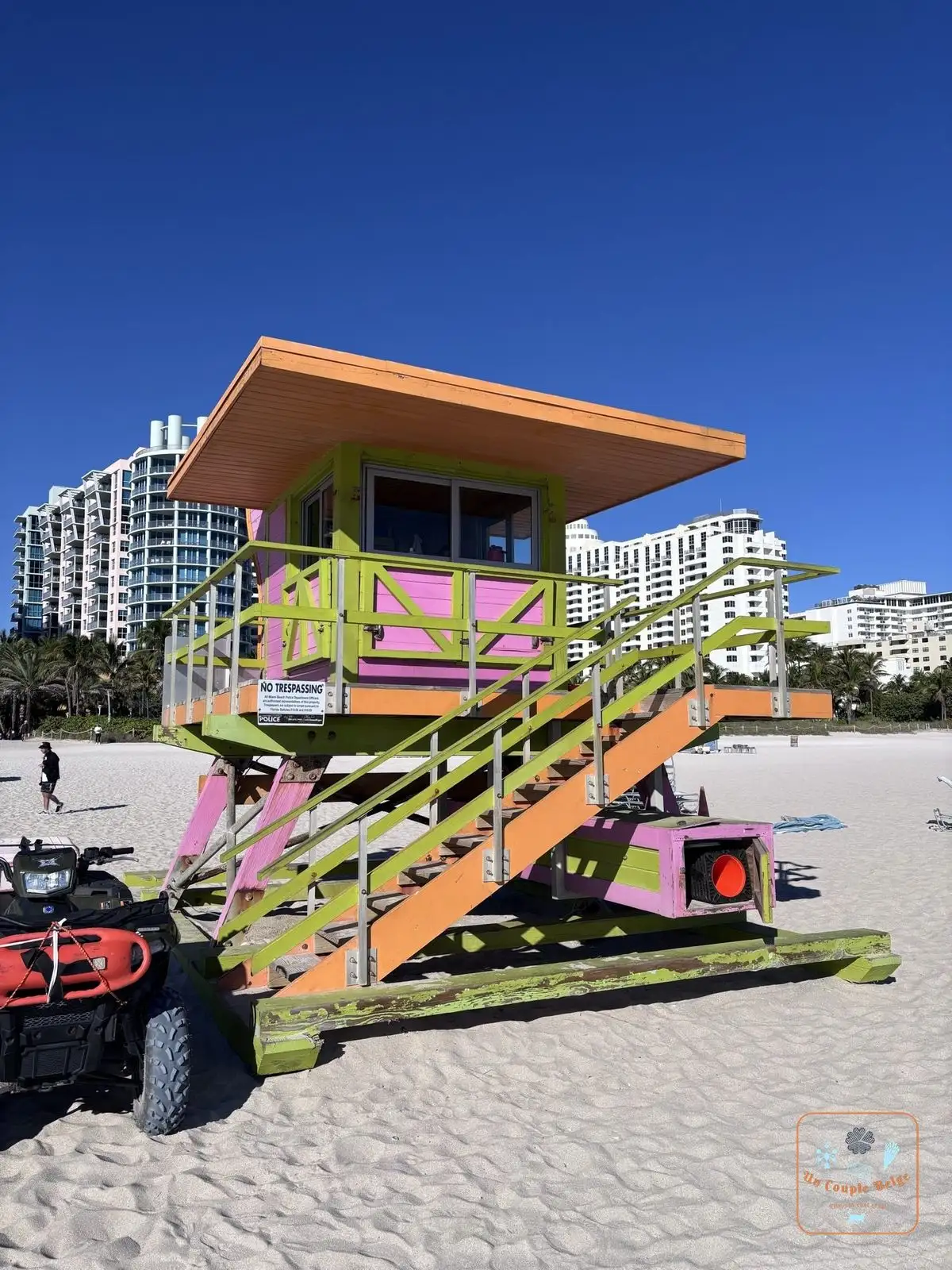 A pink, green and orange lifeguard tower on South Beach. You can walk along it for several kilometres.
 - Lincoln Road: Miami Beach’s main pedestrian street, with its shops and terraces.
- Little Havana (Calle Ocho): Cuban cafés, games of dominoes at Domino Park and music in the street.
- Wynwood Walls: a former warehouse district covered in street art murals. The neighbourhood is free to explore; the Wynwood Walls enclosure charges admission ($12 per adult).
- Vizcaya Museum and Gardens: an Italian Renaissance-style villa built in 1916, with large gardens on the bay.
- Coconut Grove and Coral Gables: two green, residential neighbourhoods. The first, on the bay, is the oldest in Miami. The second was laid out in the 1920s in a Mediterranean style.
- Key Biscayne
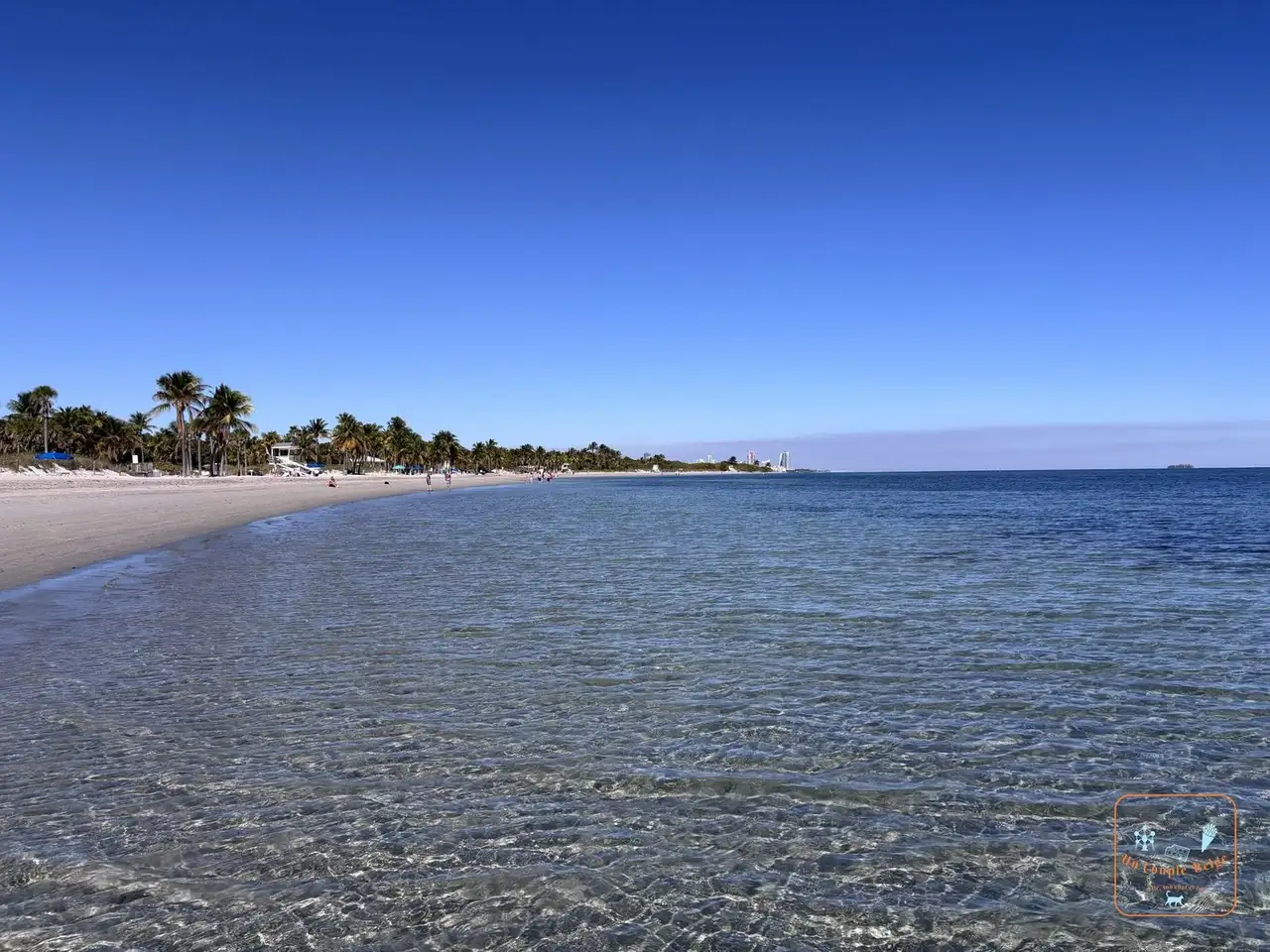 The turquoise water at Crandon Park beach: twenty minutes from the centre, with beaches far quieter than South Beach. Crandon Park for the clear water, and Bill Baggs park for the Cape Florida Lighthouse
 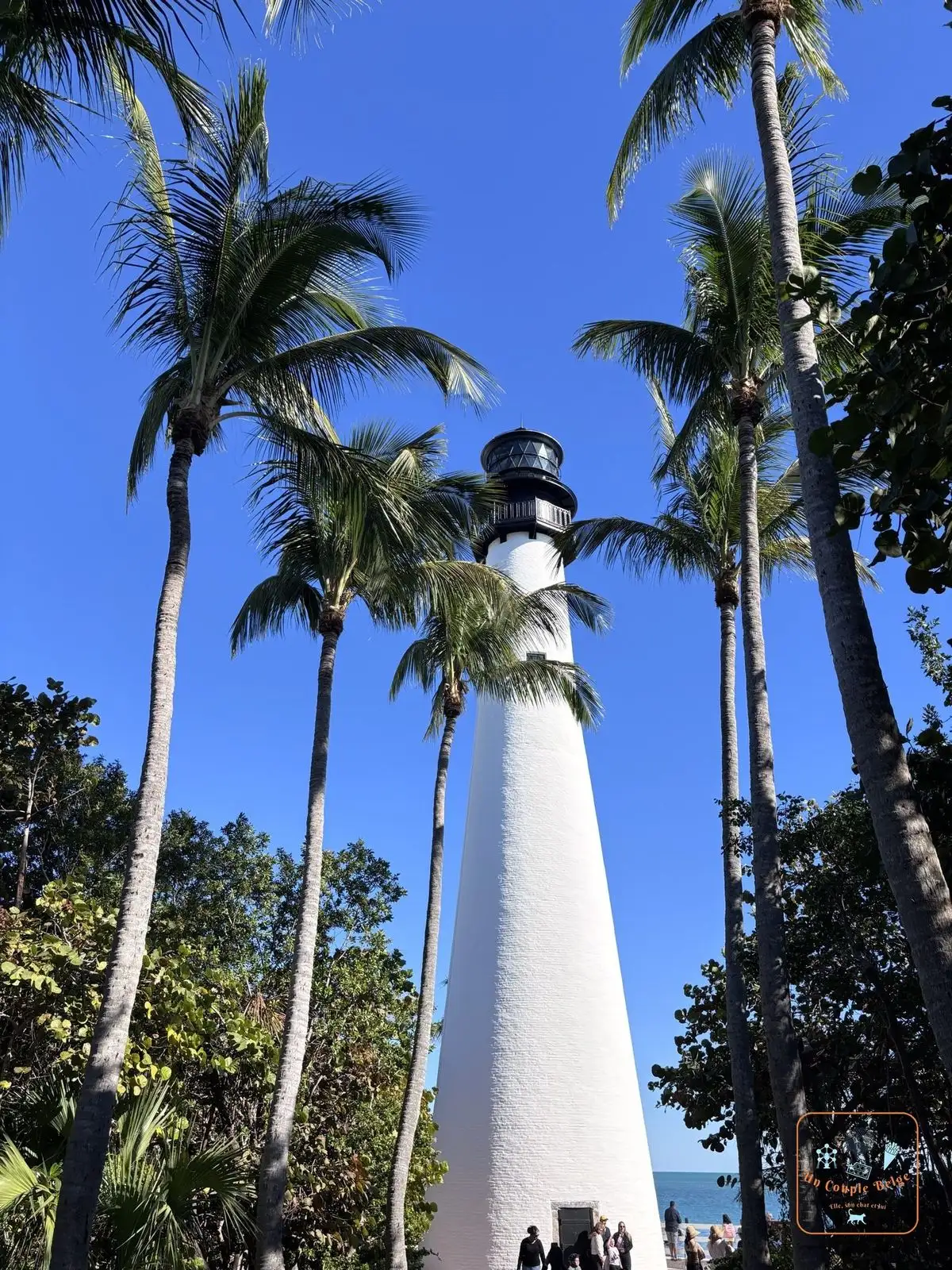 The white Cape Florida Lighthouse among the palm trees, built in 1825. On the way, the Rickenbacker Causeway gives a fine view of the Miami skyline
 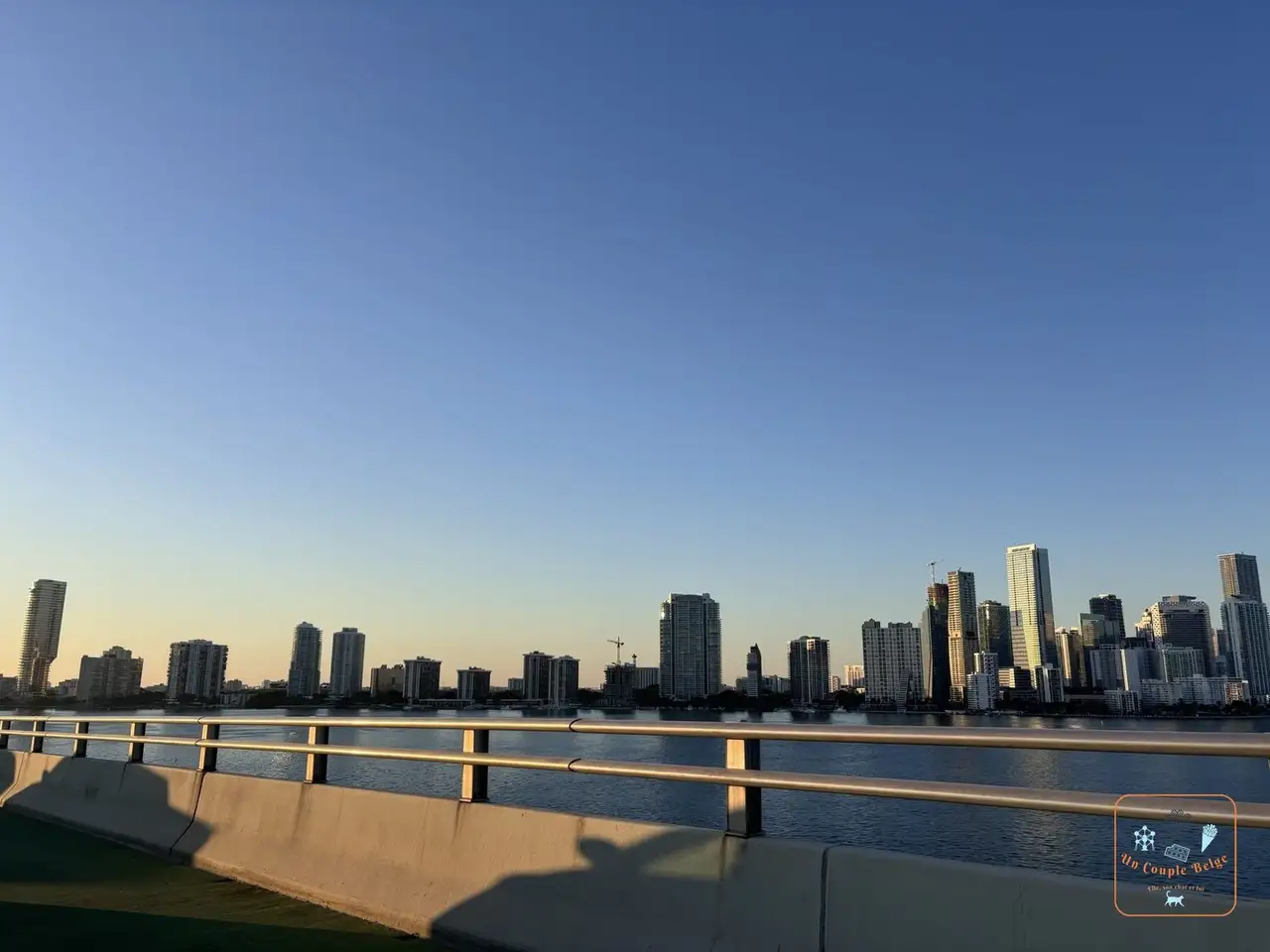 The towers of Miami and Brickell at sunset, from the Rickenbacker Causeway.
 - The Everglades: less than an hour’s drive away; see our guide to the Everglades.
Stories and good to know
- In many neighbourhoods, Spanish is the first language. Don’t be surprised to be greeted in Spanish in a restaurant or a shop.
- The colourful lifeguard towers date from after Hurricane Andrew, in 1992. It destroyed the old ones, and the city asked an architect to design new ones.
- South Beach faces east: the sun rises over the ocean there, but sets behind the buildings.
- Hurricane season runs from June to the end of November, peaking from mid-August to October. Keep an eye on the forecast if you travel then.
- In Miami Beach, many restaurants automatically add an 18 to 20% service charge to the bill. Check before leaving a tip on top.
Practical information for your road trip
- Getting there: Miami International Airport is well served from Europe, with plenty of direct flights. Orlando is often a slightly cheaper alternative.
- Parking: not all Miami Beach hotels have parking, so check before you book. Fortunately the city has its own public car parks, from $2 an hour. On Key Biscayne, allow $7 to $10 a day at Crandon Park.
- Budget: South Beach is expensive in high season, from December to March. Book early, and look at the total with taxes and resort fees, often $35 to $60 a night added to the advertised price.
- Combine it with: Miami is the starting point for the Keys to the south and the Everglades to the west. That’s what we did on our road trip 2 (see below).
Our experience in Miami
We spent three nights in Miami Beach for New Year 2026, a stone’s throw from Ocean Drive:
Our day-by-day journals are coming soon.
Quick quiz
Question 1 / 3
Expert
Miami: Art Deco, Latin culture and Atlantic beaches
Where to stay near Miami: Art Deco, Latin culture and Atlantic beaches
Stay22 affiliate links: if you book through here, we earn a small commission at no extra cost to you. Thanks for your support!
On the ground

Sponsored by UnCoupleBelge
Follow us on Instagram
Box sponsored by a partner
Other places nearby
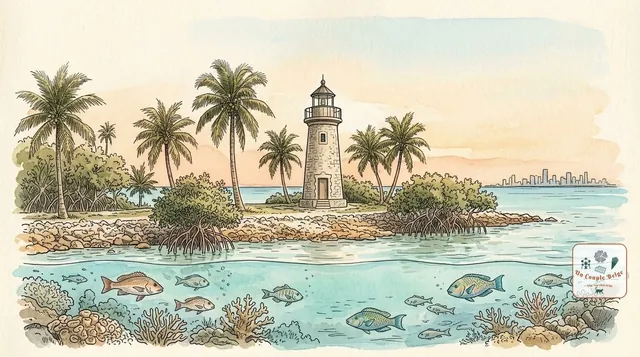
Biscayne: a national park that is 95% underwater, on Miami's doorstep
A national park almost entirely underwater, 45 minutes from Miami: a turquoise bay, mangroves, islands and the start of Florida's coral reef.
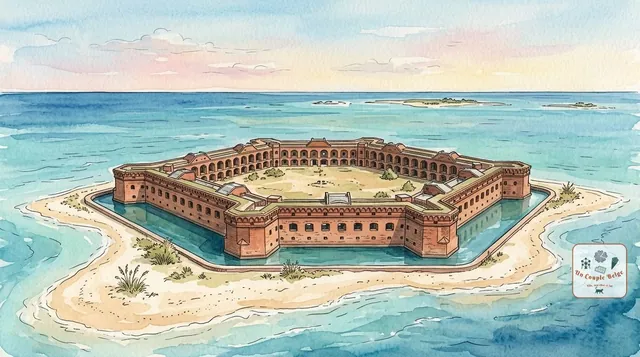
Dry Tortugas: a 19th-century fort alone in the open sea, 110 km from anything
A huge brick fort set on an islet, 110 km off Key West, in the middle of turquoise water. You can only get there by boat or seaplane.
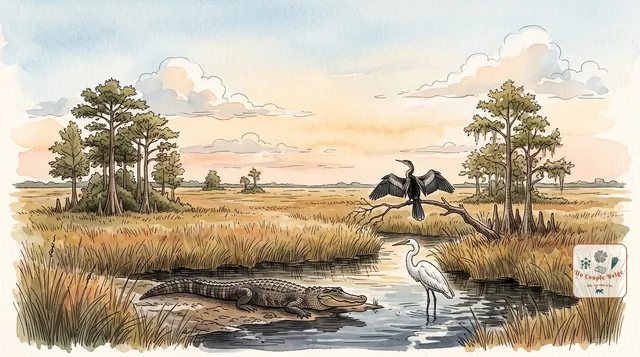
Everglades: the "river of grass" where alligators and crocodiles live side by side
A vast plain of grass and water in southern Florida, where you come across alligators a few metres from the path. It is also the only place in the world where they share their home with crocodiles.
Comments