Biscayne: a national park that is 95% underwater, on Miami's doorstep
Updated on
How long should you spend there?
At a glance
- Entrance fee
- Free. Boat trips are charged, from about $40 to $200 depending on the length.
- Best time to go
- From December to April, when the sea is calm and mosquitoes are few. Summer is hot and stormy, in the middle of hurricane season.
- Book ahead
- Boat excursions, to be booked online, especially at weekends.
- Getting around
- By car to the visitor center, then by boat. Without a boat, the visit is limited to the shore.
| Walks and hikes | Distance | Time | Level |
|---|---|---|---|
| The Convoy Point jetty | about 1 km (round trip) | 30 min | easy |
Biscayne is a park you can’t see from the road. It’s 95% underwater: a large, shallow bay, a fringe of mangrove, a string of low islands and, offshore, the start of Florida’s coral reef. All of it 45 minutes from the centre of Miami.
History and origins
The islands of the bay are the first of the Keys, and the reef is the same one that runs alongside them all the way to Key West. The mangrove, for its part, acts as a nursery for fish and protects the coast from storms.
The park was born of a battle. In the 1960s, developers wanted to build a new town on the islands, Islandia, with an industrial port and a refinery. Residents opposed it. Out of spite, the landowners ran a bulldozer down the whole length of the main island: the scar is still called “Spite Highway”. President Johnson protected the bay in 1968. It became a national park in 1980.
What to do there
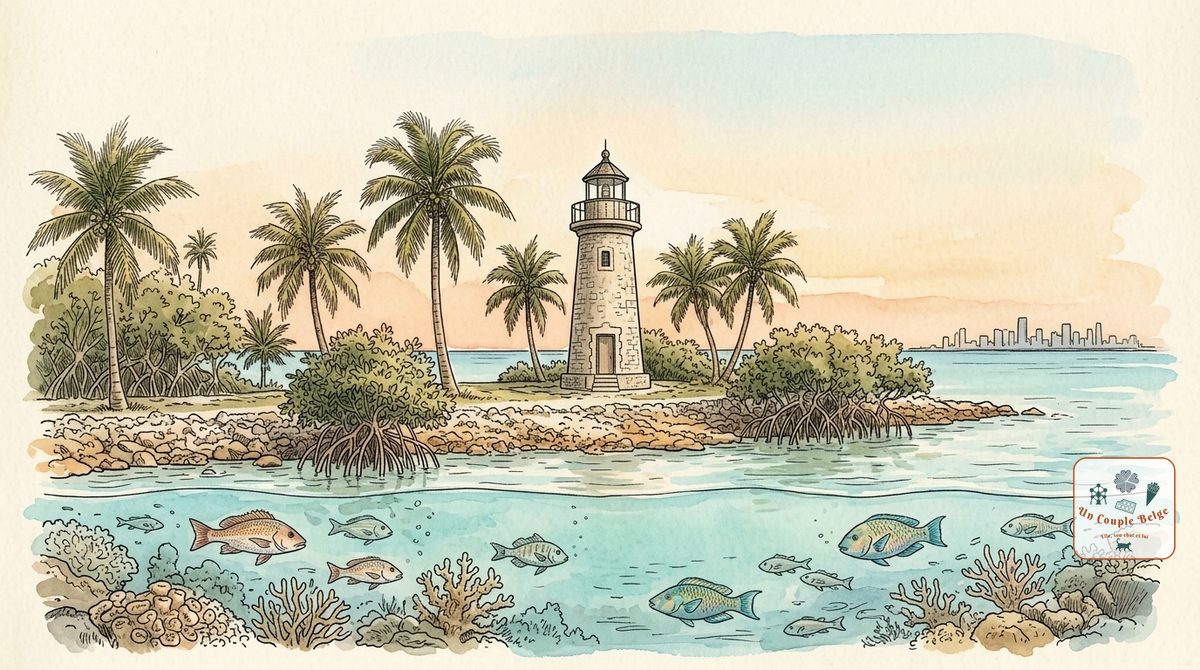
- Boca Chita Key: a small island with a stone lighthouse, built in the 1930s by a wealthy industrialist to adorn his property. You get there by boat, and climb to the top of the lighthouse to see Miami on the horizon.
- The reef: with mask, snorkel and fins, among the corals and tropical fish. Trips leave from the visitor center when the sea allows.
- The shipwrecks: the park has marked out an underwater trail linking six wrecks and a lighthouse. Some can be seen while swimming at the surface.
- Kayaking in the mangroves: a calm paddle among the mangrove roots, where you sometimes come across manatees.
- Stiltsville: a handful of houses on stilts planted in the middle of the bay, the remains of a party village from the 1930s. Six are left, visible by boat.
- The Convoy Point jetty: the only walk on foot, along the mangrove, from the visitor center.
Stories and good to know
- The Boca Chita lighthouse never guided a single ship. It was never officially approved.
- Islandia existed on paper until 2012, with a handful of voters. It never had a single building.
- One of the park’s wrecks, the Alicia, gave rise to such brawls between salvagers that it led to a change in US maritime salvage law.
Practical information for your road trip
- Getting there: the visitor center is 45 minutes south of Miami, near Homestead.
- Mosquitoes: they are fearsome from May to November, especially on the islands. Bring repellent.
- Sun: on the water, it beats down hard. Take a hat, sunglasses and a reef-safe sun cream.
- Where to stay: in Homestead or Miami. You can camp on Boca Chita Key and Elliott Key, provided you come by boat.
- Combine it with: the Everglades, whose main entrance is 30 minutes away, and the road through the Keys.
Quick quiz
Question 1 / 3
Where to stay near Biscayne: a national park that is 95% underwater, on Miami's doorstep
Stay22 affiliate links: if you book through here, we earn a small commission at no extra cost to you. Thanks for your support!
On the ground

Sponsored by UnCoupleBelge
Follow us on Instagram
Box sponsored by a partner
Other places nearby
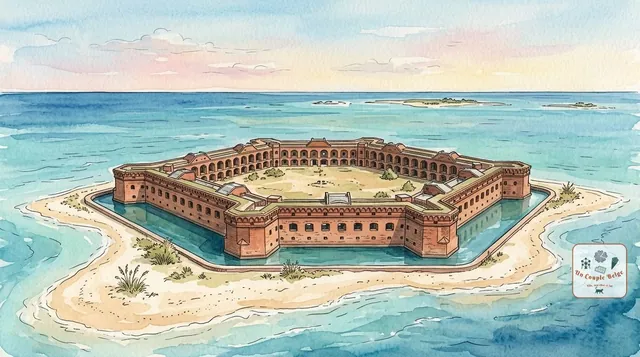
Dry Tortugas: a 19th-century fort alone in the open sea, 110 km from anything
A huge brick fort set on an islet, 110 km off Key West, in the middle of turquoise water. You can only get there by boat or seaplane.
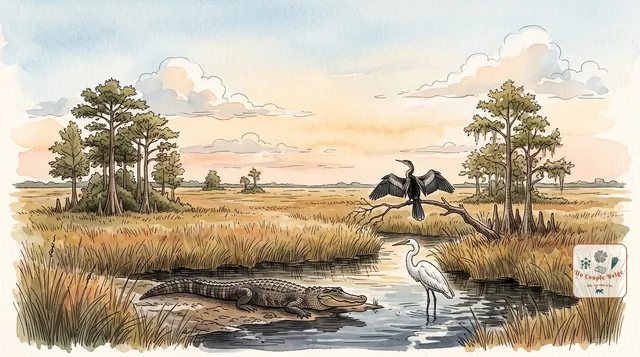
Everglades: the "river of grass" where alligators and crocodiles live side by side
A vast plain of grass and water in southern Florida, where you come across alligators a few metres from the path. It is also the only place in the world where they share their home with crocodiles.
Florida Keys: 180 km of road above the ocean, all the way to Key West
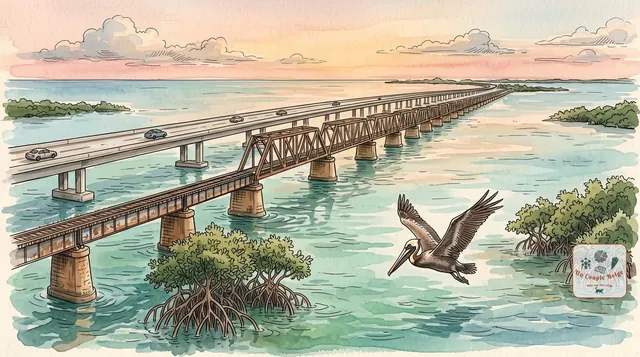
One road, 42 bridges and the sea on both sides: the Overseas Highway hops from island to island, from the Seven Mile Bridge to the wooden houses of Key West.
Comments