RT2 – Day 6 – Washington: the Capitol, the Library of Congress and the Lincoln Memorial
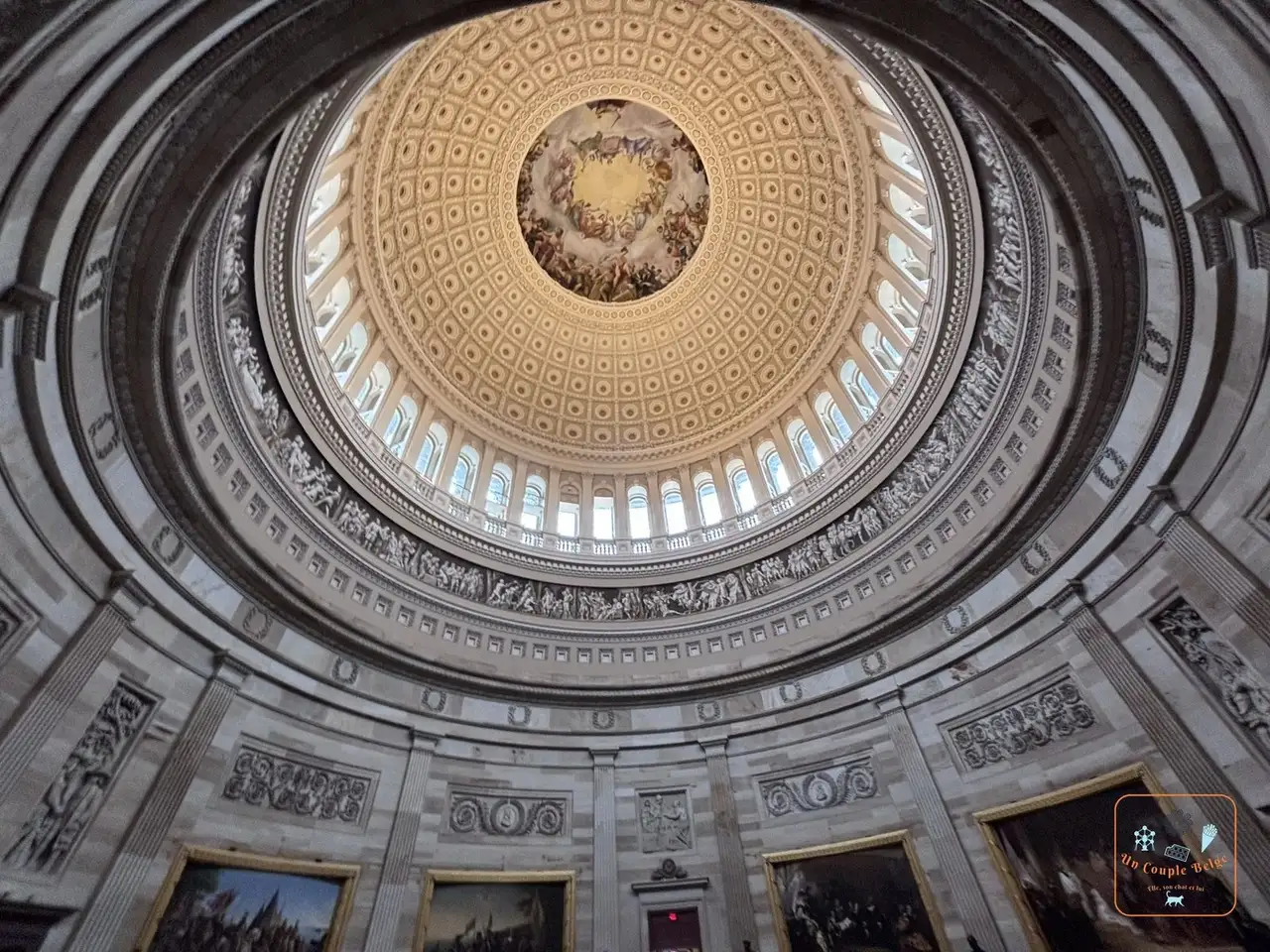
Our first full day in Washington, the federal capital. No skyscrapers here: a law limits the height of buildings, and the city is laid out around the National Mall, a great esplanade more than three kilometres long lined with monuments and museums. On the agenda: the Capitol, the Library of Congress, and the Mall on foot as far as the Lincoln Memorial. Good news for the budget: all these visits are free, you just need to book your time slots.
Heading for Capitol Hill
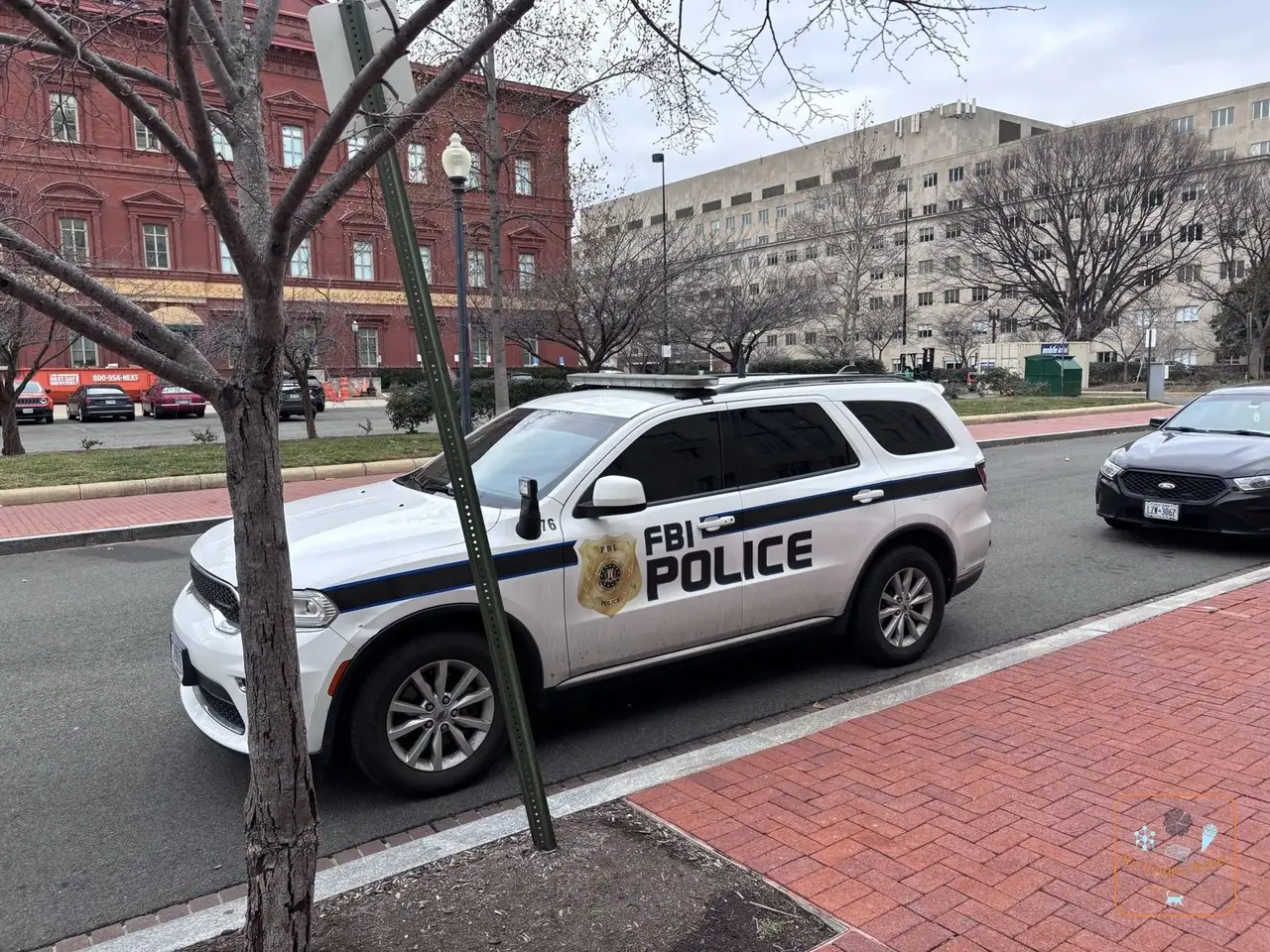
For the whole day we left the car in the car park and got around entirely on foot.
On the way, we passed an FBI Police car. In Washington you are immersed in the city of power: federal buildings, agencies, security everywhere.
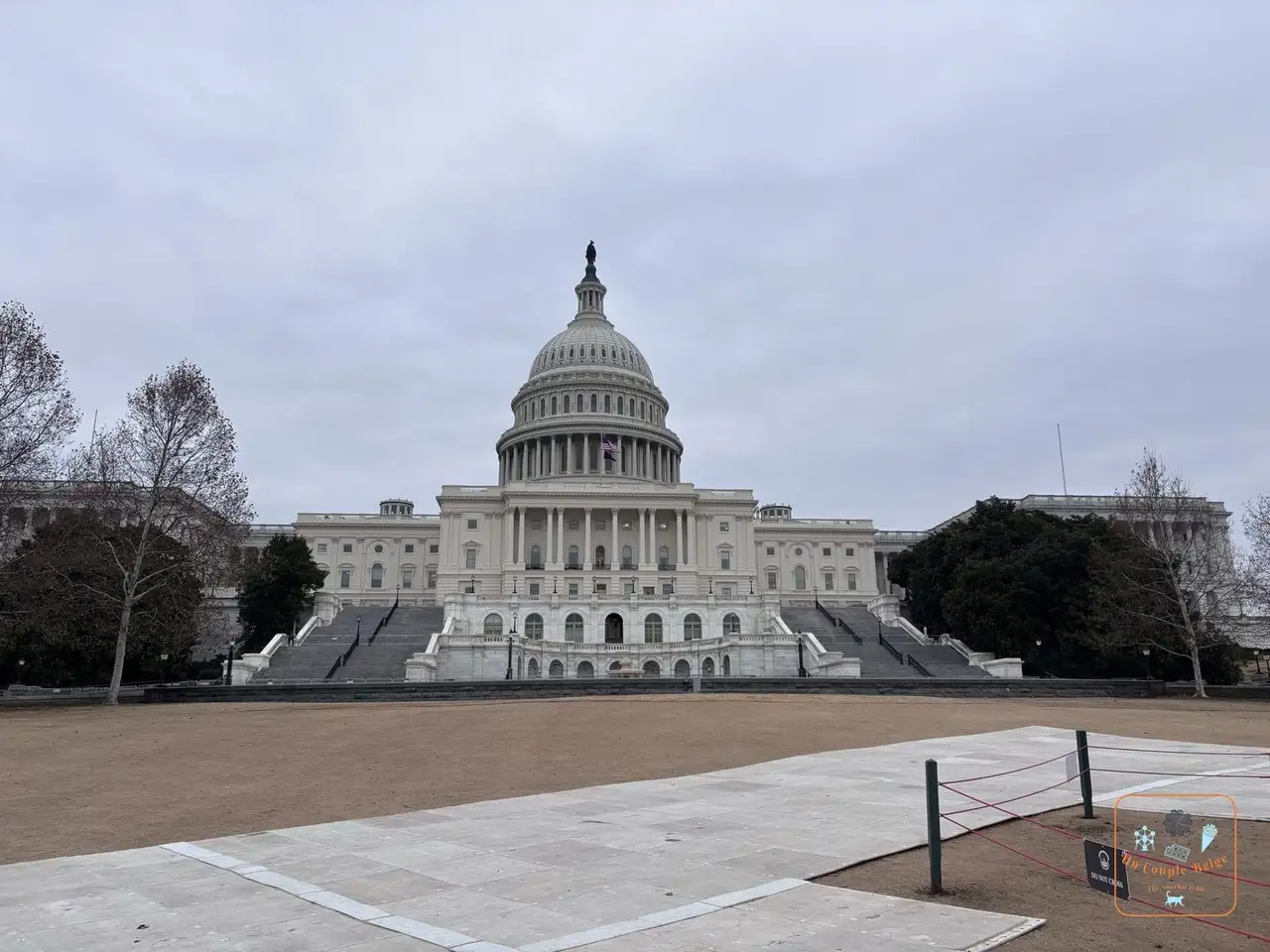
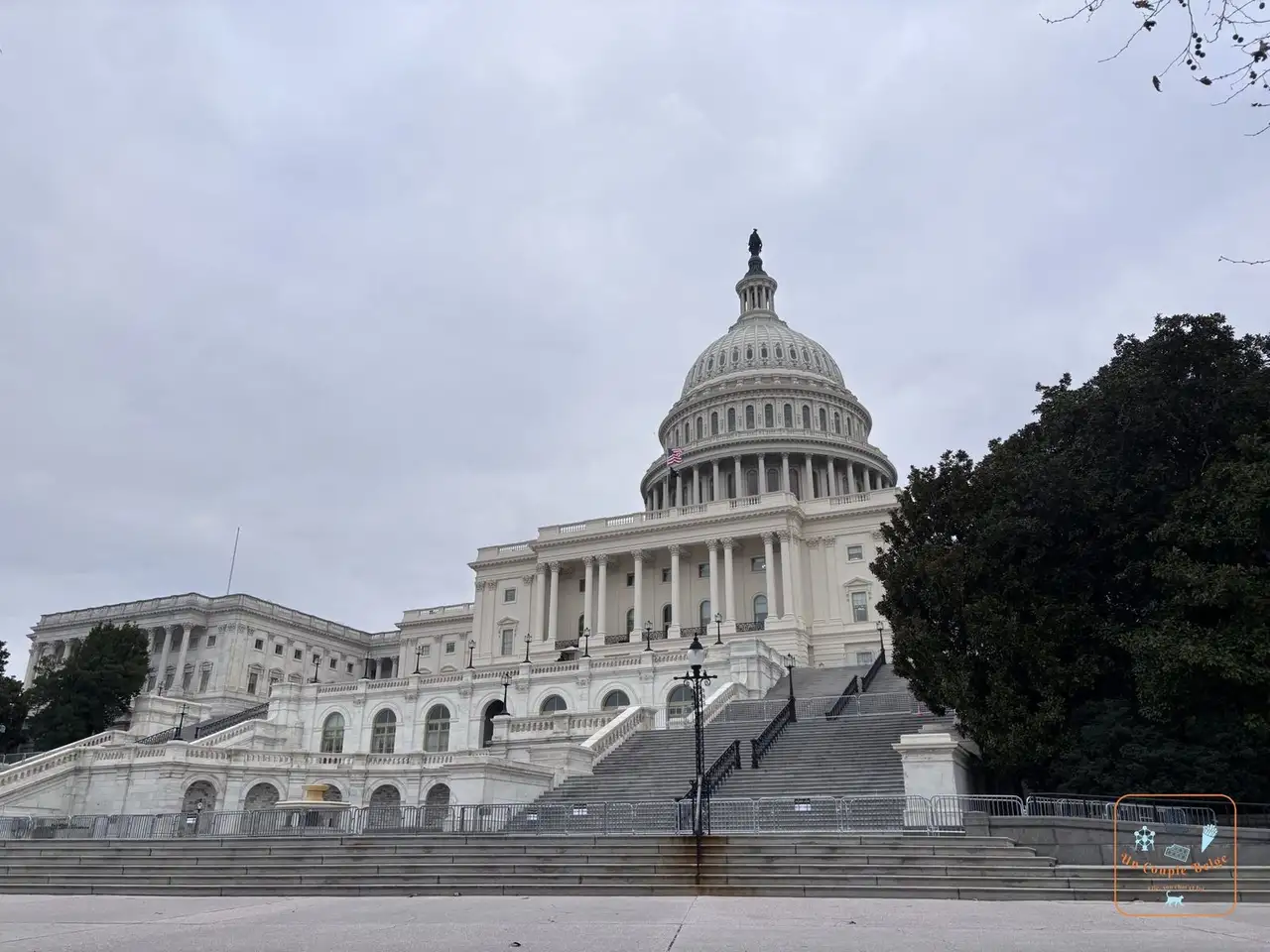
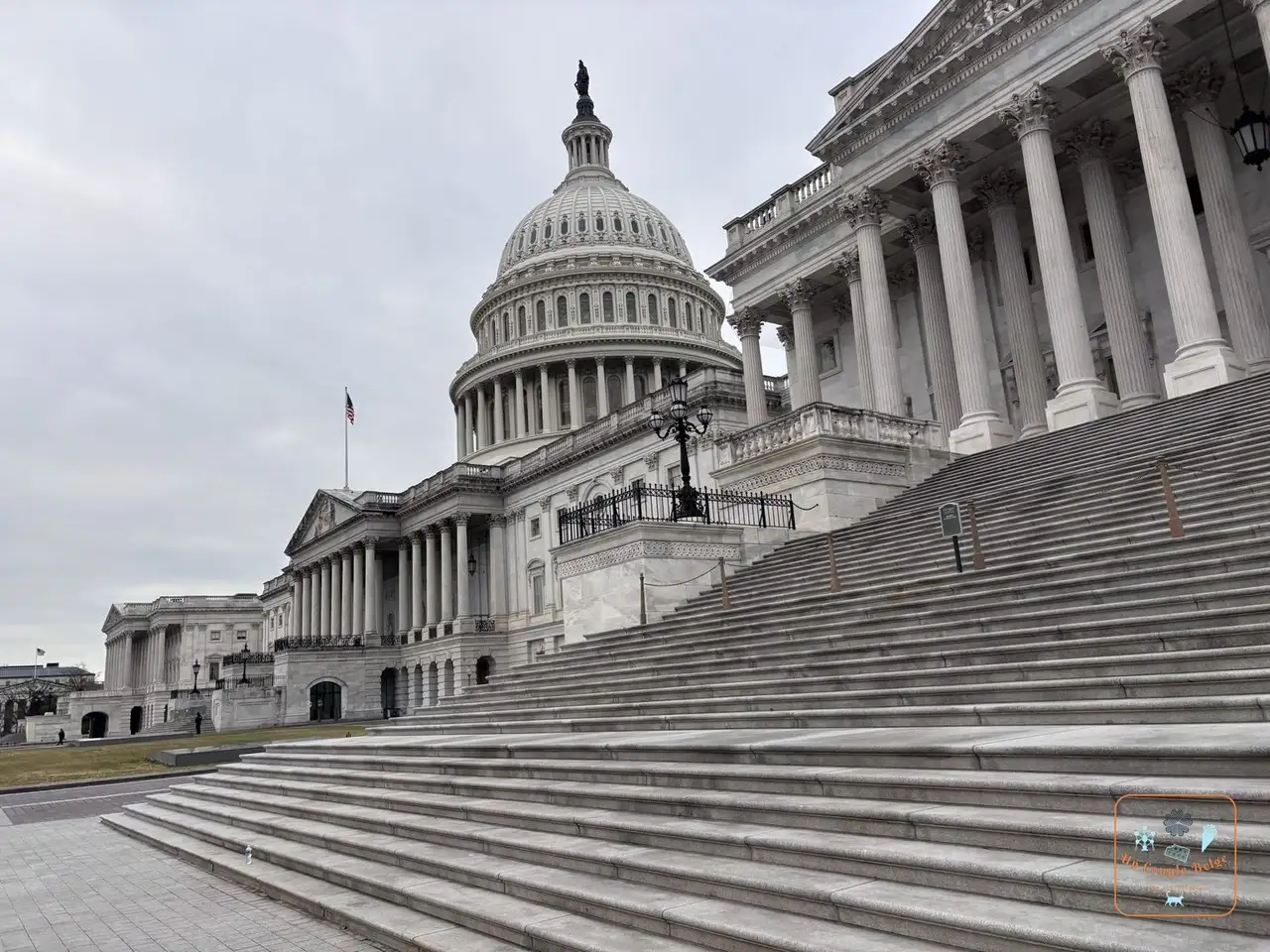
After a 15-minute walk we arrived in front of the Capitol, the seat of the US Congress, that is, the Senate and the House of Representatives. Its white dome, made of painted cast iron, was completed during the Civil War and is topped by the Statue of Freedom, a bronze figure of Freedom wearing a helmet (nothing to do with the one in New York). You recognise it instantly, having seen it in so many films and news broadcasts.
Touring the Capitol
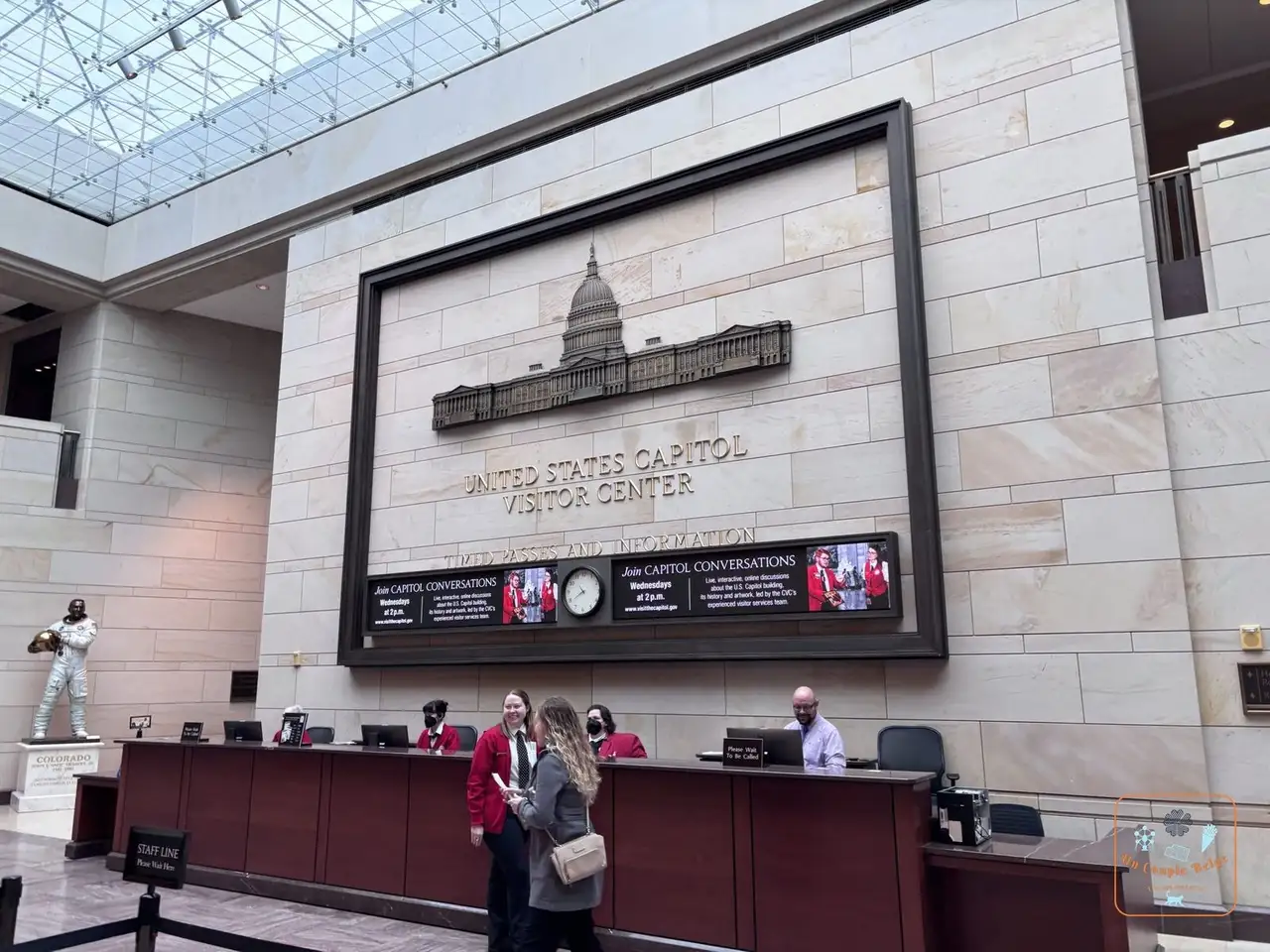
You enter through the Capitol Visitor Center, built underground on the east side of the building. After a security check, you watch a short film on the history of Congress, then a guide takes the group through the historic parts of the building. We had booked, but the queue at the entrance was endless: more than an hour and a half’s wait in the cold. As a result we missed our slot, but since everyone was stuck in the queue, we were given another one straight away.
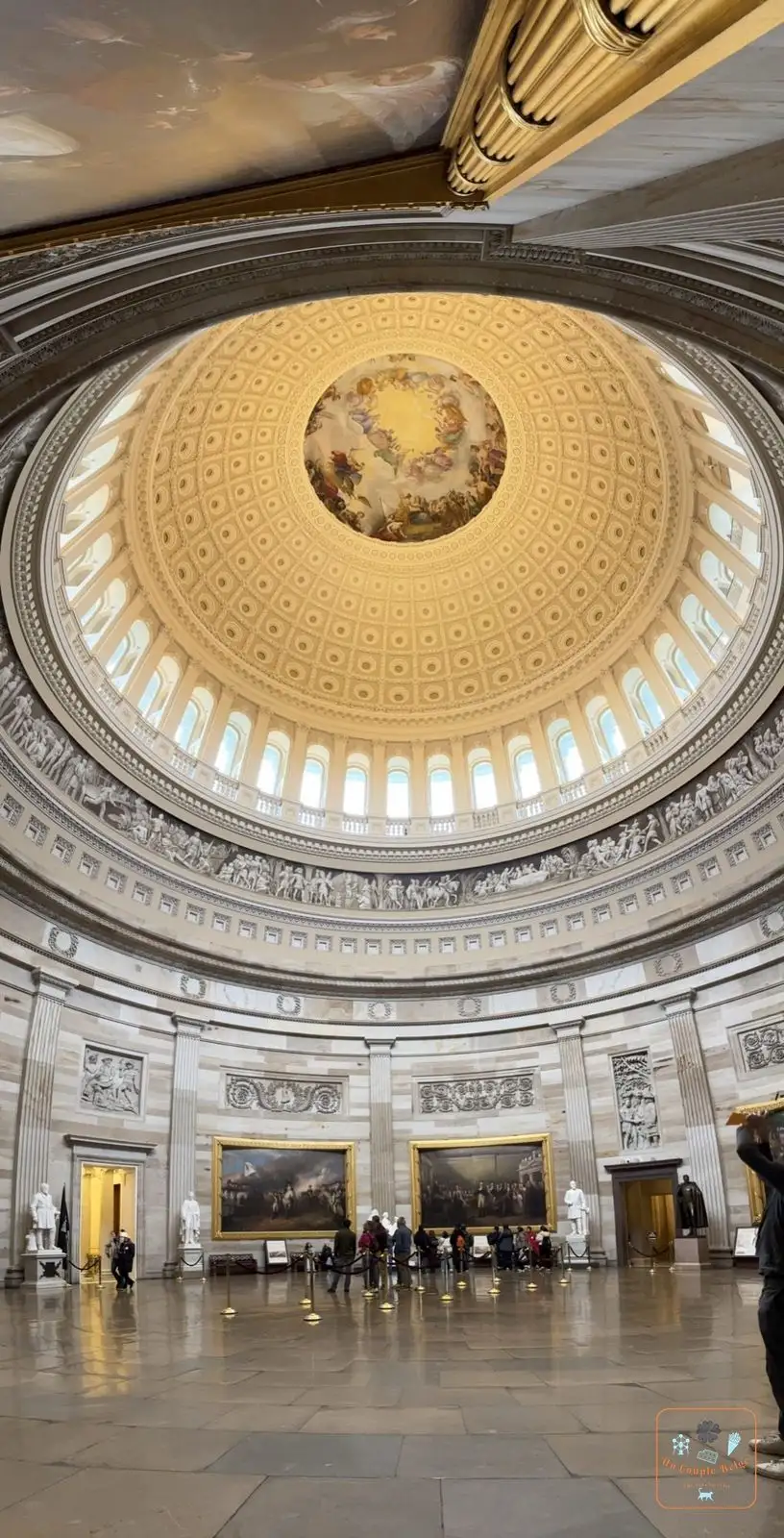
The most impressive moment is the Rotunda, right under the dome. Looking up, more than 50 metres overhead, you see the fresco The Apotheosis of Washington, painted by Constantino Brumidi in 1865: George Washington seated in the clouds, surrounded by allegorical figures. This is also where presidents and certain distinguished figures lie in state after their death.
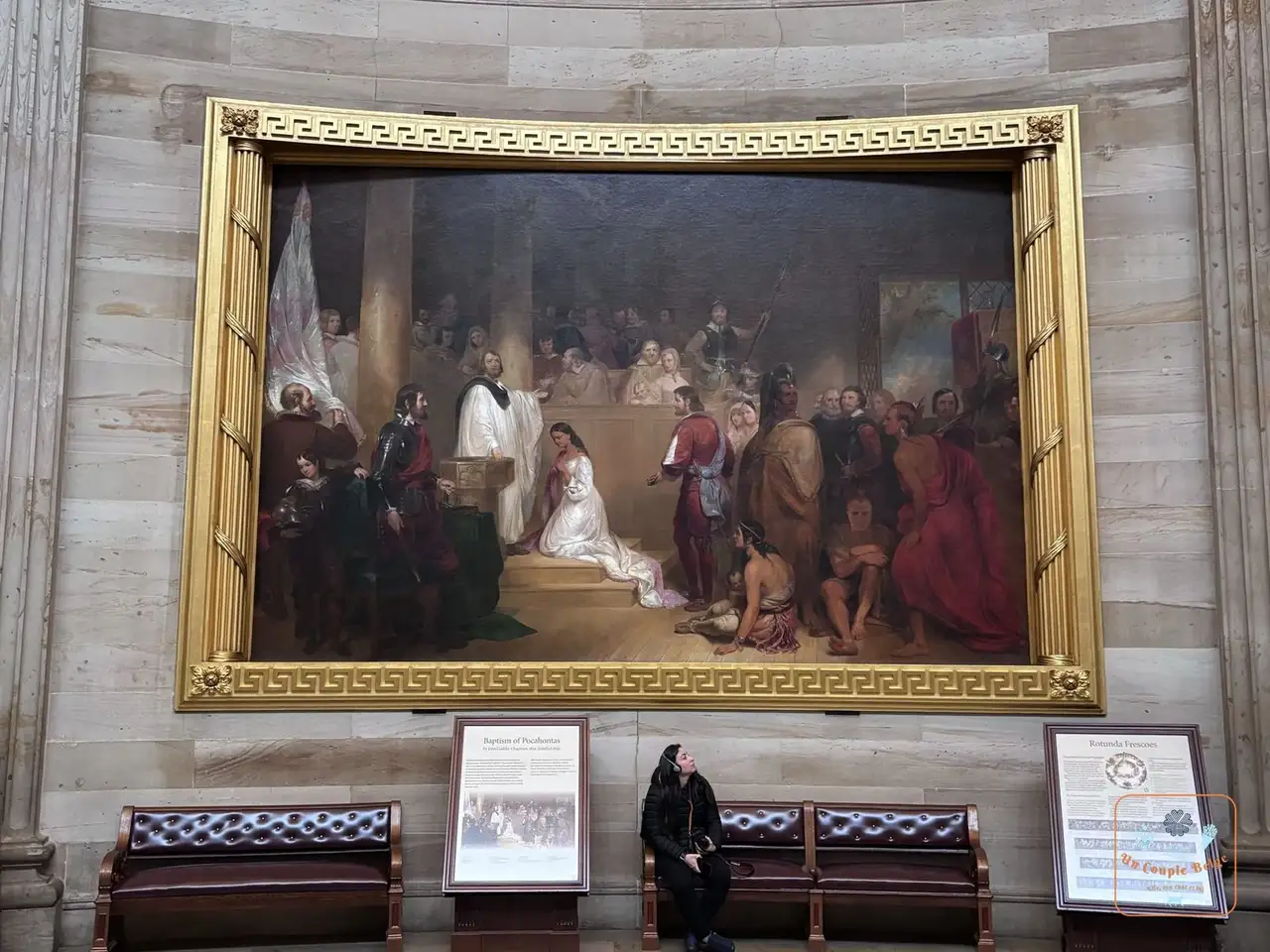
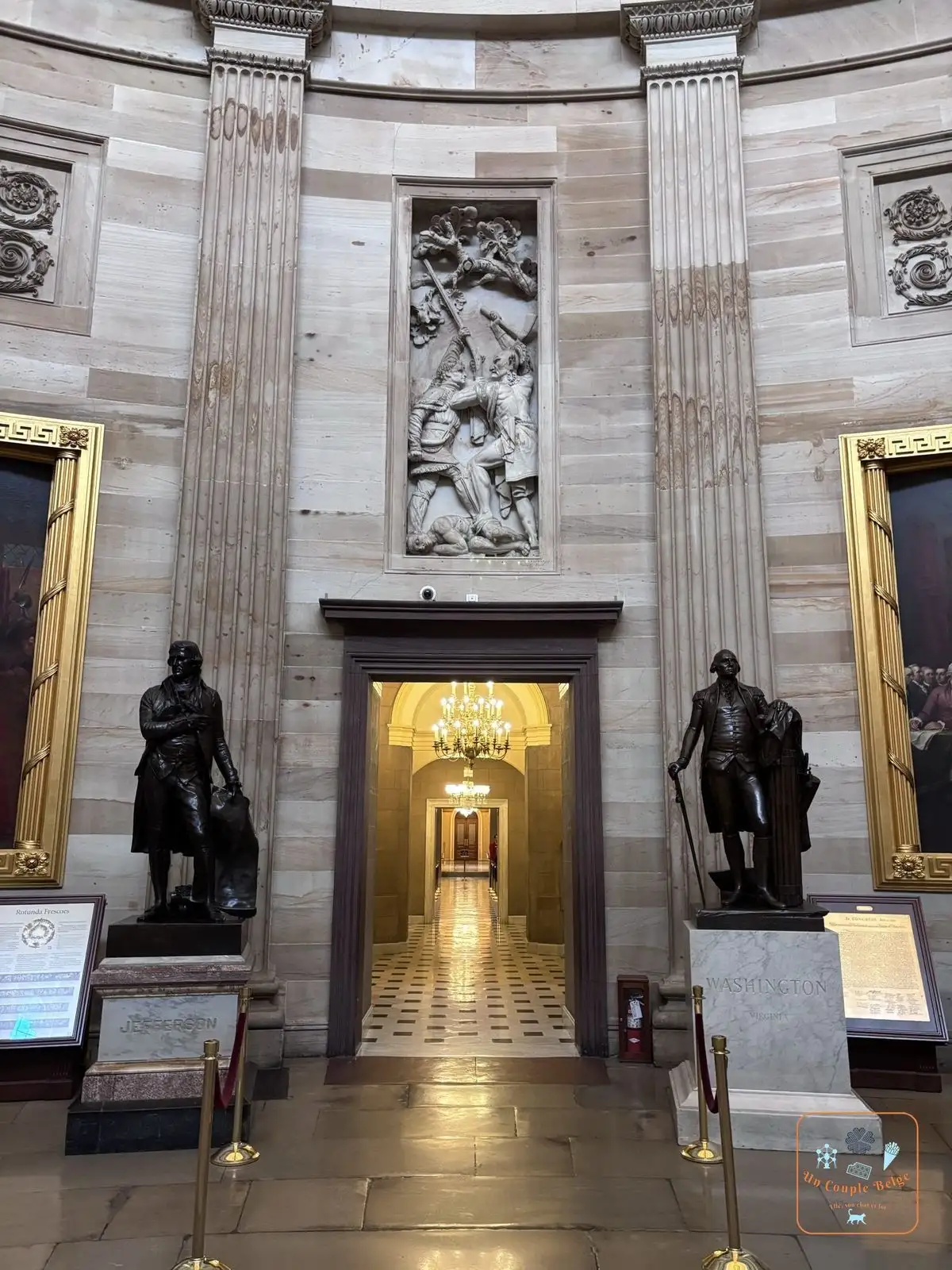
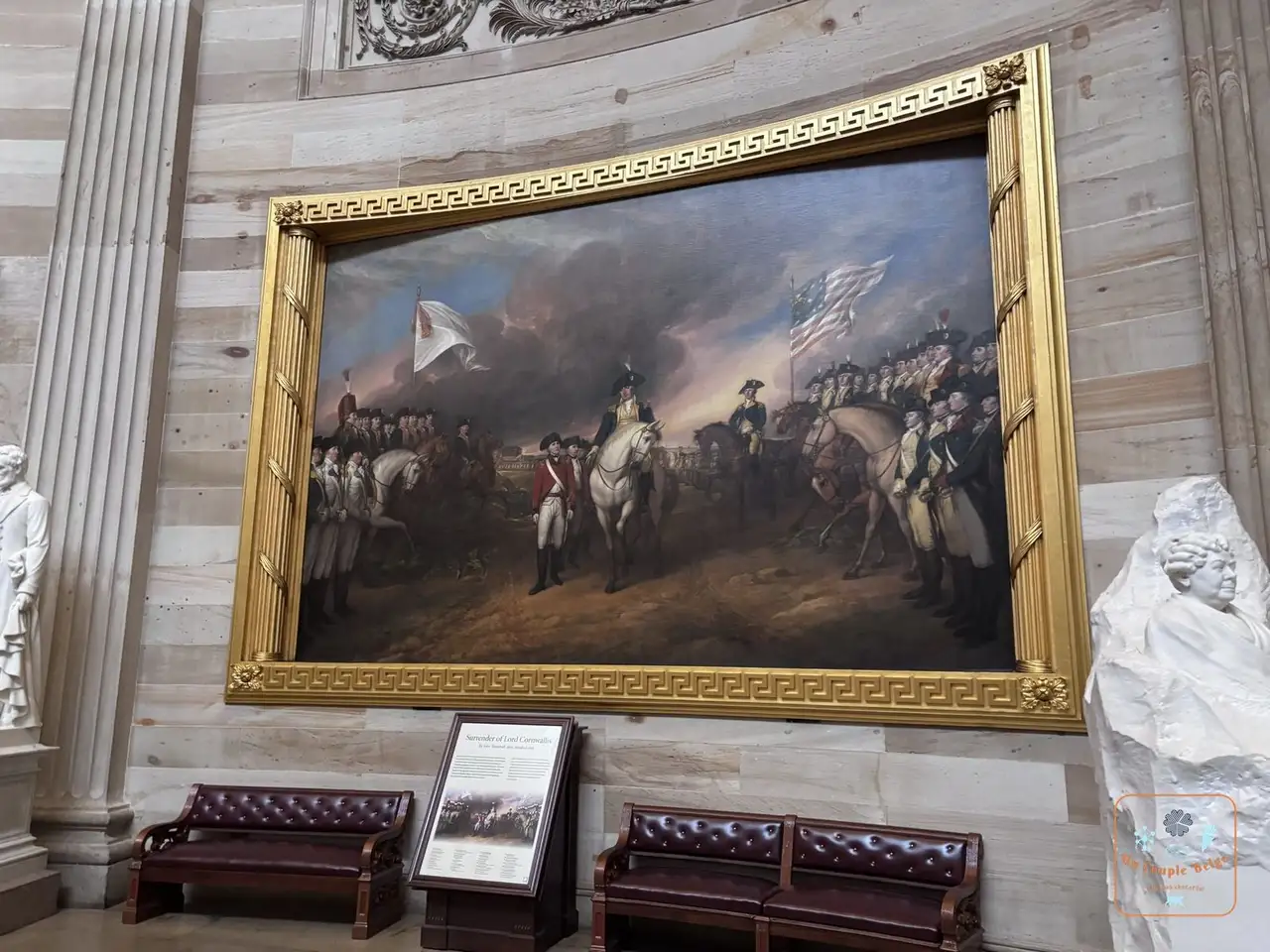
All around the Rotunda, eight huge paintings tell the story of the country, such as the Baptism of Pocahontas or the Surrender of Lord Cornwallis at Yorktown, painted by John Trumbull, which marks the end of the War of Independence. And a little nod to France: in this painting, Rochambeau’s French troops are shown alongside the Americans.
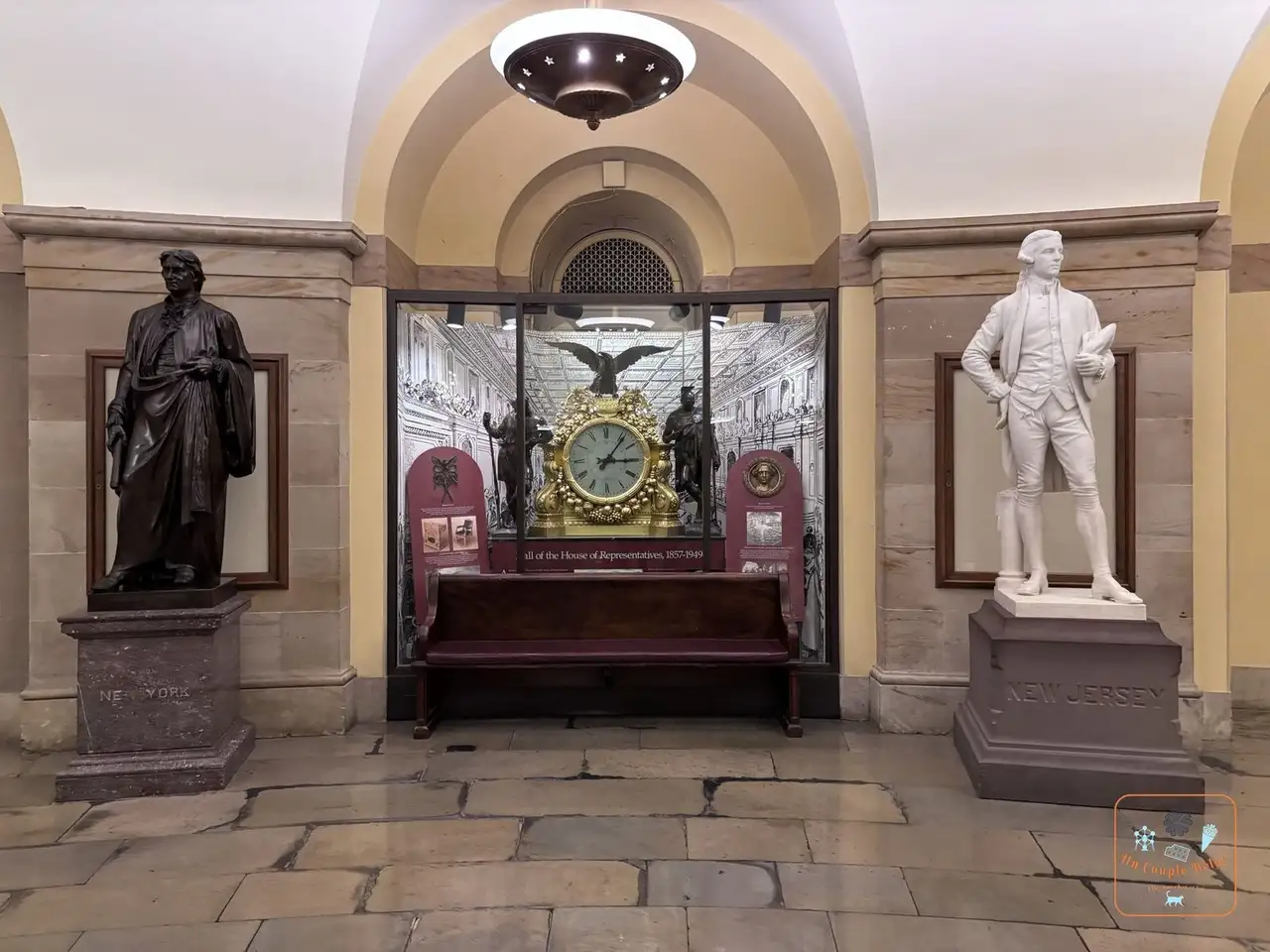
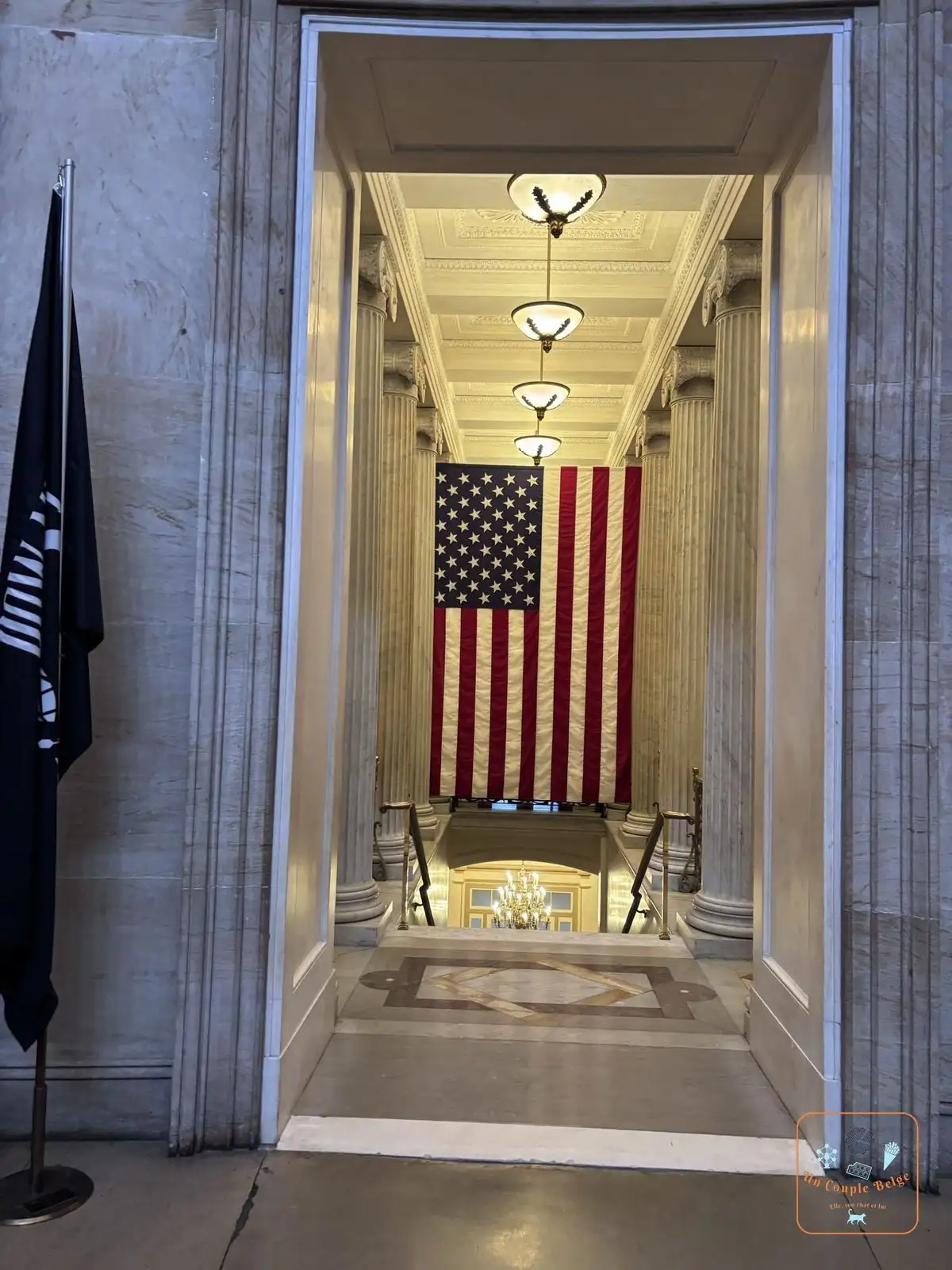
Following the guide, you also walk through corridors lined with statues, one of them with a clock above it and another with a large American flag hanging at the far end. You also pass a framed engraving of the Declaration of Independence, topped by an eagle. It’s a place steeped in history, and well worth the visit.
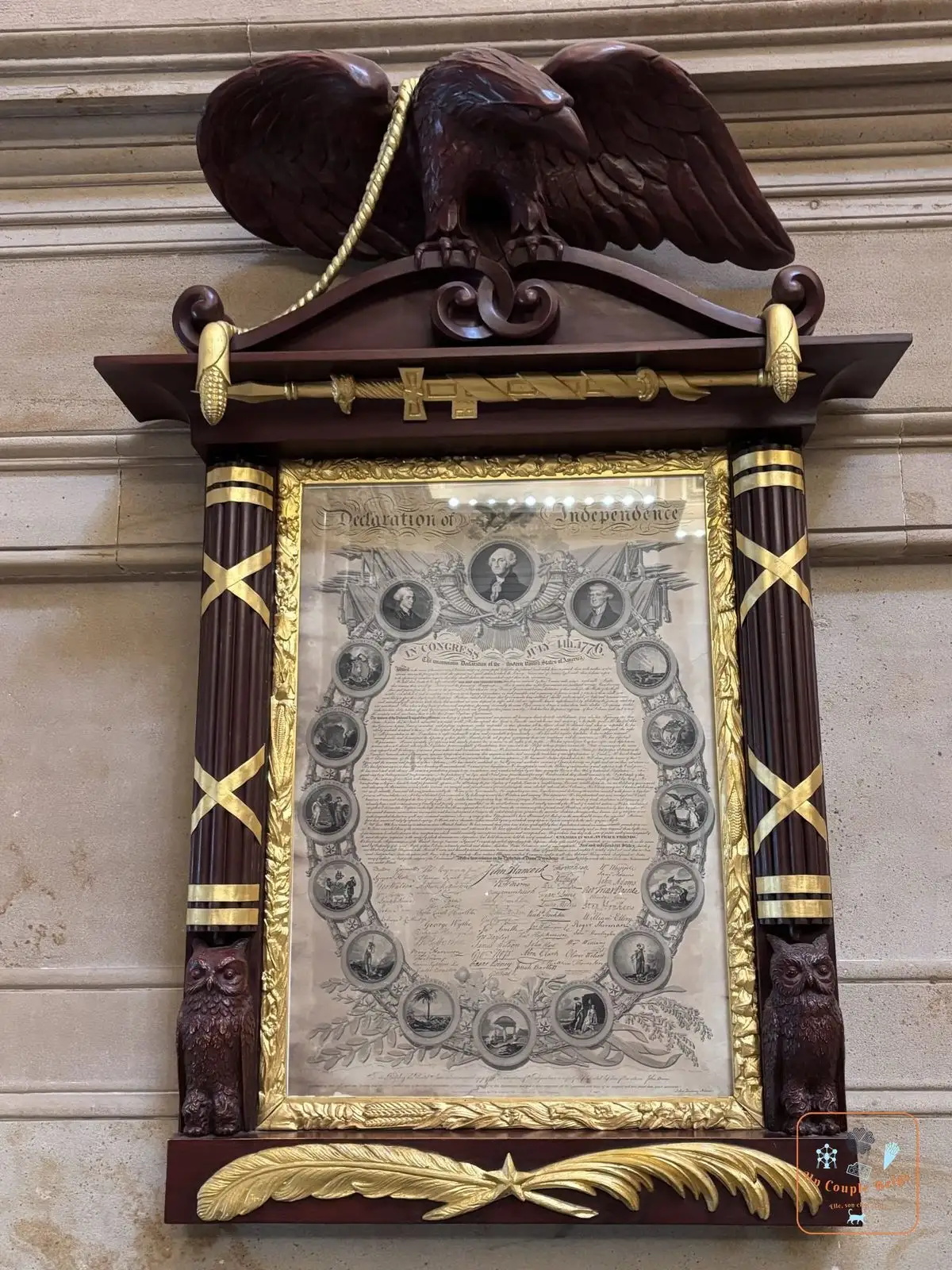
National Statuary Hall
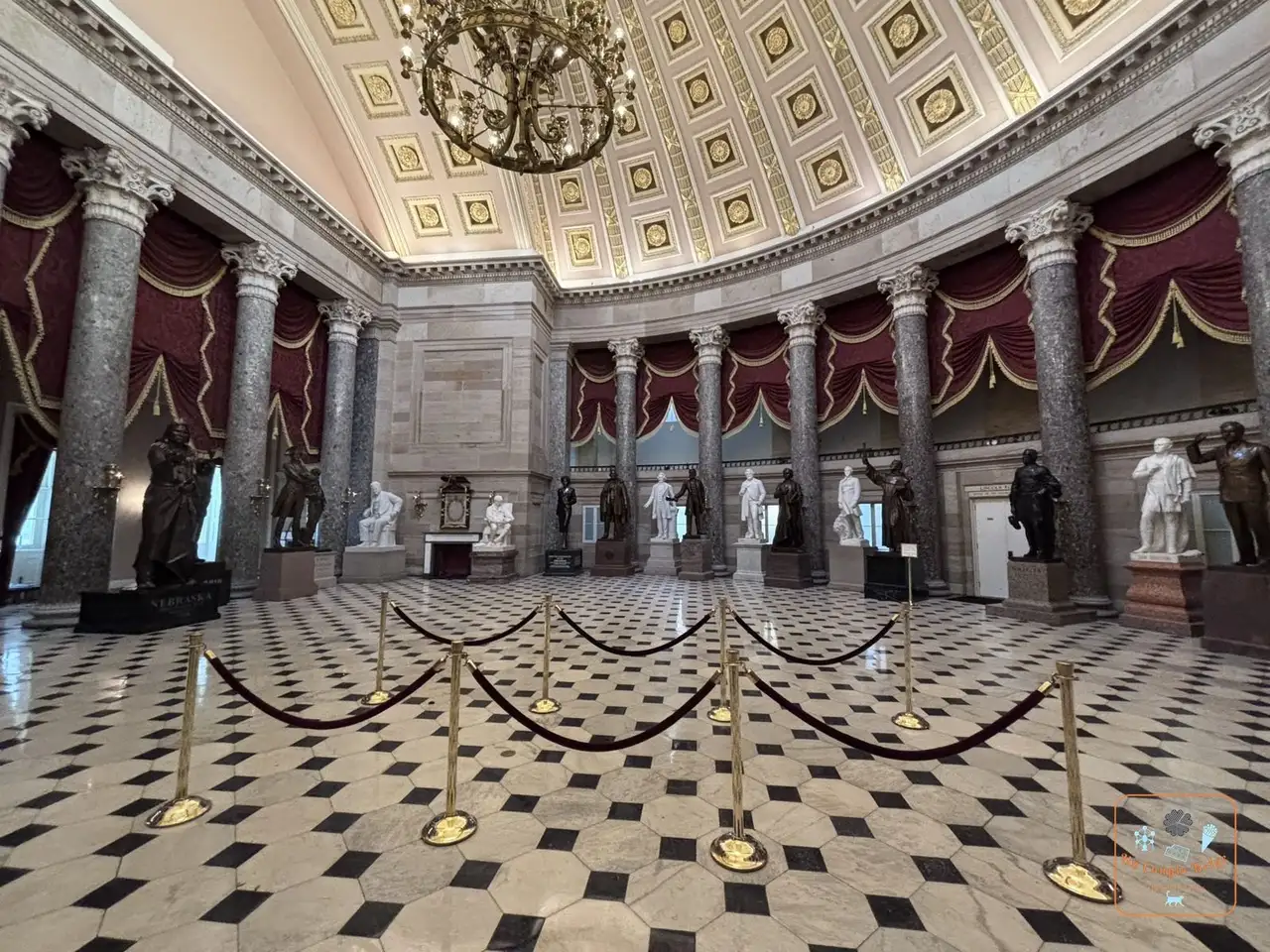
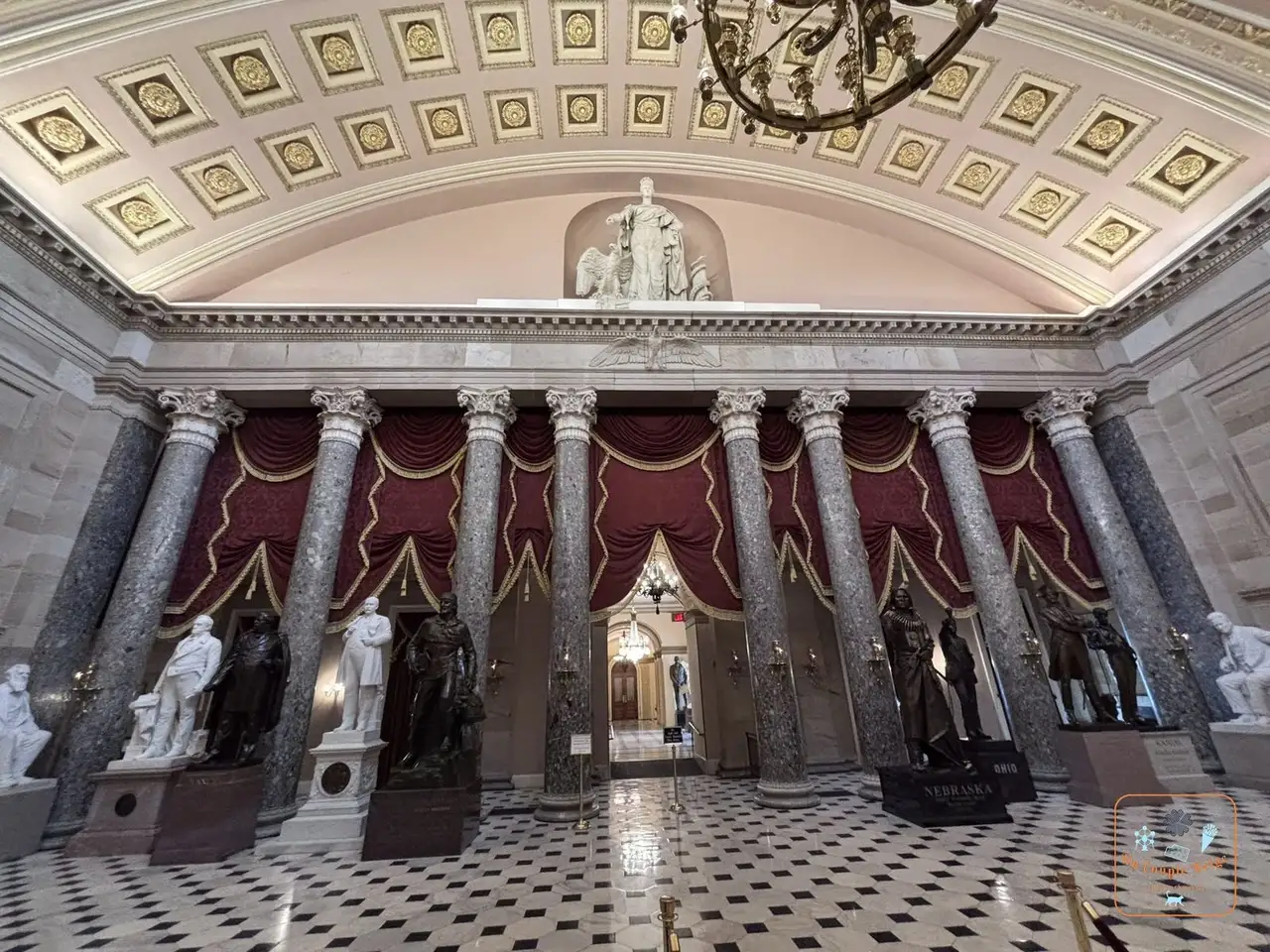
The tour then goes through National Statuary Hall, which was the chamber of the House of Representatives until the middle of the 19th century. Today it holds part of the collection of statues donated by the states: each one has given two, representing important figures from its history. As there are a hundred in all, they are spread throughout the building.
The Library of Congress
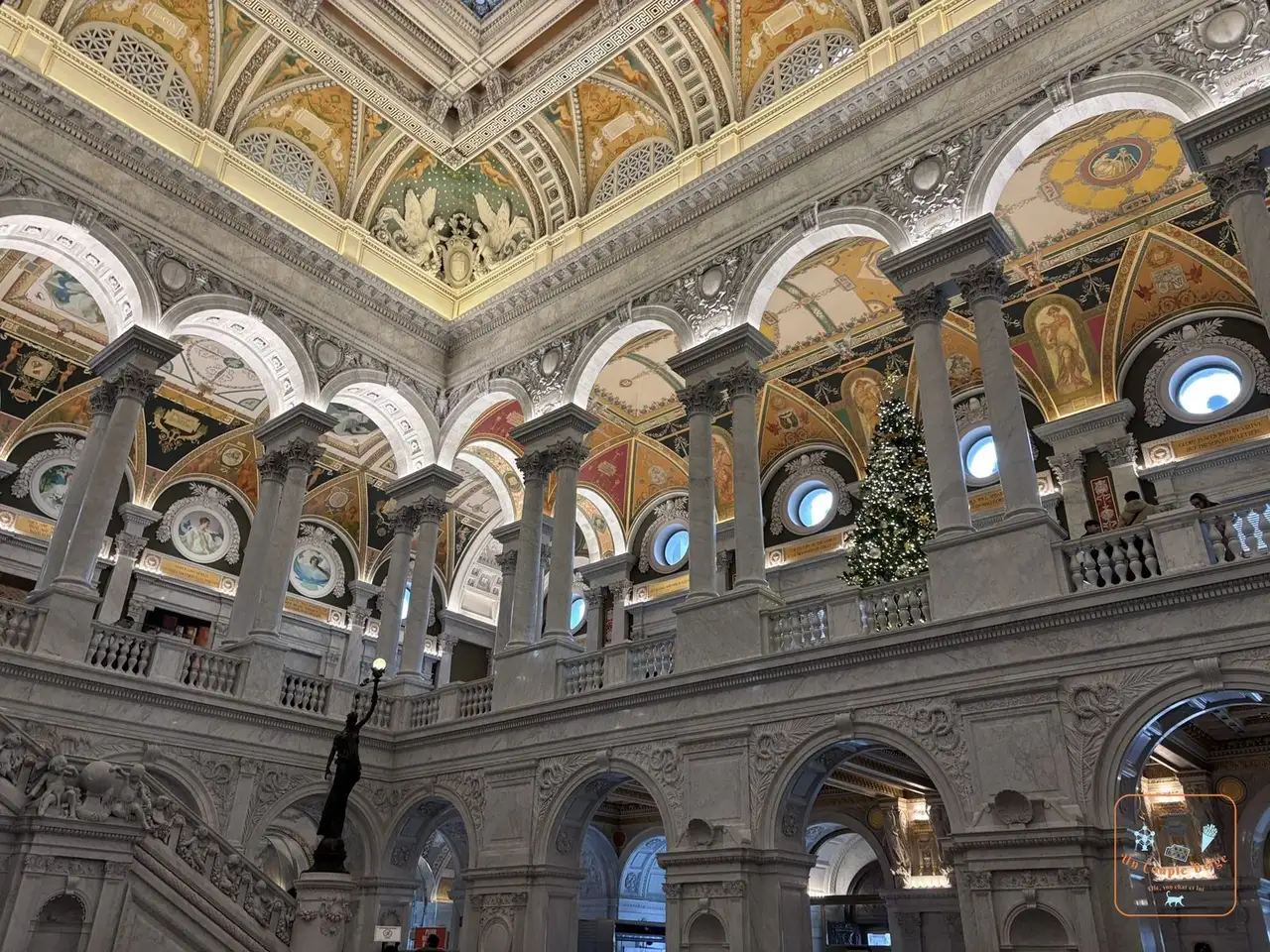
From the Capitol Visitor Center, a tunnel leads straight to the Library of Congress without going back outside. That’s the way we went. And there we came upon one of the most beautiful buildings of our whole trip. The Thomas Jefferson Building, opened in 1897, is decorated from top to bottom: marble in every colour, painted and gilded ceilings, mosaics, statues, carved staircases.
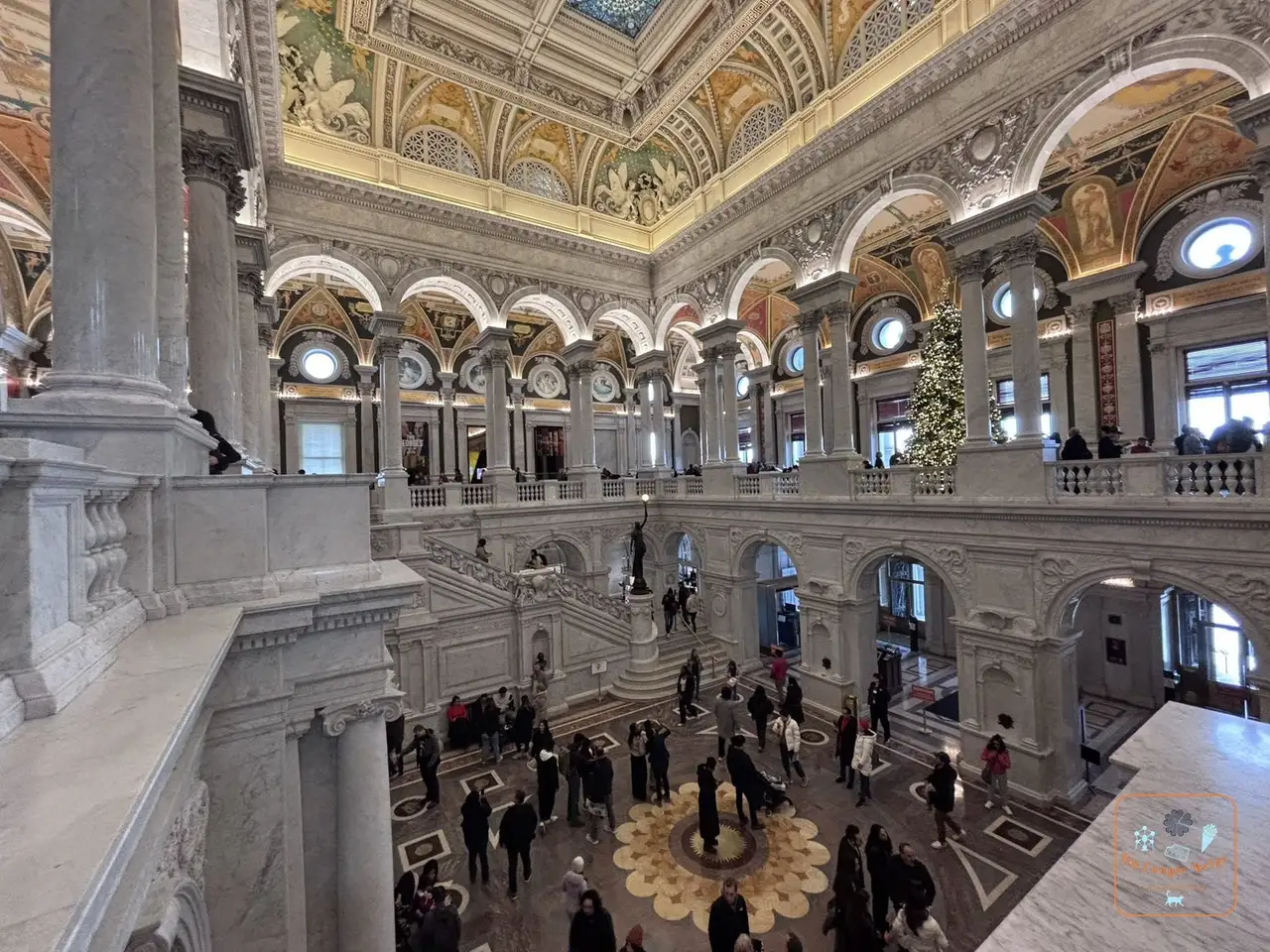
It’s the largest library in the world, with tens of millions of books and documents. Its history is tied to that of the Capitol: when the British burned the building in 1814, the library went up in smoke, and Thomas Jefferson sold his personal collection of more than 6,000 books to rebuild it.
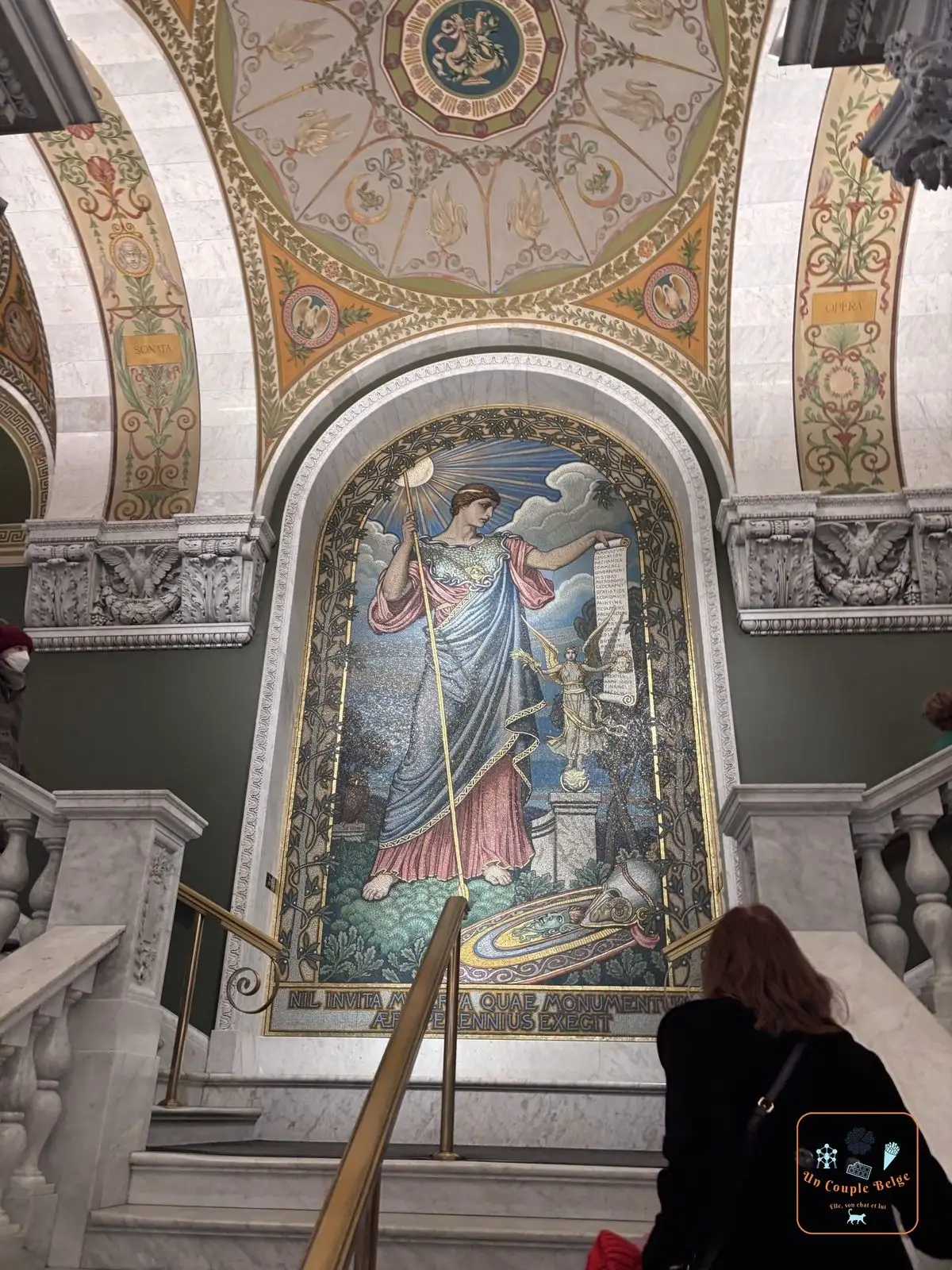
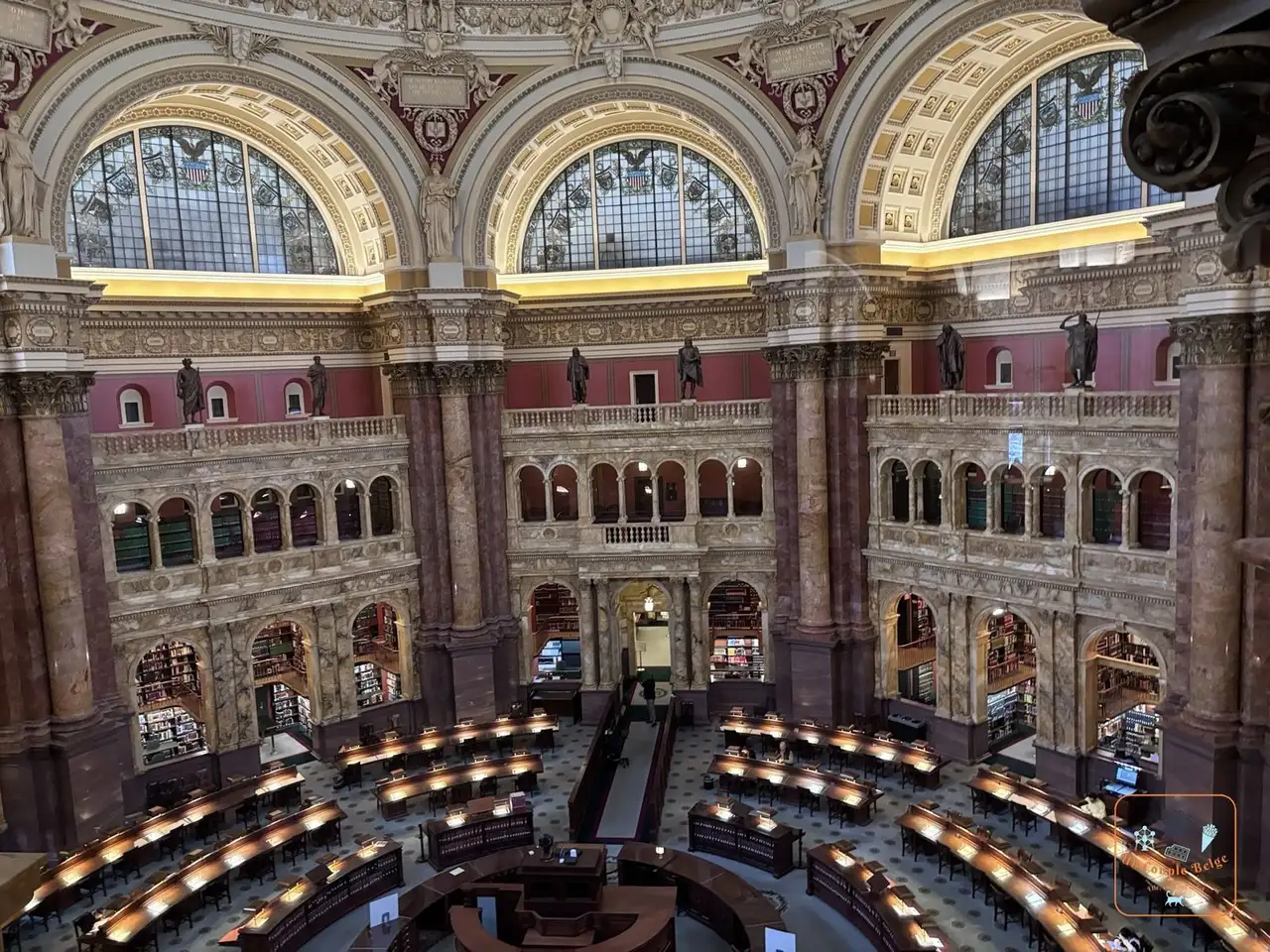
On one staircase you come across a large mosaic of Minerva, the goddess of wisdom. Then, from a glassed-in balcony, you can look down on the Main Reading Room, circular beneath its dome. It’s still a real workspace used by researchers, so you look at it from above, in silence.
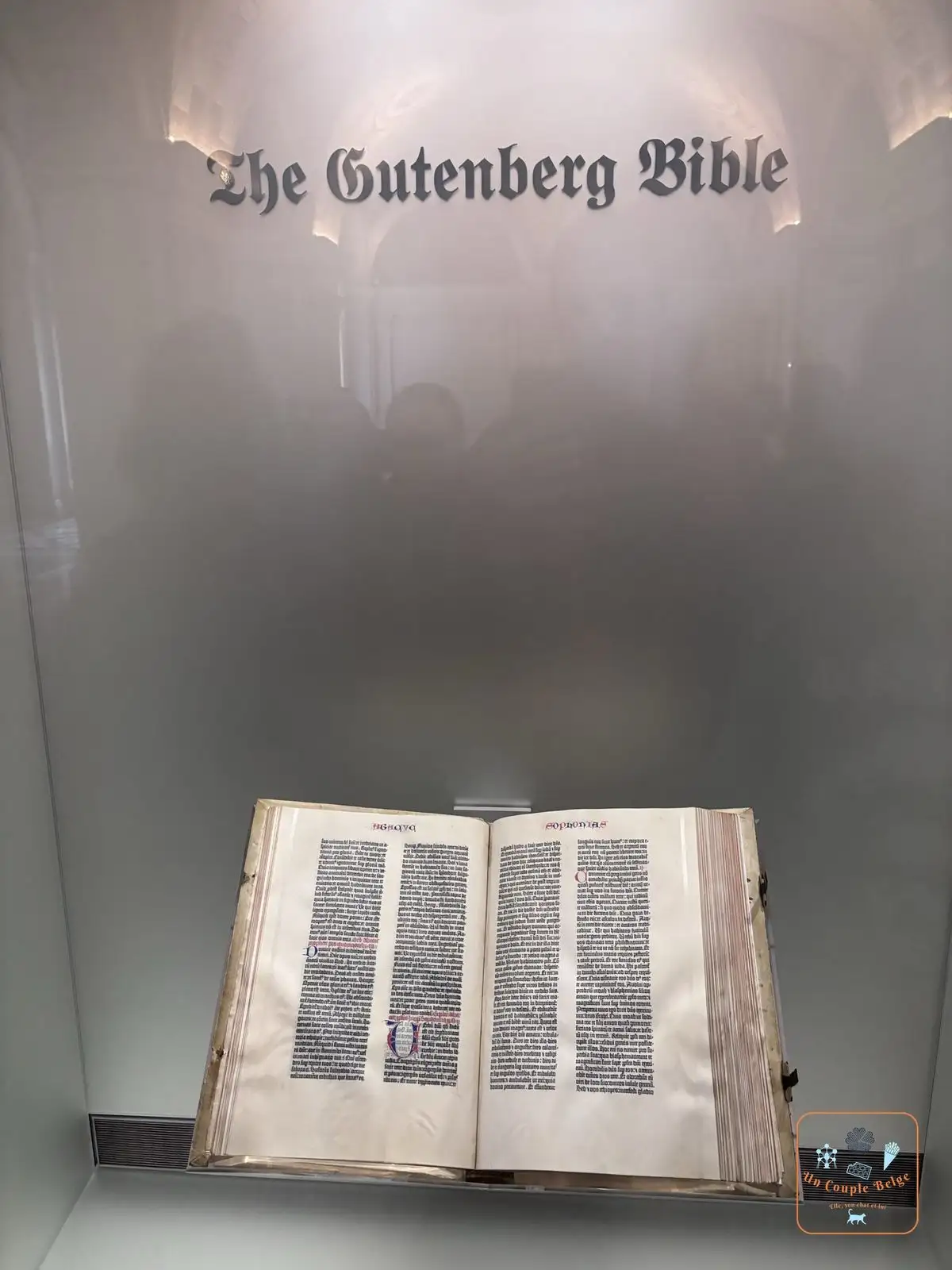
Another treasure on display: a Gutenberg Bible, one of the first books printed in Europe with movable type, in the middle of the 15th century. The Library of Congress owns one of the few complete copies printed on vellum. We stayed a little under an hour.
The National Mall on foot
As for lunch, the area is very much given over to government offices, so there isn’t a huge choice for tourists. We kept it simple and went to McDonald’s.
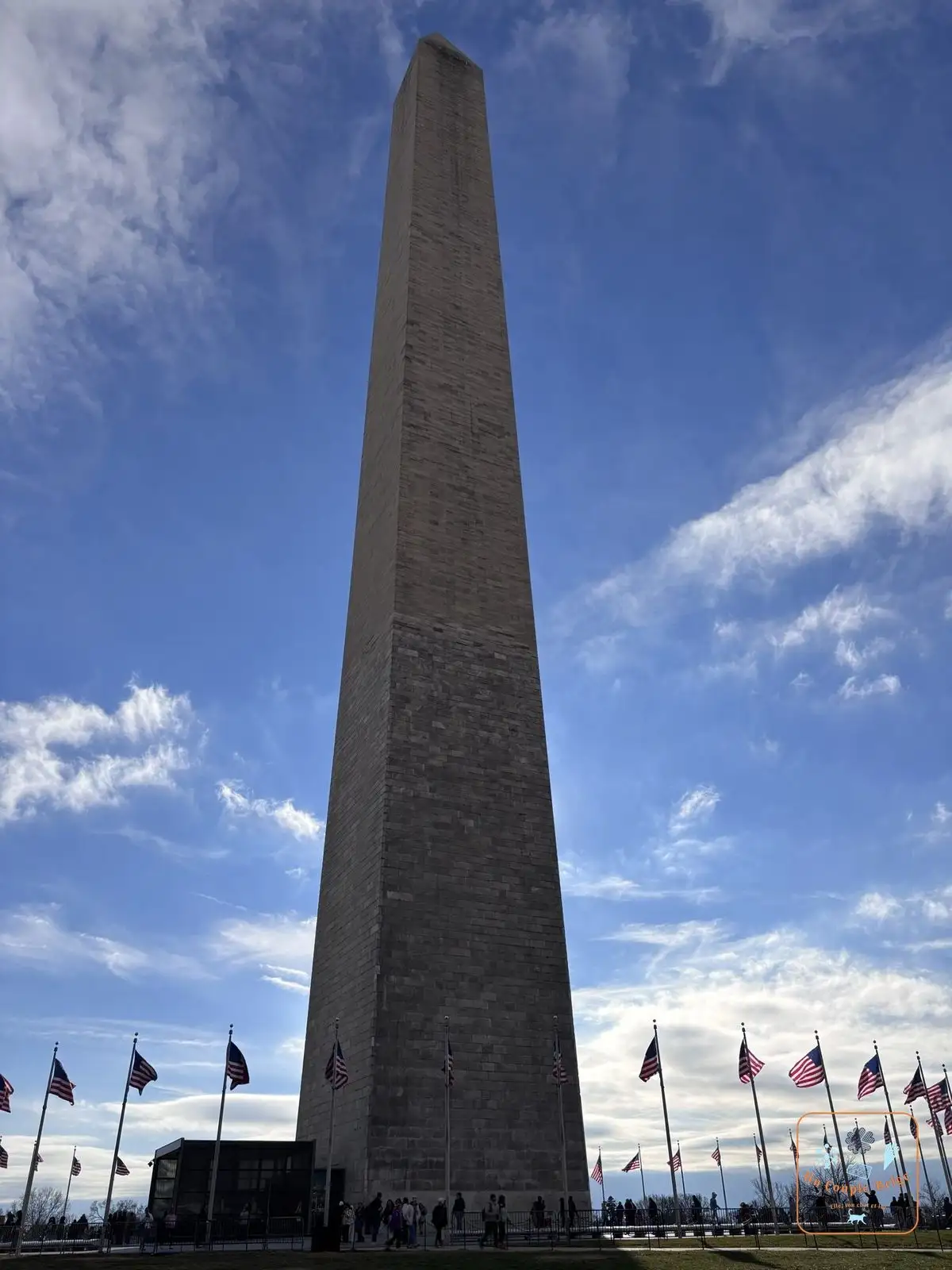
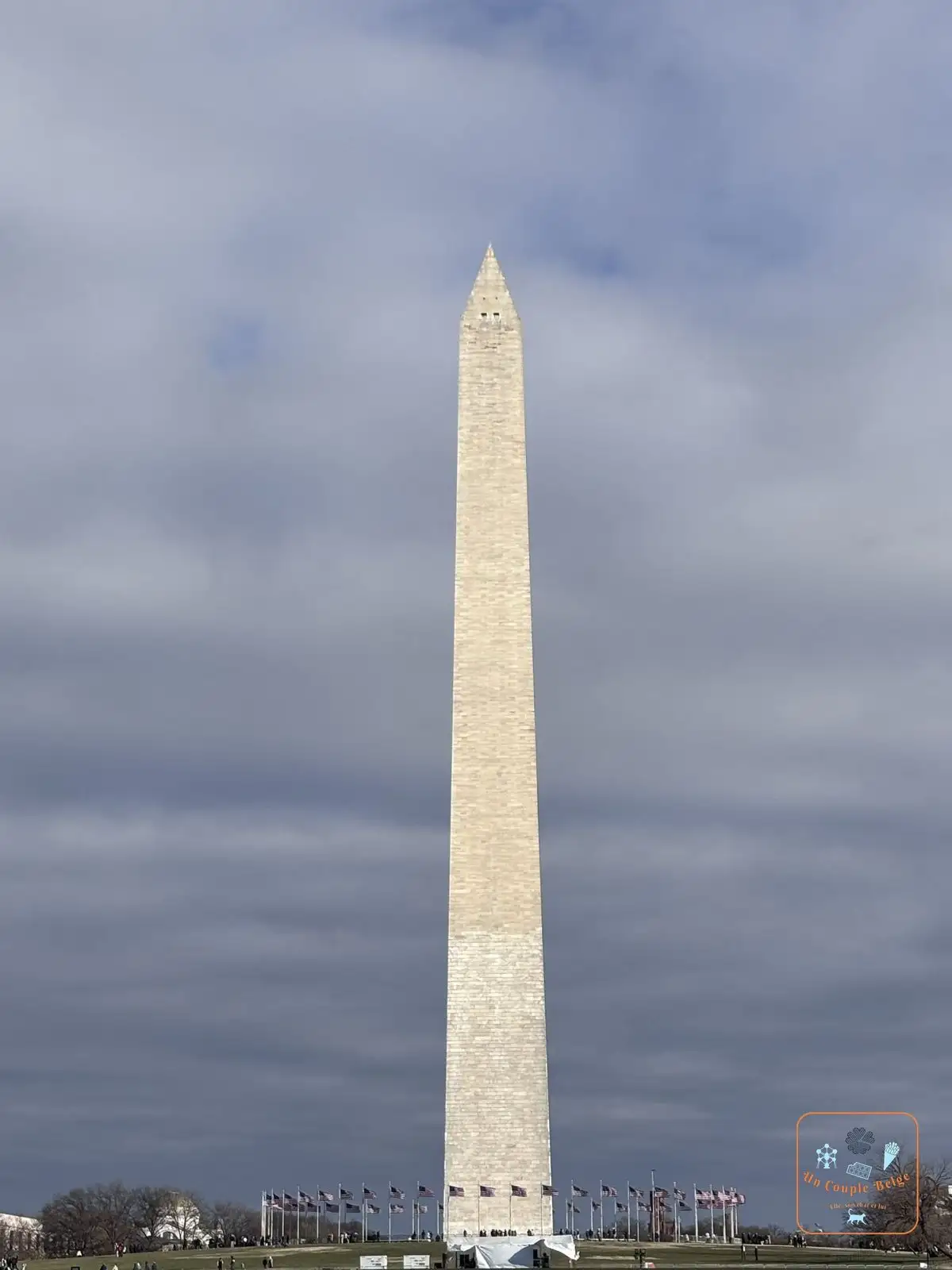
In the afternoon we walked the length of the National Mall, heading west. All along this great esplanade you pass the Smithsonian museums, lined up on either side of the lawn. From the Capitol to the Lincoln Memorial is a little over 3 km, about three quarters of an hour’s walk without stops, and you still have to come back: wear good shoes.
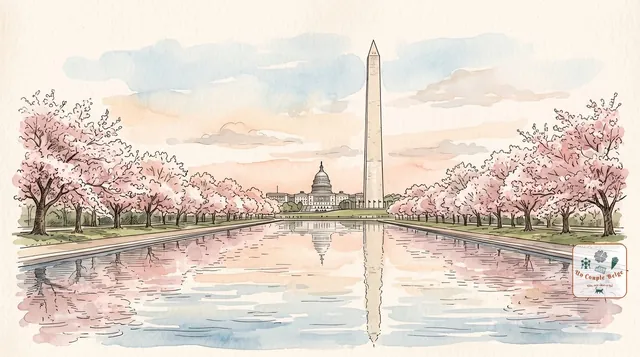
Next comes the Washington Monument, the 169-metre obelisk dedicated to the first president. If you look closely, you can see that the stone changes colour about a third of the way up: construction was interrupted for more than twenty years, partly because of the Civil War, and when it resumed, the stone came from a different quarry. We didn’t go up to the top.
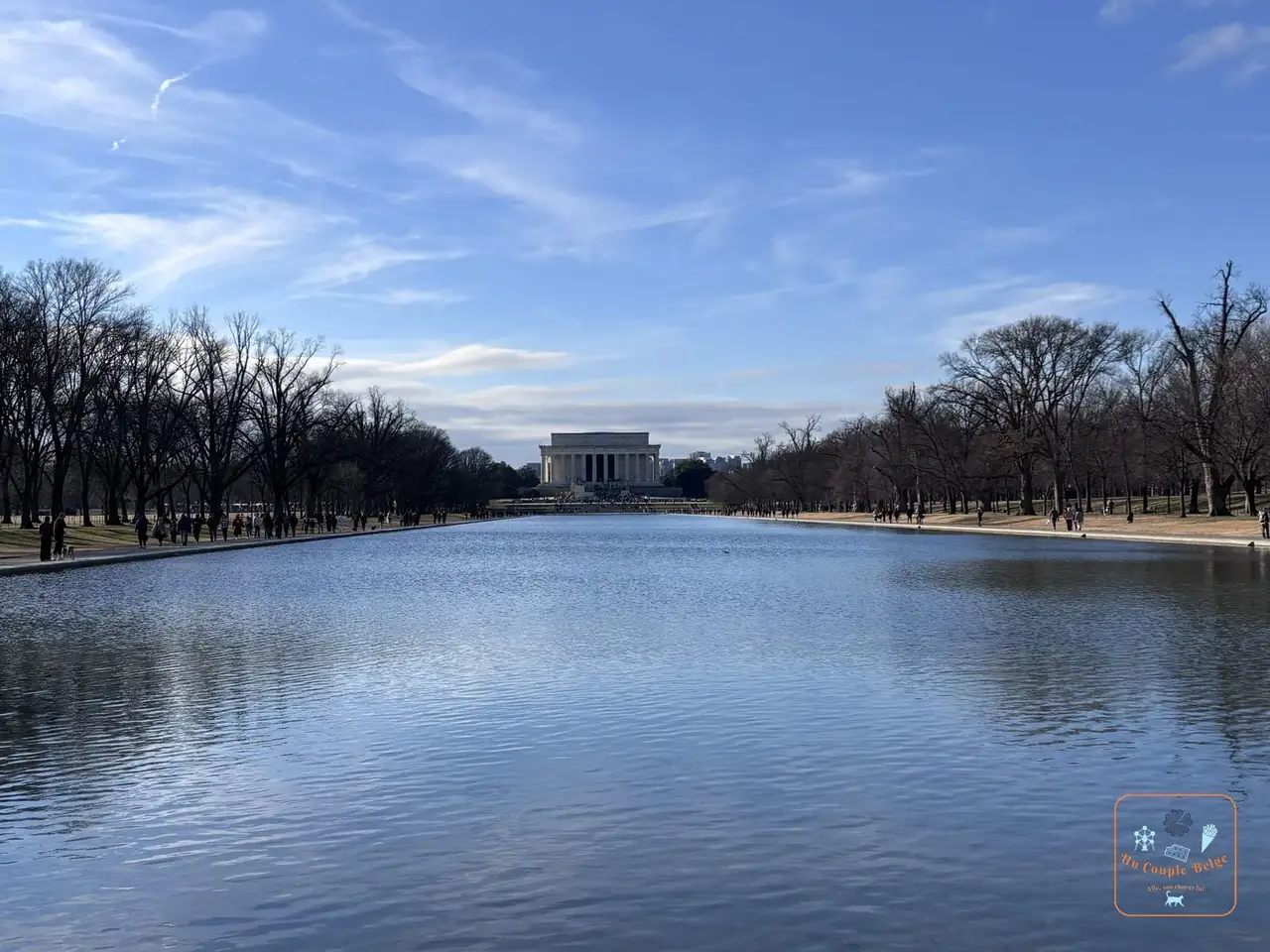
You then carry on along the Reflecting Pool, the long pool that stretches all the way to the Lincoln Memorial. It’s quite a long walk, but under the afternoon’s blue sky it was very pleasant.
The Lincoln Memorial
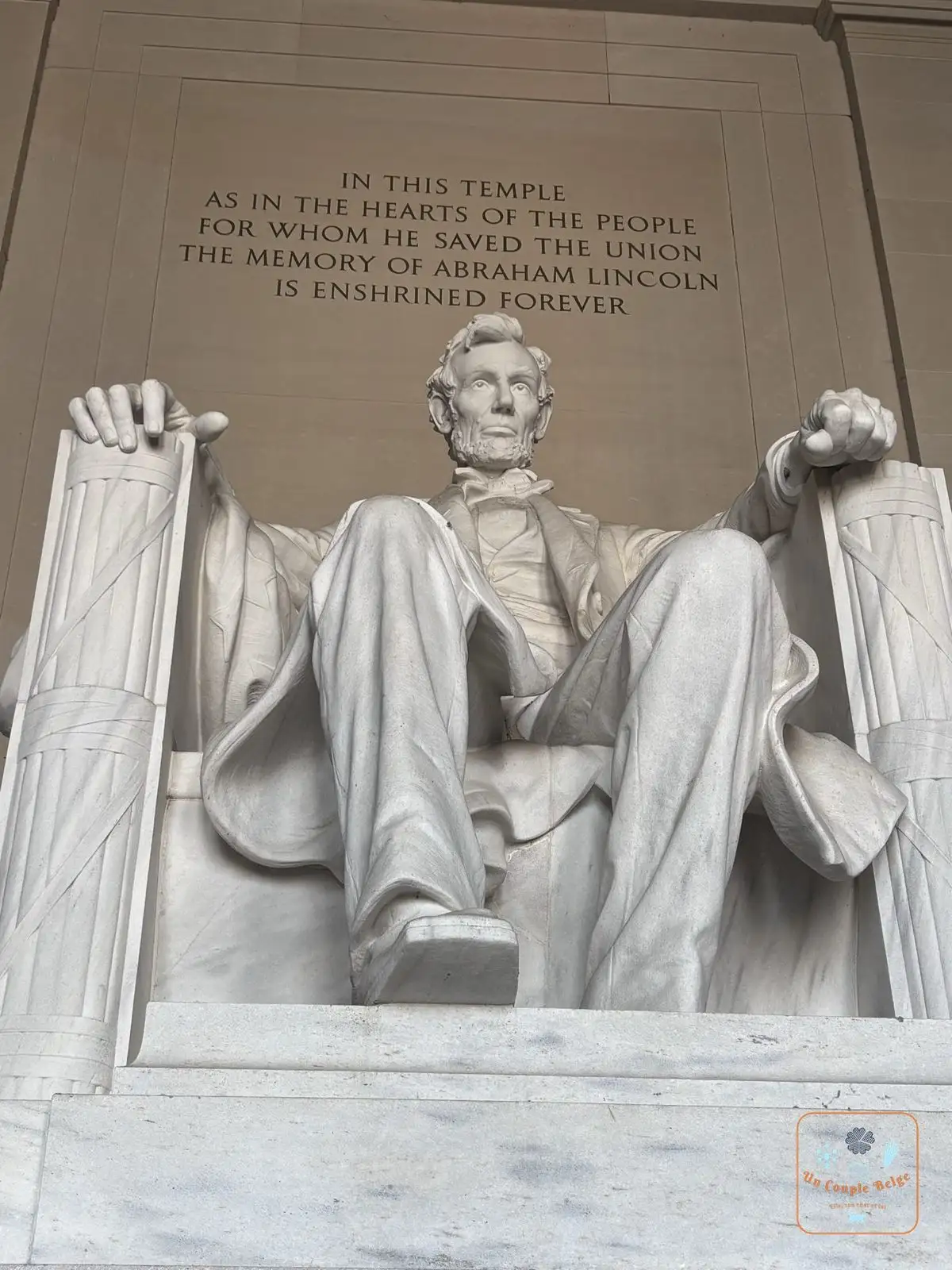
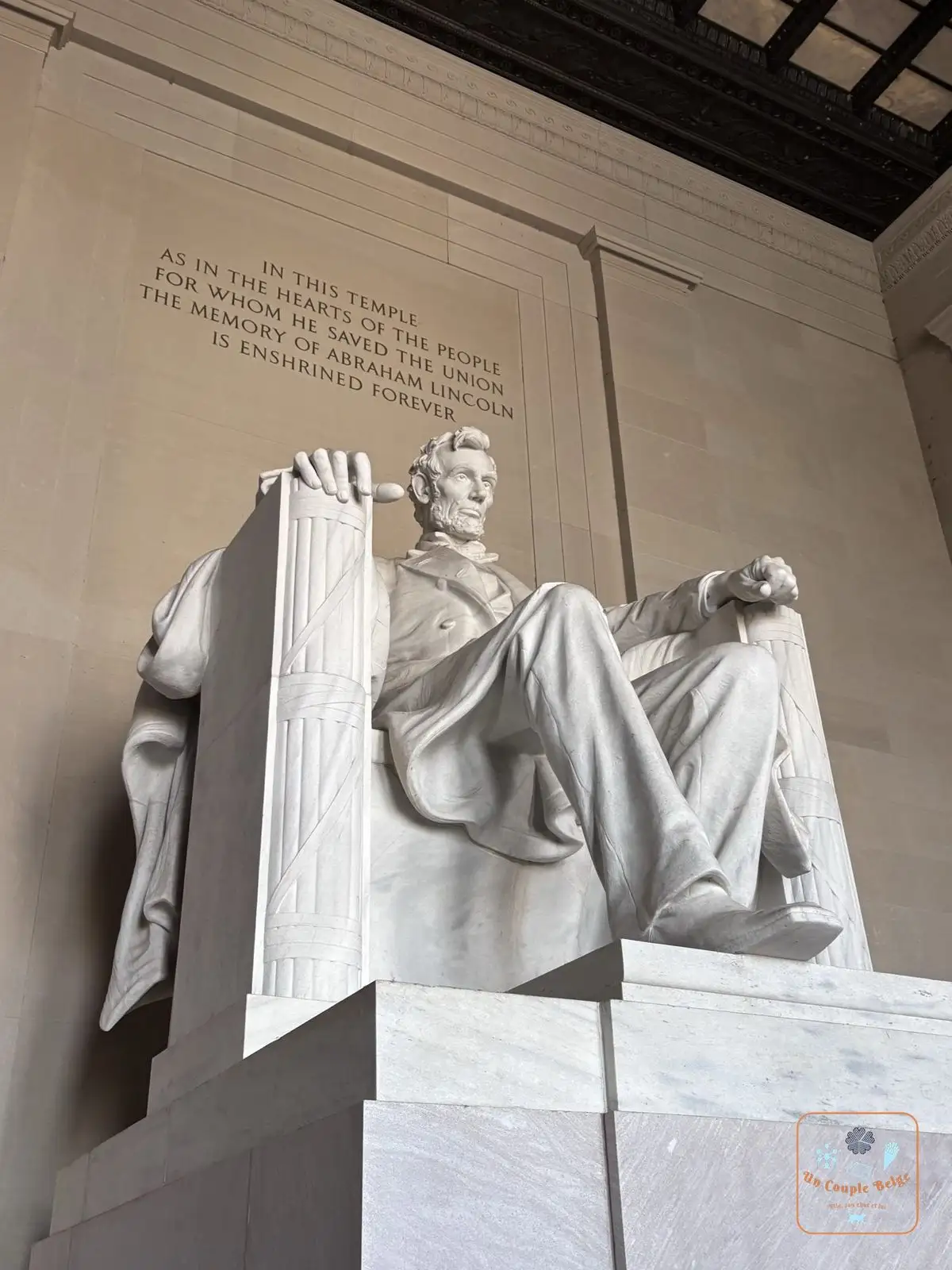
At the end of the Mall stands the Lincoln Memorial, a Greek temple in white marble dedicated in 1922. Inside, Abraham Lincoln sits, immense: the statue is nearly 6 metres tall. Above him, the inscription recalls that he saved the Union during the Civil War. Two of his speeches are carved on the walls, including the Gettysburg Address.
From the steps, the view of the Reflecting Pool, the Washington Monument and the Capitol in the distance sums up the whole city.
The White House and the National Building Museum
After the Mall, we walked past the White House. It’s still impressive, but it is heavily guarded and you don’t see much of it from the fence, all the more so as the whole East Wing had just been demolished to make way for a ballroom.
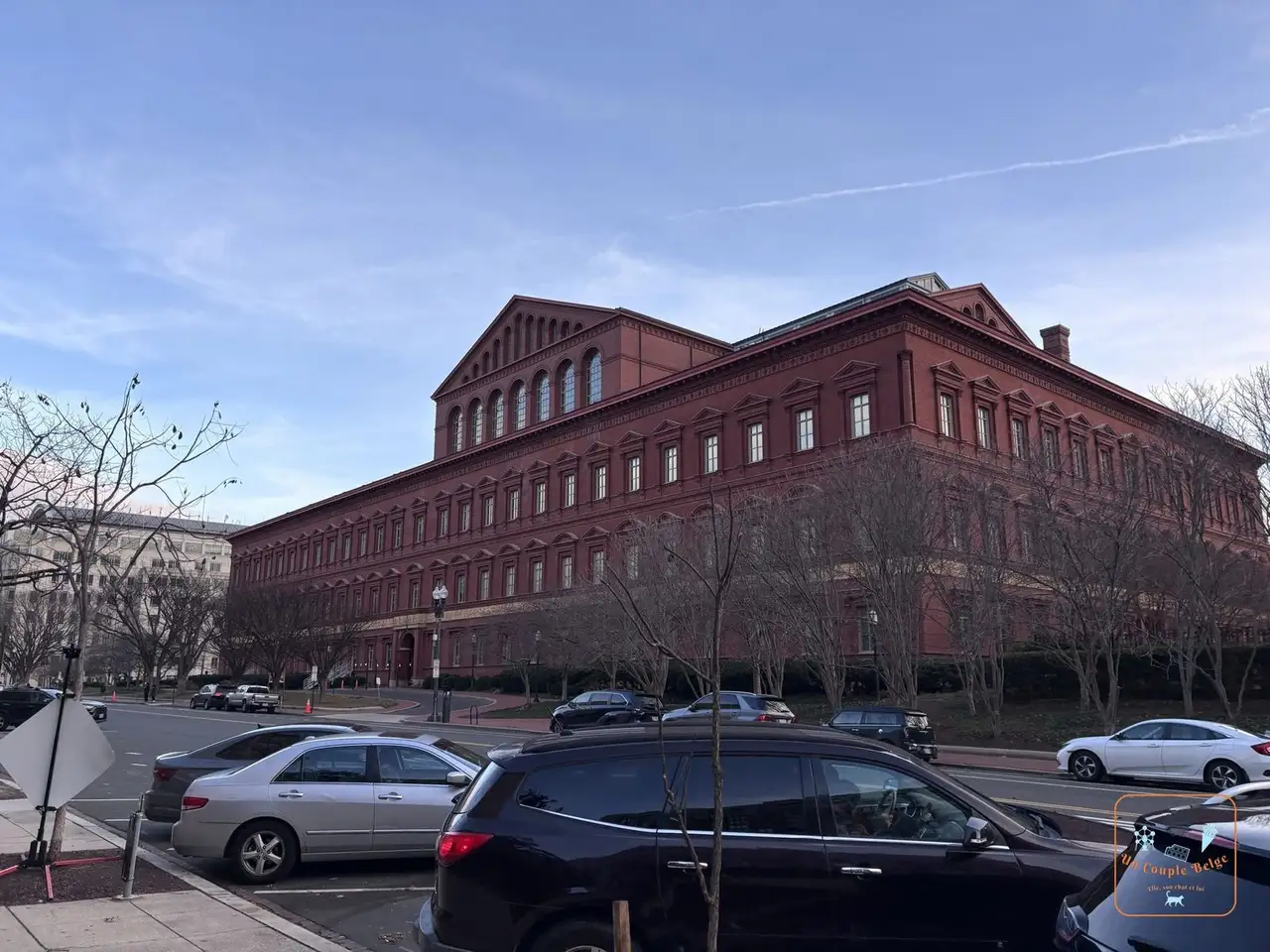
On the way back, we passed the National Building Museum, a large red-brick building put up in the late 19th century for the bureau that handled veterans’ pensions. Today it houses a museum devoted to architecture, with a vast central hall. We didn’t go in.
We then stopped at the supermarket and went back to the hotel to rest: we had been a bit under the weather towards the end of our stay in New York.
The rest of the trip is on day 7 (coming out on November 5, 2026).

Sponsored by UnCoupleBelge
Follow us on Instagram
Box sponsored by a partner
Where to stay near Washington
* Stay22 affiliate links: if you book through here, we earn a small commission at no extra cost to you. Thanks for your support!
Comments