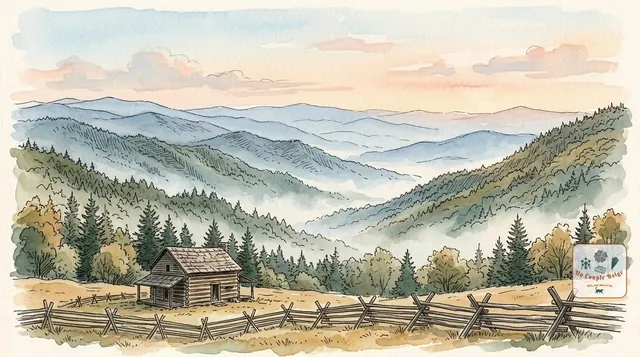
North Carolina: from the Smoky Mountains to the Outer Banks
Updated on
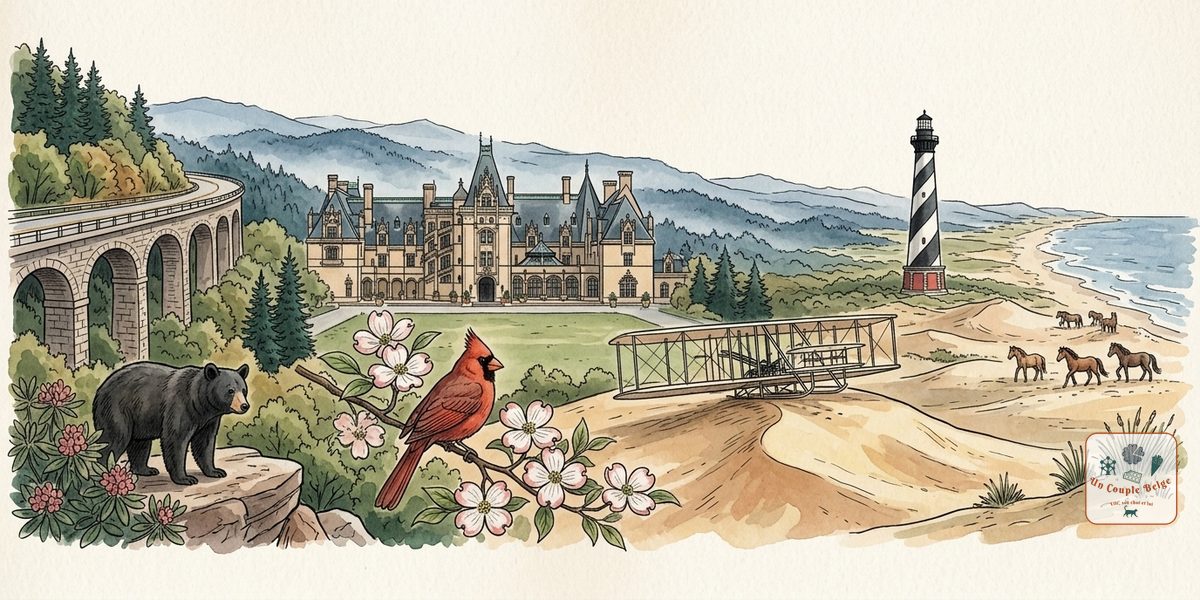
North Carolina’s licence plates read “First in Flight”, in tribute to the Wright brothers, who got the first aeroplane in history off the ground here in 1903. But the most surprising thing is that one state brings together the place where humans learned to fly, sand islands that shift with the storms, and at the other end, mountains that are among the oldest in the world and the highest in the eastern United States.
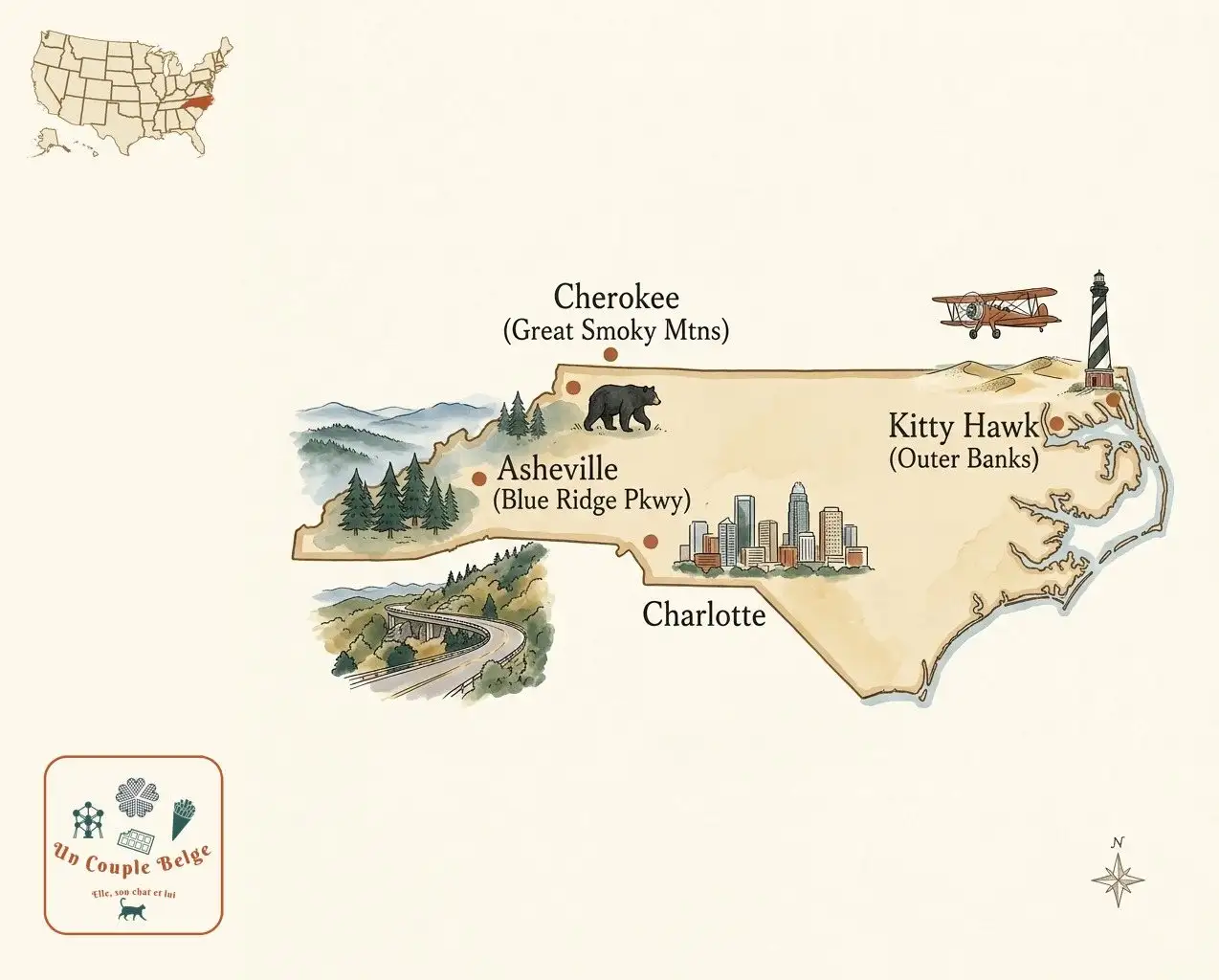
North Carolina divides into three bands: the Appalachians to the west, the Piedmont in the centre, with the big cities, and the coastal plain to the east, which opens onto the Atlantic. You can go from a hike in the mist of the Smoky Mountains to a swim on the Outer Banks in one (long) day’s drive. In between: a gigantic château, breweries, renowned universities and a real barbecue culture.
North Carolina at a glance
- Capital: Raleigh
- Largest city: Charlotte
- Population: about 11 million
- Area: about 139,000 km², a little over four and a half times Belgium
- Joined the Union: 1789, 12th state
- Time zone: Eastern Time (6 hours behind Brussels)
- Nicknames: Tar Heel State, Old North State
- Highest point: Mount Mitchell, 2,037 metres, the highest peak east of the Mississippi
Geography: mountains, Piedmont and coast
The mountains, to the west, belong to the Appalachians: the Blue Ridge Mountains and the Great Smoky Mountains, with Asheville, Boone and the Cherokee reservation.
The Piedmont, in the centre, is a region of hills where the big cities are concentrated: Charlotte, Winston-Salem, Greensboro and the “Research Triangle” (Raleigh, Durham, Chapel Hill).
The coastal plain, to the east, is flat, made up of tobacco and sweet potato fields, marshes and rivers, as far as the Outer Banks, a string of sandy barrier islands that shields the coast for more than 300 kilometres.
A bit of history
In 1587, around a hundred English settlers established themselves on Roanoke Island, where Virginia Dare was born, the first English child born in America. When the relief ships returned three years later, the colony had vanished, leaving only the word “Croatoan” carved on a post. The mystery has never been solved.
North Carolina became the 12th state in 1789. In the 19th century, the Cherokee were deported to Oklahoma on the “Trail of Tears”, but a few hundred hid in the mountains: their descendants today form the Eastern Band of Cherokee Indians. The state joined the Confederacy in 1861. In 1903 the Wright brothers achieved the first powered flight in history at Kitty Hawk, and in 1960 four Black students launched the sit-ins against segregation at lunch counters in Greensboro, a turning point in the civil rights movement. Today the state lives off banking (Charlotte), research and technology.
The must-sees
The Great Smoky Mountains
On the Tennessee border, Great Smoky Mountains National Park is the most visited national park in the United States, with more than 12 million visitors a year. Its name comes from the bluish haze that floats over the ridges, produced by humidity and the compounds given off by the forest. It is home to exceptional biodiversity, black bears, waterfalls and more than 1,000 kilometres of trails. Entry is free, but you need a parking tag to park for more than 15 minutes.
On the North Carolina side, the entrance is through Cherokee, on the land of the Eastern Band of Cherokee Indians, with the excellent Museum of the Cherokee People and the reconstructed Oconaluftee village.
The Blue Ridge Parkway
The Blue Ridge Parkway links the Smoky Mountains to Shenandoah National Park, in Virginia, over about 755 kilometres, more than half of them in North Carolina. No traffic lights, no billboards, a speed limit of 45 mph: you drive it slowly, from viewpoint to viewpoint. Among the essential stops: Linville Falls, Grandfather Mountain and its suspension bridge at more than 1,600 metres, Mount Mitchell, and autumn colours everywhere.
Please note: Hurricane Helene devastated the west of the state in September 2024, with deadly floods and landslides. Two years on, the Parkway has reopened along almost its whole length, but a few kilometres are still being repaired: check road conditions on the park’s website before you set off.
Asheville and Biltmore
Asheville, a town of artists and craft breweries in the heart of the mountains, is the ideal base for the region. It was hit hard by Hurricane Helene, particularly in its riverside arts district, and is gradually recovering.
Right next door, the Biltmore Estate, built at the end of the 19th century by George Vanderbilt, is the largest private house in the United States, with 250 rooms, in the style of the Loire châteaux. You visit the house, the gardens designed by Frederick Law Olmsted and the winery. Admission is expensive, but it’s impressive. To the south, DuPont State Forest and its waterfalls served as a backdrop for The Hunger Games 🎬.
The Outer Banks
At the other end of the state, the Outer Banks form a long strip of sand islands between the Atlantic and the sounds. These islands move so much that Cape Hatteras Lighthouse, the tallest brick lighthouse in the United States, had to be moved nearly 900 metres inland in 1999 to escape erosion.
In Kill Devil Hills, the Wright Brothers National Memorial marks the spot where, on 17 December 1903, Orville Wright flew for 12 seconds over 37 metres, the first powered flight in history. A little further on, Jockey’s Ridge is the tallest living sand dune on the East Coast, where people learn to hang-glide. In Corolla, to the north, wild horses descended from Spanish mounts wander on the beach. To the south, a free ferry leads to Ocracoke, a fishing village where the pirate Blackbeard was killed in 1718.
The Piedmont
Charlotte, the second-largest banking centre in the United States, has a modern skyline and the NASCAR Hall of Fame, in a region where motor racing is a passion. Raleigh, Durham and Chapel Hill form the Research Triangle, with Duke and UNC universities and free museums in Raleigh. In Winston-Salem, the Old Salem district, founded by Moravians in the 18th century, is visited with craftspeople in costume. In Greensboro, the International Civil Rights Center and Museum is housed in the Woolworth store where the 1960 sit-ins began.
The south coast
Wilmington has a pretty historic centre on the Cape Fear River and the battleship USS North Carolina. So many films and series have been shot there, such as Dawson’s Creek 🎬 and One Tree Hill 🎬, that it’s nicknamed “Wilmywood”. The nearby beaches, such as Wrightsville Beach, are very pleasant.
Itinerary ideas
10 days, from the mountains to the sea. Great Smoky Mountains and Cherokee (2 days) → Asheville and Biltmore (2 days) → Blue Ridge Parkway to Boone (1 day) → Winston-Salem → Raleigh and Durham → Outer Banks (3 days). About 1,000 kilometres.
One week, the mountains. Asheville → Smoky Mountains → Blue Ridge Parkway, with a possible foray into Tennessee (Gatlinburg).
One week, the coast. The Outer Banks from Corolla to Ocracoke → ferry south → Wilmington.
On the plate
- Barbecue and its civil war: in the east, they smoke the whole hog with a vinegar and pepper sauce, no tomato. In the western Piedmont, around Lexington, they smoke the shoulder with a vinegar sauce sharpened with ketchup. The two camps will never be reconciled.
- Hushpuppies, fried balls of cornmeal batter, served with barbecue and seafood.
- Calabash-style fried seafood, in a light batter, named after a fishing village near South Carolina.
- Sweet potatoes: North Carolina is the leading producer in the United States.
- Moravian cookies from Winston-Salem, ultra-thin spiced biscuits.
- And a few brands born here: Pepsi, invented in a pharmacy in New Bern in 1893, Krispy Kreme (Winston-Salem, 1937), Cheerwine, a cherry soda, and Bojangles fried chicken.
Culture and trivia
- “Tar Heel”, the nickname of the inhabitants, is said to come from the production of tar and turpentine from pine trees, or from soldiers who “stuck” to the front line during the Civil War.
- Michael Jordan grew up in Wilmington and played at the University of North Carolina at Chapel Hill.
- The Roanoke mystery is told every summer in an outdoor drama, The Lost Colony, performed since 1937 on the very site of the colony.
- The biodiversity of the Smoky Mountains is so rich that there are more species of salamander here than almost anywhere else on Earth.
When to go
- Autumn (late September to early November): the most beautiful time in the mountains, with the colours of the Appalachians gradually moving down from the summits to the valleys.
- Spring (April-May): wildflowers and rhododendrons in the mountains, a coast that is still quiet.
- Summer (June to August): hot and humid in the Piedmont and on the coast, cooler in the mountains. It’s high season on the Outer Banks.
- Winter: mild on the coast, cold and sometimes snowy in the mountains. Some sections of the Parkway close.
- Hurricane season: from June to November, mainly on the coast, but Helene showed that the mountains can be hit too.
Practical information
- Recommended length of stay: around ten days to link mountains and coast, one week for a single region.
- Getting there: Charlotte airport is a major hub, with direct flights from several European cities. Raleigh-Durham and Asheville are also served.
- Getting around: a car is essential. Allow seven to eight hours’ drive between Asheville and the Outer Banks.
- Budget: moderate, higher at Biltmore, in Asheville in autumn and on the Outer Banks in summer.
- Things to watch out for: on the Outer Banks, the currents are dangerous, so respect the flags. In the Smoky Mountains, keep your distance from black bears.
- One more tip: for autumn colours, consult the forecast maps and aim for mid-October at altitude and late October lower down.