Montana: Big Sky Country
Updated on
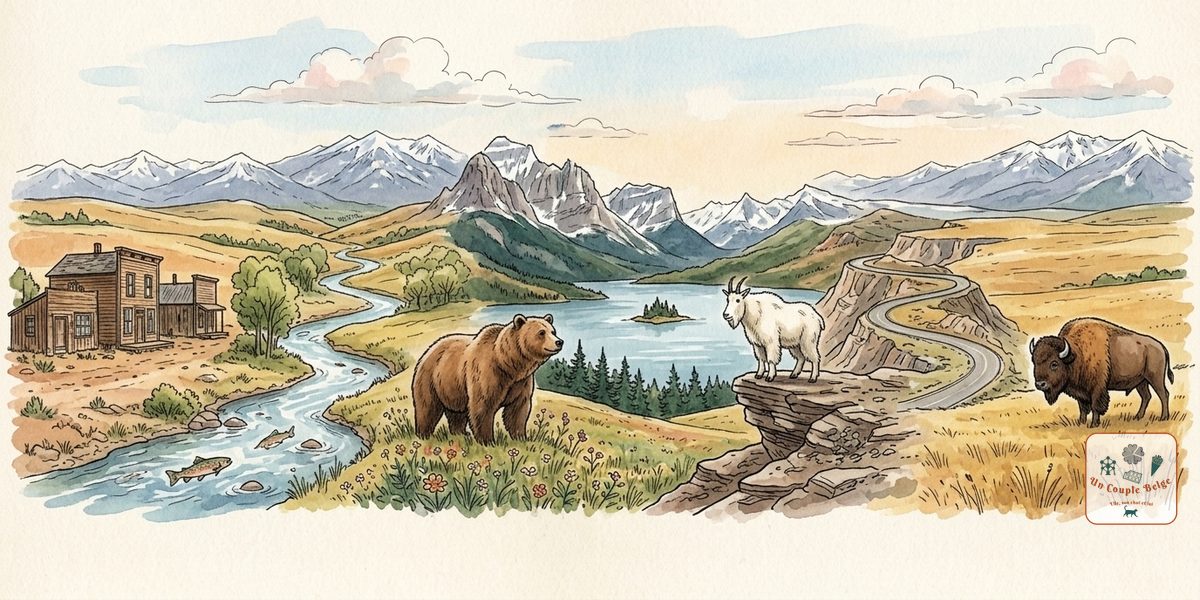
Entering Montana, you get the impression that the sky has changed size. The locals call their state “Big Sky Country”, and it’s not just a slogan. To the east, the plains stretch to the horizon. To the west, the Rockies raise glacier-covered peaks, and between the two are trout rivers, ranches and mining towns where time seems to have stopped.
Montana is often the great forgotten one on road trips, overshadowed by the stars of neighbouring Wyoming (Yellowstone, Grand Teton) and the West Coast. Yet it’s one of the most beautiful states in the country, with Glacier National Park, one of the most spectacular mountain roads in America and a sense of space that is almost impossible to find anywhere any more. Twelve times the size of Belgium for barely more than a million inhabitants, it has to be earned, kilometre after kilometre.
Montana at a glance
- Capital: Helena
- Largest city: Billings
- Population: about 1.1 million
- Area: about 381,000 km², more than twelve times Belgium. It’s the 4th-largest state.
- Joined the Union: 1889, 41st state
- Time zone: Mountain Time (8 hours behind Brussels)
- Nicknames: Treasure State, Big Sky Country
- Highest point: Granite Peak, 3,904 metres
Geography: the Rockies to the west, the plains to the east
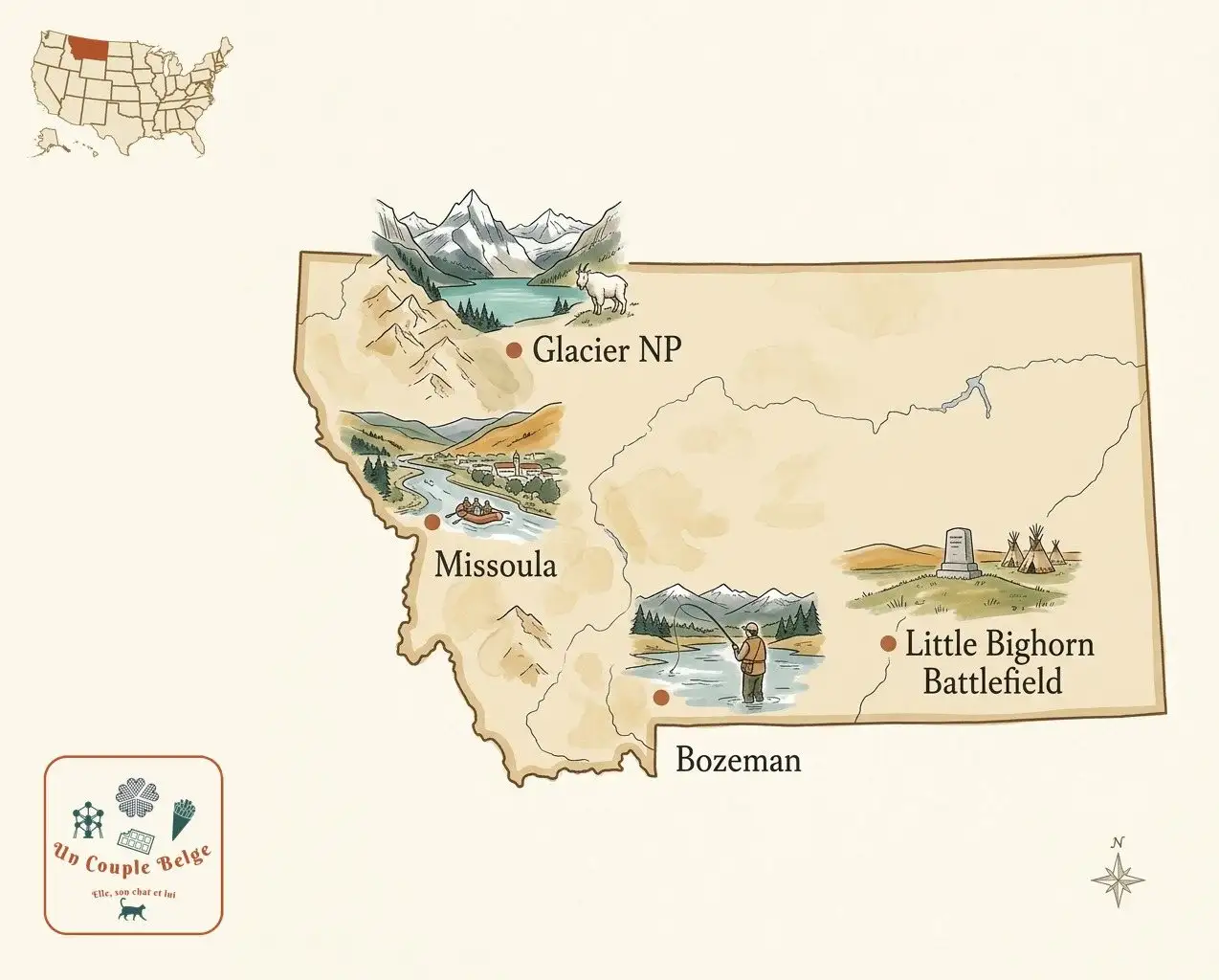
The west, about a third of the state, is mountainous: the Rockies, with Glacier National Park, Flathead Lake, the Missoula and Bozeman valleys and part of Yellowstone. The Continental Divide runs through it.
The east, the remaining two-thirds, belongs to the Great Plains: prairies, wheat fields, badlands, immense ranches and Native American reservations, with Billings and the Missouri and Yellowstone rivers.
Montana has seven Native American reservations, including those of the Blackfeet, east of Glacier, and the Crow, around Little Bighorn.
A bit of history
The Blackfeet, the Crow, the Salish, the Northern Cheyenne, the Assiniboine and other peoples lived here when the Lewis and Clark expedition crossed the region in 1805-1806. In the 19th century, the discovery of gold at Bannack (1862) and then at Virginia City set off a rush, then the copper of Butte made Montana one of the great mining centres of the world.
In 1876, Lieutenant Colonel Custer and his 7th Cavalry Regiment were wiped out at Little Bighorn by Lakota, Cheyenne and Arapaho warriors led by Sitting Bull and Crazy Horse. The following year, Chief Joseph’s Nez Perce surrendered in northern Montana, a few dozen kilometres from Canada. Montana became a state in 1889. In the 20th century the mines declined, and ranching, timber and tourism took over. Glacier National Park was created in 1910.
The must-sees
Glacier National Park
Glacier National Park, right in the north, on the Canadian border, is nicknamed “the Crown of the Continent”. Its name is becoming more and more ironic: there were about 150 glaciers here in the mid-19th century, and fewer than thirty remain today. The turquoise lakes, glacial valleys and jagged summits are still spectacular.
The Going-to-the-Sun Road crosses the park for 80 kilometres, climbing to Logan Pass, at more than 2,000 metres, where you often come across mountain goats and bighorn sheep. It’s only open along its full length from late June or early July to mid-October, depending on the snow. In some years, a reservation is required to drive it in high season: check on the park’s website. Among the star hikes: the Highline Trail, Grinnell Glacier, Avalanche Lake. The Many Glacier area, to the east, is ideal for seeing grizzlies from a distance.
The Beartooth Highway and Yellowstone’s north entrance
The Beartooth Highway (Route 212) links Red Lodge to the north-east entrance of Yellowstone, climbing to more than 3,300 metres, among alpine lakes and snowfields, even at the height of summer. The journalist Charles Kuralt called it “the most beautiful drive in America”. It’s only open from roughly late May to mid-October.
The north entrance to Yellowstone, at Gardiner, with its stone arch of 1903, is the only one open to cars all year round. Paradise Valley, between Livingston and Gardiner, is superb, with hot springs such as those at Chico.
Flathead Lake and the west
South of Glacier, Flathead Lake is the largest natural freshwater lake west of the Mississippi, with very clear water and cherry orchards on its shores. Whitefish, a small mountain town with a ski resort, is a good base for Glacier. Further south, the CSKT Bison Range (the former National Bison Range, returned to the Salish and Kootenai tribes in 2022) is home to a free-roaming bison herd.
Bozeman and Missoula
Bozeman and Missoula are two young, sporty university towns, full of breweries, outdoor shops and fly fishers. In Bozeman, the Museum of the Rockies has one of the largest collections of dinosaur fossils in the world, including a T. rex skeleton. Missoula is crossed by the Clark Fork River, where river surfers play on an artificial wave right in the centre. Robert Redford’s film A River Runs Through It 🎬 is set in the region.
Butte and the mining towns
At the beginning of the 20th century, Butte was nicknamed “the richest hill on Earth” thanks to its copper mines. The town, far quieter today, has kept impressive architecture and mine headframes everywhere. The Berkeley Pit, a former open-pit mine filled with acidic, toxic water, is viewed from a platform, a sight as fascinating as it is disturbing.
Montana has dozens of ghost towns. Bannack, the territory’s first capital, is a state park where the wooden buildings are still standing. Virginia City and Nevada City bring the gold rush era back to life in summer, with costumed actors.
Little Bighorn and the eastern plains
In the south-east, Little Bighorn Battlefield National Monument marks the site of Custer’s defeat in 1876. White markers show where the soldiers fell, and red markers the Native American warriors. A memorial pays tribute to the nations that fought. A tour guided by a member of the Crow tribe sheds a very different light on the story.
Near Billings, Pompeys Pillar is a rock on which William Clark carved his name in 1806: it’s the only visible physical trace of the Lewis and Clark expedition. Further east, Makoshika State Park, the largest state park in Montana, is a badlands landscape rich in fossils.
Itinerary ideas
One week, the Rockies. Bozeman (1 day) → Paradise Valley and Yellowstone via Gardiner (2 days) → Beartooth Highway → back via Butte → Missoula → Flathead Lake → Glacier (2-3 days).
10-14 days, Montana and Wyoming. Glacier → Missoula → Butte → Bozeman → Yellowstone → Grand Teton → Beartooth Highway → Little Bighorn → Billings. One of the finest loops in the American West.
With Canada. Glacier is twinned with Waterton Lakes National Park, just across the border, in Alberta, and Banff is a four- to five-hour drive away.
On the plate
- Huckleberries, small wild berries related to the blueberry, which nobody has managed to cultivate: they turn up in milkshakes, pies, jam, beer and even sweets.
- Bison and elk meat, as a burger or a steak, and beef from the ranches.
- Butte’s pork chop sandwich, a breaded pork cutlet in a bun, an institution since 1924.
- Butte’s pasties, meat turnovers brought by Cornish miners.
- Flathead cherries, in July and August.
- Rocky Mountain oysters, which aren’t oysters but fried bull testicles.
Culture and trivia
- Evel Knievel, the daredevil who jumped his motorbike over buses and casino fountains, was born in Butte in 1938.
- The speed limit reaches 80 mph (about 130 km/h) on Montana’s interstates. For a few years, in the 1990s, there wasn’t even a numerical limit during the day, just an obligation to drive in a “reasonable and prudent” manner.
- Grasshopper Glacier, near Cooke City, contained millions of grasshoppers trapped in the ice centuries ago. The glacier has almost melted away.
- Rodeo isn’t folklore for tourists: in summer, almost every small town holds its own, with real local cowboys.
- There are more cows than people in Montana, about twice as many.
When to go
- Summer (July-August): the only time when all the pass roads (Going-to-the-Sun, Beartooth) are open. It’s high season, with crowds at Glacier and Yellowstone. Wildfires can bring smoke in August.
- September: excellent, with fewer people, the autumn colours beginning and the wildlife active. The first snow can close the high roads.
- June: beautiful and green, but the mountain roads are often still closed by snow.
- Winter (December to March): for skiing at Big Sky or Whitefish and Yellowstone by snowmobile. Cold, with difficult roads.
Practical information
- Recommended length of stay: 7 to 10 days at least, ideally combined with Wyoming.
- Getting there: Bozeman, Missoula, Billings and Kalispell (close to Glacier) airports are served by connecting flights. Salt Lake City, Denver or Calgary (Canada) are alternatives.
- Getting around: a car is essential. Amtrak’s Empire Builder train runs along the southern edge of Glacier, an original option.
- Budget: medium. Accommodation near Glacier and Yellowstone is expensive in summer and goes very quickly. Since 2026, the national parks pass has cost foreign visitors 250 dollars, and Glacier, like Yellowstone, charges a 100-dollar surcharge per person without it: see our guide to the national parks pass.
- Things to watch out for: Montana is grizzly country. When hiking, make noise, walk in a group and carry bear spray. Fill up as soon as the tank drops below half; petrol stations can be very far apart.
- One more tip: book accommodation near Glacier months ahead, and find out about access reservations for the Going-to-the-Sun Road as early as spring.
Our place guides in Montana
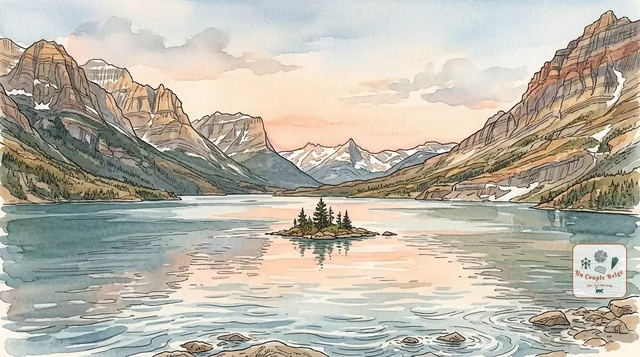
Glacier: the Crown of the Continent, before its glaciers disappear
Ice-carved peaks, turquoise lakes and a legendary mountain road, in northern Montana. One of the finest hiking parks in the country.
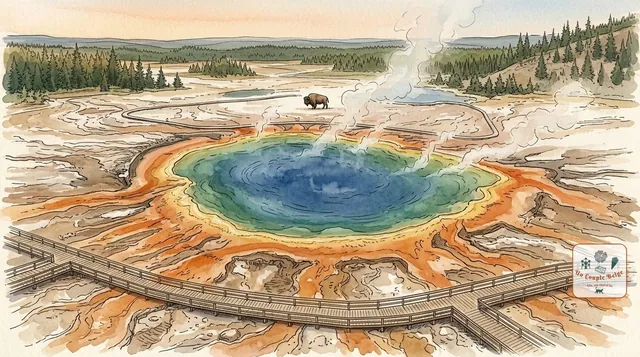
Yellowstone: geysers, bison and springs of every colour
The world's first national park, sitting on a volcano: geysers, multicoloured hot springs, a yellow canyon and bison in the middle of the road.