Yellowstone: geysers, bison and springs of every colour
Updated on
How long should you spend there?
At a glance
- Entrance fee
- $35 per vehicle for 7 days, plus $100 per person for non-residents aged 16 and over, unless you hold the annual pass.
- Best time to go
- From late May to late September, when all the roads are open. Most close from early November to mid-April.
- Book ahead
- None to enter. The park's hotels can be booked up to 13 months ahead.
- Getting around
- By car only. There's no shuttle, and the sites are an hour's drive from one another.
| Walks and hikes | Distance | Time | Level |
|---|---|---|---|
| Grand Prismatic Spring overlook | about 2 km (round trip) | 45 min | easy |
| Upper Geyser Basin, from Old Faithful to Morning Glory Pool | about 4 km (round trip) | 1 hr 30 | easy |
| The terraces of Mammoth Hot Springs | 2.8 km (boardwalks) | 1 hr | easy |
| Brink of the Lower Falls | 1.1 km (round trip) | 45 min | moderate |
| Fairy Falls | 8 km (round trip) | 2 hrs 30 | easy |
| Mount Washburn | about 10 km (round trip) | 4 hrs | strenuous |
Yellowstone is the world’s first national park, created in 1872. It sits on a giant volcano, which heats the ground beneath it and powers half the geysers on the planet. Add a canyon with yellow walls, a high-altitude lake and thousands of bison, and you have a park like no other. It’s also immense: almost 9,000 km², straddling Wyoming, Montana and Idaho.
History and origins
President Ulysses S. Grant signed the law creating the park on 1 March 1872. The idea was brand new: setting a territory aside, for everyone. Nobody yet knew how to manage such a place. In 1886 the army was sent in to stop the poachers. It stayed until 1918, two years after the National Park Service was created.
Beneath the park, a pocket of magma heats the rainwater that has seeped into the ground. It comes back out through more than 10,000 springs, geysers, fumaroles and mud pots. The volcano’s last very large eruption was 640,000 years ago. Scientists monitor it constantly, and nothing points to a reawakening.
In 1995, after seventy years’ absence, the wolf was reintroduced to the park. It has stayed, and a dozen or so packs live there today.
What to do there
- Old Faithful: the most famous geyser in the world. It erupts roughly every 90 minutes, to a height of more than 30 metres. The time of the next eruption is posted at the visitor center. All around, boardwalks link dozens of other geysers and pools: it’s the highest concentration on the planet.
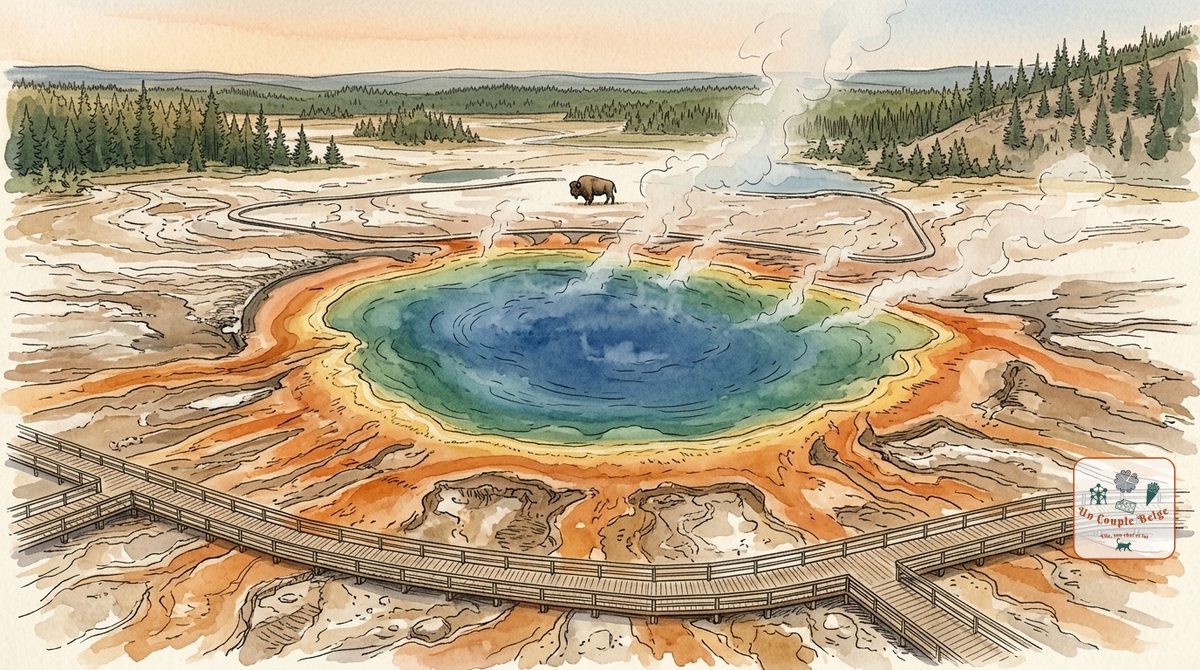
- Grand Prismatic Spring: the largest hot spring in the park, 113 metres across, blue in the centre, then green, yellow and orange around the edges. The colours come from heat-loving bacteria. From ground level you mostly see steam: climb to the overlook, on the Fairy Falls trail.
- The Grand Canyon of the Yellowstone: a canyon of yellow and pink rock, 240 to 370 metres deep, where the river drops over two great waterfalls. The most famous view is from Artist Point. A steep trail goes down to the very brink of the lower fall.
- Hayden Valley and Lamar Valley: the two great wildlife valleys. You see herds of bison, elk, sometimes bears and wolves. Come at dawn or at the end of the day, with binoculars.
- Mammoth Hot Springs: stepped terraces of white and orange limestone, with hot water trickling over them. They look different from one year to the next. Elk often graze on the lawns of the village.
- Norris Geyser Basin: the hottest and most changeable basin in the park, with Steamboat, the tallest geyser in the world, whose eruptions are rare and unpredictable.
- West Thumb and Yellowstone Lake: hot springs on the shore of a huge lake, at an altitude of 2,357 metres. Some bubble away under the water.
- Mud Volcano and Fountain Paint Pot: two places to see the mud pots, which bubble and smell of sulphur.
- The Grand Loop Road: the figure-of-eight road that links all these sites, over about 230 km. You can’t drive it in a day.
Stories and good to know
- The park has more than 500 geysers, which is over half of those on the planet.
- Yellowstone’s traffic jams have a name: “bison jams”. A herd decides to walk along the road, and everyone waits. It can last an hour.
- Biscuit Basin, near Old Faithful, has been closed since a steam explosion in July 2024, which destroyed the boardwalks. Nobody was hurt.
- The series Yellowstone 🎬, with Kevin Costner, was hardly filmed in the park at all. The Duttons’ ranch is in Darby, Montana.
- The park received nearly 4.8 million visits in 2025. In July and August, the car parks at Old Faithful and Grand Prismatic are full by mid-morning.
Practical information for your road trip
- Pass: with the surcharge for non-residents, the America the Beautiful pass pays for itself with this park alone. Everything is explained in our guide to the national parks pass.
- Getting there: the park has five entrances. The west entrance, at West Yellowstone, is the closest to the geysers. The south entrance leads straight into Grand Teton. The most convenient airport is Jackson or Bozeman.
- Distances: allow 45 minutes to an hour between West Yellowstone and Old Faithful, not counting stops. The other sites are further still: you drive slowly, and you stop constantly.
- Fuel: there are petrol stations in the park, at Old Faithful, Canyon, Mammoth, Grant Village, Fishing Bridge and Tower. They take cards 24 hours a day.
- Phone signal: there’s almost none outside the villages. Download the map before you enter.
- Weather: the park is above 2,000 metres. It can snow in May and September, and the nights are cool even in summer.
- Where to stay: in the park, nine hotels and several campgrounds, including the famous Old Faithful Inn, built entirely of logs. Outside, West Yellowstone and Gardiner are the most convenient bases. Changing accommodation during your stay saves hours of driving.
- Combine it with: Grand Teton, just to the south. The two parks are almost always visited together.
Our experience in Yellowstone
We went there on our road trip 3, and we’ll be telling you all about it soon. Until then, if you’d like more details, feel free to write to us by message or on Instagram.
The day-by-day account will be available soon.
Quick quiz
Question 1 / 3
Where to stay near Yellowstone: geysers, bison and springs of every colour
Stay22 affiliate links: if you book through here, we earn a small commission at no extra cost to you. Thanks for your support!
On the ground

Sponsored by UnCoupleBelge
Follow us on Instagram
Box sponsored by a partner
Other places nearby
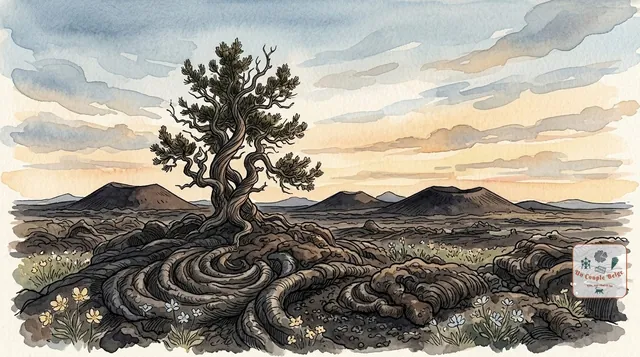
Craters of the Moon: an ocean of black lava in Idaho
Frozen lava flows as far as the eye can see, black cinder cones and tunnels to explore by torchlight. The landscape where the Apollo astronauts came to train.
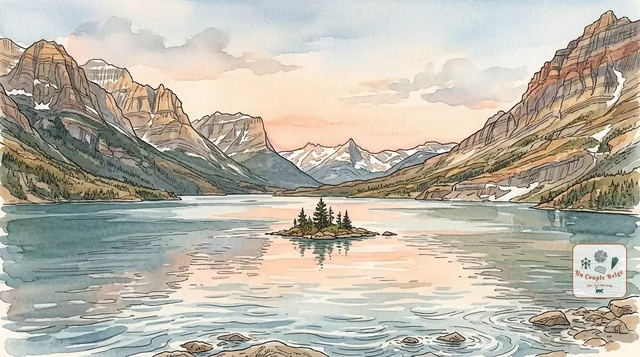
Glacier: the Crown of the Continent, before its glaciers disappear
Ice-carved peaks, turquoise lakes and a legendary mountain road, in northern Montana. One of the finest hiking parks in the country.
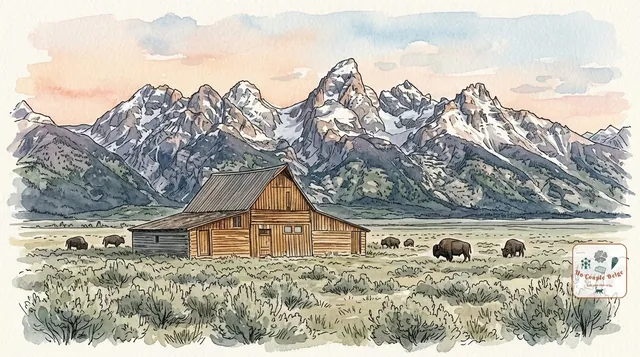
Grand Teton: sheer peaks above the lakes and the plain
A range of jagged peaks rising abruptly above a flat valley, with glacial lakes at its feet. Yellowstone's neighbour, smaller and more alpine.
Comments