Travel and health insurance in the United States: don't leave without it
Updated on
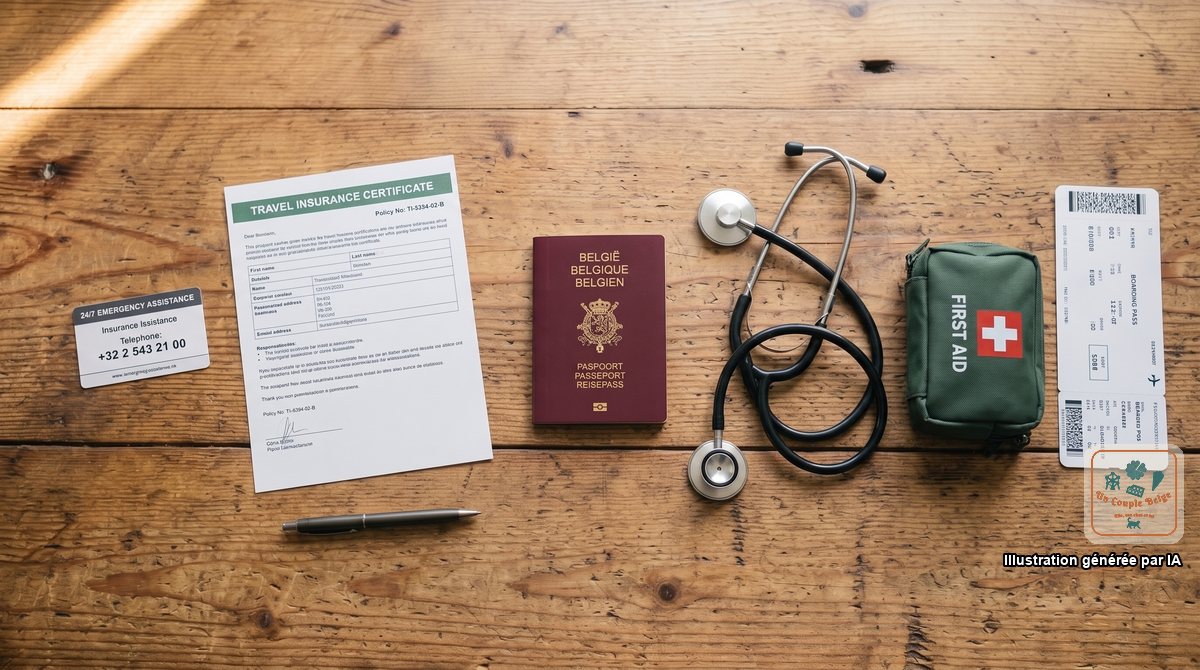
If there’s one expense not to skimp on for a trip to the United States, it’s insurance.
Healthcare there is among the most expensive in the world: an emergency room visit for a sprain can exceed 1,000 dollars, a night in hospital several thousand, and a medical repatriation runs into tens of thousands of dollars.
What you may already have
Your health insurance fund. Belgian health funds (mutualités) offer assistance abroad through Mutas, but its basic cover is limited to Europe and the countries around the Mediterranean: the United States is not included. The one exception: some funds extend Mutas worldwide for children who receive family allowances (and sometimes their family). The conditions vary from one fund to another: ask yours, but work on the assumption that you need other insurance.
Your bank card. Some premium credit cards (Visa Gold, Mastercard Gold, Platinum…) include travel insurance, provided you paid for the trip with the card. Read the conditions carefully:
- the ceiling for medical expenses (often not enough for the United States);
- the maximum length of trip covered;
- who is covered (the cardholder alone, or the spouse and children too);
- the excess and the procedure (paying up front or direct settlement).
Annual travel insurance. If you travel several times a year, an annual policy (from your insurer, your bank or a broker) is often better value. Check that the United States isn’t excluded or subject to a surcharge.
What good insurance should cover
- Medical and hospital expenses: aim for a high ceiling, ideally unlimited, and in any case several hundred thousand euros. Ceilings of 25,000 or 50,000 euros, common on bank cards, are quickly exceeded if you’re hospitalised in the United States.
- Medical repatriation.
- Direct settlement of costs by the insurer (so that you don’t have to pay out enormous sums up front).
- 24-hour assistance with a number you can reach from the United States.
- Trip cancellation, as an option, if you’ve booked non-refundable flights or accommodation.
- Personal liability abroad.
- If you’re planning sporting activities (demanding hikes, canyoning, skiing), check that they aren’t excluded.
Before you leave
- Save the assistance number and your policy number in your phone and on paper.
- Take enough of your medication, in its original packaging, with a prescription or a letter from your doctor in English. Some medicines sold over the counter in Belgium are prescription-only in the United States, and vice versa.
- Pack a small first-aid kit: plasters, disinfectant, painkillers, sun cream, something for blisters.
Once there, if something goes wrong
- Life-threatening emergency: 911 (police, fire, ambulance).
- For a non-urgent problem, avoid hospital emergency departments (Emergency Room), which are very expensive. Go to an Urgent Care instead: these are walk-in medical centres for minor injuries, infections and sprains. Much cheaper and quicker.
- Call your insurer before you go for a consultation, if possible: it can direct you to a partner facility.
- Keep all the paperwork: invoices, medical reports, pharmacy receipts.
- Pharmacies (CVS, Walgreens, Rite Aid) are everywhere, often open late, and the pharmacist can advise on minor problems.
All the detail is in getting medical care in the United States.
Our advice
- Never leave without insurance that covers the United States, even for a short stay.
- Compare the ceilings, not just the price.
- Look at the insurance for the rental vehicle too: that’s a separate subject, covered in our article on car rental.
For our part, we combine three covers: hospitalisation insurance valid worldwide, through our work; Europ Assistance worldwide assistance, taken out for the year, which works out better for us than a single-trip policy; and an Ethias policy for cancellation and the return journey.
Some links on this page are affiliate links: we may earn a small commission, at no extra cost to you, if you book through them.