Public holidays and major events in the United States: what closes, what costs more
Updated on
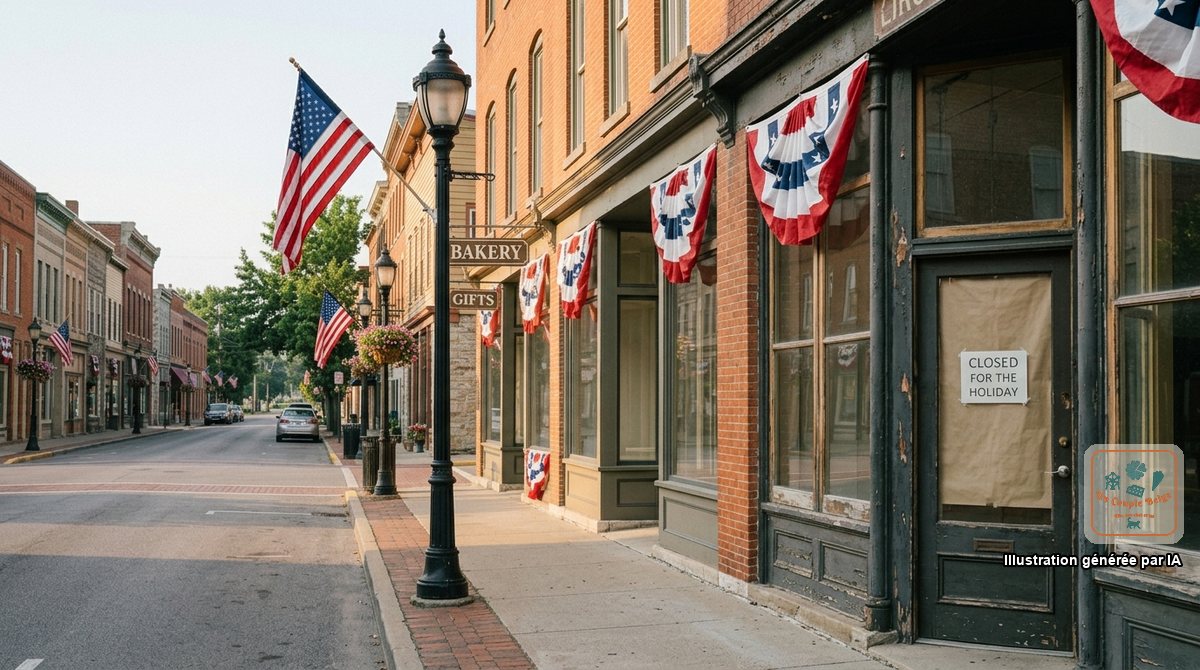
Americans have little time off, and they all take it at the same time. A long weekend can push prices up sharply and draw big crowds. But if you get the chance, experiencing a Fourth of July or a Thanksgiving on the spot makes for some of the best memories. Either way, it’s better to know before fixing your dates.
Federal holidays
| Holiday | Date | Effect for the traveller |
|---|---|---|
| New Year’s Day | 1 January | Many shops closed in the morning |
| Martin Luther King Jr. Day | 3rd Monday in January | Long weekend, ski resorts full |
| Presidents’ Day | 3rd Monday in February | Long weekend, sales |
| Memorial Day | Last Monday in May | Start of the summer season, everything is full |
| Juneteenth | 19 June | Little effect |
| Independence Day | 4 July | Fireworks everywhere, high prices |
| Labor Day | 1st Monday in September | End of the summer season, everything is full |
| Columbus Day / Indigenous Peoples’ Day | 2nd Monday in October | Long autumn weekend |
| Veterans Day | 11 November | Little effect |
| Thanksgiving | 4th Thursday in November | The country stops, roads and airports saturated |
| Christmas Day | 25 December | Almost everything is closed |
When a holiday falls on a Saturday or a Sunday, it’s moved to the Friday or the Monday.
What really closes
Far less than in Belgium.
- Always closed on public holidays: banks, post offices, government offices.
- Almost always open: supermarkets, petrol stations, restaurants, shopping malls, national parks.
- The two exceptions: Thanksgiving Day and 25 December, when most shops and many restaurants close. Do your shopping the day before.
- National parks stay open all year, but some visitor centers close on 25 December, at Thanksgiving and on 1 January.
- Museums often close at Thanksgiving and Christmas.
Sunday isn’t a closing day: everything is open, sometimes with reduced hours.
The weekends when everything is full
Book a long way ahead, or avoid the very touristy places:
- Memorial Day, at the end of May;
- the Fourth of July and the days around it;
- Labor Day, in early September;
- Thanksgiving, from the Wednesday to the Sunday;
- the week from Christmas to New Year;
- spring break, from late February to mid-April depending on the university, especially in Florida, Arizona and southern California.
During these periods, the park campgrounds have been full for months and hotel prices double. The two weeks after Labor Day, on the other hand, are among the best of the year (see when to go).
The celebrations to experience on the spot
The Fourth of July. Parades in the morning in small towns, barbecues, then fireworks after dark. The biggest are in New York, Washington, Boston and San Francisco, but those of a little town in the West have more charm. Fireworks are banned in national parks, and often cancelled in the West when the fire risk is high.
Halloween, on 31 October. Houses are decorated from the end of September, children go from door to door in the late afternoon, and adults dress up too. Salem, in Massachusetts, and the Greenwich Village parade in New York are the best-known events.
Thanksgiving. The great family celebration. In the morning, the Macy’s parade makes its way down the avenues of New York with its giant balloons. At lunchtime, everyone is at the table in front of a turkey. Many restaurants offer a special menu, which needs booking. The next day is Black Friday (see shopping).
Christmas and New Year. We did New York at Christmas and then New Year’s Eve in Miami Beach, among fireworks and colourful lifeguard towers. Two opposite atmospheres a week apart.
Mardi Gras in New Orleans, in February or early March: two weeks of parades before the day itself.
St Patrick’s Day, on 17 March: Chicago dyes its river green, New York and Boston hold parades.
The events that fill a whole region
They send prices soaring within a 100 km radius. Worth knowing about, whether to experience them or to avoid them.
| Event | Where | When |
|---|---|---|
| CES (consumer electronics show) | Las Vegas | Early January |
| Super Bowl | A different city each year | Early February |
| Coachella festival | Near Palm Springs | Two weekends in April |
| Kentucky Derby | Louisville | First Saturday in May |
| Indianapolis 500 | Indianapolis | Memorial Day weekend |
| Comic-Con | San Diego | July |
| Cheyenne Frontier Days (rodeo) | Wyoming | Late July |
| Sturgis Motorcycle Rally | South Dakota | Early August |
| Burning Man | Nevada desert | Late August |
| Balloon Fiesta | Albuquerque | Early October |
| New York City Marathon | New York | First Sunday in November |
Sturgis deserves a mention for road trippers: for ten days, hundreds of thousands of bikers take over the Black Hills, Mount Rushmore and the Badlands. Hotels are full as far as Wyoming.
More generally, also check whether a major event is taking place in the cities on your itinerary on your dates: a Formula 1 Grand Prix (Miami, Austin, Las Vegas), a NASCAR race, the NBA Finals, a big concert or a convention is enough to fill the hotels and push prices up.
American school holidays
- Summer: from late May or mid-June to mid-August or early September, depending on the state. Schools in the South go back in the first half of August, which already empties some parks.
- Winter: two weeks around Christmas.
- Spring: one week in March or April.
The weeks of late August and September are therefore quieter than in Europe.
Games and roads
On the evening of an American football game or a concert, traffic around the stadium is gridlocked and the neighbouring hotels are expensive. Take a look at the city’s calendar before booking.
On the big getaway days (the Wednesday before Thanksgiving, the Sunday after it, the Friday before Memorial Day), avoid flying or driving through a major urban area.