Seeing a game or a show in the United States: NBA, baseball, rodeo, Broadway
Updated on
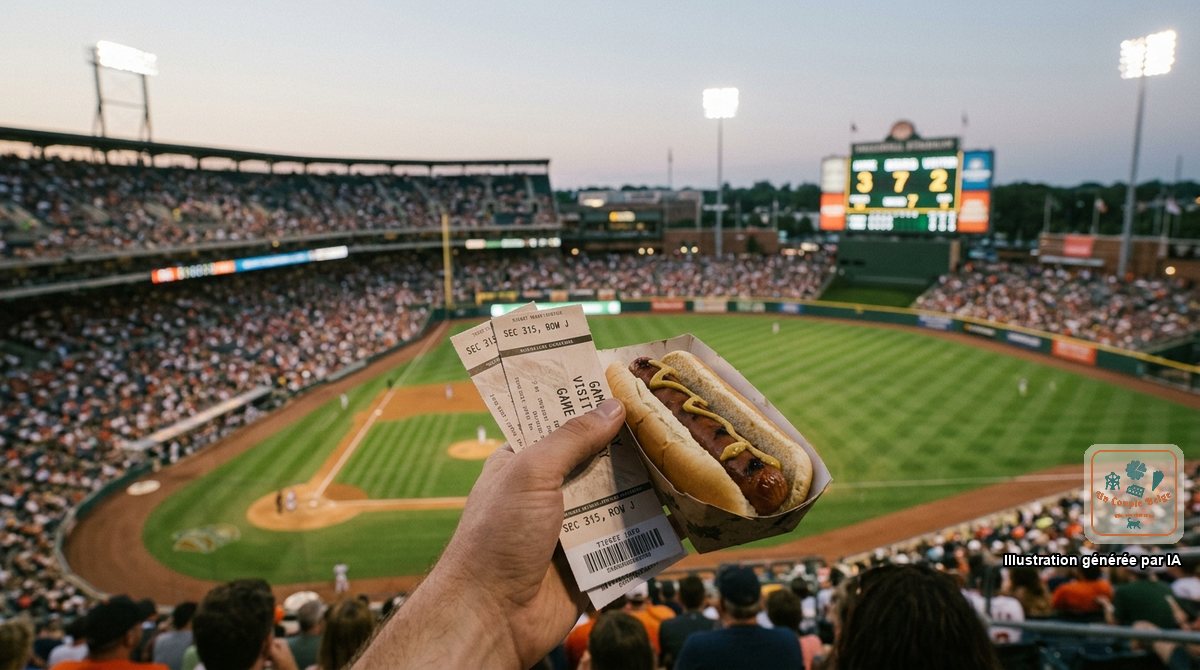
Going to a game in the United States means seeing something more than sport: the national anthem sung standing up, the cheerleaders, the T-shirt cannons, the hot dogs passed from hand to hand along the row.
Even without knowing the rules, you have an excellent evening. And it’s often simpler and cheaper to organise than you’d think.
Who plays when?
| Sport | League | Regular season | Play-offs |
|---|---|---|---|
| Basketball | NBA | Late October to mid-April | Until June |
| Ice hockey | NHL | October to mid-April | Until June |
| Baseball | MLB | Late March to late September | October |
| American football | NFL | September to early January | Until the Super Bowl, in February |
| Soccer | MLS | Late February to October | Until December |
| College football | NCAA | Late August to early December | Until January |
| College basketball | NCAA | November to March | March Madness, in March-April |
In summer, there’s only baseball and soccer. In winter, basketball and hockey are played almost every evening. In autumn, everything overlaps.
Which sport to choose?
Baseball is the most accessible. Each team plays 81 home games, tickets are the cheapest (from 15 to 30 dollars), and the atmosphere is relaxed and family-friendly. A game lasts about two and a half hours. You go as much for the ballpark, the sunset and the hot dog as for the play. Fenway Park in Boston and Wrigley Field in Chicago are monuments.
Basketball is the most spectacular: an indoor arena, two and a half hours of non-stop show. Allow 30 to 100 dollars in the upper tiers for an ordinary game, much more in New York, in Los Angeles or against a star team.
Hockey is fast, physical, and easy to follow. Prices are close to those of basketball.
American football is the king of sports, and the hardest to get into. Each team plays only eight or nine home games, almost always on a Sunday, and seats often exceed 100 to 150 dollars. The game lasts more than three hours. The experience begins in the car park, where fans set up barbecues from the morning onwards: tailgating.
College sport is a little-known alternative. In university towns, Saturday football fills stadiums of 80,000 to 100,000 seats, with marching bands and century-old traditions.
Minor league baseball, in small towns, offers seats at 10 or 15 dollars, entertainment between every inning and sometimes fireworks.
Buying tickets
- The team’s official website points to its authorised seller, most often Ticketmaster or SeatGeek.
- Resale platforms (StubHub, SeatGeek, Vivid Seats) are legal and widely used. Prices rise and fall like a stock market, and often drop on the day itself, a few hours before the game.
- Look at the total price. Since May 2025, American sites have had to display the fees from the start. Check at the final step all the same: fees commonly amount to 20 to 30% of the price.
- Tickets are digital. They arrive in the seller’s app and can be added to the phone’s wallet. Screenshots are refused: you need the app, and therefore signal or a ticket saved in advance.
- Never buy in the street.
For an ordinary baseball or basketball game on a weekday, you can find seats without difficulty the day before or on the day. For the NFL, the play-offs or a big fixture, plan ahead.
On game day
Arriving. Come 45 minutes to an hour beforehand: security checks, a walk round the stadium, the warm-up, the anthem.
Payment. Almost all stadiums are cashless.
Food. It’s part of the experience, and it’s expensive: 8 to 12 dollars for a hot dog, 12 to 16 dollars for a beer. Your passport will be asked for if you buy alcohol (see alcohol, tobacco and cannabis). Some stadiums let you bring in a sealed bottle of water and food.
Transport. Parking costs 20 to 60 dollars. When the stadium is in town, take the subway or an Uber. On the way out, walk a few streets away before ordering a car.
The rituals. Everyone stands for the anthem, caps off. At baseball, you stand again in the middle of the seventh inning to sing Take Me Out to the Ball Game.
The rodeo
In the West, rodeo is a real sport, with its champions and its professional circuit.
- Cody (Wyoming), on the doorstep of Yellowstone, holds a rodeo every evening from June to August.
- Cheyenne Frontier Days (Wyoming), in late July, is the largest outdoor rodeo in the world.
- Fort Worth (Texas) has a rodeo every weekend in its historic Stockyards district.
- County fairs, in summer, almost all have their rodeo night.
Tickets cost 20 to 40 dollars and are bought on the spot or online. The events follow one another: bronc and bull riding, calf roping, barrel racing. Seats higher up keep you out of the dust.
Broadway and the shows
In New York, around forty theatres play every evening around Times Square.
Paying less
- The TKTS booths (Times Square and Lincoln Center) sell same-day seats at 20 to 50% off. The queue is long, and the choice depends on what’s unsold.
- The TodayTix app offers reduced prices and last-minute seats.
- Digital lotteries: most musicals put seats up every day at 30 or 50 dollars. You enter the day before on the show’s website.
- Rush tickets: a few cheap seats sold at the box office when it opens, that same morning.
- The theatre box office avoids the fees of the ticketing sites.
Good to know
- Most theatres are dark on Mondays. Matinées are on Wednesday, Saturday and Sunday afternoons.
- There’s no dress code.
- The auditoriums are heavily air-conditioned.
- For a first time, choose a musical whose story you know: it’s easy to follow, even with average English.
For our part, we saw the ballet The Nutcracker at Lincoln Center during our Christmas stay in New York, a holiday tradition for New Yorkers. We tell the story in the day 2 travel diary (coming out on October 18, 2026).
Elsewhere
- Las Vegas: Cirque du Soleil shows, magicians, residency concerts. Booths on the Strip sell discounted seats for the same evening.
- Nashville: the Grand Ole Opry for country music, and live music in every bar on Broadway.
- New Orleans: jazz in the clubs of Frenchmen Street.
- Chicago: blues and improv theatres.
Free or nearly free outings
- Open-air concerts and cinema in the parks of the big cities, all summer.
- Practice sessions and preseason games, at knock-down prices.
- High school games on Friday evenings, in any small town: the whole community is in the stands.
- Ranger programmes in the national parks: evening campfire talks, stargazing.
For our part, we haven’t yet had the chance to go to a game, though we’d like to. We find tickets often very expensive, all the more so as we’ve several times been there right in the middle of the NBA Finals.