CityPASS or Go City: which sightseeing pass to choose, city by city?
Updated on
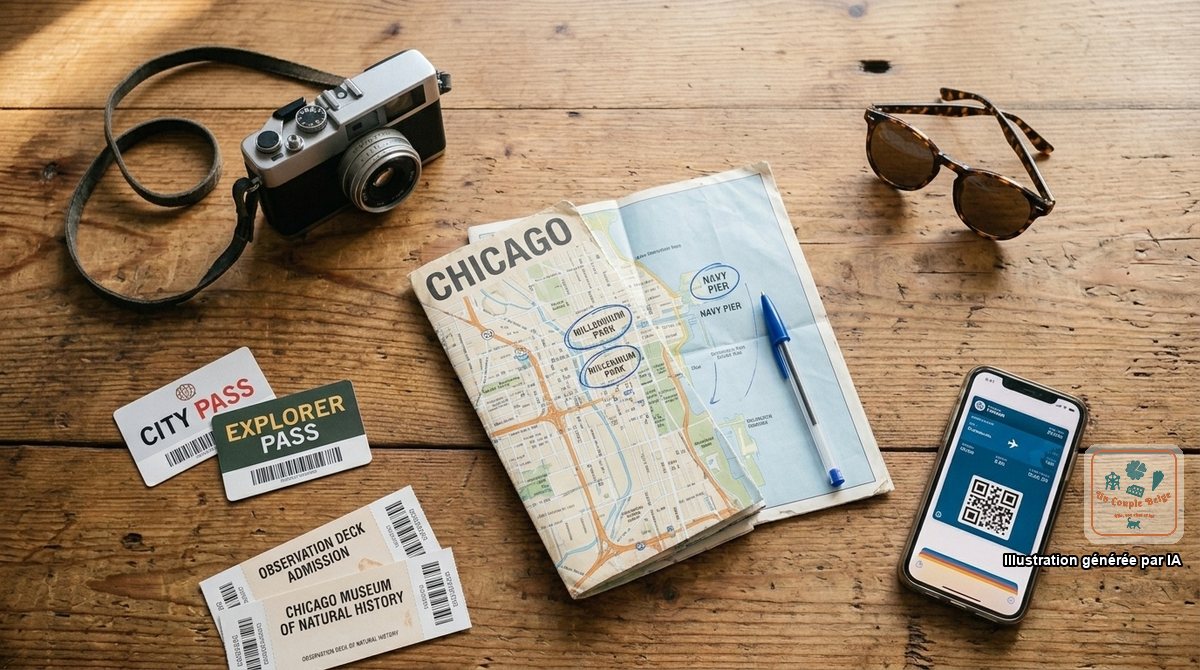
In the big American cities, every visit is expensive: 40 to 50 dollars for an observation deck, 30 dollars for a museum. Sightseeing passes promise savings of up to 50%. Sometimes that’s true, sometimes not at all.
In New York, we bought one for three attractions, and booked the fourth separately, because it worked out cheaper without the pass.
The two big players
Since the Sightseeing Pass closed in 2025, two main operators remain.
| CityPASS | Go City | |
|---|---|---|
| Principle | A fixed booklet of a few major attractions | A very wide catalogue, pick-and-choose or unlimited |
| Formulas | CityPASS (generally 5 attractions) and C3 (3 of your choice) | Explorer Pass (2 to 10 attractions) and All-Inclusive (unlimited for 1 to 10 days) |
| Validity | 9 days for the CityPASS, 30 days for the C3 | 30 days from the first visit for the Explorer |
| For whom | Those who want the classics, without complicating their lives | Those who want to choose, or to pack in a lot of visits |
We’ve only used the Go City pass, in New York. We describe it in detail in our dedicated article.
How to do the sums
The method takes four steps, and it applies to every city.
- List the visits you would make anyway, without a pass.
- Note the price of each on its official website, taxes included, for your dates.
- Compare the total with the price of the pass that covers them.
- Take out the attractions that are free or cheaper when booked direct.
Our example in New York. The Explorer Pass for three attractions cost us 209 dollars for two, or about 35 dollars per person per visit. We used it for the Empire State Building, Top of the Rock and the natural history museum, all of which cost more individually. The Statue of Liberty, on the other hand, can be booked direct for about 26 dollars, pedestal included: we took it separately.
The rules that emerge
- A pass is worth it for expensive attractions: observation decks, cruises, big paying museums.
- It’s worth nothing for cheap or free attractions, which pad out the catalogue.
- Unlimited formulas only pay for themselves at three or four visits a day, an exhausting pace.
- You often have to book a time slot as well, on the attraction’s website or in the pass’s app. The pass doesn’t exempt you from the security queue.
- Some options aren’t included: the top floor of an observation deck, access to the crown of the Statue of Liberty, temporary exhibitions.
New York
The city where passes are most useful, given how many paying visits there are.
| Pass | Adult price noted in 2026 | Contents |
|---|---|---|
| CityPASS | $164 | 5 attractions, including the Empire State Building and the natural history museum, valid for 9 days |
| CityPASS C3 | $109 | 3 attractions of your choice from a list of about ten |
| Go City Explorer | From $89 (2 attractions) to $299 (10 attractions) | A choice from around a hundred activities |
| Go City All-Inclusive | Depending on the number of days | Unlimited visits |
- For a first stay of four or five days with two observation decks, a museum and a cruise, a pass for three to five attractions almost always pays for itself.
- The Statue of Liberty is cheaper direct, and access to the pedestal or the crown is sold only by the official company.
- The 9/11 Memorial (the pools) is free, as are the Staten Island Ferry, the High Line, Central Park and the Brooklyn Bridge.
San Francisco
- CityPASS: four attractions, including the aquarium and a bay cruise.
- Go City: pick-and-choose and unlimited formulas.
- Alcatraz isn’t in any standard pass: tickets are booked with the official company, several weeks ahead. We did it at sunset, and we recommend it.
- The Golden Gate, Lombard Street, the neighbourhoods and the viewpoints are free. A pass is therefore rarely essential.
Chicago
- CityPASS: five attractions, including the two big observation decks, the Shedd Aquarium and the Field Museum.
- Go City: pick-and-choose or unlimited, with the architecture cruise on the river, the city’s flagship visit.
- Millennium Park and its mirrored sculpture are free.
Los Angeles and Southern California
- Go City Los Angeles covers the film studios, guided tours and some parks.
- CityPASS Southern California mainly groups together the theme parks: it’s a different product, to look into if you’re doing several (see theme parks).
- Griffith Observatory, the beaches, Hollywood Boulevard and the Hollywood Sign are free.
Boston, Seattle, Philadelphia, Washington
- Boston and Seattle have a CityPASS and a Go City pass, useful for two or three days of classic sightseeing.
- Philadelphia: a pass exists, for a city where many historic sites are free.
- Washington: useless or almost. The Smithsonian museums, the Capitol, the monuments and the zoo are free. We spent a day there between the Capitol, the Library of Congress and the National Mall, where everything is free or nearly so.
Las Vegas, Orlando, Miami
- Las Vegas: Go City offers a pass with attractions, excursions and a few shows. Visiting the hotels, the city’s main draw, is free (see Las Vegas).
- Orlando: the passes cover the secondary attractions, not Disney or Universal, which have their own tickets.
- Miami: a Go City pass exists, with excursions to the Everglades and bay cruises.
Where to buy
- On the pass’s official website, which regularly runs promotions of 10 to 20%.
- On ticketing platforms such as Tiqets, which also sell individual tickets: handy for comparing.
- Not in the street, and not from unknown resellers.
The pass arrives as a code in an app. It’s activated at the first visit, not at purchase: so you can buy it in advance during a promotion. Read the refund conditions, often generous as long as the pass hasn’t been used.
The other ways to pay less
- Free days and evenings at museums: many offer one a week or a month, sometimes with a reservation.
- “Pay what you wish” admission, reserved for residents at some museums or open to all at certain times.
- Online discounts: several observation decks sell tickets booked two weeks ahead for less.
- Combined tickets between two neighbouring attractions.
- Free views: a ferry, a bridge, a rooftop bar or a library sometimes offers the same panorama as a 45-dollar observation deck.
Some links on this page are affiliate links: we may earn a small commission, at no extra cost to you, if you book through them.