Great Sand Dunes: the tallest dunes in North America, at the foot of the Rockies
Updated on
How long should you spend there?
At a glance
- Entrance fee
- $25 per vehicle for 7 days, with no surcharge for non-residents.
- Best time to go
- Late May and early June, when the creek is flowing. Spring and autumn for walking. In summer the sand is burning hot in the afternoon.
- Book ahead
- None. The park campground is booked in advance.
- Getting around
- By car to the dunes car park, then on foot in the sand.
| Walks and hikes | Distance | Time | Level |
|---|---|---|---|
| High Dune | about 4 km (round trip) | 2 hrs | strenuous |
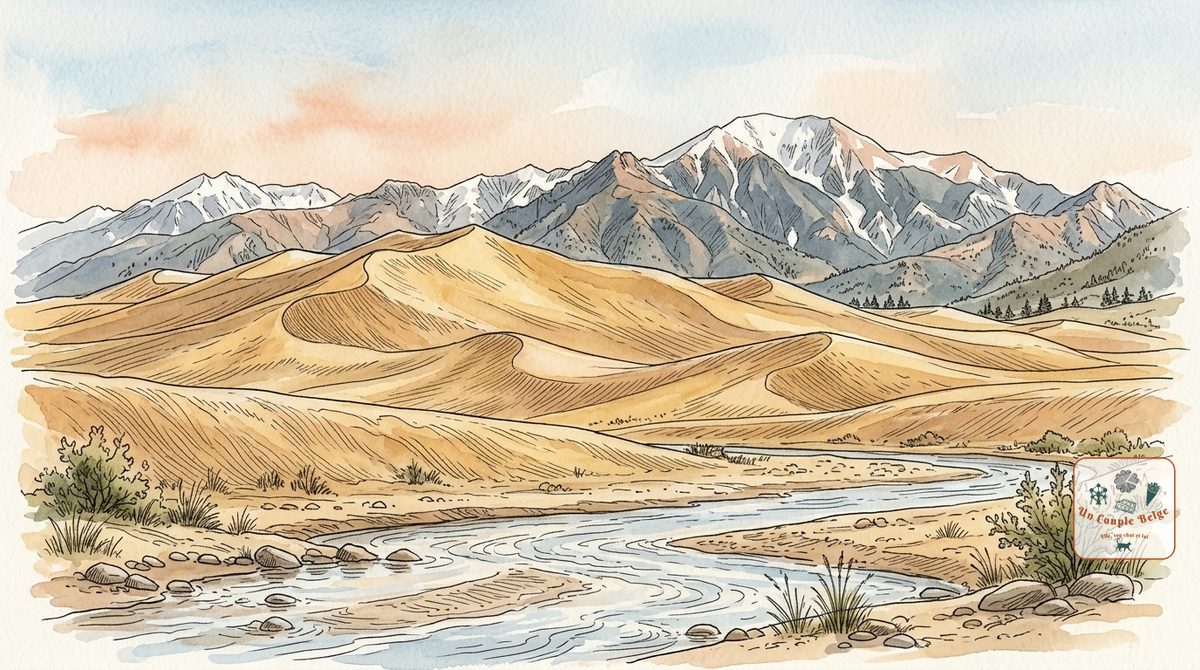
In southern Colorado, at the back of a great high-altitude valley, a pile of sand covering 80 km² has built up against the mountains. The tallest dunes rise more than 200 metres: they are the tallest in North America. Behind them stand summits of more than 4,000 metres, often capped with snow.
History and origins
The sand comes from ancient lakes, now gone, that once filled the San Luis Valley. The prevailing wind pushes it north-east, to the foot of the Sangre de Cristo Mountains. There, the winds from the passes blow it back. Caught between the two, it piles up.
Two creeks border the dunes. They carry the sand back to the valley, where the wind picks it up again. This merry-go-round has been going on for hundreds of thousands of years. The site was protected in 1932 and became a national park in 2004.
What to do there
- Climbing the dunes: there’s no trail. You set off from the car park, cross the creek bed, and climb wherever you like. High Dune, the nearest of the big ones, takes a good hour’s effort.
- Sledding and sandboarding: you hurtle down the slopes on special waxed boards, which are rented at the park entrance. A snow sled doesn’t slide on dry sand.
- Medano Creek: in spring, the snowmelt sends a wide, shallow creek flowing at the foot of the dunes. It moves forward in little waves, and children play in it as if at the beach.
- Zapata Falls: just outside the park, a waterfall hidden at the back of a rock cleft. You reach it by walking through the water.
- At night: on a moonless night, the dunes under the Milky Way are one of the most beautiful sights in Colorado.
Stories and good to know
- The dunes sing. When an avalanche of sand slides down a steep slope, it produces a deep hum.
- The park is at an altitude of 2,500 metres. Climbing in the sand leaves you more breathless than you expect.
- Behind the dunes, a track of soft sand, for 4x4s only, crosses the mountains over a pass.
Practical information for your road trip
- Pass: the America the Beautiful pass covers the entrance fee. Everything is explained in our guide to the national parks pass.
- Getting there: the park is 40 minutes from Alamosa and about 4 hrs from Denver.
- Board rental: in the shops at the park entrance and in Alamosa. The park itself doesn’t rent them.
- On site: no restaurant and no fuel in the park. There’s a small shop at the entrance.
- Where to stay: in Alamosa or at the lodge at the park entrance. The campground looks straight onto the dunes.
- Combine it with: Mesa Verde, to the west, or Santa Fe, to the south.
Quick quiz
Question 1 / 3
Where to stay near Great Sand Dunes: the tallest dunes in North America, at the foot of the Rockies
Stay22 affiliate links: if you book through here, we earn a small commission at no extra cost to you. Thanks for your support!
On the ground

Sponsored by UnCoupleBelge
Follow us on Instagram
Box sponsored by a partner
Other places nearby
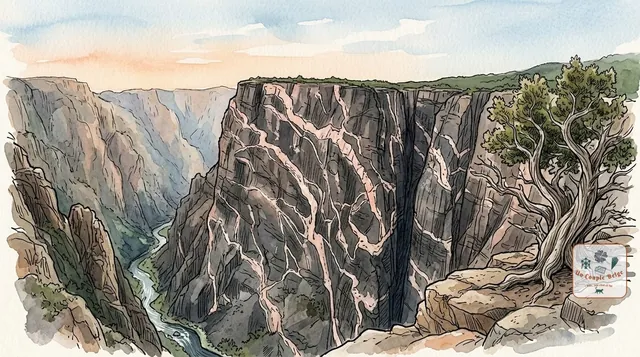
Black Canyon of the Gunnison: a chasm so narrow the sun barely gets in
A narrow, dark and dizzying canyon in western Colorado: sheer walls 600 to 800 metres high, which you look at from a series of overlooks.
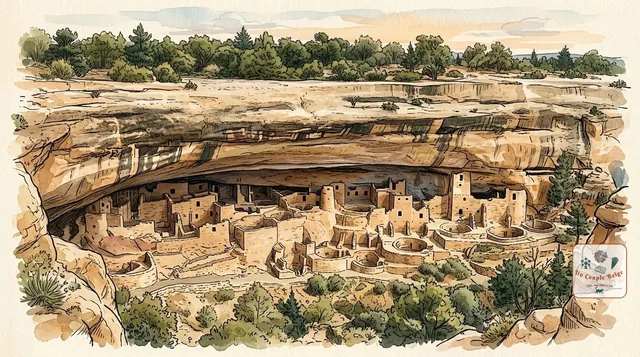
Mesa Verde: the cliff dwellings of the Ancestral Puebloans
Entire villages built beneath the cliffs 800 years ago, in south-west Colorado. The largest group of cliff dwellings in the United States.
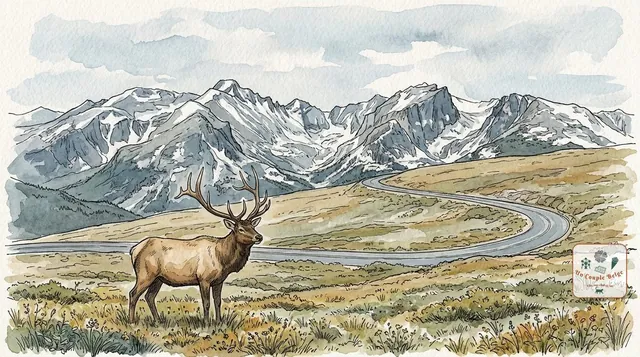
Rocky Mountain: the highest road in America and elk in the valley
The high mountains of Colorado, 1 hr 30 from Denver: a road that climbs to more than 3,700 metres, alpine lakes, elk and 4,000-metre summits.
Comments