Haleakalā: watching the sun rise from a sleeping volcano
Updated on
How long should you spend there?
At a glance
- Entrance fee
- $30 per vehicle for 3 days, with no surcharge for non-residents. Card payment only.
- Best time to go
- All year. It's cold at the summit in every season, and the Kīpahulu coast is very rainy.
- Book ahead
- Compulsory to enter between 3am and 7am, for sunrise: $1 per car, at recreation.gov.
- Getting around
- By car. The summit and the Kīpahulu coast are not linked by a road inside the park.
| Walks and hikes | Distance | Time | Level |
|---|---|---|---|
| Hosmer Grove | 0.8 km (loop) | 20 min | easy |
| Pā Ka'oao, at the summit | 0.6 km (round trip) | 20 min | easy |
| Pīpīwai Trail, to Waimoku Falls | 6.4 km (round trip) | 2 hrs 30 | moderate |
| Sliding Sands, to the crater floor | about 9 km (round trip) | 4 hrs | strenuous |
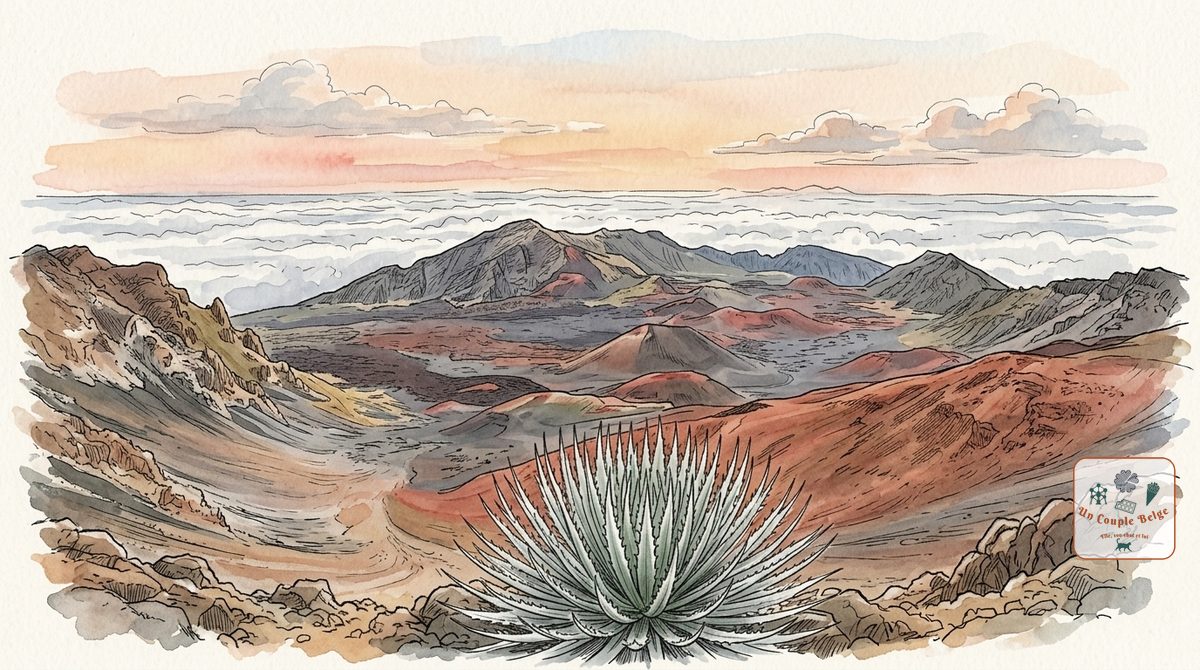
Haleakalā is the volcano that forms three-quarters of the island of Maui. Its name means “house of the sun”. At the summit, at 3,055 metres, lies an immense crater of red, ochre and black cinders. At the very bottom, on the ocean side, the same park protects a valley of waterfalls and bamboo.
History and origins
According to legend, the demigod Māui climbed up here to lasso the sun and force it to slow its course, so that the days would be longer. The summit is a sacred place for Hawaiians.
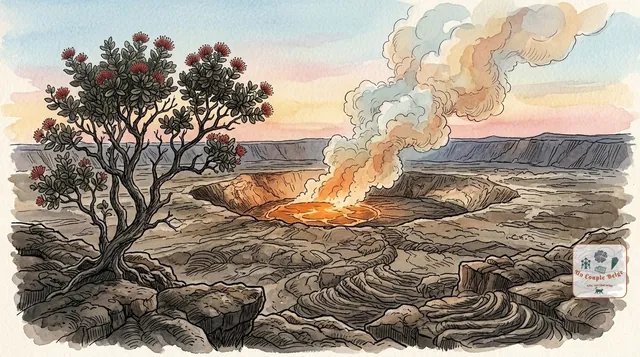
The “crater” isn’t really one. It’s a valley carved by erosion, which more recent eruptions then dotted with small cones. The volcano is sleeping, but it isn’t extinct: its last eruption was a few centuries ago. The park was created in 1916, together with the volcanoes of the Big Island, and became independent in 1961.
What to do there
- Sunrise: you drive up in the dark to see the sun emerge from a sea of clouds and light up the crater. It’s the Maui ritual. It’s often close to 0°C up there, with wind.
- Sunset: just as beautiful, with no reservation and no 3am alarm.
- The summit road: 60 km of hairpin bends, from sea level to 3,000 metres. Few roads in the world climb so high in so short a distance.
- Sliding Sands: the trail that descends into the crater, through a silent desert of cinders. Every step down has to be paid for on the way back.
- Hosmer Grove: a small wood at the bottom of the summit road, where you see red and green birds that exist only in Hawaii.
- Kīpahulu: on the east coast, at the end of the road to Hana. The Pīpīwai Trail runs through a forest of giant bamboo to a 120-metre waterfall. Lower down, a stream descends to the ocean from pool to pool.
- The stars: the summit is one of the best stargazing sites on the planet.
Stories and good to know
- The silversword, a silvery ball-shaped plant, grows only on this volcano. It lives for decades, flowers just once, then dies.
- The nēnē, the Hawaiian goose, almost disappeared. You come across them at the roadside: drive slowly.
- Tour companies take people down the summit road by bike, freewheeling, for nearly 40 km.
Practical information for your trip
- Pass: the America the Beautiful pass covers the entrance fee. Everything is explained in our guide to the national parks pass.
- Getting there: allow 1 hr 30 to 2 hrs’ drive from Kahului to the summit, and 2 hrs 30 to 3 hrs to Kīpahulu via the road to Hana.
- Fuel and food: nothing in the park. The last village on the summit road is 45 minutes from the entrance.
- Where to stay: in the villages on the slopes of the volcano, to shorten the night-time drive, or on the coast. The park has two campgrounds and three cabins in the crater.
- Combine it with: the road to Hana, and Hawaii Volcanoes, on the Big Island.
Quick quiz
Question 1 / 3

Where to stay near Haleakalā: watching the sun rise from a sleeping volcano
Stay22 affiliate links: if you book through here, we earn a small commission at no extra cost to you. Thanks for your support!
On the ground

Sponsored by UnCoupleBelge
Follow us on Instagram
Box sponsored by a partner
Comments