Hawaii Volcanoes: walking on an island that is still being formed
Updated on
How long should you spend there?
At a glance
- Entrance fee
- $30 per vehicle for 7 days, with no surcharge for non-residents. Card payment only.
- Best time to go
- All year. The summit is at 1,200 metres: it's cool and often rainy there.
- Book ahead
- None.
- Getting around
- By car, on two roads: the drive around the crater and the descent to the ocean.
| Walks and hikes | Distance | Time | Level |
|---|---|---|---|
| Devastation Trail | 1.6 km (round trip) | 30 min | easy |
| Nāhuku lava tube | about 0.8 km (loop) | 20 min | easy |
| The Pu'uloa petroglyphs | 2.3 km (round trip) | 1 hr | easy |
| Kīlauea Iki | about 6 km (loop) | 2 to 3 hrs | moderate |
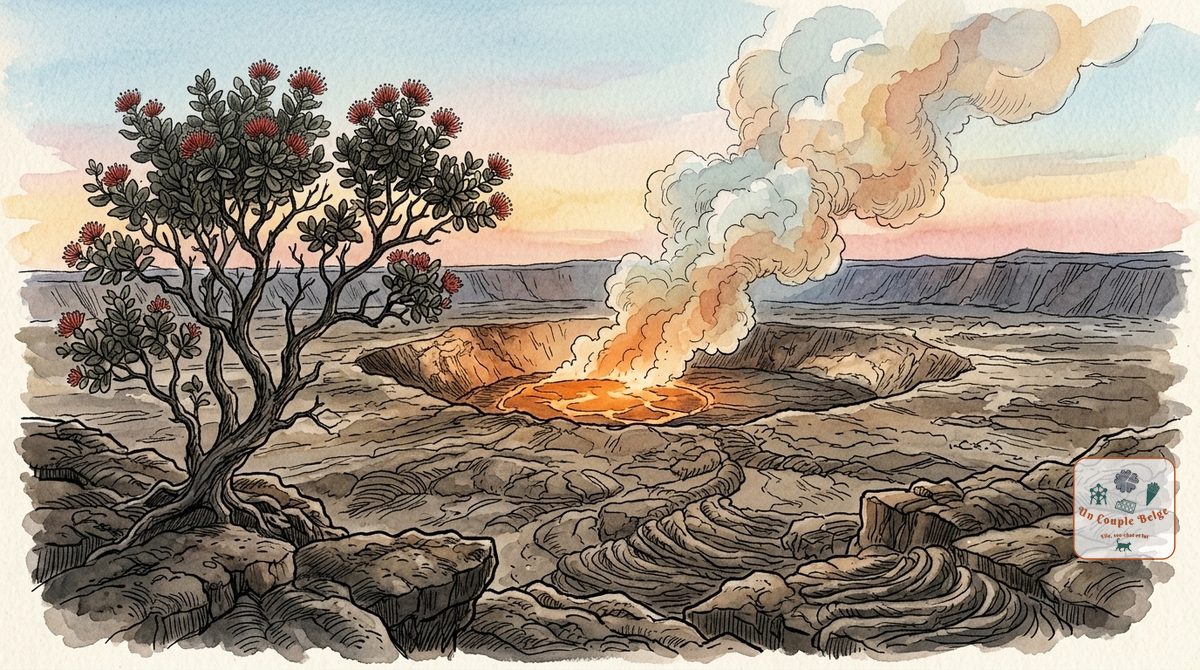
On the Big Island of Hawaii, the park protects two volcanoes: Kīlauea, one of the most active in the world, and Mauna Loa, the biggest. Here the island is still growing. You walk on lava flows younger than you are, among steaming craters, fern forests and a coast of black cliffs.
History and origins
For Hawaiians, Kīlauea is the home of Pele, the goddess of fire. The Halema’uma’u crater, at the summit, is her hearth. Offerings are still left there.
Hawaii’s volcanoes are flat and broad, because their lava is very fluid: it flows instead of exploding. Kīlauea erupted almost without a break from 1983 to 2018. That year, its summit collapsed and a lava flow destroyed hundreds of houses outside the park. Since December 2024, it has been producing a series of short episodes of lava fountains in the summit crater, lasting a few hours, separated by pauses of several weeks. The park dates from 1916, and it’s a World Heritage Site.
What to do there
- The crater rim: several overlooks face the Kīlauea caldera and Halema’uma’u. When there’s an eruption, this is where you see it from, especially at night, when the lava lights up the smoke.
- The steam vents: steam rises from the ground beside the road, where rainwater touches the hot rock.
- Kīlauea Iki: a trail descends through the forest, then crosses the floor of a crater: a lava lake that cooled in 1959, still warm in places.
- The Nāhuku lava tube: a tube hollowed out by a river of lava, as tall as a metro tunnel, among the tree ferns.
- Chain of Craters Road: a 30 km descent to the ocean, across lava flows of every age. The road comes to a dead end where the lava covered it.
- The Pu’uloa petroglyphs: thousands of Hawaiian carvings on an old lava flow.
Stories and good to know
- Measured from the ocean floor, Mauna Loa is higher than Everest.
- Every year, visitors send back to the park stones they had taken away, convinced that they brought them bad luck. The legend of Pele’s curse was invented by a ranger, to discourage theft.
- Nēnē geese often cross the road. They are protected.
Practical information for your trip
- Pass: the America the Beautiful pass covers the entrance fee. Everything is explained in our guide to the national parks pass.
- Getting there: the park entrance is 45 minutes from Hilo and more than 2 hrs from Kona.
- Clothing: a waterproof and a jacket for the summit, a torch if you stay after dark.
- Fuel and food: there’s no fuel in the park. The village of Volcano, at the entrance, has a few restaurants and a petrol station.
- Where to stay: in Volcano, in the B&Bs in the forest, or at the hotel on the crater rim.
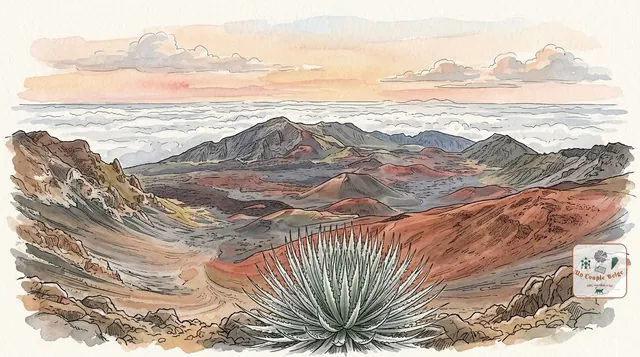
- Combine it with: the rest of the Big Island, and Haleakalā, on Maui.
Quick quiz
Question 1 / 3
Where to stay near Hawaii Volcanoes: walking on an island that is still being formed
Stay22 affiliate links: if you book through here, we earn a small commission at no extra cost to you. Thanks for your support!
On the ground

Sponsored by UnCoupleBelge
Follow us on Instagram
Box sponsored by a partner
Comments