Grocery shopping in the United States: supermarkets, prices and good deals
Updated on
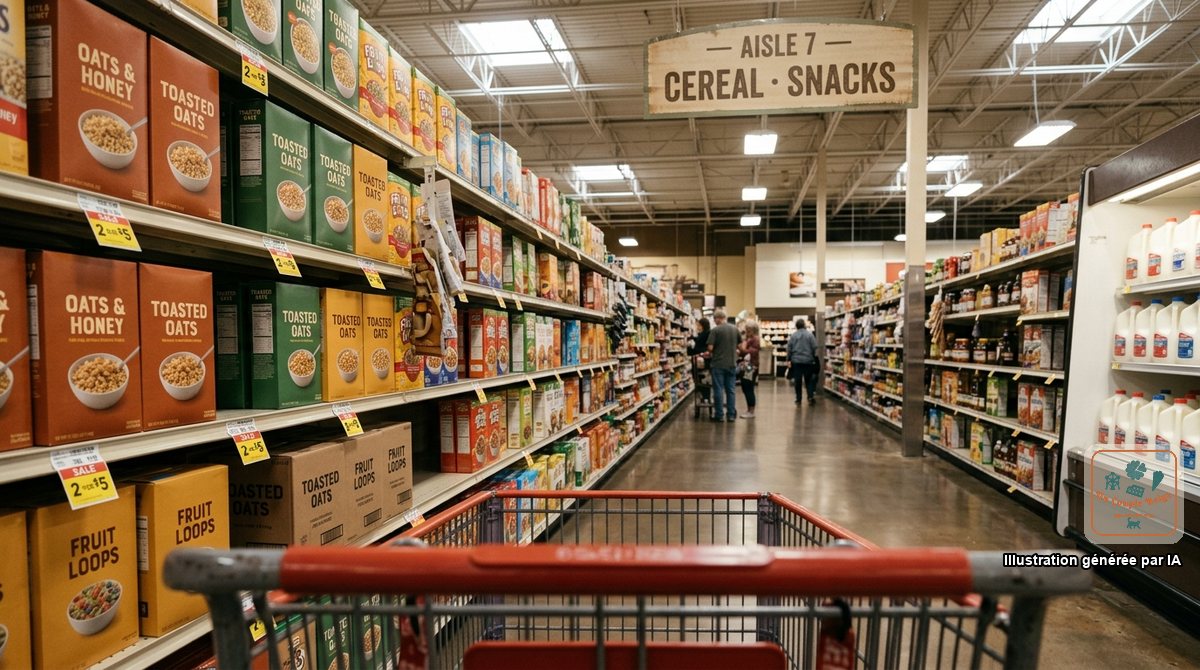
The supermarket is the budget’s best ally. On our 18-day road trip between New York and Florida, we spent 468 euros there, almost as much as at restaurants, on a good share of the breakfasts, picnics and water.
It’s also a visit in its own right: whole aisles of cereal, two-litre tubs of ice cream and fluorescent birthday cakes.
The chains to know
| Chain | Where | Good to know |
|---|---|---|
| Walmart Supercenter | Everywhere, especially on the outskirts | The lowest prices, everything under one roof (food, camping, pharmacy, clothes), often open late |
| Target | Cities and suburbs | A little more expensive, more pleasant, good food section |
| Kroger and its subsidiaries (Ralphs, Fry’s, Smith’s, King Soopers, City Market) | West, Midwest, South | Classic supermarket, reduced prices with the card |
| Safeway, Albertsons, Vons | West | Classic, reduced prices with the card |
| Publix | Florida and the Southeast | Very well run, known for its sandwiches made to order at the counter |
| Trader Joe’s | Cities | Small store, original and inexpensive own-brand products, ideal for snacks |
| Whole Foods | Cities | Organic and upmarket, expensive, excellent hot food bar |
| Aldi | Mainly the East and Midwest | The same principle as in Belgium |
| Costco | Outskirts | Bulk sales, members only |
| Dollar General, Family Dollar | Small rural towns | A stopgap when there’s nothing else |
Understanding the prices
Before tax. The shelf price doesn’t include sales tax. It’s reduced or zero on basic foodstuffs in many states, but not everywhere, and not on prepared dishes.
By the pound. Fruit, vegetables, meat and cheese from the counter are priced by weight: 1 pound (lb) = 454 grams. A price of 3.99 dollars a pound is about 8.80 dollars a kilo.
The deposit. In California, Oregon, Michigan and a few other states, a 5 to 10 cent deposit is added on every bottle and can.
Bags. They’re charged for, or plastic ones are banned, in several states, including California and New York. Keep a cloth bag in the car.
The loyalty card: essential
At Kroger, Safeway, Albertsons and their subsidiaries, the labels show two prices: the normal price and the price “with the card”, sometimes 30 to 50% lower. The card is free.
- Ask for it at the till or at customer service: “Can I get a store card, please?”
- You’ll be asked for a phone number. Give yours, or the hotel’s.
- If you don’t have one, the cashier will often swipe hers or the store’s: you just have to ask nicely.
Walmart, Trader Joe’s and Aldi have no card: the price displayed is the same for everyone.
What we put in the trolley
For the cooler
- A cooler: a few dollars for a polystyrene model, 20 to 40 dollars for a proper one.
- A bag of ice (3 to 4 dollars), to be renewed every day or every other day. The motel ice machine also does the job.
- Sliced cold meats and cheese, hummus, ready-washed raw vegetables, yoghurts, fruit.
For picnics
- Bread. American sliced bread is sweet: look for the bakery section, bagels or tortillas.
- Rotisserie chicken, 5 to 8 dollars, which makes two meals.
- The ready-made salads and sandwiches from the deli section.
- Crisps, dried fruit, cereal bars, peanut butter.
For the car
- Water in one-gallon jugs (3.8 litres), far cheaper than small bottles. Many stores also have a dispenser for refilling your jugs by the litre.
- Kitchen roll, wipes, bin bags, cutlery.
The products that surprise you
- The sizes. Everything exists in “family size”. For two, aim for the smallest packs.
- The cheese. Orange, sliced or grated. Real cheeses are found in the specialty cheese section, at high prices.
- The milk. Sold by the gallon or half-gallon, colour-coded by fat content.
- The eggs. In the chilled section, and to be kept in the fridge: they are washed and don’t keep at room temperature.
- The coffee. Weak. Espresso lovers will head for the in-store Starbucks.
- Over-the-counter medicines. On open shelves, in large bottles (see getting medical care there).
Alcohol
The rules depend on the state, sometimes on the county. In California, everything is sold in supermarkets. In Utah, you’ll only find light beer there. Elsewhere, wine and spirits are sold only in specialist shops. In every case, you’ll be asked for identification at the till. We go into it all in alcohol, tobacco and cannabis.
Costco, for whom?
Costco sells in bulk, with a paid membership card. For two people over three weeks, the quantities are out of all proportion. Two exceptions: the fuel, among the cheapest, and the hot dog with a drink for 1.50 dollars, an institution. A Costco card bought in Europe (there are stores in France and Spain, not in Belgium) is valid in the United States.
The tills
- Self-checkouts are everywhere. They accept contactless.
- At the regular tills, an employee bags your shopping. It isn’t a paid service and you don’t leave a tip.
- To the question “Cash back?” on the terminal, answer no: it’s a cash withdrawal reserved for American debit cards.
- You’ll often be asked to round up for a charity. You can decline without embarrassment.
For our part, we mostly go to Target and Walmart, which is a lot like a Carrefour, only bigger still. For clothes, we go to Ross and the outlets, and we never leave without a stop at Bath & Body Works (see shopping and outlets). The result: we leave with one suitcase each, and come back with two.