Cooking in a van or at a campground during a road trip in the United States
Updated on
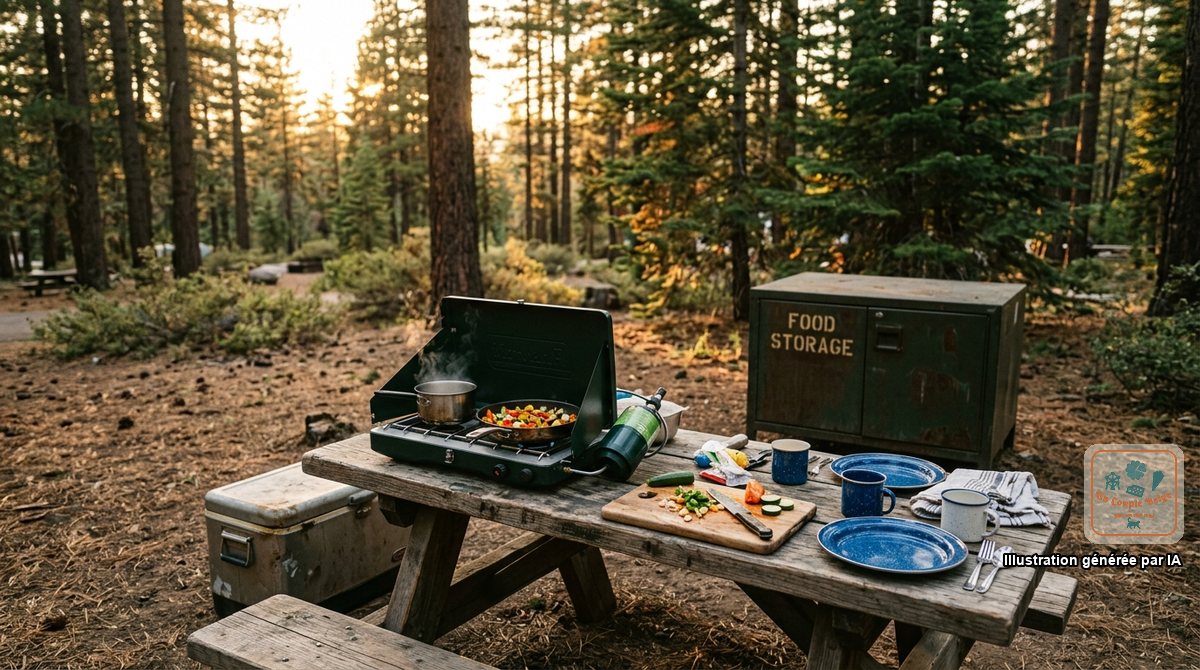
Cooking for yourself is what makes a van or camping genuinely economical: a meal for two comes to 8 or 12 dollars instead of 50 at a restaurant. It still has to be simple, because after a day’s hiking nobody feels like peeling vegetables by head torch.
What the rental company supplies
Most campervans are rented with a kitchen kit: a one- or two-burner stove, saucepan, frying pan, crockery, cutlery, chopping board, knife, washing-up bowl, cooler or small fridge. Check on the quote whether it’s included or optional, and take an inventory before leaving the depot.
What is almost always missing, and is bought at the first supermarket:
- a lighter or matches
- biodegradable washing-up liquid, a sponge, a tea towel
- aluminium foil, freezer bags
- kitchen roll and bin bags
- salt, pepper, oil, spices in small sizes
- a tin opener and a corkscrew
- a 5- or 10-litre water container
Gas
American camping stoves run on small one-pound green propane cylinders (about 450 grams), sold for 5 to 8 dollars at Walmart, in sports shops and at petrol stations near the parks. One cylinder lasts two people several days.
- They can’t go on a plane: don’t bring any back.
- Don’t leave them in direct sun in the vehicle.
- At the end of the trip, leave any that remain with the rental company or on the branch’s swap shelf, where travellers leave what they haven’t used. Remember to take a look at it when you arrive.
Fire bans
In summer in the West, the authorities bring in fire restrictions in stages when the wildfire risk is high.
- Stage 1: wood and charcoal fires banned outside the fire rings of developed campgrounds.
- Stage 2: wood fires banned everywhere.
Gas stoves fitted with a shut-off valve generally remain allowed, but not always. The signs at the entrance to forests and parks show the stage in force, and the fine is heavy.
Keeping the cooler cold
Without a fridge, the cooler takes a little organisation.
- Ice every day or every other day: a bag costs 3 to 4 dollars at any petrol station or supermarket.
- Drain the meltwater every morning through the plug.
- Pack everything in boxes or sealed bags: nothing should be sitting in water.
- Keep the cooler in the shade, under a blanket, never in the boot in full sun.
- Buy meat and fish for that same evening, not for three days.
- Freeze bottles of water when a motel has a freezer: they keep things cold, then you drink them.
Simple meals
Breakfast
- Sachets of instant oatmeal: all you need is hot water.
- Bagels, peanut butter, fruit.
- Scrambled eggs and tortillas when you have time.
Lunch, with no cooking
- Wraps: tortillas, hummus, raw vegetables, chicken or cheese.
- Sandwiches, with a bagged salad.
- Leftovers from the night before.
Dinner, in a single pan
- Pasta with a jar of sauce and frozen vegetables.
- Precooked rice (ready rice), black beans, sweetcorn, avocado, salsa: a Mexican-style bowl in ten minutes.
- Quesadillas in the frying pan: tortillas, grated cheese, whatever is left.
- Tinned chili or soup, improved with some bread.
- Grilled sausages and corn on the cob, when fires are allowed.
- A supermarket rotisserie chicken with a salad (see grocery shopping).
Washing-up and water
- At a developed campground, use the sinks provided if there are any. You don’t wash up in the bathroom basins or at the drinking-water taps.
- When wild camping, wash at least 60 metres from any watercourse, with very little biodegradable soap. Strain out the food scraps, take them away with your rubbish, and scatter the dirty water.
- Wipe plates with kitchen roll before washing: you use a third as much water.
- Allow 4 to 5 litres of water per person per day for drinking and cooking, more in the desert.
Drinking-water points are found at campgrounds, park visitor centers and some petrol stations.
In bear country
In the Sierra Nevada, the Rockies and a good part of the forests of the West, the rules on food are strict and enforced by the rangers.
- Nothing that smells stays outside or in the tent: food, cooler, dirty dishes, rubbish, but also toothpaste, sun cream and lip balm.
- Use the metal lockers (bear boxes) provided at each site. At Yosemite, food is banned from cars at night: bears know how to open a door.
- Cook and eat away from where you sleep.
- Put rubbish in the bins with special latches.
At Curry Village, in Yosemite, every tent has its locker outside the door, and everything goes in it, down to the chewing gum. More details in our article on wildlife.
Rubbish
The principle everywhere: you take away everything you brought. Bins are rare on public land. Keep a closed bag in the vehicle and empty it at a petrol station or a campground.