Where to sleep in a van or at a campground in the United States
Updated on
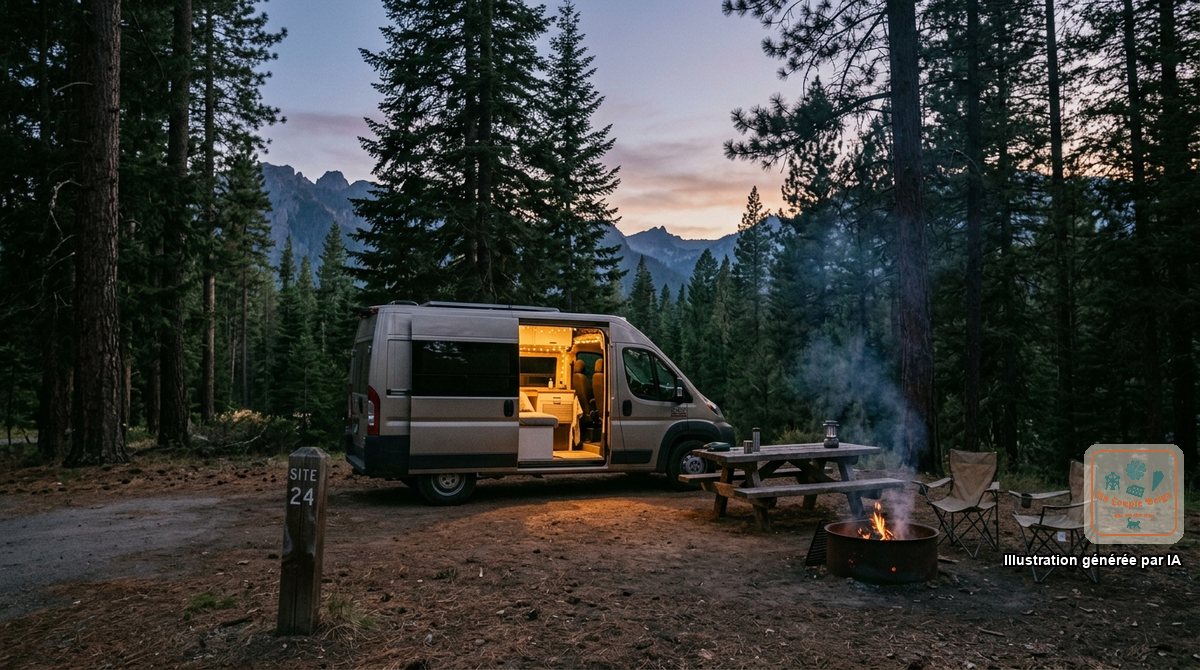
In the United States you can’t park just anywhere to sleep, but the possibilities are very numerous, from a fully equipped campground with a pool to a free patch of desert with nobody within ten kilometres. The key is knowing who manages what, and what needs booking.
The main families of campgrounds
| Type | Price per night | Facilities | Booking |
|---|---|---|---|
| National parks | $20 to $35 | Table, fire ring, toilets, rarely showers | Recreation.gov, often 6 months ahead |
| National forests | $10 to $25 | Simple: table, vault toilets | Recreation.gov or first come, first served |
| State parks | $20 to $45 | Often showers and electricity | Each state’s website |
| Private campgrounds (KOA and others) | $40 to $90 | Full hookups, showers, laundry, wifi, pool | Online, easy |
| Wild camping on public land | Free | Nothing | None |
In the national parks
These are the most beautiful sites and the most sought-after. At Yosemite, Zion, the Grand Canyon or Yellowstone, summer places go in a few minutes when reservations open.
- Create your Recreation.gov account in advance and log in before the opening time.
- Note the opening date for each campground: six months before the arrival date in many cases, but some parks work by whole month or two weeks ahead.
- Check the maximum length allowed for the vehicle.
- Watch for cancellations: places come free every day, especially in the week before.
At Yellowstone, some of the campgrounds are run by a private concessioner and are booked on its own website.
Campgrounds marked first-come, first-served can’t be booked: in season, you need to arrive in the morning, between 8 and 10am, when the previous occupants are leaving.
National forests and BLM land
Around the parks, immense public lands are managed by the Forest Service (the national forests) and the Bureau of Land Management, or BLM, especially in the West.
You’ll find simple, cheap campgrounds there, and above all dispersed camping: the right to set up for free outside developed campgrounds, along the tracks. The usual rules:
- 14 days maximum in the same place;
- set up on a spot that has already been used, away from watercourses and the main road;
- take everything away with you, rubbish and toilet paper included;
- respect fire bans, frequent in summer.
Most of the time there’s no water, no toilets and no signal. The rules vary by district: a phone call or a visit to the ranger station avoids nasty surprises. For finding sites, iOverlander, Campendium and The Dyrt are the most widely used apps (see our selection).
Private campgrounds
KOA (Kampgrounds of America) is the best-known chain, with several hundred campgrounds beside the main routes and near the parks. You’ll find sites with hookups, clean bathrooms, a laundry, often a pool, and small cabins to rent.
It’s more expensive and less wild, but it’s the simple solution for a proper shower, a wash, emptying the tanks and a quiet night near a town.
The vocabulary of hookups:
- Full hookup: water, electricity and sewer at the site.
- Electric only or water/electric: partial hookups.
- Dry camping or boondocking: no hookups at all.
- Dump station: the point for emptying waste water, free or charged for (5 to 15 dollars).
- Pull-through: a site you drive through without reversing.
Car parks for one night
For a driving stop, a few fallback solutions exist. None of them is a right.
- Walmart. Many stores tolerate a night in their car park, but the decision rests with each store and with the town. Ask at the customer service desk, and leave early.
- Cracker Barrel. This restaurant chain often sets aside a few spaces for motorhomes.
- Truck stops (Pilot, Flying J, Love’s): open all night, noisy, with paid showers.
- Motorway rest areas: the rules change from one state to another, from a few hours’ break to a full night.
- Casinos, in Nevada and elsewhere, often accept motorhomes.
When everything is full
- Look in the national forest next to the park, at both campgrounds and dispersed camping.
- Look at the state parks in the area, often forgotten.
- Widen the search to 45 minutes’ drive.
- Call a private campground: they sometimes keep sites that aren’t listed online.
- As a last resort, a motel (see our article).
Campground etiquette
- Quiet hours from 10pm to 6am, generators off.
- Fires only in the fire rings provided, and never during a ban. Buy your firewood on the spot: carrying it from one region to another spreads pests.
- Food stored in the bear lockers where they exist (see wildlife).
- Check-out before 11am or noon, check-in from 1 or 2pm.