Saguaro: the forest of giant cacti that frames Tucson
Updated on
How long should you spend there?
At a glance
- Entrance fee
- $25 per vehicle for 7 days, valid for both districts, with no surcharge for non-residents.
- Best time to go
- From October to April. The cacti flower in May and June, but by then it's over 38°C.
- Book ahead
- None.
- Getting around
- By car. The park's two districts are separated by the city, 45 minutes to an hour's drive from each other.
| Walks and hikes | Distance | Time | Level |
|---|---|---|---|
| Desert Discovery Trail, west district | 0.8 km (loop) | 20 min | easy |
| Signal Hill, west district | 0.8 km (round trip) | 20 min | easy |
| Valley View Overlook, west district | 1.3 km (round trip) | 30 min | easy |
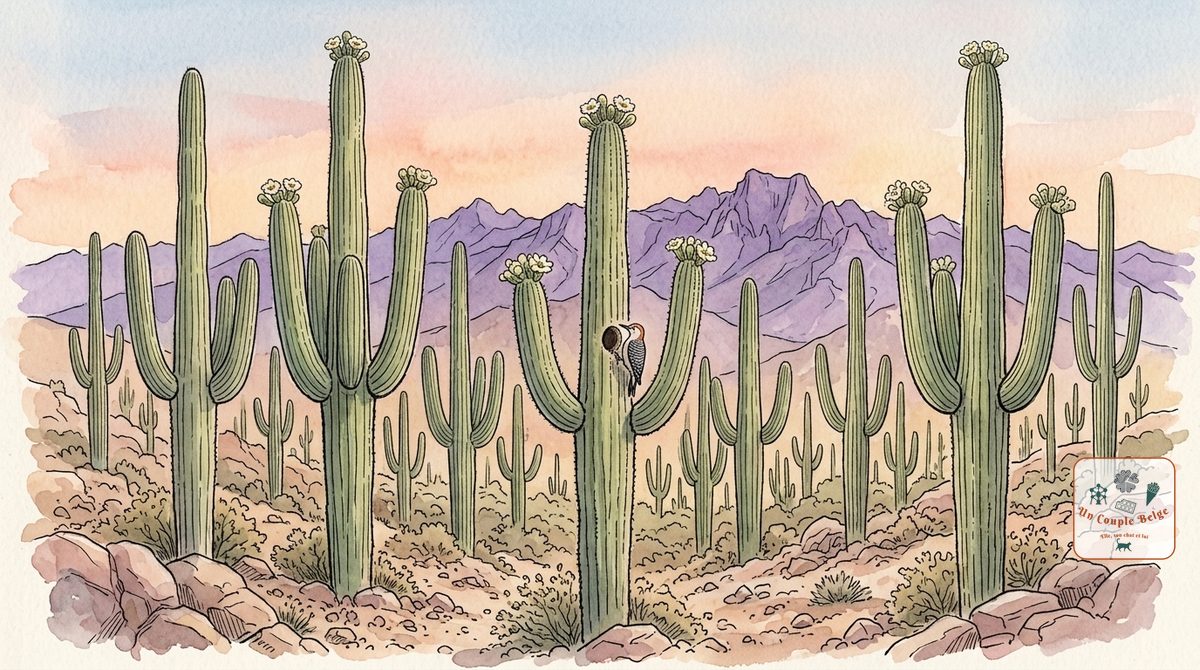
The saguaro is the cactus of the cartoons: a thick trunk, arms raised to the sky. It grows only in the Sonoran Desert, in southern Arizona and Mexico. Around Tucson it forms real forests. The park protects two of them, one on each side of the city.
History and origins
A saguaro grows very slowly. At ten years old, it measures a few centimetres. It takes fifty to seventy years to put out its first arm. The tallest exceed twelve metres and are more than 150 years old.
The Tohono O’odham have lived in this desert for centuries. Every summer they harvest the cactus’s red fruit, using long poles, to make syrup and a ceremonial wine. This harvest marks the start of their year. The site was protected in 1933 and became a national park in 1994.
What to do there
- The west district: the densest cactus forests, on the slopes of the Tucson Mountains. A gravel road loops through it, and several short trails start from it. It’s the best side for sunset.
- Signal Hill: a small hill of black rocks, covered with carvings more than a thousand years old.
- The east district: larger and more mountainous. A paved 13 km road winds through the cacti, at the foot of the Rincon Mountains.
- The desert museum: right next to the west district, an open-air zoo and botanical garden devoted to the Sonoran Desert. It isn’t the park, but it’s the best complement to it.
- The bloom: in May and June, large white flowers open at the top of the cacti, at night, and close again the next day.
Stories and good to know
- A large saguaro swollen with water can weigh several tonnes.
- The holes you see in the trunks are dug by woodpeckers. Once abandoned, they serve as nests for small owls.
- Damaging or stealing a saguaro is an offence in Arizona. Some of the park’s cacti carry a microchip.
Practical information for your road trip
- Pass: the America the Beautiful pass covers the entrance fee. Everything is explained in our guide to the national parks pass.
- Getting there: each district is 20 to 30 minutes from downtown Tucson. Tucson is 1 hr 30 from Phoenix.
- Which district to choose: the west if you only have a few hours, for the density of the cacti and the neighbouring museum.
- On site: no restaurant and no fuel in the park. Water at the visitor centers.
- Where to stay: in Tucson.
- Combine it with: Tombstone and southern Arizona, or Sedona and the Grand Canyon, further north.
Quick quiz
Question 1 / 3
Where to stay near Saguaro: the forest of giant cacti that frames Tucson
Stay22 affiliate links: if you book through here, we earn a small commission at no extra cost to you. Thanks for your support!
On the ground

Sponsored by UnCoupleBelge
Follow us on Instagram
Box sponsored by a partner
Other places nearby
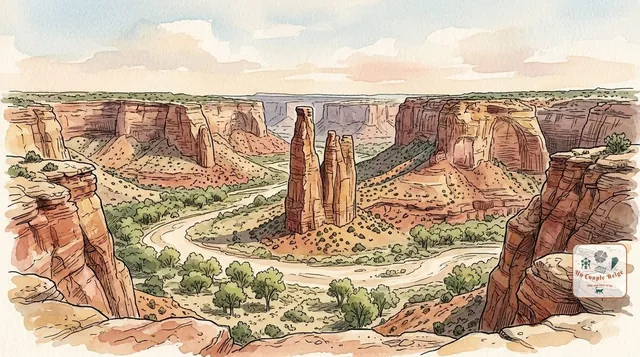
Canyon de Chelly: a Navajo canyon that is still lived in
A red sandstone canyon on Navajo land, inhabited for 5,000 years and still farmed today. You look at it from above for free, and go down into it with a guide.
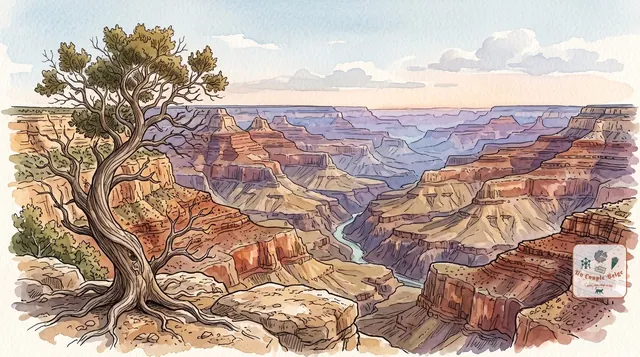
Grand Canyon: the South Rim, from viewpoint to viewpoint
A canyon 446 km long and more than 1,600 metres deep, which you discover from the South Rim, one viewpoint after another. Even half a day is enough to remember it for a long time.
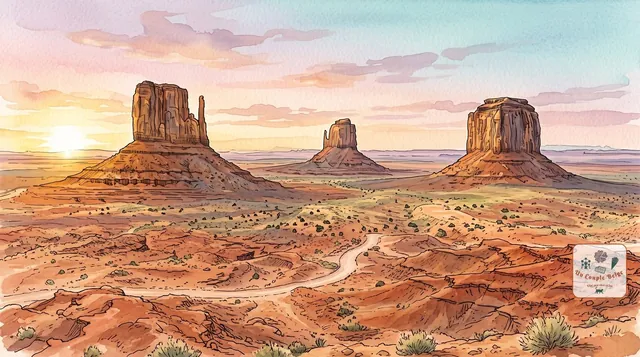
Monument Valley: the red buttes of Navajo country
Red sandstone buttes on a vast plain, on Navajo land: the Western backdrop everyone has in mind, best seen at sunrise.
Comments