Nevada: Las Vegas, and the great desert around it
Updated on
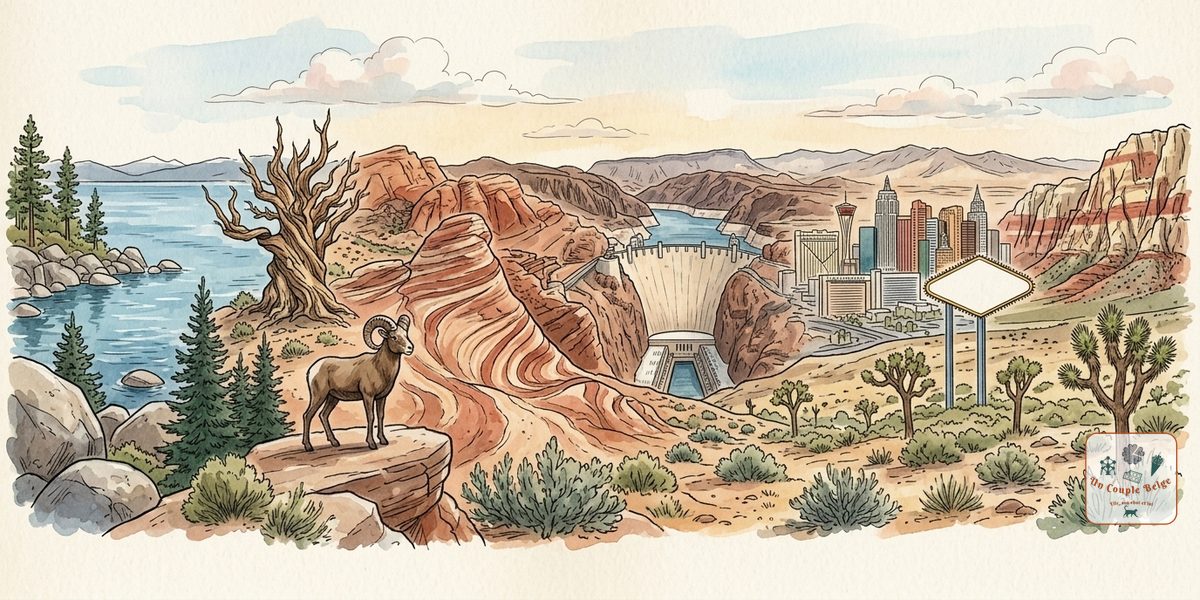
Say “Nevada” to someone and they’ll think Las Vegas within a second: the neon, the quickie weddings, the all-you-can-eat buffets. That’s true, but so partial that it becomes misleading. Las Vegas occupies a small corner in the far south of an immense state, which has more than 300 mountain ranges, salt flats and roads where you can drive for an hour without passing a car.
It’s this contrast that makes Nevada fascinating: on one side the world capital of gambling and entertainment, loud and electric, on the other an almost empty desert where you’re more likely to come across wild horses than humans. In between, laws that astonish the rest of the country, legends of aliens, ghost towns from the silver rush and trees nearly 5,000 years old.
Nevada at a glance
- Capital: Carson City
- Largest city: Las Vegas
- Population: about 3.2 million, three-quarters of them in the Las Vegas metropolitan area
- Area: about 286,000 km², more than nine times Belgium
- Joined the Union: 1864, 36th state, in the middle of the Civil War, hence its motto “Battle Born”
- Time zone: Pacific Time (9 hours behind Brussels)
- Nicknames: Silver State, Battle Born State
- Highest point: Boundary Peak, 4,007 metres
Geography: the Great Basin
Almost all of Nevada belongs to the Great Basin, an immense region where the rivers never reach the sea: they vanish into salt lakes or evaporate in the desert. The landscape endlessly alternates north-south mountain ranges and flat valleys, the “basin and range”.
The south, around Las Vegas, belongs to the Mojave Desert: very hot, with red rocks, Lake Mead and the Colorado River.
The centre is the emptiest part: a succession of valleys and mountains crossed by Route 50 and the Extraterrestrial Highway.
The north-west, with Reno, Carson City and Lake Tahoe, backs onto the Sierra Nevada. The north-east, around Elko, has surprisingly green mountains, such as the Ruby Mountains.
A bit of history
The Paiute, the Shoshone and the Washoe lived in the Great Basin. The territory passed from Mexico to the United States in 1848. In 1859, the discovery of the Comstock Lode, a silver deposit of unprecedented richness near Virginia City, set off a rush and partly funded the Union’s war effort. Nevada became a state as early as 1864, with Lincoln’s backing.
After the mines declined, Nevada chose a very particular model: quick divorce, gambling legalised in 1931 in the depths of the Great Depression (after a ban between 1910 and 1931), then the construction of the Hoover Dam in the 1930s. During the Cold War, more than 900 nuclear tests took place at the Nevada Test Site, north of Las Vegas. Las Vegas then boomed, driven by the Mob in the 1950s, then by the big entertainment corporations.
The must-sees
Las Vegas
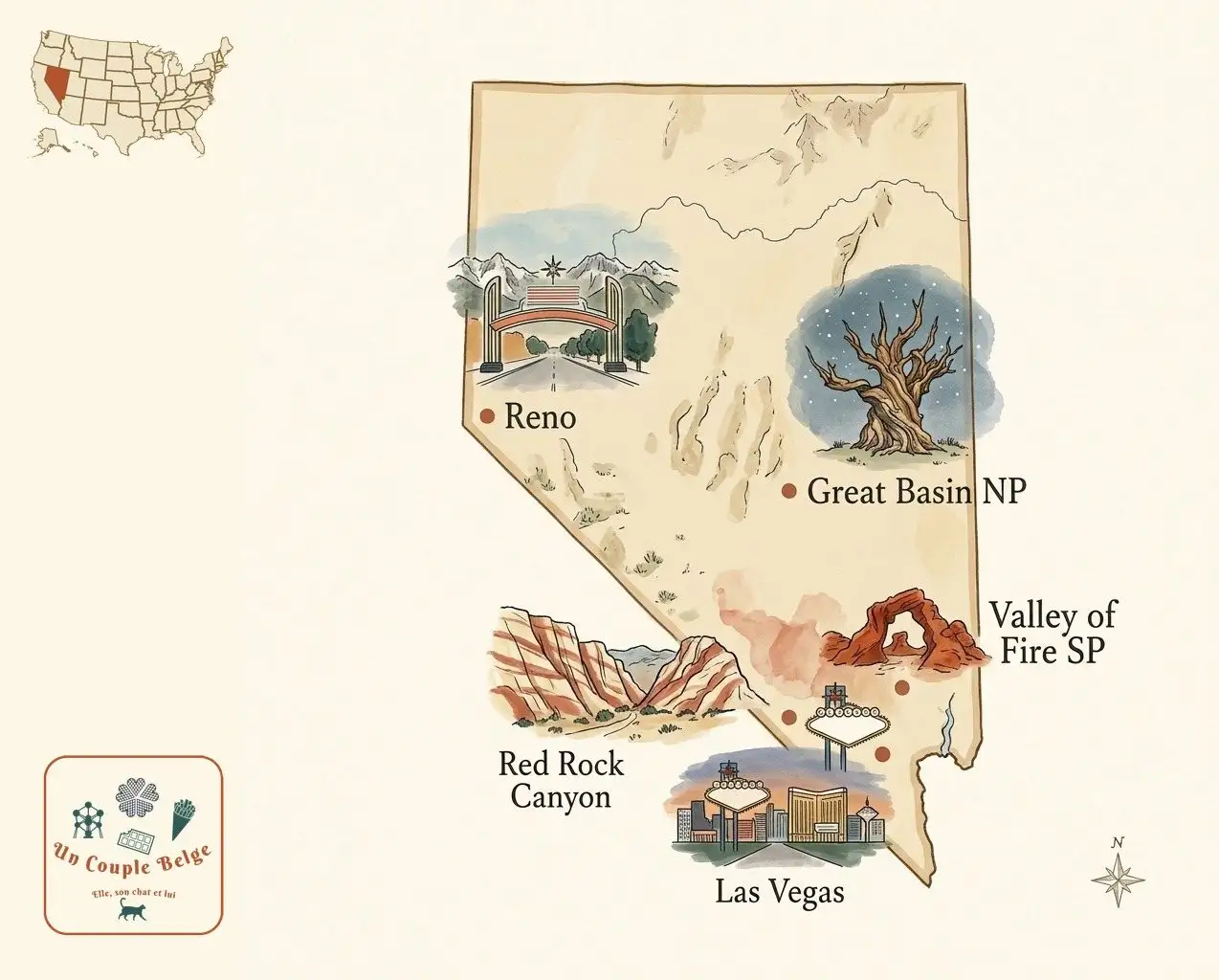
You have to see Las Vegas at least once, if only to grasp the scale of the Strip, that boulevard of nearly 7 kilometres where hotel-casinos reproduce an Egyptian pyramid, the Eiffel Tower or the canals of Venice. The Bellagio fountains dance every 15 to 30 minutes, for free. The Sphere, a giant spherical venue opened in 2023 whose entire outer surface is a screen, has become the city’s new icon.
Old Las Vegas, around Fremont Street, has kept its retro casinos beneath a giant screen that covers the street. The Neon Museum displays the city’s old signs, magnificent at night. The Mob Museum tells the story of the Mafia, which built the city. And the shows (Cirque du Soleil, concerts, magicians) are often excellent. Our travel diaries: day 15 (Valley of Fire and the Strip) and day 16 (Red Rock Canyon and Seven Magic Mountains) of road trip 1.
Around Las Vegas
Twenty minutes from the Strip, Red Rock Canyon offers a 21-kilometre scenic loop through cliffs of red and tan sandstone, with fine hikes and climbing. From October to May, a timed entry must be reserved (BLM).
An hour to the north-east, Valley of Fire State Park, Nevada’s oldest state park, is redder still: sculpted, twisted sandstone formations, petroglyphs and rocks that seem to burn at sunset. The Hoover Dam, 45 minutes to the south-east, holds back Lake Mead on the Colorado: you can tour the inside and walk across the dam, with one foot in Nevada and the other in Arizona. And south of the city, Seven Magic Mountains are seven stacks of boulders painted in fluorescent colours, a work of art in the middle of the desert.
Death Valley, in California, is only a two-hour drive away. On the way, Rhyolite is a gold rush ghost town, with strange ghostly sculptures in the open air.
The Extraterrestrial Highway
Highway 375, between Las Vegas and Great Basin, was officially named the Extraterrestrial Highway in 1996, because it passes close to the mysterious Area 51, a secret military base. You cross empty valleys for more than 150 kilometres, with an obligatory stop at the Little A’Le’Inn, in Rachel, a café-motel decorated with flying saucers. Don’t go near the base’s gates: the guards aren’t joking.
Great Basin
In the far east, Great Basin National Park is one of the least visited in the country. You tour Lehman Caves, full of formations, climb towards Wheeler Peak, at nearly 4,000 metres, and walk among bristlecone pines, some of the oldest trees in the world: some are nearly 5,000 years old. The night sky here is one of the purest in the United States.
The Loneliest Road
Route 50, which crosses central Nevada from east to west, was nicknamed “the Loneliest Road in America” by Life magazine in 1986. The state turned the insult into a selling point: a free “passport” to be stamped in the small towns along the way, such as Ely, Eureka and Austin, earns you a survival certificate. On the way, Sand Mountain, a dune that sings in the wind.
Reno, Virginia City and Lake Tahoe
In the north-west, Reno, “The Biggest Little City in the World”, is more relaxed than Las Vegas, with its casinos, its river where people kayak in the middle of town and the National Automobile Museum. Half an hour away, Virginia City, the silver rush town, has kept its wooden boardwalks and saloons: this is where Mark Twain began his career as a journalist.
Lake Tahoe, shared with California, has a splendid eastern shore on the Nevada side, with the boulders and turquoise water of Sand Harbor. Further north, Pyramid Lake, on a Paiute reservation, is a large desert lake with strange rock formations.
The north-east
Around Elko, this is the Nevada of cowboys and Basque sheepherders. In January, the National Cowboy Poetry Gathering brings together cowboys who read their poems. The Ruby Mountains and Lamoille Canyon are nicknamed the “Alps of Nevada”, with glacial lakes and snowy peaks in the middle of the desert.
And every late August, the Black Rock Desert, in the north-west, hosts Burning Man, a festival where more than 70,000 people build a temporary city, before burning everything and leaving without a trace.
Itinerary ideas
3-4 days, Las Vegas and around. Las Vegas (2 days) → Red Rock Canyon → Valley of Fire → Hoover Dam.
One week, the great desert. Las Vegas → Valley of Fire → Extraterrestrial Highway → Great Basin (1-2 days) → Route 50 (Ely, Eureka, Austin) → Virginia City → Reno → Lake Tahoe.
With the parks of the West. Las Vegas is the ideal gateway to Zion (2 hrs 30), the Grand Canyon (4 hrs 30) and Death Valley (2 hrs). Many road trips in the West start or end there.
On the plate
- The casino buffets, fewer since 2020 but still gigantic. The most renowned are expensive, but the experience is worth it once.
- Great chefs from all over the world have a restaurant in Las Vegas, often at high prices.
- The cheap shrimp cocktail of the old Fremont Street casinos, a tradition from the 1950s.
- The Basque cooking of Elko, Reno and Winnemucca, served at long shared tables: soup, lamb, chorizo, and Picon punch, a bitter cocktail based on Picon.
- And in the desert, the little diners of the mining towns, where time has stood still.
Culture and trivia
- Gambling is everywhere: you’ll find slot machines even in petrol stations, supermarkets and Las Vegas airport.
- Prostitution is legal in some rural Nevada counties, but banned in Las Vegas and Reno.
- Nevada is home to more than half of the wild horses (mustangs) in the United States, protected by a 1971 law. You often see them at the roadside.
- You can get married in a few minutes in Las Vegas, in chapels where Elvis can officiate. You simply need to get a licence from the county marriage bureau.
- The Hoover Dam contains enough concrete to build a two-lane road from San Francisco to New York, according to the often-quoted figure.
When to go
- Spring (March to May) and autumn (September to November): the best times, with pleasant temperatures in the desert.
- Summer (June to August): very hot in the south, often above 40 °C in Las Vegas and far more in Death Valley. Ideal, on the other hand, for the north, Great Basin and Tahoe.
- Winter (December to February): mild in Las Vegas (15 °C during the day), cold and sometimes snowy in the north, with skiing at Tahoe.
Practical information
- Recommended length of stay: 3 to 4 days for Las Vegas and around, 7 to 10 days for a real tour of the state.
- Getting there: Las Vegas has direct flights from several European cities and countless domestic flights. Reno is served by connecting flights.
- Getting around: in Las Vegas you walk a lot on the Strip, with a monorail and shuttles. A car is essential to get out of the city.
- Budget: Las Vegas hotels can be very cheap on weekdays, but watch out for the “resort fees” added each night and the price of shows and restaurants. The rest of the state is affordable.
- Things to watch out for: in the desert, carry plenty of water, fill up at every opportunity and download your maps for offline use: the signal disappears for long stretches.
- One more tip: book the Red Rock Canyon time slot and, for Great Basin, the Lehman Caves tour in advance.
Our place guides in Nevada
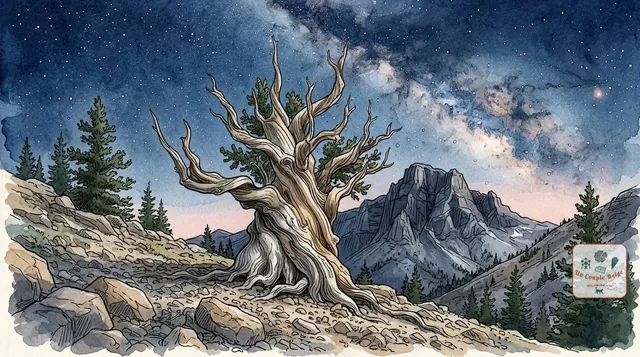
Great Basin: absolute solitude among caves, ancient pines and starry skies
A mountain nearly 4,000 metres high in the middle of the Nevada desert, with caves, pines several thousand years old and one of the darkest skies in the country.
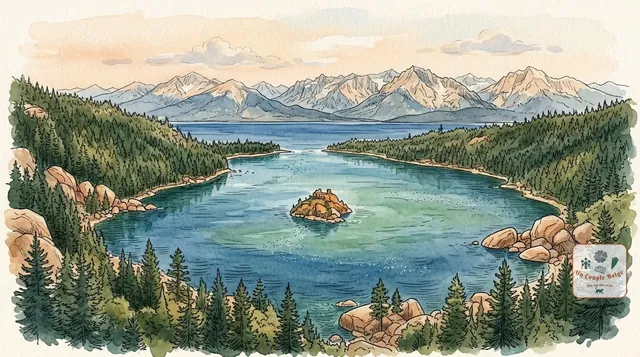
Lake Tahoe: the blue jewel between California and Nevada
A large mountain lake of deep blue, at an altitude of 1,900 metres, between California and Nevada. Beaches, coves and trails in summer, and skiing in winter.
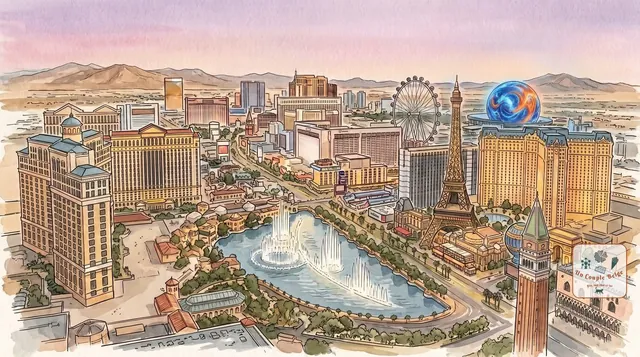
Las Vegas: the Strip, its neon lights and the desert all around
An Eiffel Tower, a pyramid and dancing fountains in the middle of the desert: you either love it or soon have enough. The finest landscapes begin half an hour from the Strip.