Las Vegas: the Strip, its neon lights and the desert all around
Updated on
How long should you spend there?
At a glance
- Entrance fee
- Walking along the Strip and through the hotels is free, as are the Bellagio fountains. Shows and attractions charge admission.
- Best time to go
- Spring and autumn. Summer tops 40°C.
- Book ahead
- Shows, and the Red Rock Canyon scenic drive from October to May.
- Getting around
- On foot along the Strip, which is longer than it looks. A monorail runs along the east side (about $6 a ride). A car is useful for Fremont Street and the desert.
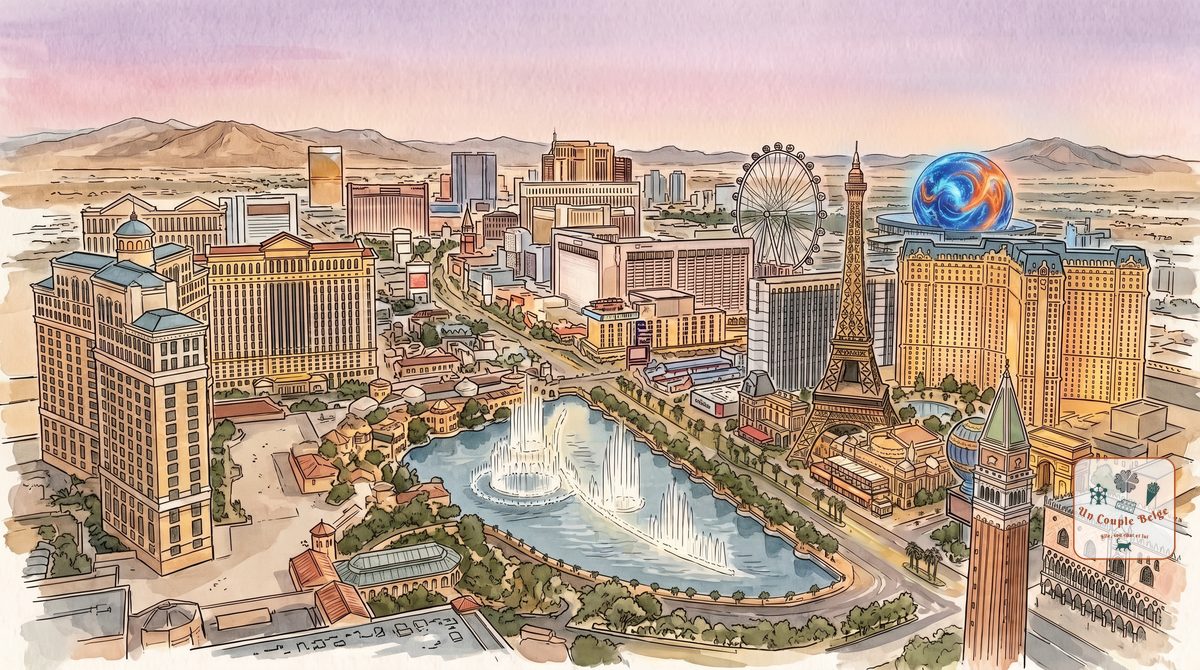
Las Vegas leaves nobody indifferent. On the Strip, an Eiffel Tower stands alongside an Egyptian pyramid and a Venetian palace, everything is outsized and nothing ever closes. Some people love it, others have had enough after one evening. What is often forgotten is that the city is surrounded by desert, and that superb landscapes begin half an hour from the casinos.
History and origins
Las Vegas was born in 1905 as a simple railway stop in the desert, on the line from Los Angeles to Salt Lake City. Everything changed in 1931: in the middle of the Great Depression, Nevada legalised gambling to fill its coffers. That same year, 50 km away, construction began on Hoover Dam, which brought thousands of workers.
After the war, the mob invested in ever bigger hotel-casinos. The gangster Bugsy Siegel opened the Flamingo in late 1946, and the Strip took shape. From the 1990s the city reinvented itself as an entertainment capital, with ever larger themed hotels, artist residencies and giant venues.
What to do there
- The Strip on foot
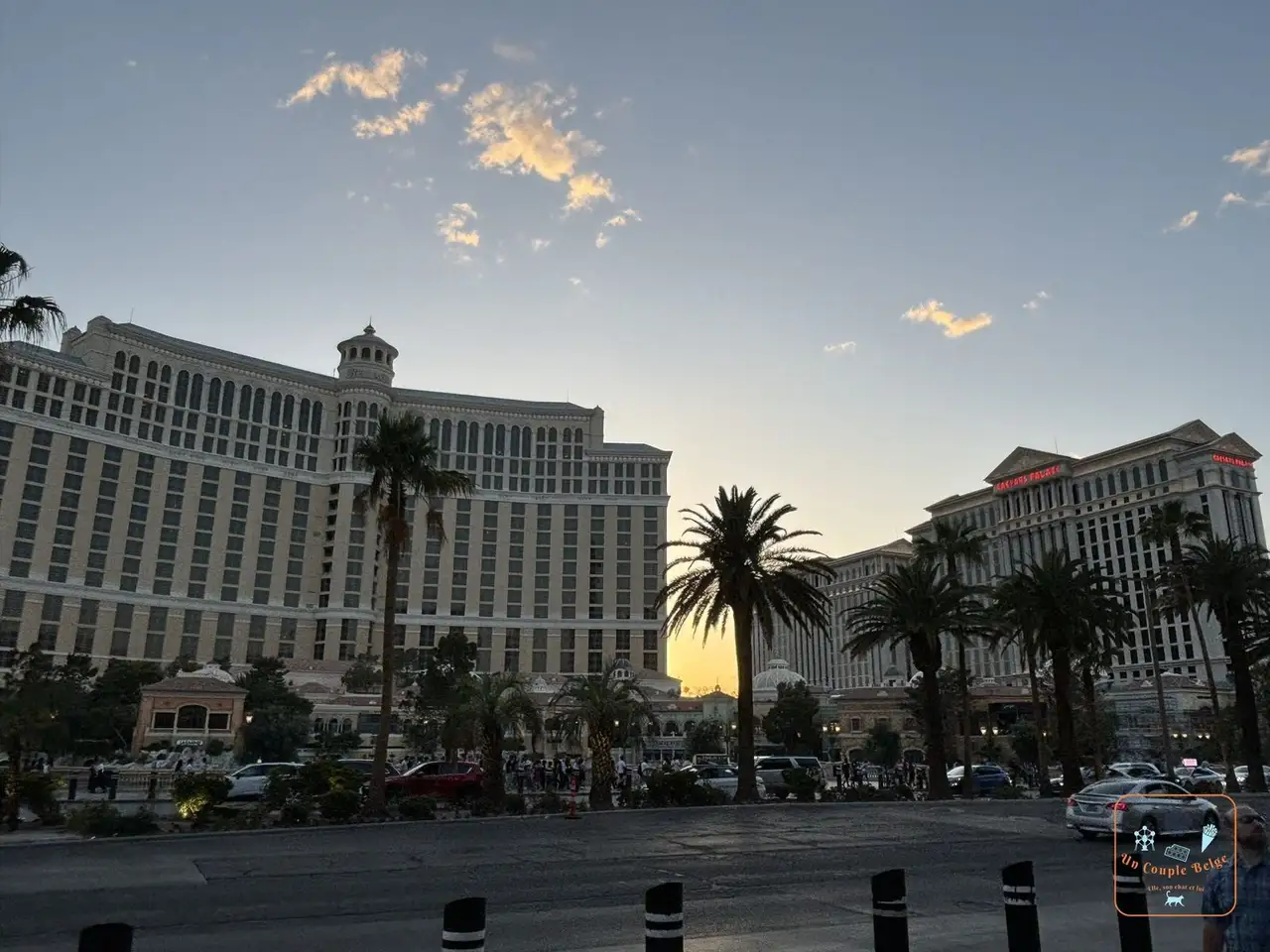 The Bellagio and Caesars Palace at sunset: you go from one hotel to the next, each with its own decor. Go into the lobbies, it’s free: the glass flower ceiling at the Bellagio
 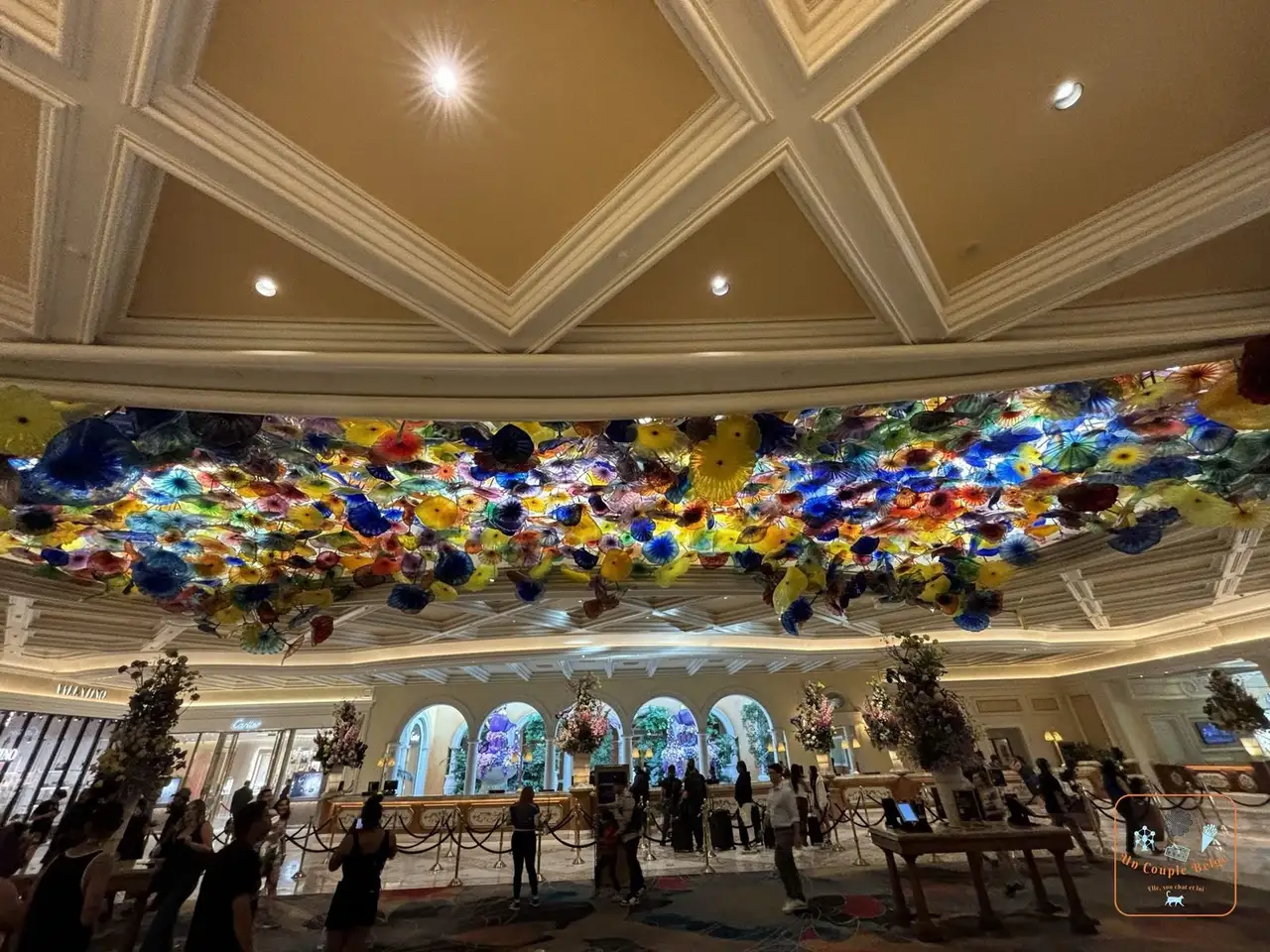 The glass flower ceiling in the Bellagio lobby, the Roman statues at Caesars Palace, the pharaohs at the Luxor.
 - The Bellagio fountains
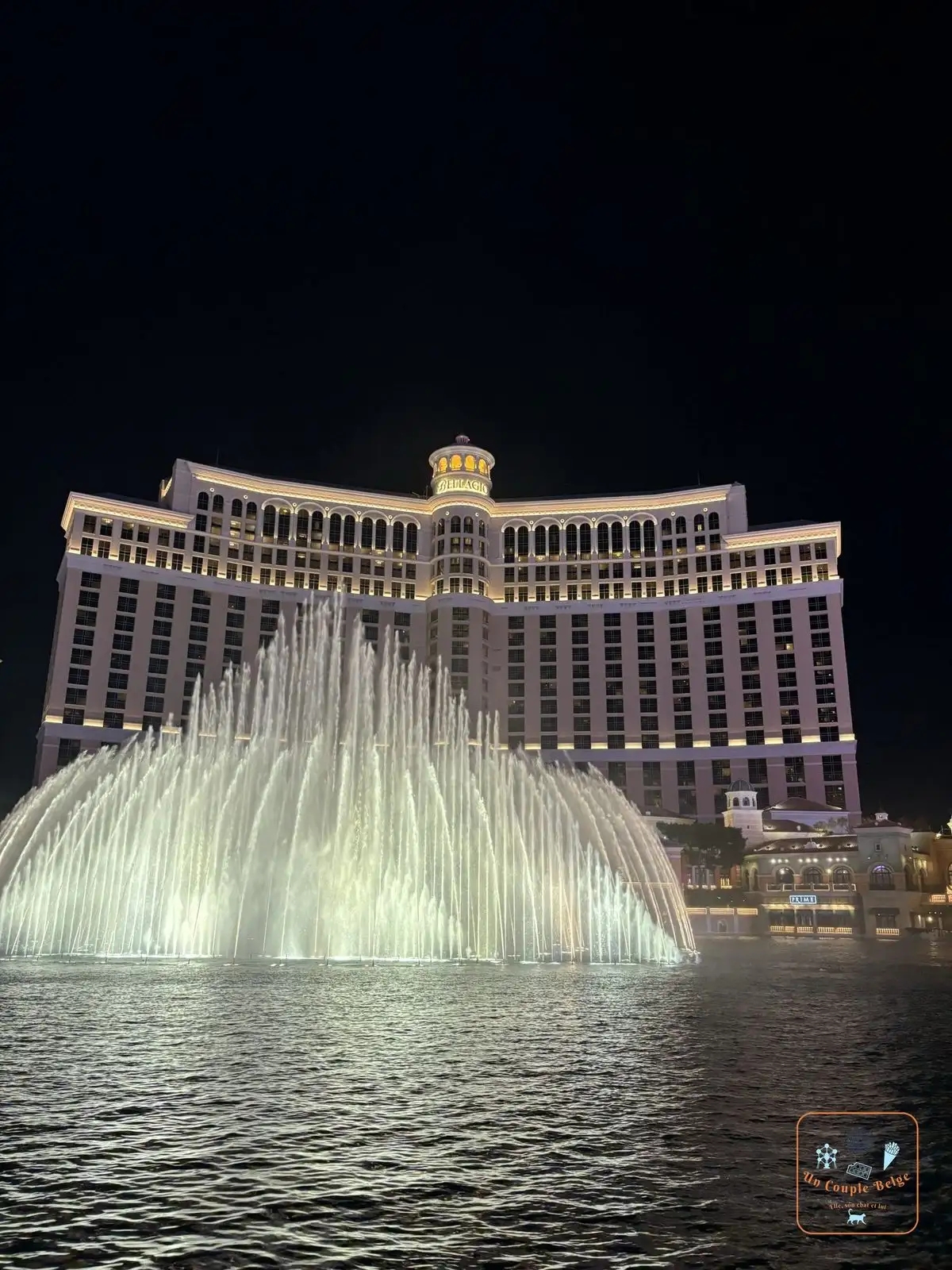 The Bellagio fountains at night: the free show not to be missed. The jets dance to music in front of the hotel, every half hour in the afternoon and every 15 minutes in the evening, until midnight.
 - The Flamingo garden
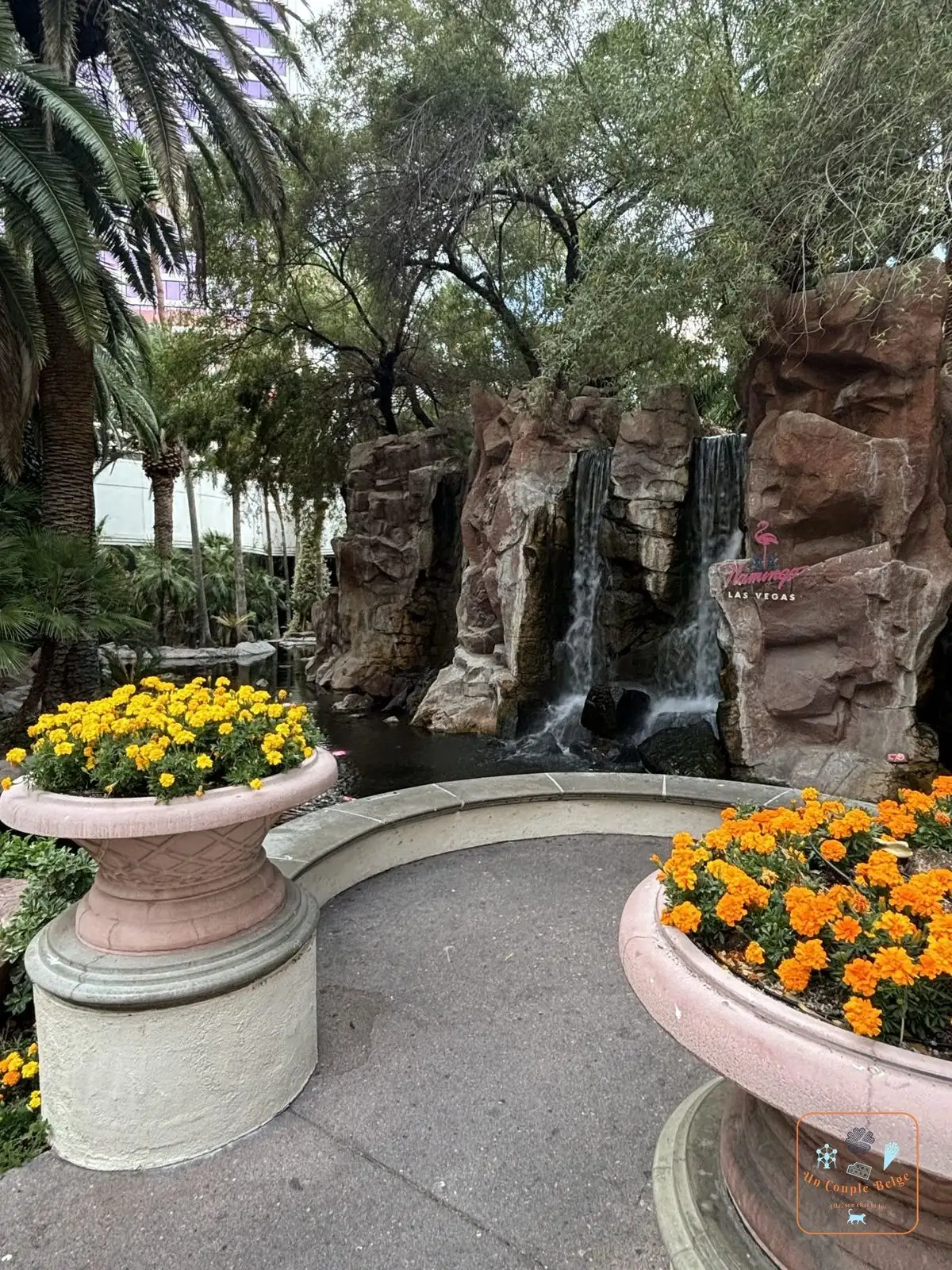 A waterfall in the Flamingo garden: a tropical garden open to all, with waterfalls and flamingos, in the midst of the noise of the Strip.
 - Sphere and the High Roller
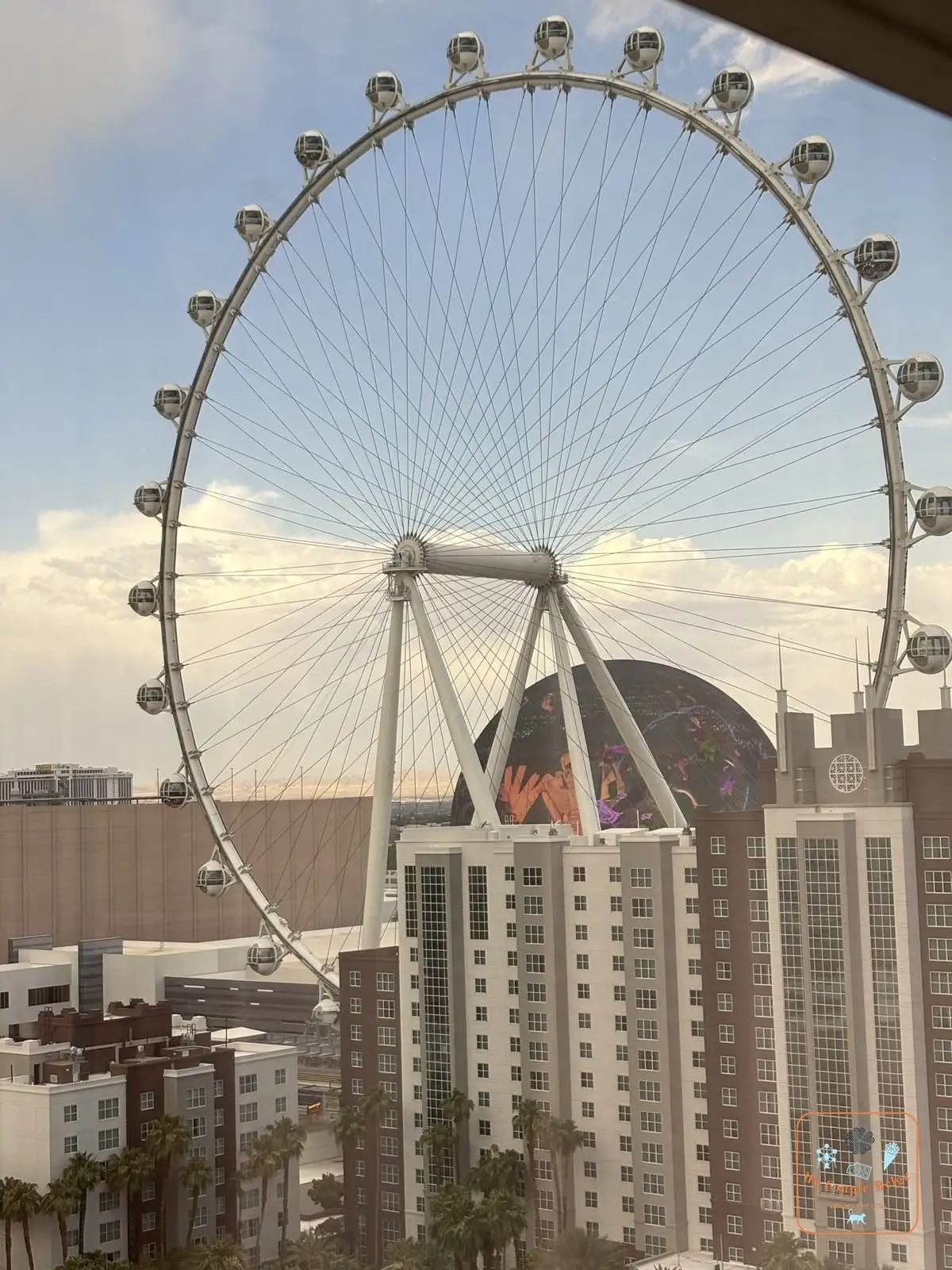 The High Roller observation wheel and Sphere: Sphere is a ball-shaped venue covered in screens. You can watch its animations for free from the street after dark. Right next to it, the High Roller is one of the tallest observation wheels in the world.
 - Fremont Street
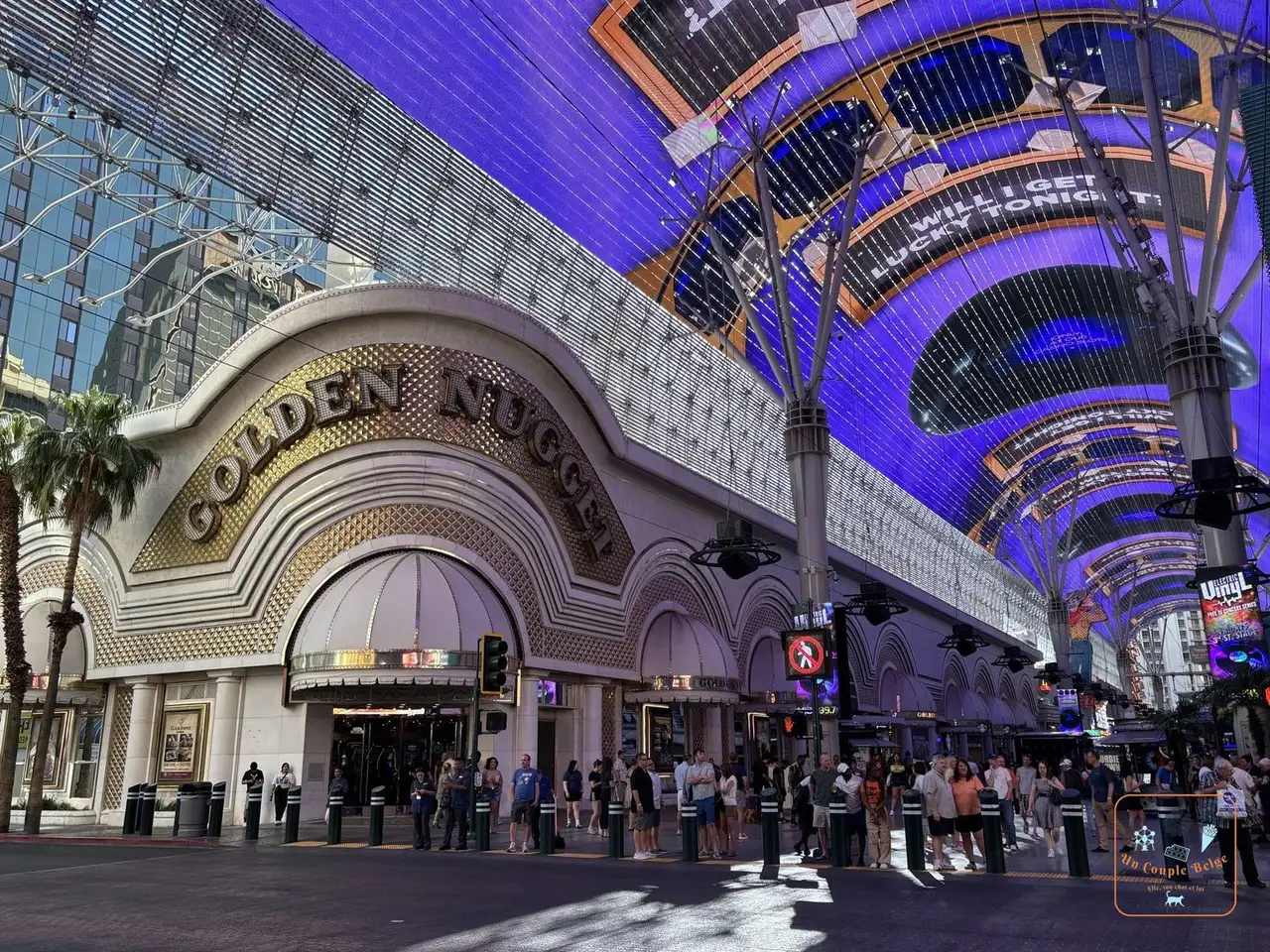 The Golden Nugget under the Fremont Street canopy: old Las Vegas, north of the Strip. The old casinos line up under a canopy of screens 420 metres long. The atmosphere is more down-to-earth and wilder.
 - The “Welcome to Fabulous Las Vegas” sign
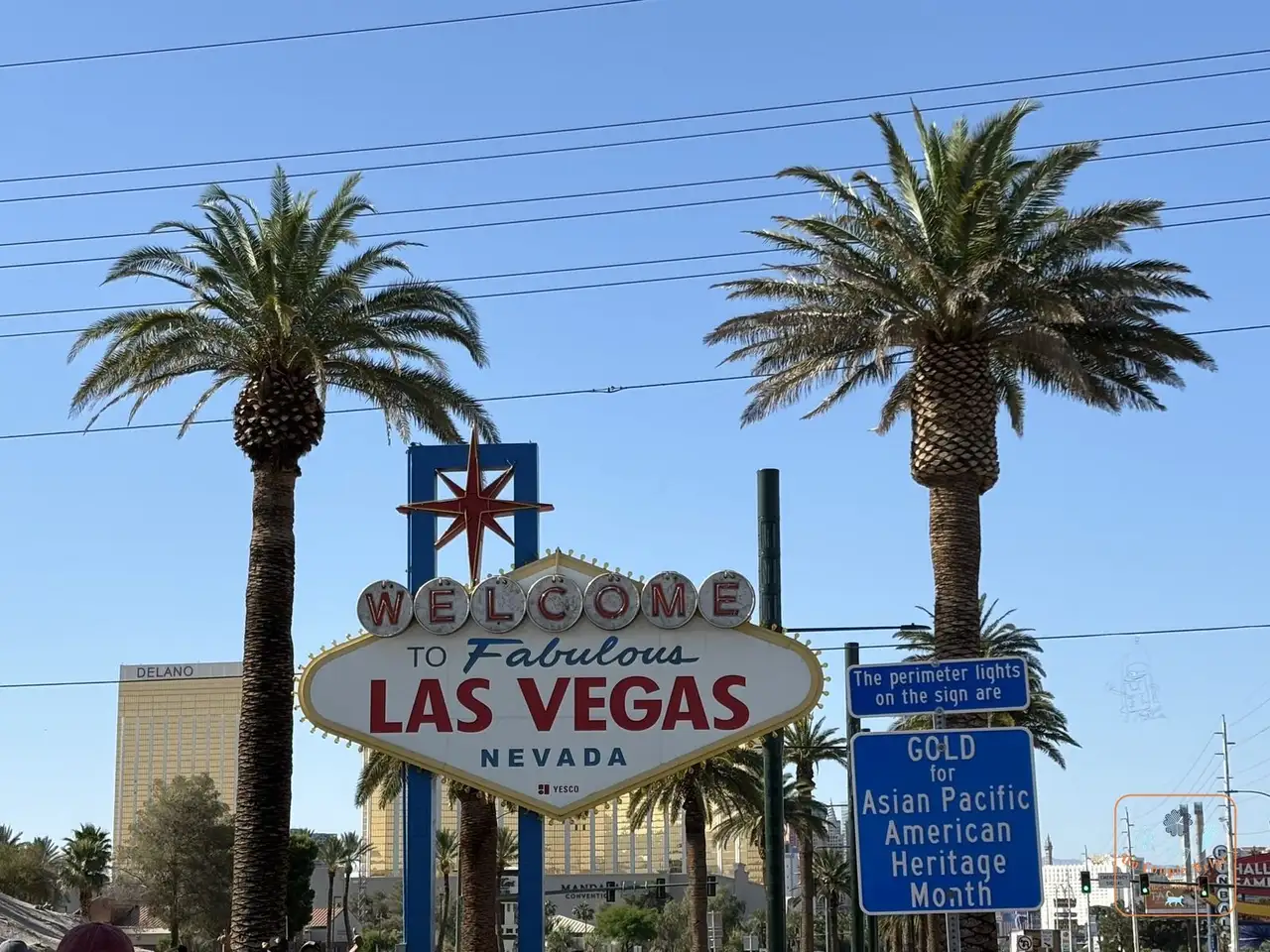 The Welcome to Fabulous Las Vegas sign: south of the Strip, with a small free car park and often a queue for the photo.
 - A show: Cirque du Soleil, magic, concert residencies. Book ahead for the best seats.
Around the city
- Red Rock Canyon
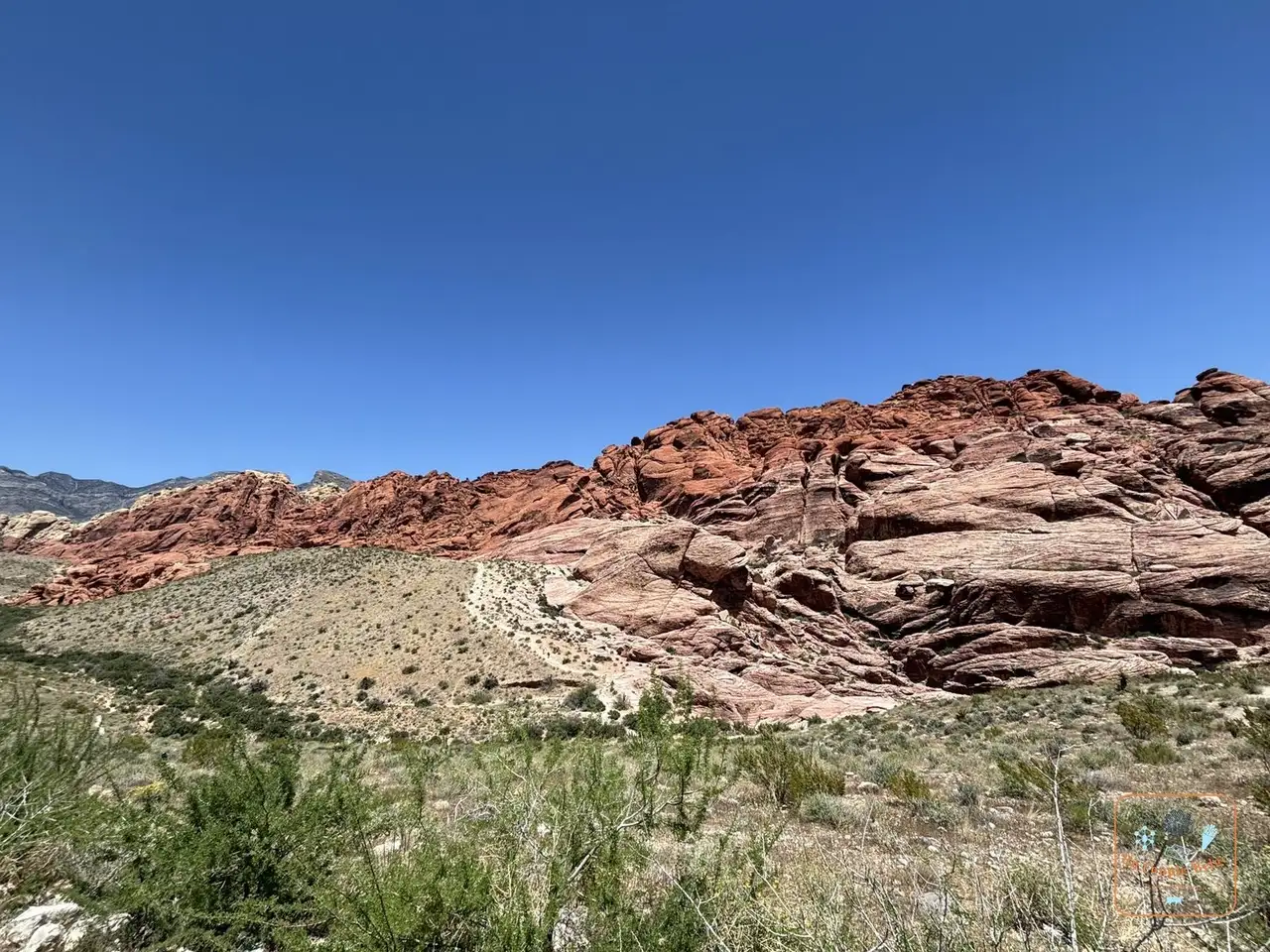 The Calico Hills in Red Rock Canyon: half an hour from the Strip, a 21 km one-way scenic drive loops around red and cream cliffs, with short walks.
 - Valley of Fire
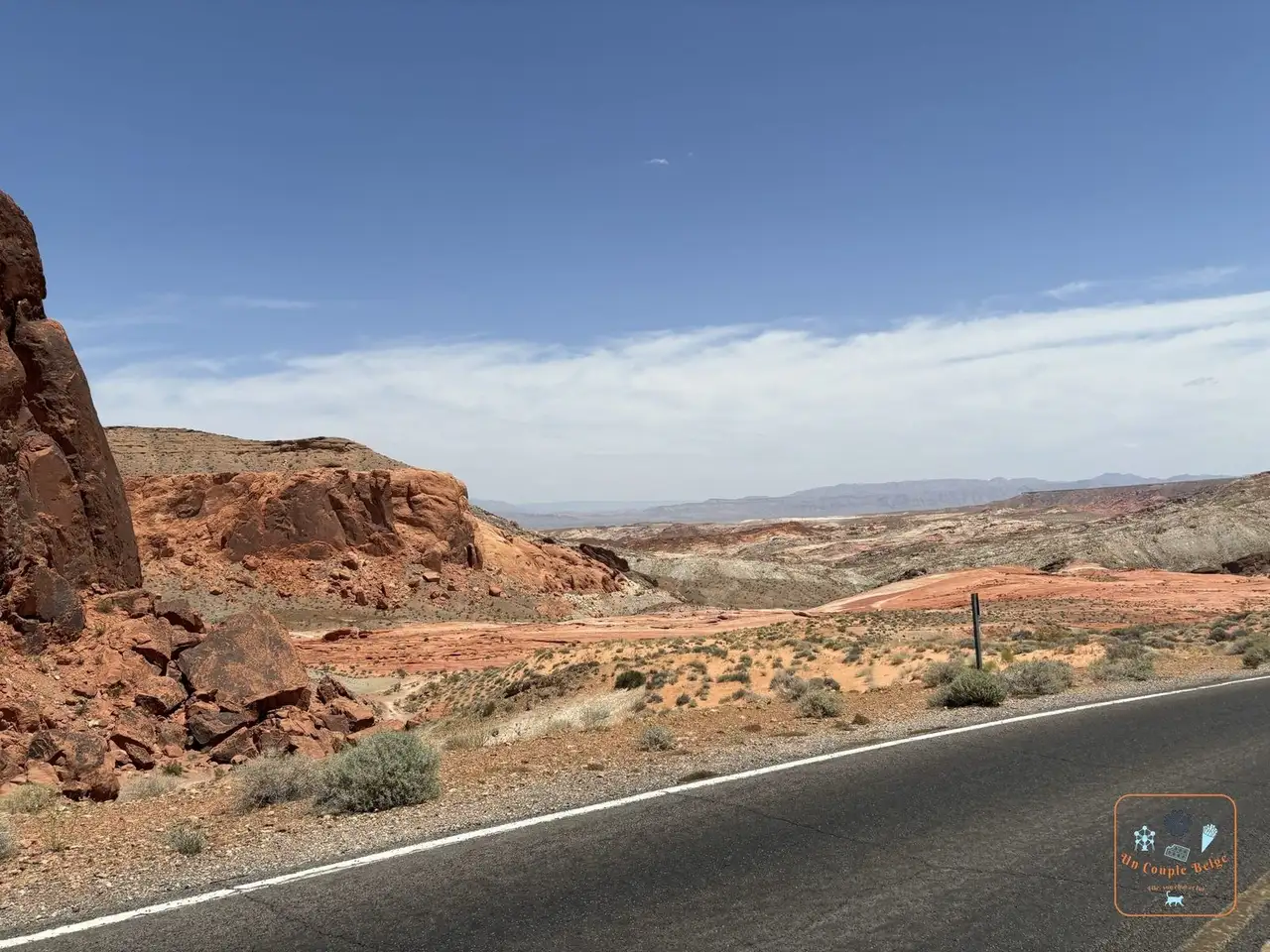 The road through the red hills of Valley of Fire: an hour to the north-east, Nevada’s oldest state park. Bright red sandstone, petroglyphs and, with a bit of luck, desert bighorn sheep
 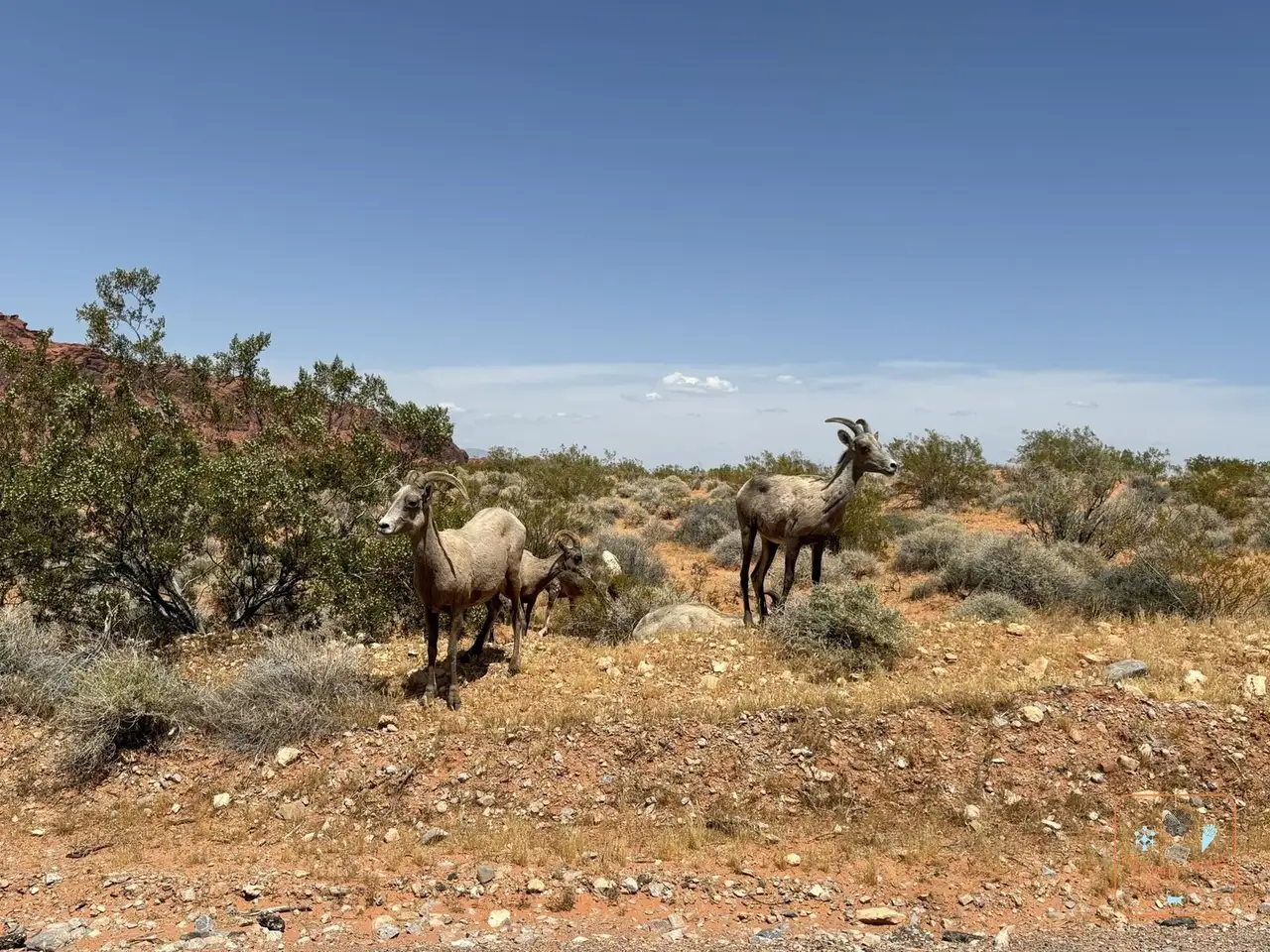 Desert bighorn sheep at the roadside in Valley of Fire.
 - Seven Magic Mountains
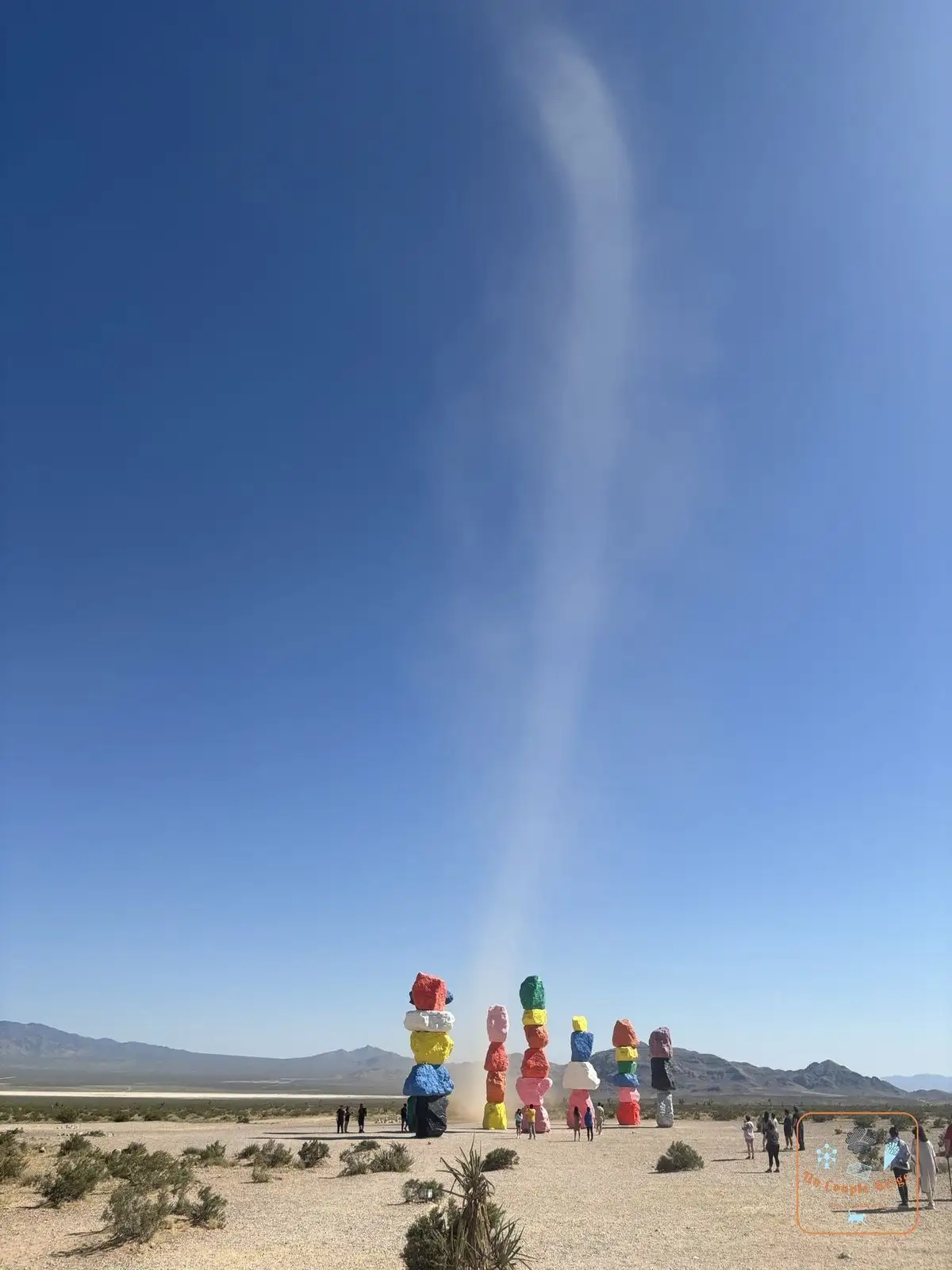 The totems of Seven Magic Mountains, with a dust devil: south of the city, seven towers of boulders painted in fluorescent colours, in the middle of the desert. Access is free.
 - Hoover Dam: 45 minutes away. You can walk across the dam and the bridge above it for free. The tour of the inside charges admission.
Stories and good to know
- The casinos have no clocks and no windows: everything is designed to make you lose track of time.
- On the Strip, distances are deceptive. The hotels are so big that they look very close, when it often takes a good quarter of an hour’s walk to get from one to the next.
- In the 1950s, the nuclear tests carried out in the desert, about a hundred kilometres away, could be seen from the city. Some hotels held parties to watch the mushroom clouds.
- The “Welcome to Fabulous Las Vegas” sign dates from 1959. It belongs to no casino but to a sign company, which leases it to the county. Its designer, Betty Willis, never copyrighted her design: it was her gift to the city, which is why you find it on every souvenir.
- Seven Magic Mountains was meant to stay for two years from 2016. Its success has kept it in place, but its future beyond 2026 is not assured: check that it’s still there before making the detour.
- The Strip is constantly changing. The Mirage closed in 2024 to become a guitar-shaped Hard Rock hotel, expected in late 2027, and the Tropicana was demolished to make way for a baseball stadium.
Practical information for your road trip
- Getting there: Las Vegas is about 2 hours 30 from Zion and from Death Valley, 4 hours from Los Angeles and 4 hours 30 from the Grand Canyon (South Rim).
- Hidden charges: almost all the hotels on the Strip add resort fees, $45 to $55 a night before tax, to the advertised price. Parking is often charged on top, even for guests, at $18 to $25 a night. Look at the total before you book.
- Stay midweek: rooms are much cheaper from Sunday to Thursday than at the weekend, except during the big trade shows.
- Heat: in summer it is over 40°C and walking the Strip in the daytime is gruelling. You go from one air-conditioned hotel to the next.
- Age: you must be 21 to gamble and to drink alcohol.
- Around the city: allow $20 per vehicle for Red Rock Canyon, covered by the national parks pass, and $15 for Valley of Fire, a state park where the pass is no use. Bring cash for Valley of Fire.
- Hoover Dam: $10 parking. Tours of the inside cost from $15 to $40.
Our experience in Las Vegas
We spent two nights there in May 2024, during our road trip 1, between Zion and Death Valley. We stayed at the Flamingo, on the Strip, with a view of the High Roller and Sphere, and kept a morning for the desert.
Our day-by-day journals are coming soon.
Quick quiz
Question 1 / 3
Expert
Las Vegas: the Strip, its neon lights and the desert all around
Where to stay near Las Vegas: the Strip, its neon lights and the desert all around
Stay22 affiliate links: if you book through here, we earn a small commission at no extra cost to you. Thanks for your support!
On the ground

Sponsored by UnCoupleBelge
Follow us on Instagram
Box sponsored by a partner
Other places nearby
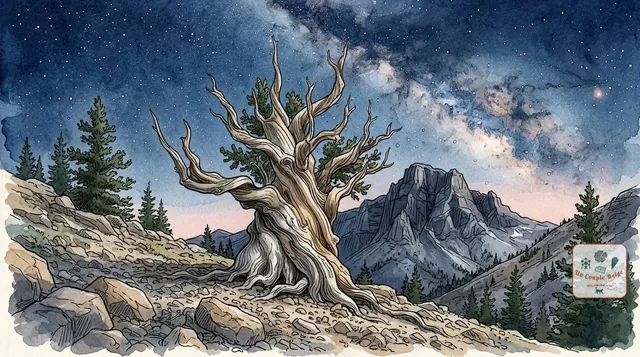
Great Basin: absolute solitude among caves, ancient pines and starry skies
A mountain nearly 4,000 metres high in the middle of the Nevada desert, with caves, pines several thousand years old and one of the darkest skies in the country.
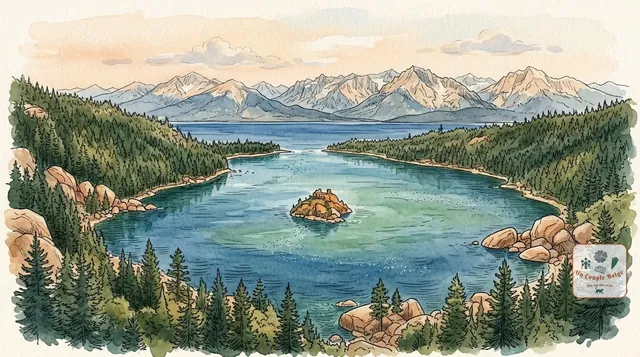
Lake Tahoe: the blue jewel between California and Nevada
A large mountain lake of deep blue, at an altitude of 1,900 metres, between California and Nevada. Beaches, coves and trails in summer, and skiing in winter.
Comments