Pinnacles: towers of volcanic rock where California condors soar
Updated on
How long should you spend there?
At a glance
- Entrance fee
- $30 per vehicle for 7 days, with no surcharge for non-residents.
- Best time to go
- From March to May for the flowers, and autumn. In summer it's often over 38°C.
- Book ahead
- None. The car park fills up fast on spring weekends.
- Getting around
- By car, via the east entrance or the west entrance. No road links the two through the park.
| Walks and hikes | Distance | Time | Level |
|---|---|---|---|
| Bear Gulch Cave and the reservoir | about 2.5 km (round trip) | 1 hr 30 | moderate |
| Balconies Cave | about 4 km (loop) | 1 hr 30 | moderate |
| Condor Gulch and High Peaks | about 8.5 km (loop) | 3 to 4 hrs | strenuous |
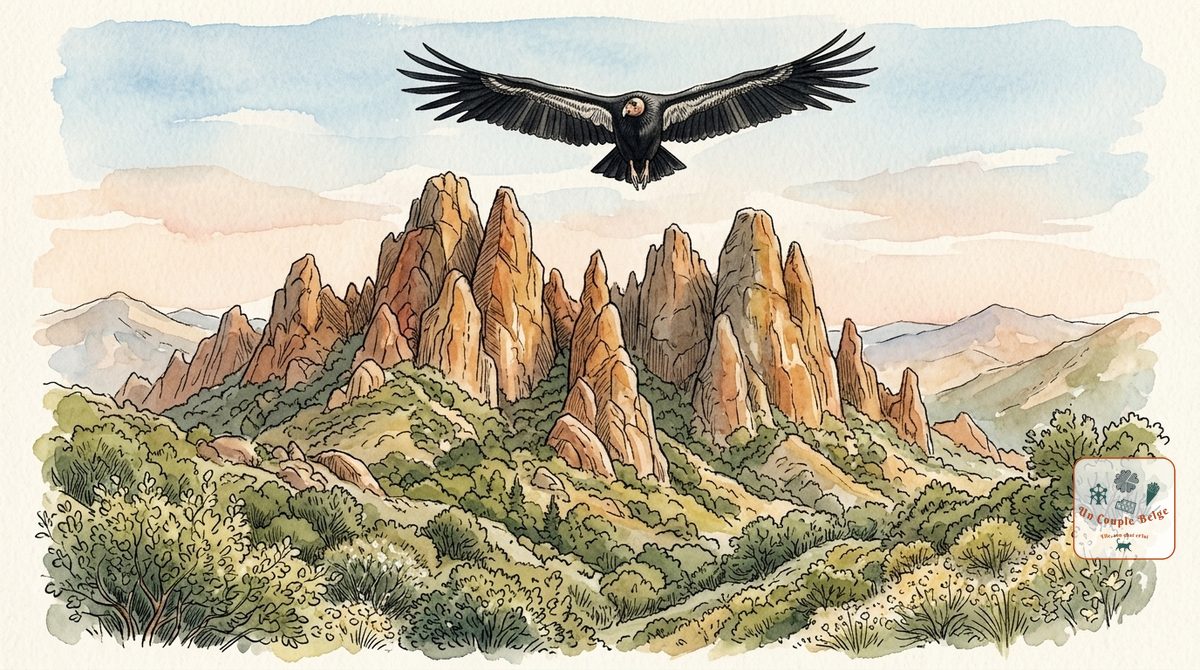
Two hours south of San Francisco, among dry hills covered in oaks, rises a jumble of spires and towers of red rock. They are the remains of a volcano, and they have a surprising history: they weren’t born here.
History and origins
The volcano erupted 23 million years ago, more than 300 km to the south-east, near Los Angeles. It sat astride the San Andreas Fault. The fault cut it in two and carried one half north, at a rate of a few centimetres a year. The other half stayed where it was.
Erosion then sculpted the spires. Enormous boulders fell to the bottom of the narrow ravines and roofed them over: this forms caves with no ceiling of solid rock, just a roof of fallen blocks. The site was protected as early as 1908 and became a national park in 2013.
What to do there
- Bear Gulch Cave: a dark passage beneath the boulders, with steps cut into the rock and a stream. You come out beside a small reservoir ringed by towers. You need a torch.
- The High Peaks: the most spectacular trail. It climbs among the spires, by steps and handrails cut into the rock in the 1930s. It’s where you have the best chance of seeing the condors.
- Balconies Cave: the other cave, on the west side, at the foot of immense rock walls.
- The California condors: the largest bird in North America, with a wingspan of nearly three metres. The park is one of the sites where they are released. They soar above the ridges morning and evening.
- The flowers: in March and April, the hills are covered in orange poppies and lupins.
- Climbing: the spires have been drawing climbers for a century.
Stories and good to know
- In 1987, only 27 California condors were left, all in captivity. Today there are several hundred, a good share of them in the wild.
- You can tell a condor from a vulture by its size, its very steady flight, and the numbered tag it wears on its wing.
- It’s the youngest national park in California.
Practical information for your road trip
- Pass: the America the Beautiful pass covers the entrance fee. Everything is explained in our guide to the national parks pass.
- Getting there: the east entrance, the more convenient, is about 2 hrs from San Francisco and 1 hr 15 from Monterey. The west entrance is reached via Soledad, on a narrow road. Driving from one to the other takes more than an hour.
- On site: there’s nothing to eat in the park, apart from a small shop at the campground. No fuel.
- Where to stay: at the campground by the east entrance, or in the towns of the Salinas Valley.
- Combine it with: Monterey, Carmel and Big Sur, on Highway One.
Quick quiz
Question 1 / 3
Where to stay near Pinnacles: towers of volcanic rock where California condors soar
Stay22 affiliate links: if you book through here, we earn a small commission at no extra cost to you. Thanks for your support!
On the ground

Sponsored by UnCoupleBelge
Follow us on Instagram
Box sponsored by a partner
Other places nearby
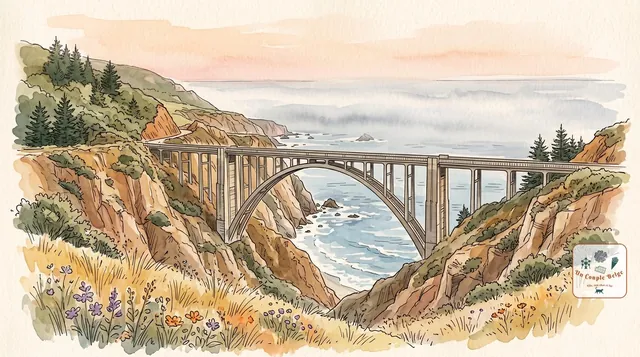
Big Sur: 145 km of cliffs between the mountains and the Pacific
The most beautiful stretch of Highway One: a road clinging to the cliffs, a postcard bridge, a waterfall that drops onto a beach and redwoods beside the ocean.
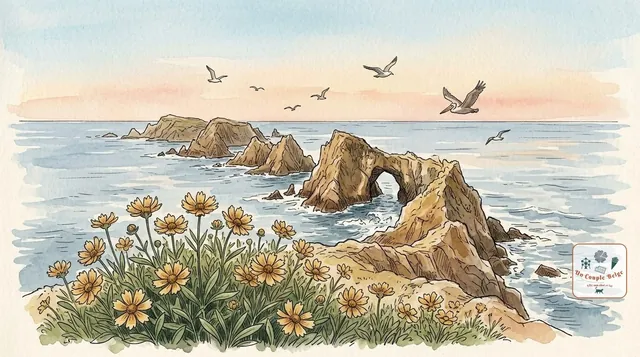
Channel Islands: the Californian Galápagos, a world apart
Five wild islands off the coast of Southern California, with no roads or hotels, but with cliffs, sea caves and a fox found nowhere else.
Death Valley: salt, dunes and the lowest point in North America
A vast desert of salt flats, dunes and hills in every colour. Superb from October to April, dangerous at the height of summer.
Comments