San Francisco: the Golden Gate, Alcatraz and hills beside the bay
Updated on
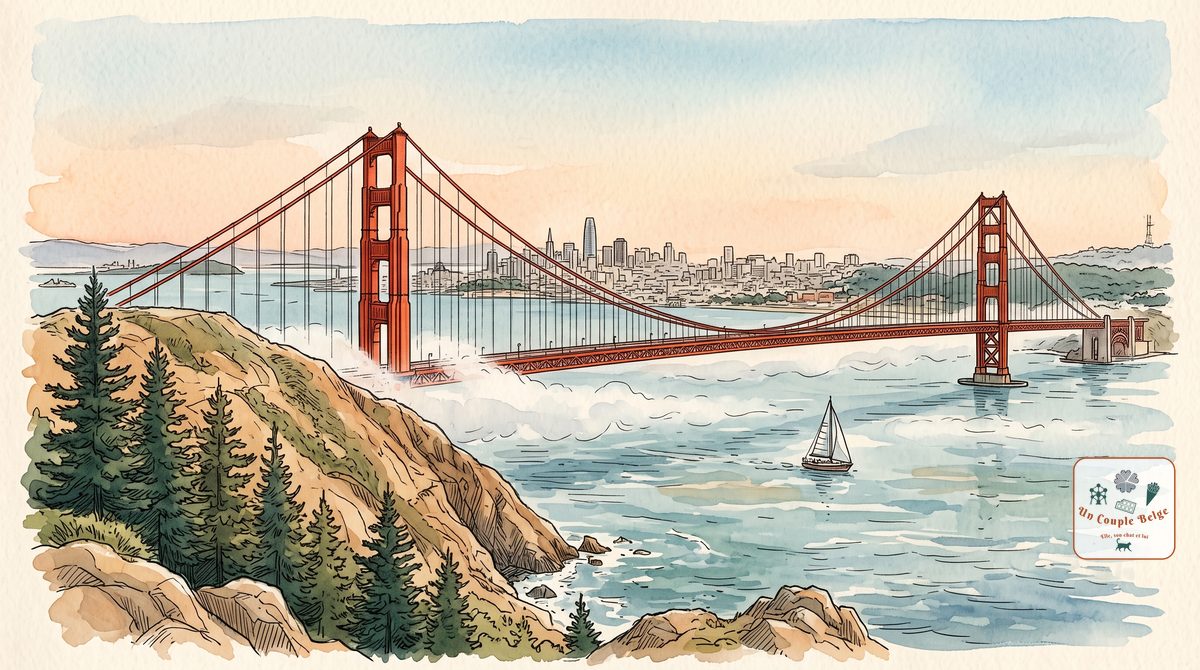
How long should you spend there?
At a glance
- Entrance fee
- The city itself is free to visit. Allow about $48 per adult for Alcatraz by day, $60 in the evening.
- Best time to go
- September and October, the sunniest months. In summer it's cool and fog is frequent.
- Book ahead
- Alcatraz, several weeks ahead. Tickets go on sale 90 days in advance.
- Getting around
- On foot, by bus, streetcar and cable car, or in a driverless Waymo taxi. A car is useless in the city, and parking is very expensive.
San Francisco sits on a peninsula eleven kilometres across, all hills, between the Pacific Ocean and a huge bay. You come for an orange bridge, a prison on an island and steep streets. You also discover a city made for walking, where every hilltop opens a view of the water.
History and origins
The city was born in 1776 around a Spanish mission, Mission Dolores. Its church is still standing: it’s the oldest building in San Francisco.
Everything changed with the Gold Rush of 1849. Within a few years, a village of a few hundred inhabitants became a city of tens of thousands. In 1906 an earthquake, followed by three days of fire, destroyed most of it. It was rebuilt in under ten years.
In the 20th century, San Francisco became the city of countercultures: the poets of the Beat Generation in the 1950s, the hippies of the “Summer of Love” in 1967, then the fight for gay rights, led by Harvey Milk in the Castro district. Today it moves to the rhythm of neighbouring Silicon Valley.
What to do there
- The Golden Gate Bridge
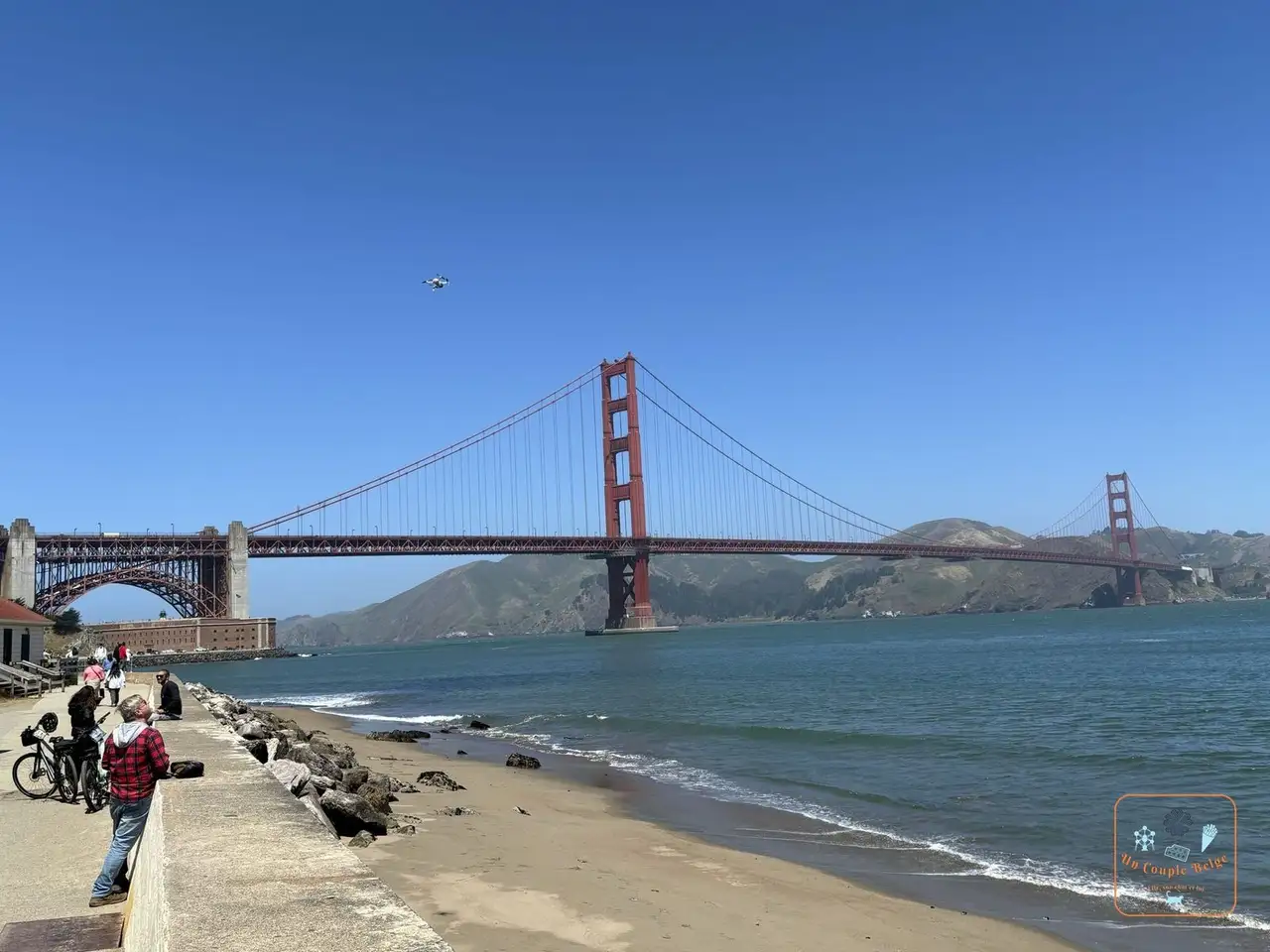 The Golden Gate Bridge above the beach and promenade of Crissy Field: opened in 1937, 2.7 km long, with towers 227 metres high. You can cross it for free on foot or by bike. The finest approach is on foot via Crissy Field, a promenade along the bay where the bridge grows with every step.
 - Fort Point
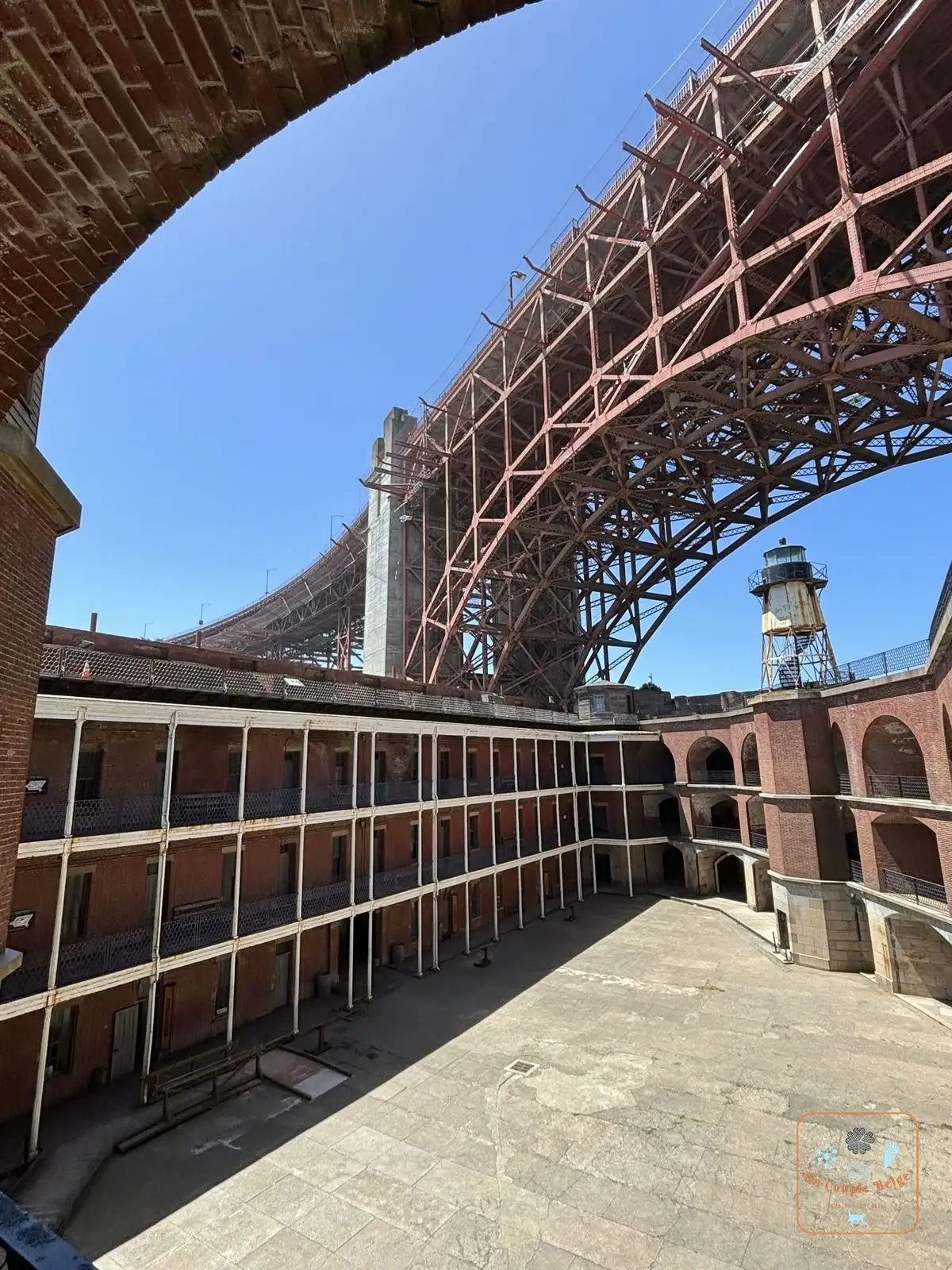 The steel arch of the Golden Gate above the courtyard of Fort Point: a brick fort from the 1850s, right under the bridge. The engineers added a steel arch to pass over it rather than demolish it. From the roof you’re beneath the deck
 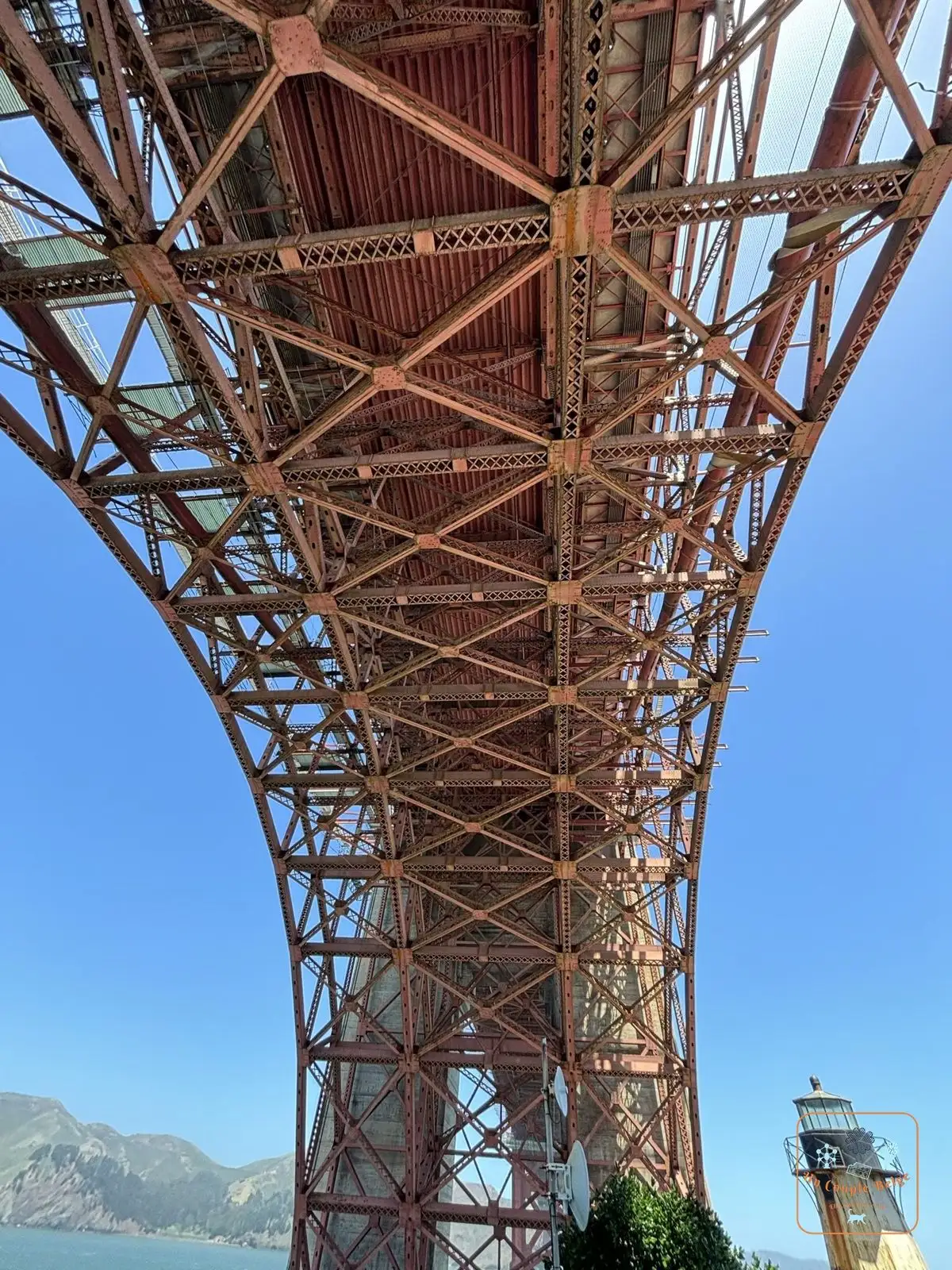 The steel structure of the Golden Gate Bridge seen from below, with the noise of the cars overhead. It’s free, and open Thursday to Monday.
 - Alcatraz
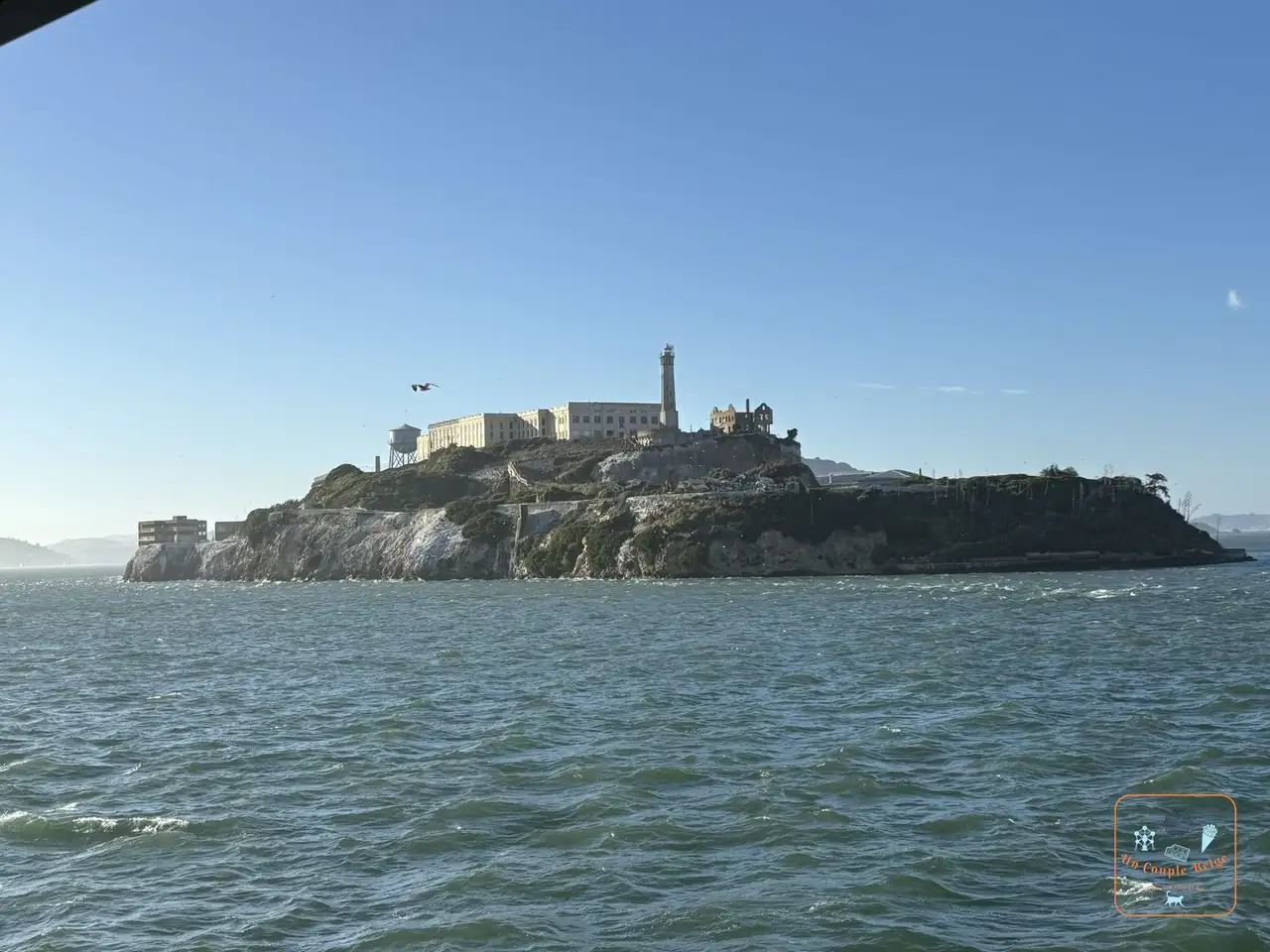 Alcatraz Island and its lighthouse seen from the ferry: the former federal prison, on its island a quarter of an hour away by ferry. You visit the cellhouse
 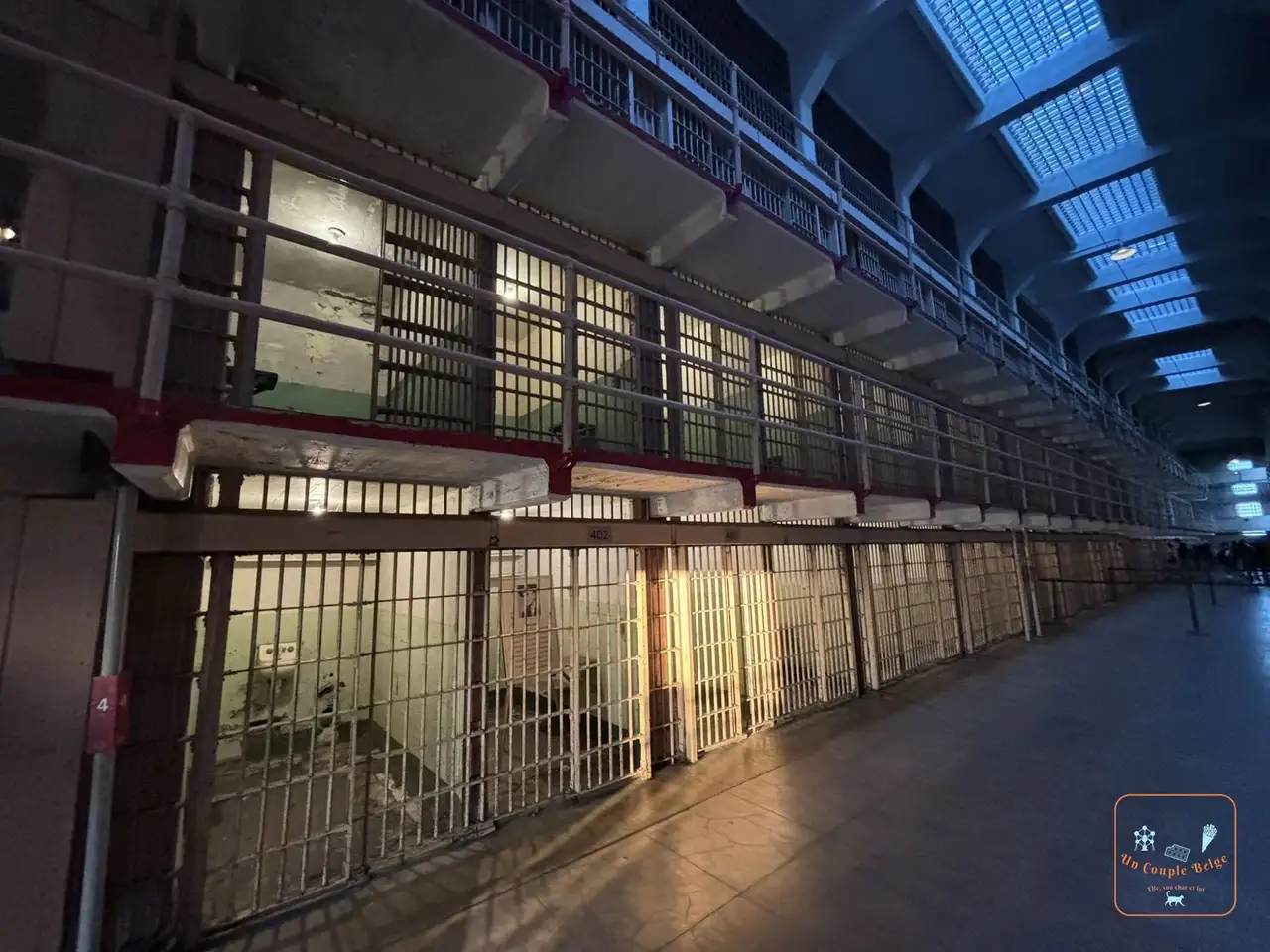 The Alcatraz cellhouse lit up at nightfall with an audio guide narrated by former guards and former inmates. We took the evening tour, and we recommend it. We set off in broad daylight, watched the sun go down behind the Golden Gate from the island, then saw the city light up across the water.
 - Pier 39 and its sea lions
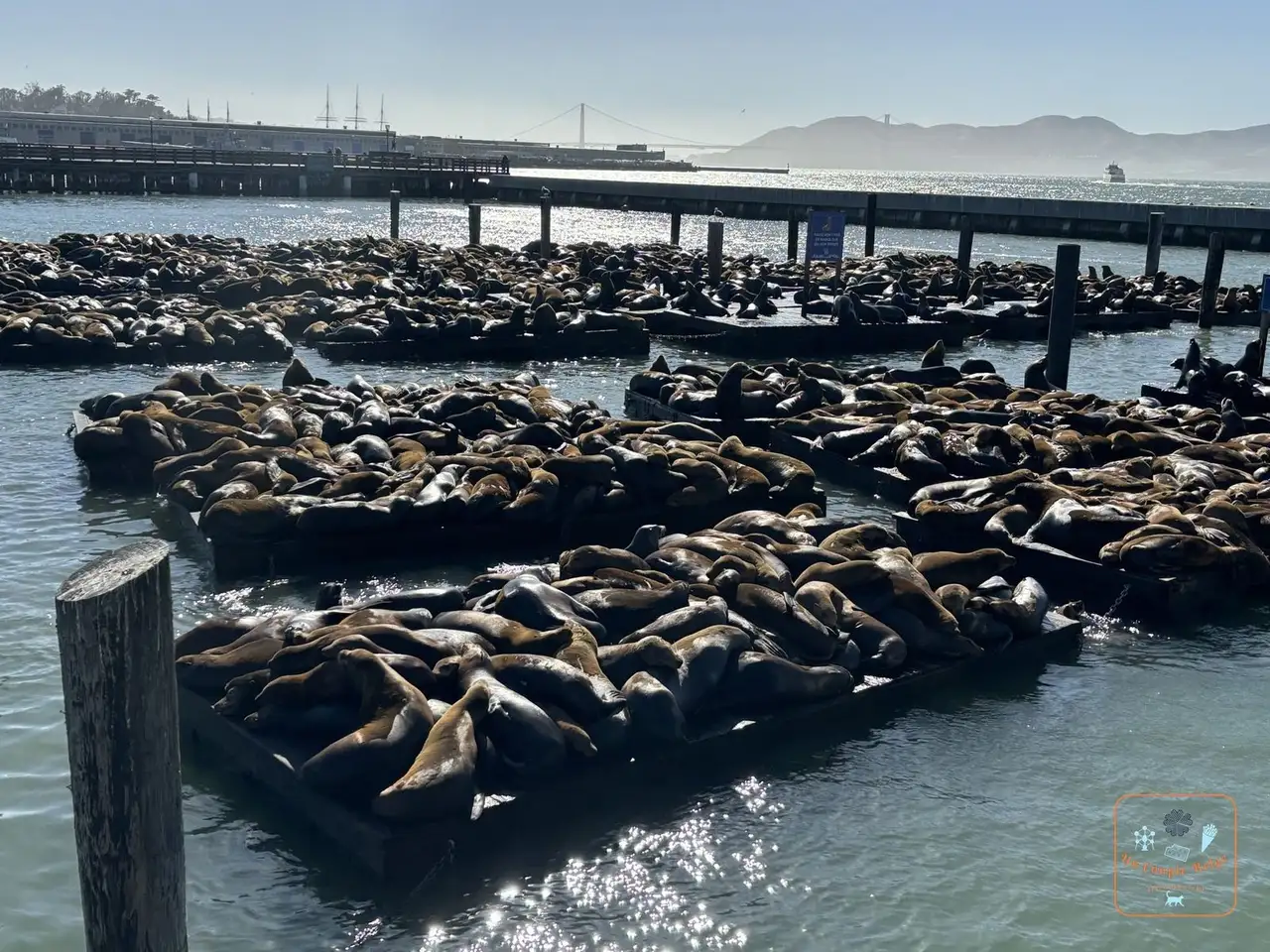 Dozens of sea lions piled onto the docks at Pier 39: wild sea lions took over the docks in 1990 and never left. There are sometimes hundreds of them, barking and shoving each other for a place in the sun. The noise and the smell are part of the show.
 - Fisherman’s Wharf
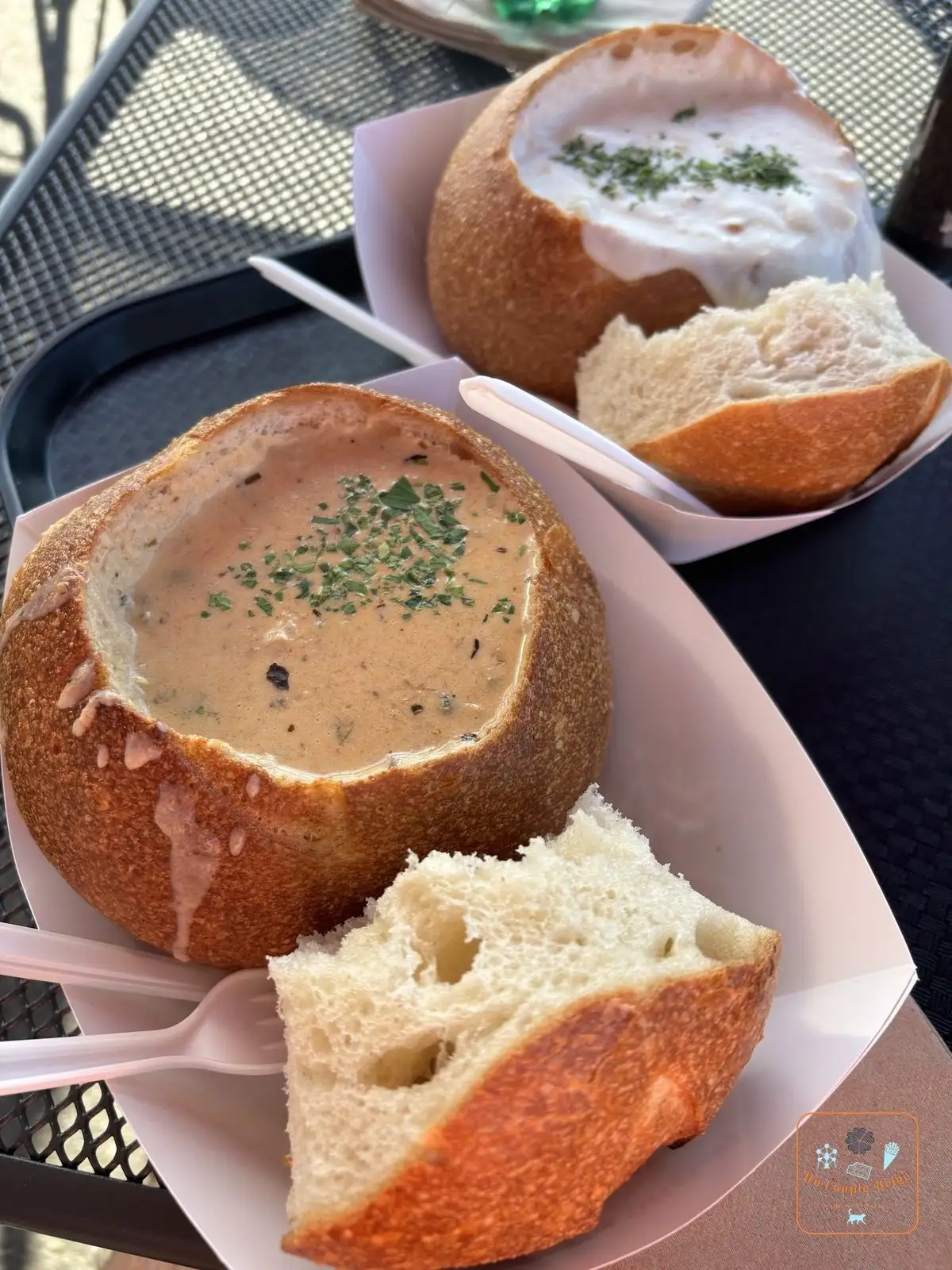 Two clam chowders served in sourdough bread bowls: the old fishing harbour, very touristy. This is where you try clam chowder, a creamy clam soup served in a hollowed-out sourdough loaf.
 - Lombard Street
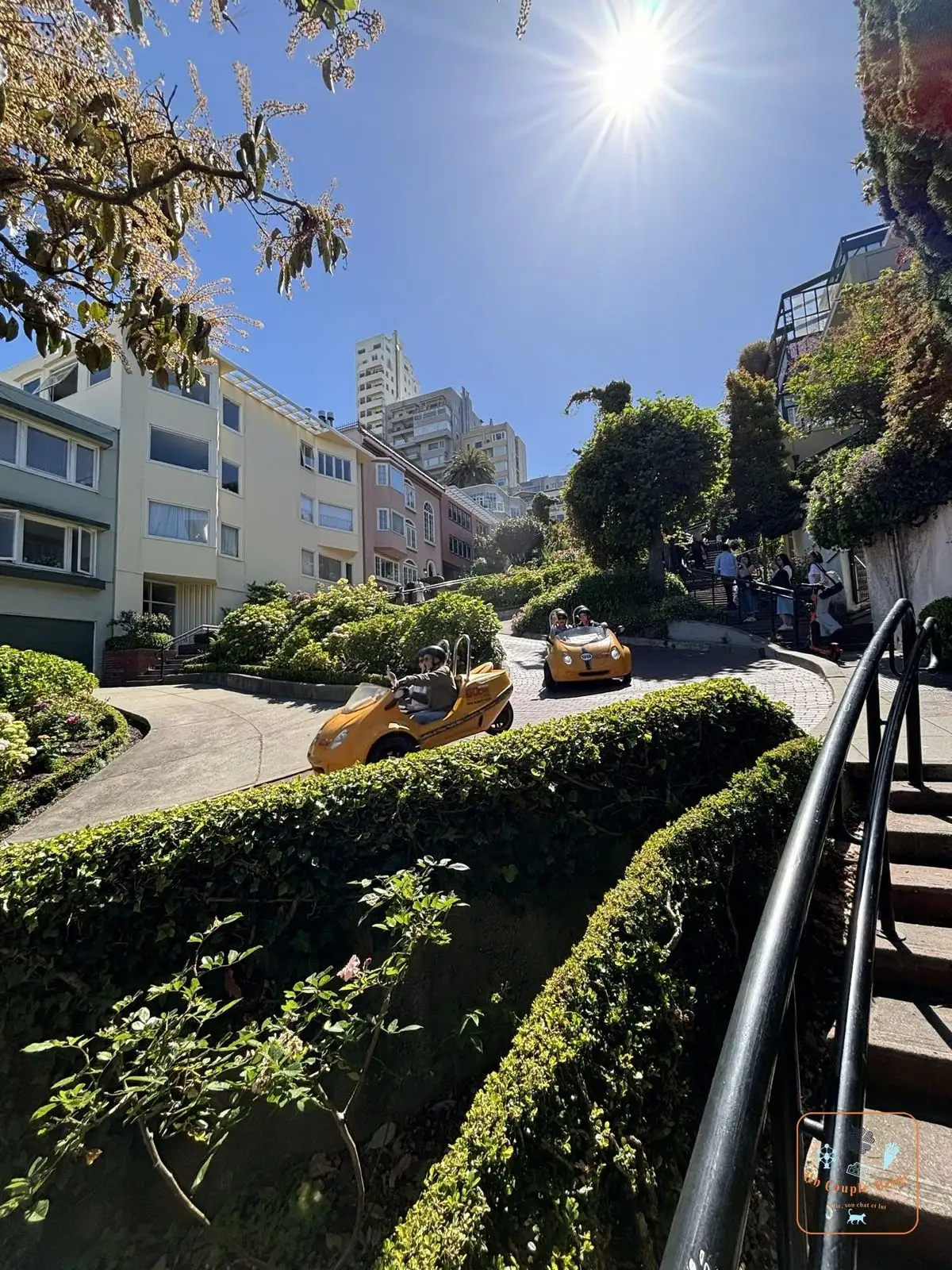 The flower-lined bends of Lombard Street with little yellow cars: eight hairpin bends between flower beds, in a single block. You go down it by car or on foot, by the steps on either side. We did both, a day apart: they are two different experiences, and on foot you get a better view of Coit Tower.
 - The Palace of Fine Arts
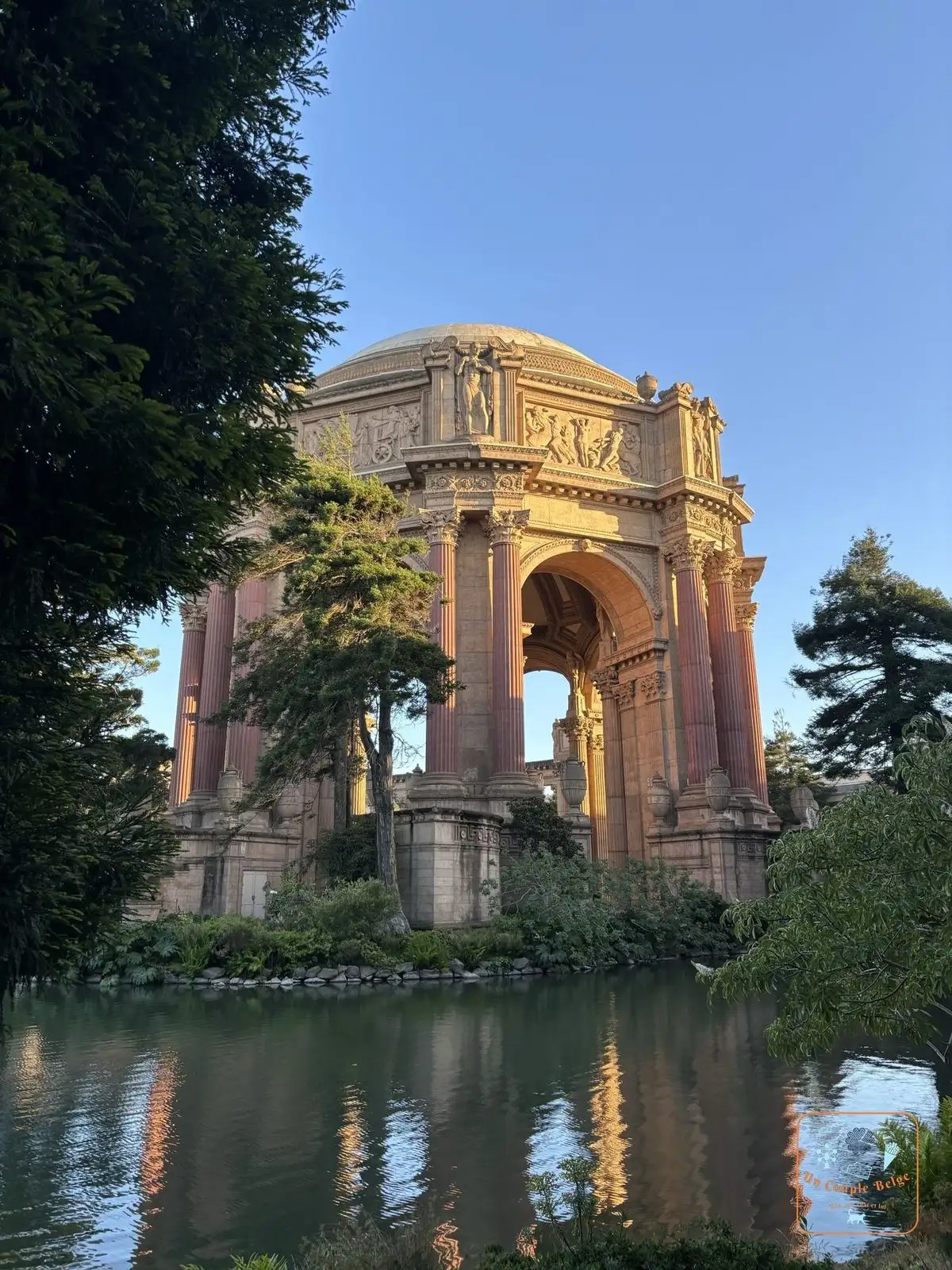 The rotunda of the Palace of Fine Arts reflected in the lake: a rotunda and colonnades in the style of a mock Roman temple beside a small lake. It’s the only building kept from the 1915 World’s Fair.
 - Alamo Square and the Painted Ladies
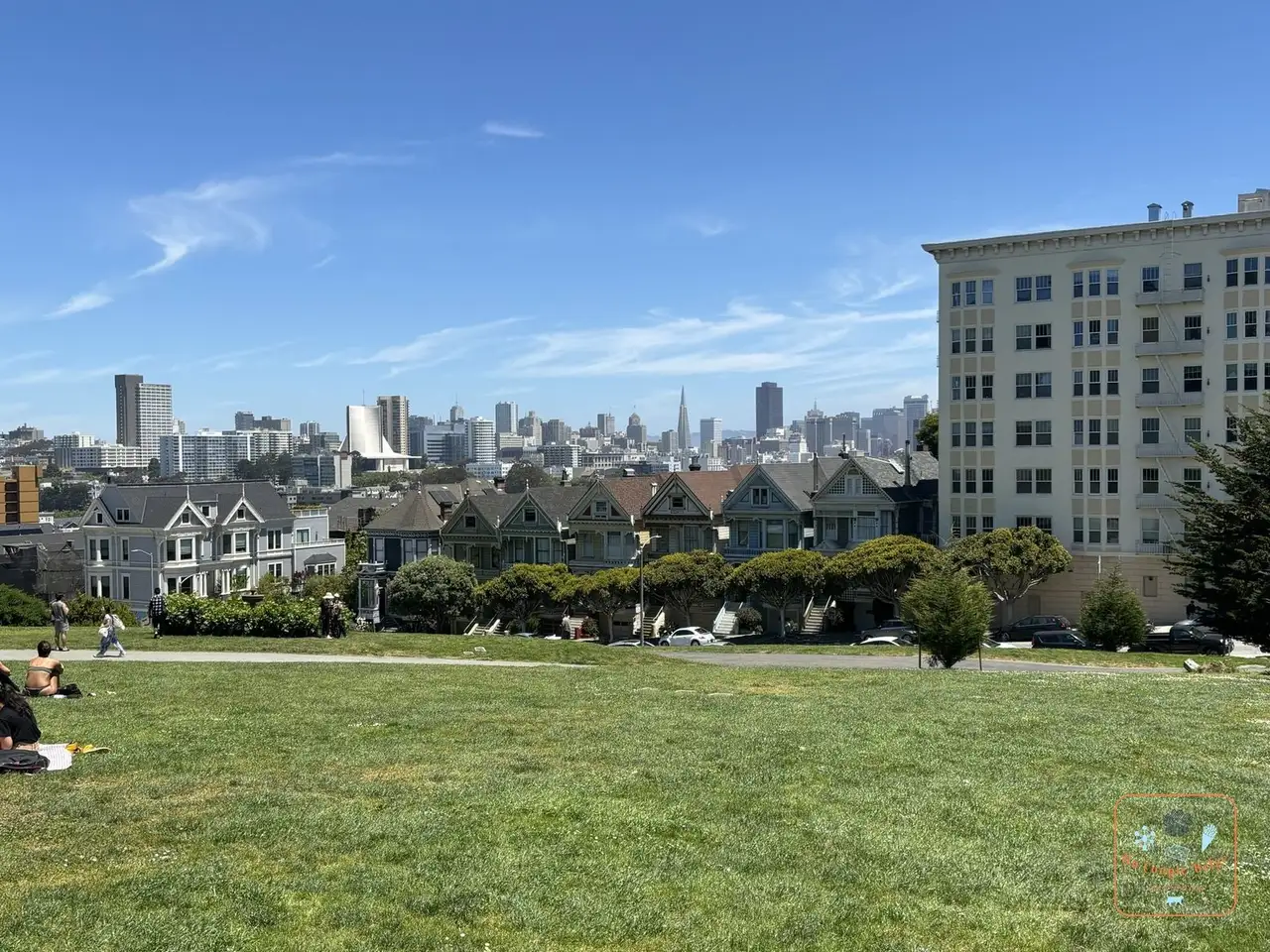 The Painted Ladies Victorian houses in front of the San Francisco skyscrapers from Alamo Square: a row of colourful Victorian houses, with the skyscrapers just behind. The photo is taken from the lawn of the park.
 - City Hall
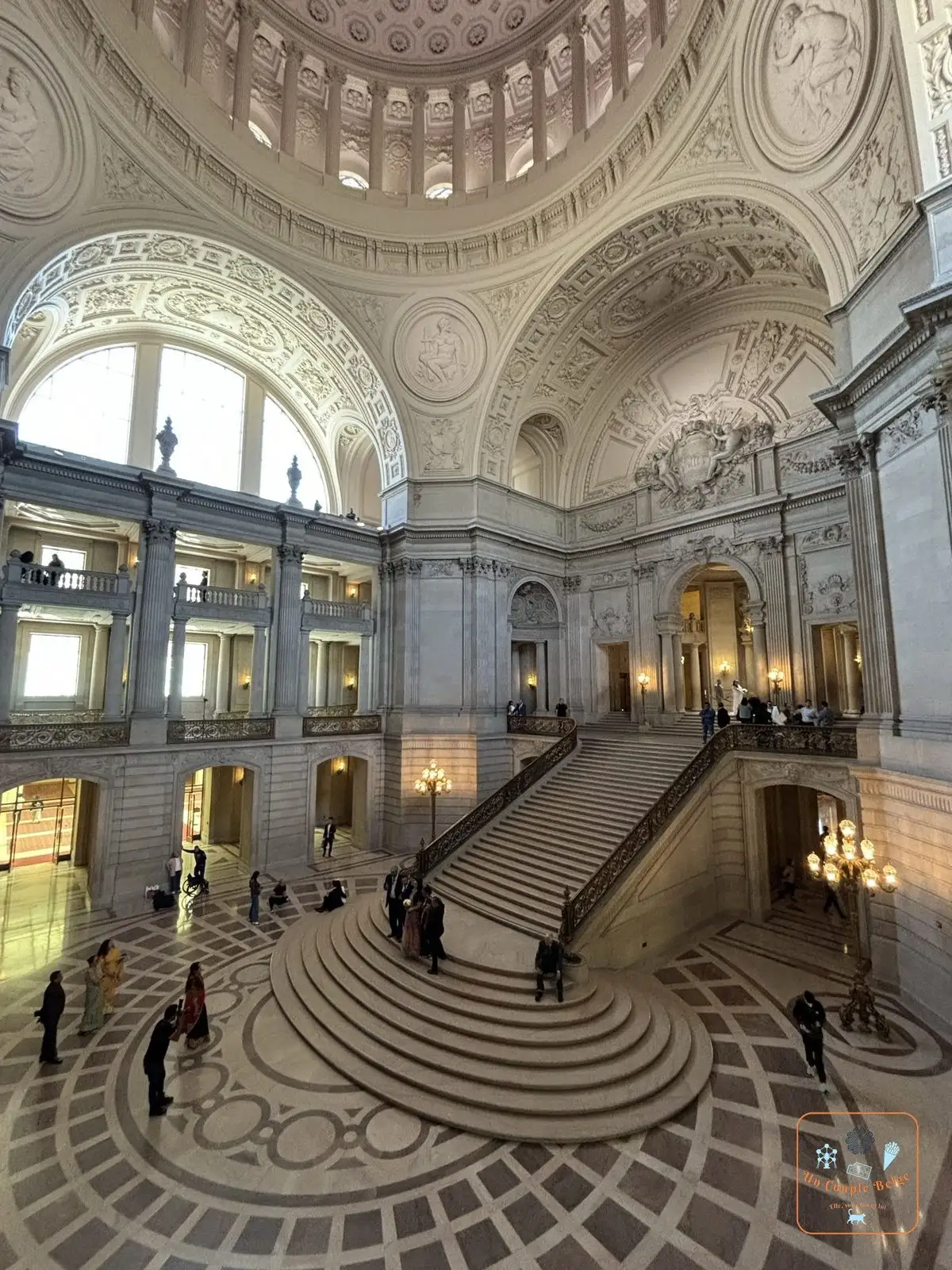 The grand marble staircase and rotunda of City Hall: rebuilt in 1915, with an immense dome and a grand marble staircase. Admission is free on weekdays, and you’ll often come across newlyweds.
 - The cable cars: these trams, pulled by a cable under the roadway, have been climbing the steepest streets since 1873. Three lines still run. The loveliest is the Powell-Hyde, which passes the top of Lombard Street. We rode it there and back, from the Aquatic Park terminus, near the maritime museum, to Powell Street. The queue is long at the terminuses: come early, or get on at a stop along the route.
- Chinatown: the oldest Chinese quarter in North America. You enter it through the Dragon Gate, on Grant Avenue.
- The neighbourhoods: the Mission for its murals and tacos, Haight-Ashbury for the memory of the hippies, North Beach for its Italian cafés and the City Lights bookshop.
- Baker Beach
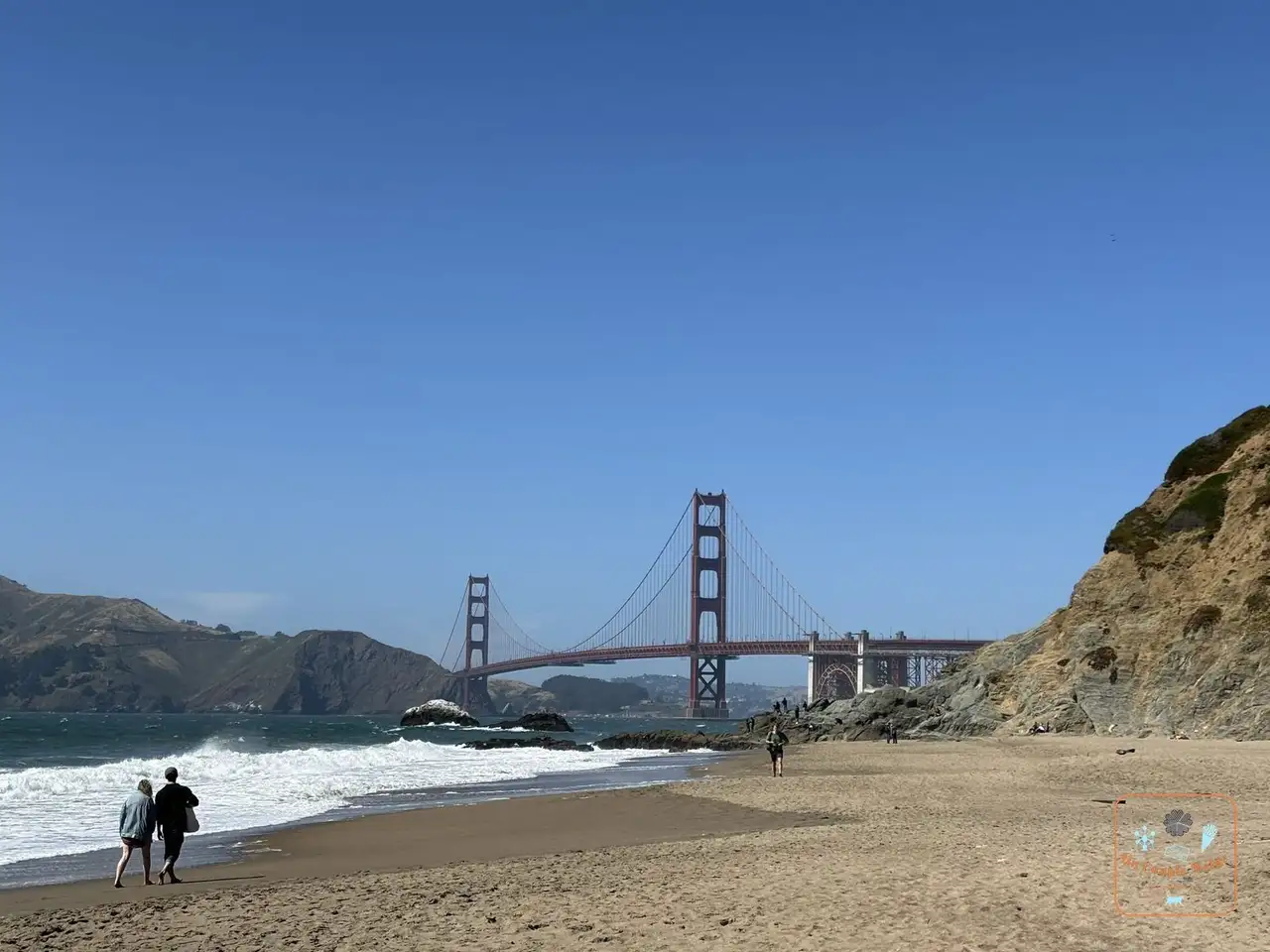 The Golden Gate Bridge from Baker Beach: a long sandy beach facing the bridge, on the ocean side. You don’t swim here, the water is icy and the currents strong, but the view is superb in the late afternoon.
 - The Marin Headlands and Hawk Hill
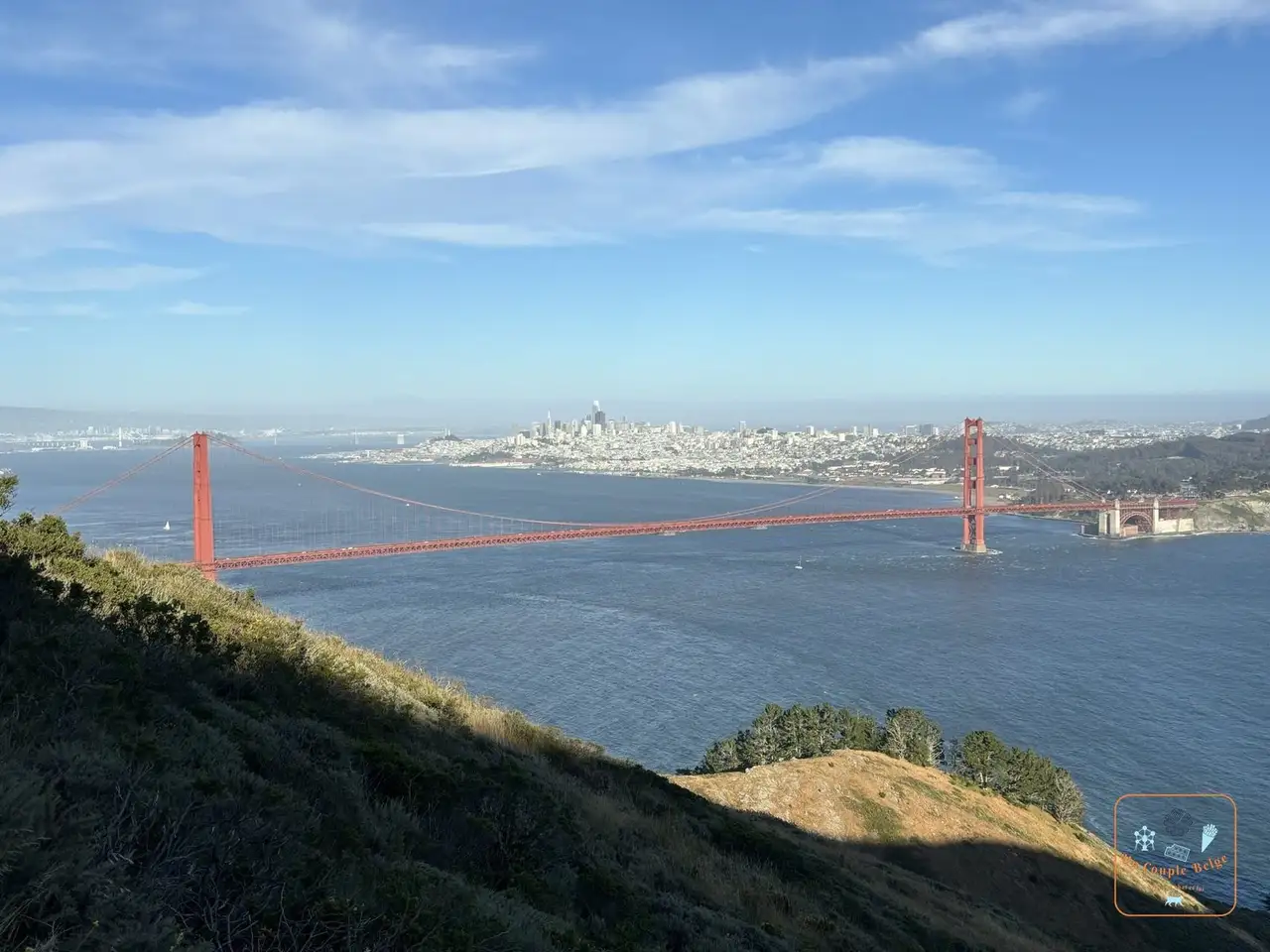 The Golden Gate Bridge and San Francisco seen from above at Hawk Hill: on the other side of the bridge, a road climbs into wild hills. From Hawk Hill you see the whole bridge, the bay and the city behind. For us it’s the finest view of the Golden Gate. Further on, a trail leads to the Point Bonita lighthouse through a tunnel and across a suspension footbridge.
 - Lands End and the Sutro Baths
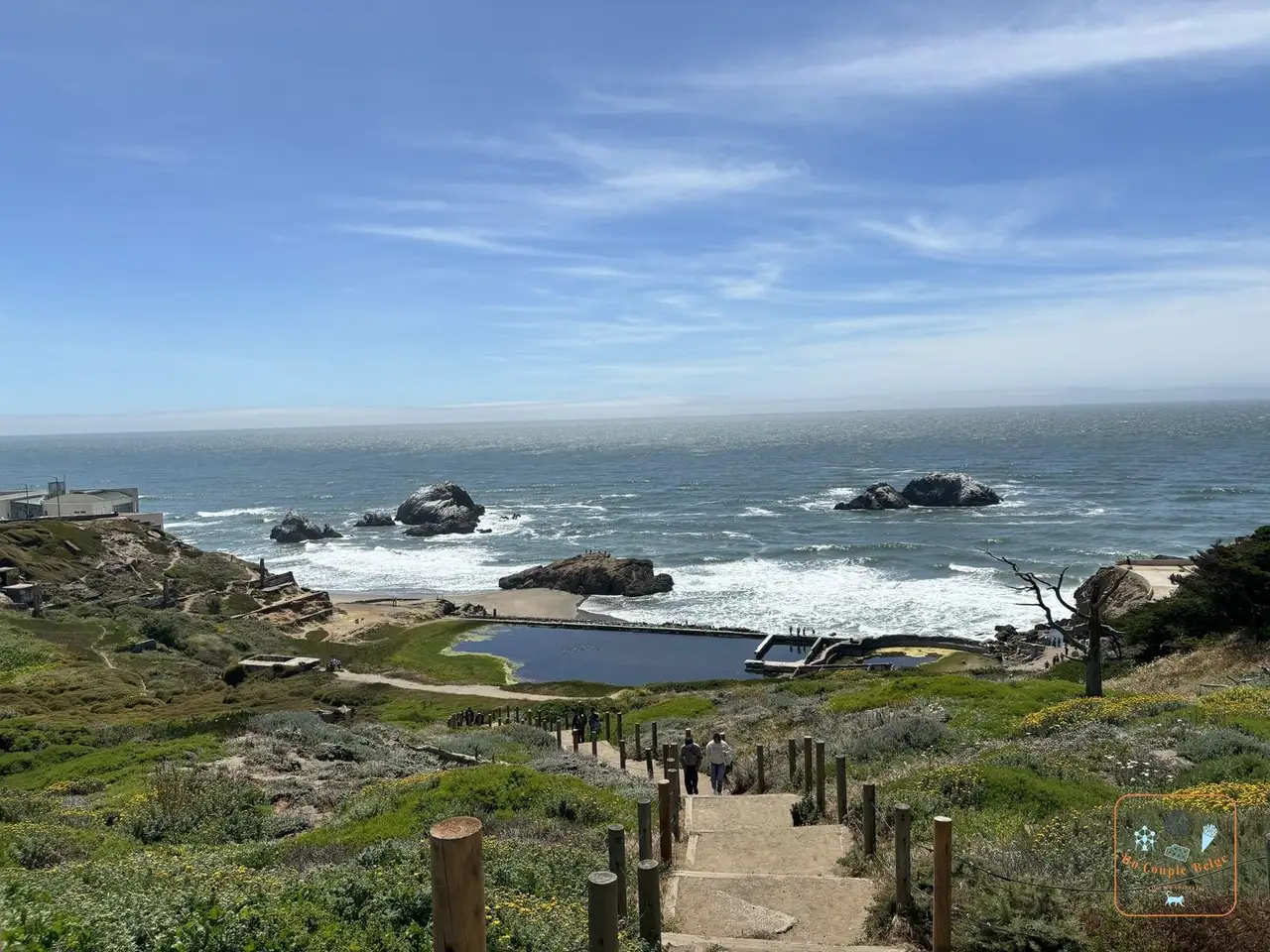 The ruins of the Sutro Baths beside the ocean at Lands End: the north-western tip of the city, facing the Pacific. At the foot of the cliffs lie the ruins of vast public baths from 1896. A trail follows the coast to views of the bridge.
 - Ocean Beach and Golden Gate Park: a beach nearly 6 km long, windy and wild, at the end of a park bigger than Central Park. At its far end stands a Dutch windmill from 1903, unexpected here.
- Sausalito and Muir Woods: a waterside village you reach by ferry, and a redwood forest 45 minutes away.
- Berkeley
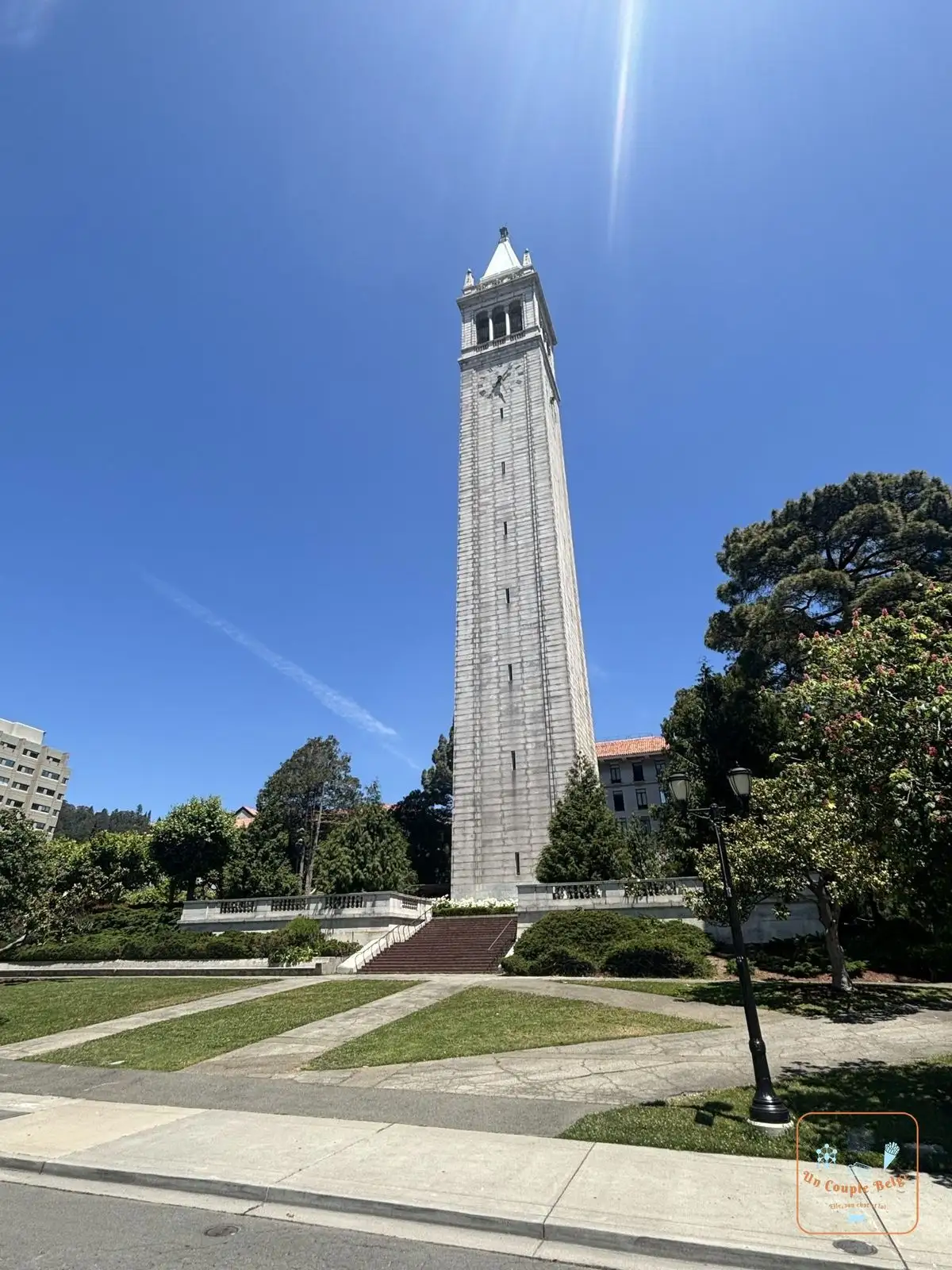 Sather Tower, the campanile of the University of California, Berkeley: across the bay, the campus of the University of California, with its 94-metre campanile. We stopped there on the way in from Yosemite.
Stories and good to know
- The Golden Gate was meant to be painted black and yellow, so that ships could see it. The architect Irving Morrow insisted on the orange of the primer coat, easier to see in fog and more handsome against the hills.
- San Francisco’s fog has a name: Karl, or “Karl the Fog”. The nickname was born on social media in 2010, after the giant in the film Big Fish. Karl mostly turns up in summer, morning and evening, and can hide the whole bridge. We saw a little of him, but he left the Golden Gate clear for us. If the sky is clear, go and see the bridge straight away.
- Alcatraz was a federal prison for only 29 years, from 1934 to 1963. Al Capone was locked up there. In 1962, three inmates escaped, leaving fake papier-mâché heads in their beds
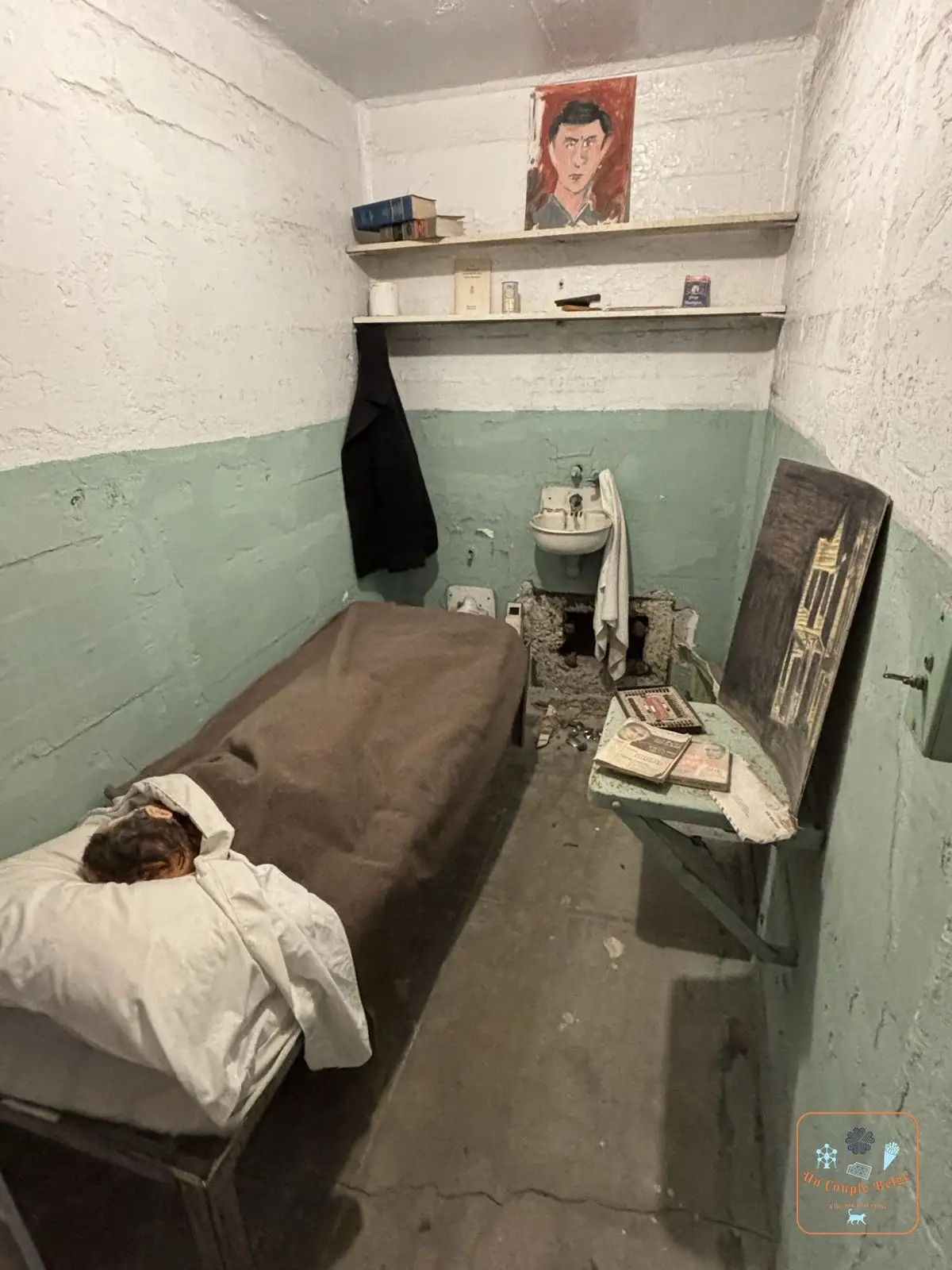 A cell with a fake head on the pillow, a reminder of the 1962 escape. They were never found.
 - Sourdough bread is the city’s other pride. Some bakeries say they have been using the same starter since the Gold Rush.
- “The coldest winter I ever spent was a summer in San Francisco.” The line is attributed to Mark Twain. He probably never said it, but it’s true.
Practical information for your road trip
- Getting there: San Francisco is about 4 hrs from Yosemite. It’s also the starting point of Highway One towards Big Sur and Los Angeles.
- From the airport: the BART train links the airport to the centre in 30 minutes, for about $11.
- Getting around: a bus or streetcar ride costs about $3, payable with a contactless bank card. The cable car is separate: $9 a ride in 2026, with an increase announced for 2027.
- The car: leave it parked. Hotels in the centre often charge $50 to $80 a night, plus taxes. If you’re arriving from a road trip, return the car when you get there, or only rent it when you leave.
- Waymo: these driverless taxis operate all over the city and are ordered through an app, like any ride-hailing service. We tried it and approved: it really is practical, and it’s an attraction in its own right.
- Safety: car break-ins, long the city’s black spot, have dropped sharply since 2023. As a precaution, still leave nothing visible inside the car. We had no trouble at all, apart from a slight feeling of unease around Union Square, very close to the Tenderloin district, which is best avoided in the evening.
- Golden Gate toll: it’s only paid on the way into the city, about $10.50, with no toll booth. Your number plate is photographed, and the rental company bills you for the toll, often with a fee.
- Clothing: bring a jacket and a windbreaker, even in July. It’s rarely more than 20°C by the bay.
- Muir Woods: parking must be booked in advance, for $10, on top of the entrance fee of $15 per adult. The national parks pass covers the entrance fee, not the parking.
- Where to stay: around Fisherman’s Wharf or the Marina to be near the bay, or near Union Square to be central, while keeping away from the Tenderloin. Always check the price of parking before booking. We stayed at the Coventry Motor Inn, on Lombard Street: a bad experience, we don’t recommend it.
Our experience in San Francisco
We spent five days there in late May and early June 2024, arriving from Yosemite, during our road trip 1. We were lucky: sunshine nearly the whole time, and barely a hint of fog.
Our day-by-day journals are coming soon.
Quick quiz
Question 1 / 3
Expert
San Francisco: the Golden Gate, Alcatraz and hills beside the bay
Where to stay near San Francisco: the Golden Gate, Alcatraz and hills beside the bay
Stay22 affiliate links: if you book through here, we earn a small commission at no extra cost to you. Thanks for your support!
On the ground

Sponsored by UnCoupleBelge
Follow us on Instagram
Box sponsored by a partner
Other places nearby
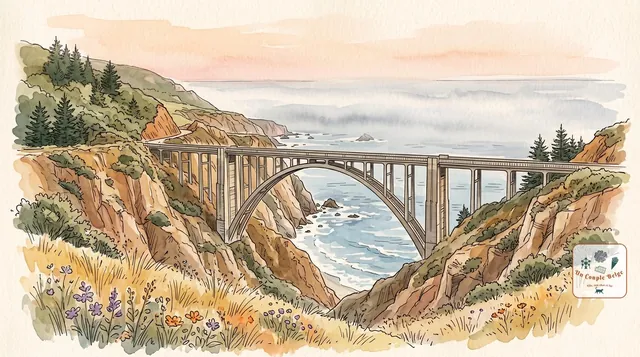
Big Sur: 145 km of cliffs between the mountains and the Pacific
The most beautiful stretch of Highway One: a road clinging to the cliffs, a postcard bridge, a waterfall that drops onto a beach and redwoods beside the ocean.
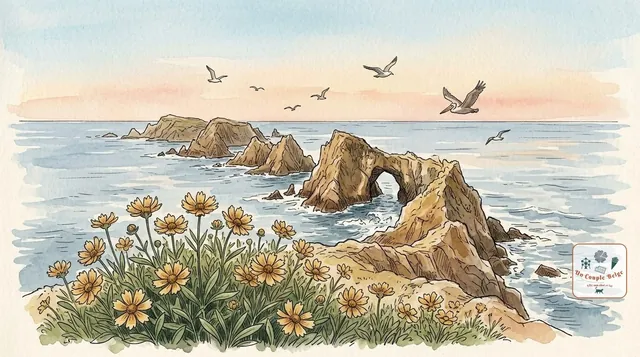
Channel Islands: the Californian Galápagos, a world apart
Five wild islands off the coast of Southern California, with no roads or hotels, but with cliffs, sea caves and a fox found nowhere else.
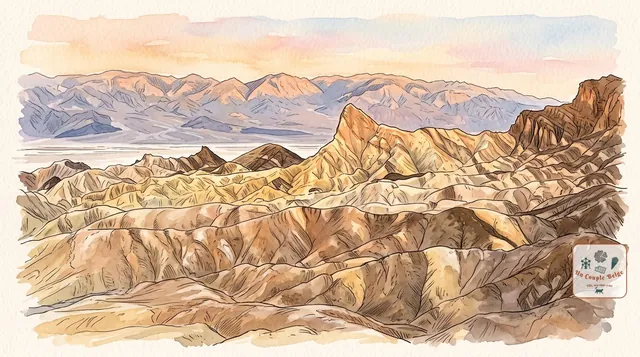
Death Valley: salt, dunes and the lowest point in North America
A vast desert of salt flats, dunes and hills in every colour. Superb from October to April, dangerous at the height of summer.
Comments