Yosemite: a valley of granite, waterfalls and great hikes
Updated on
How long should you spend there?
At a glance
- Entrance fee
- $35 per vehicle for 7 days, plus $100 per person for non-residents aged 16 and over, unless you hold the annual pass.
- Best time to go
- May and June for the waterfalls at their fullest. September and October for the quiet, with the falls often dry.
- Book ahead
- No reservation needed to enter in 2026. Lodging in the valley and the Half Dome permit have to be booked months ahead.
- Getting around
- By car to the valley, then on foot and by free shuttle. The car parks are full by mid-morning.
| Walks and hikes | Distance | Time | Level |
|---|---|---|---|
| Bridalveil Fall | 0.8 km (round trip) | 20 min | easy |
| Lower Yosemite Fall | 1.6 km (loop) | 30 min | easy |
| Mirror Lake | 3.2 km (round trip) | 1 hr | easy |
| Columbia Rock | 3.2 km (round trip) | 2 hrs | moderate |
| Mist Trail, to the top of Vernal Fall | 3.9 km (round trip) | 3 hrs | moderate |
| Mist Trail, to the top of Nevada Fall | 8.7 km (round trip) | 5 to 6 hrs | strenuous |
| Upper Yosemite Fall, to the top | 11.6 km (round trip) | 6 to 8 hrs | strenuous |
Yosemite is first and foremost a valley: eleven kilometres of meadows and forest beside a river, squeezed between granite cliffs nearly 1,000 metres high. In spring, waterfalls pour down on every side. You can see it in a day from the road. But this is a park you have to earn on foot, and the most beautiful spots are at the top of the trails.
History and origins
The valley was carved by glaciers out of the granite of the Sierra Nevada. The Ahwahneechee lived here long before the settlers arrived. In 1851 an armed militia, the Mariposa Battalion, entered the valley to drive them out.
In 1864, in the middle of the Civil War, Abraham Lincoln signed the Yosemite Grant. It entrusted the valley and the sequoias of Mariposa Grove to California, so that they would be protected and open to everyone. It was the first time the American government had set land aside for the public. The idea of the national park comes from there.
The naturalist John Muir arrived in 1868 and fell in love with the place. He fought to have the mountains around the valley protected too. He won in 1890, when Yosemite became a national park. In the 20th century, Ansel Adams’s black-and-white photographs did the rest.
What to do there
- Tunnel View
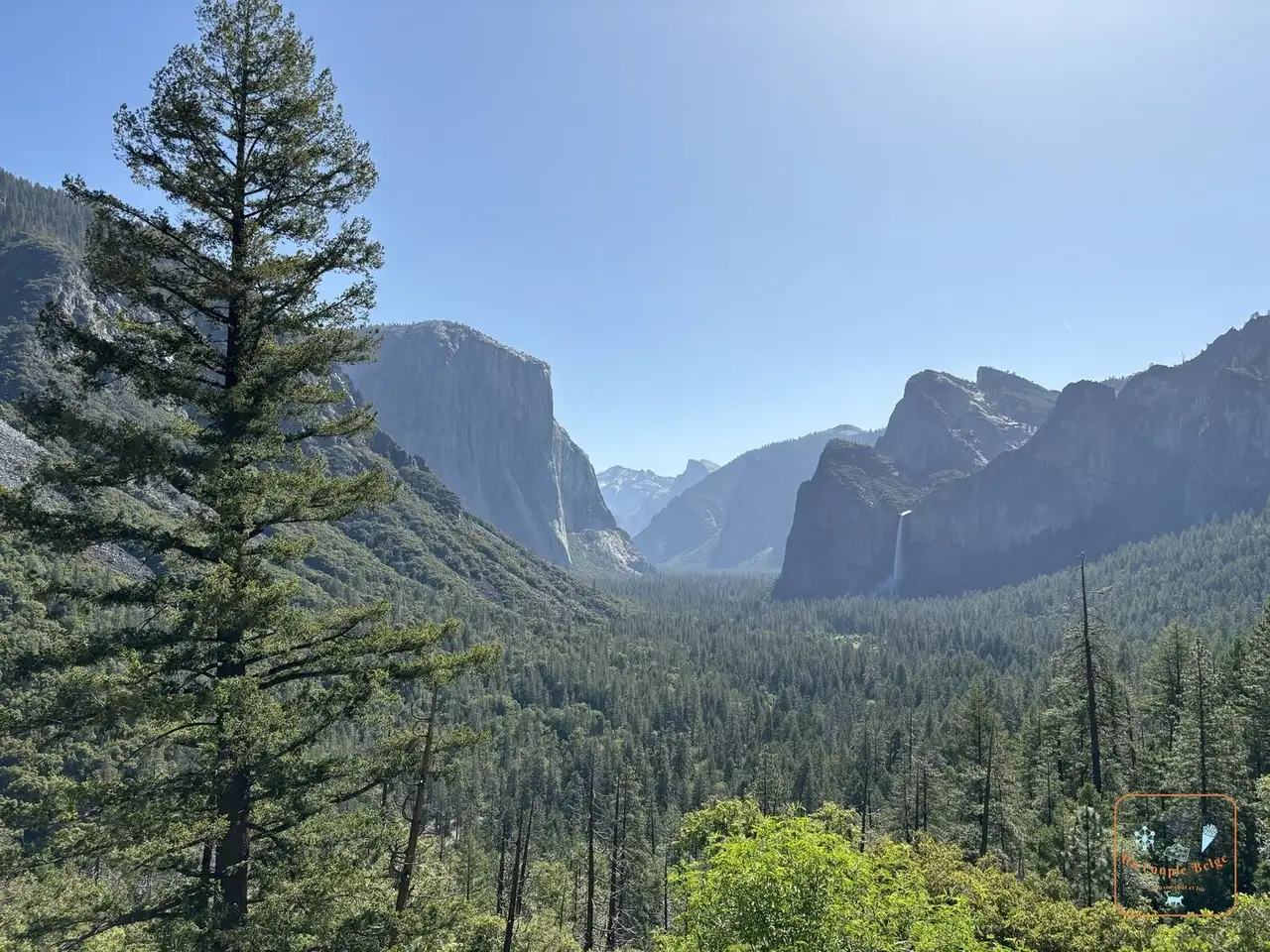 Yosemite Valley from Tunnel View with El Capitan, Half Dome and Bridalveil Fall: the park’s postcard view, at the exit of a tunnel. In a single glance, El Capitan on the left, Bridalveil Fall on the right and Half Dome at the back. We came back at sunset.
 - Bridalveil Fall
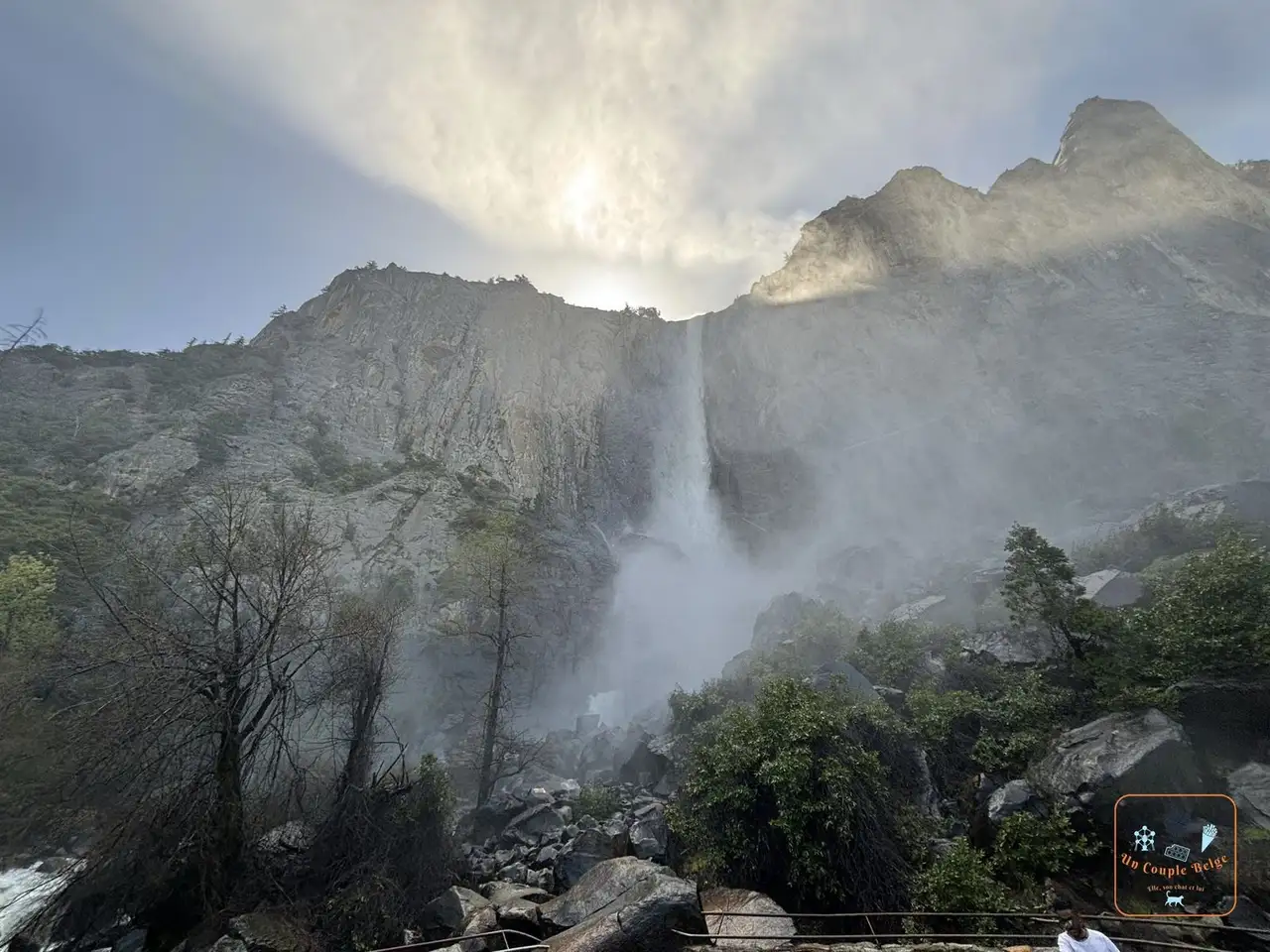 Bridalveil Fall and its cloud of spray in the morning light: a 190-metre waterfall, a few minutes from the car park. In spring, you get soaked.
 - El Capitan
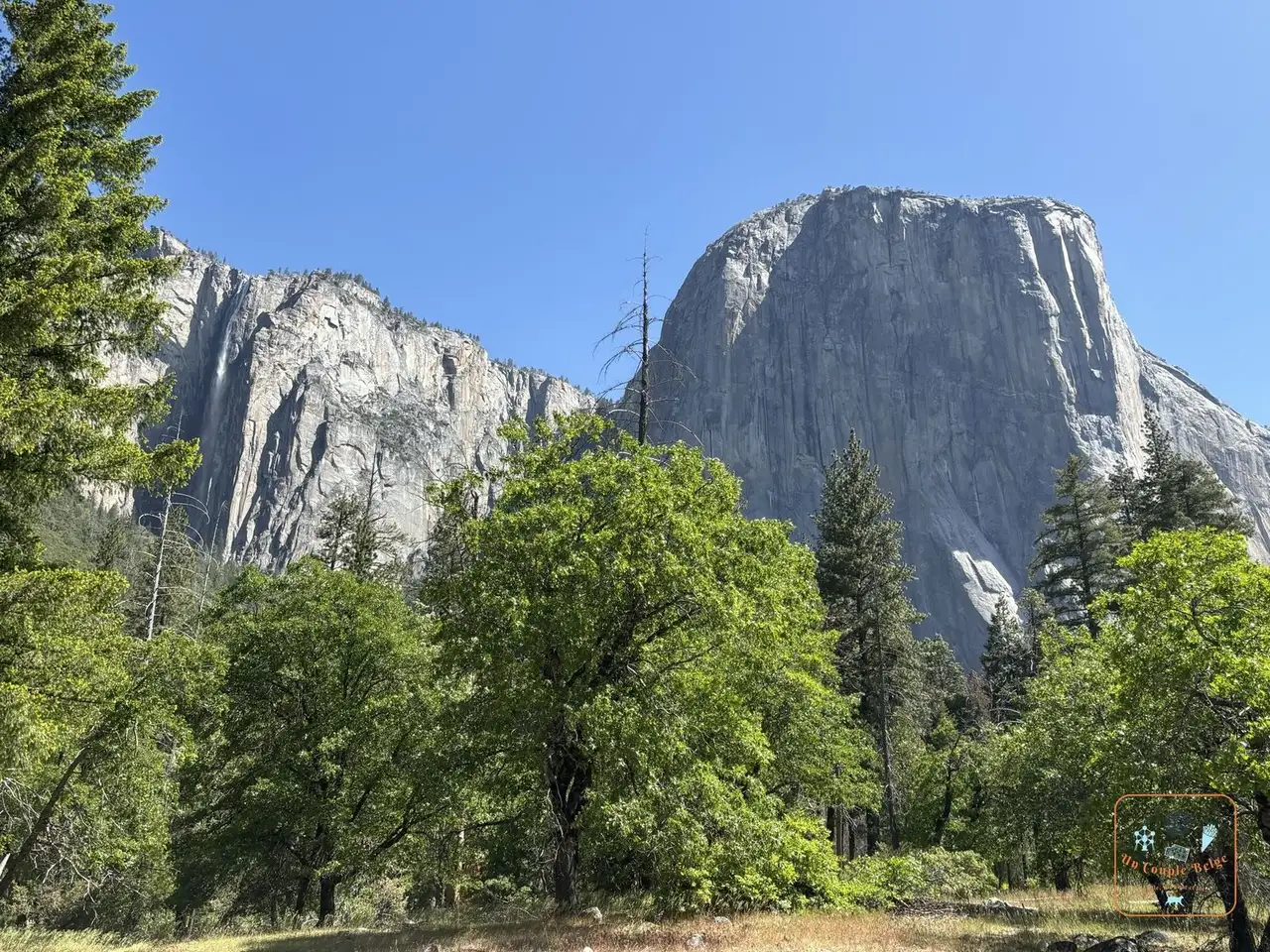 El Capitan above a meadow and the oaks of the valley: a 900-metre block of granite, legendary among climbers. From the meadow at its foot, with binoculars, you can sometimes pick out roped parties on the wall.
 - Yosemite Falls
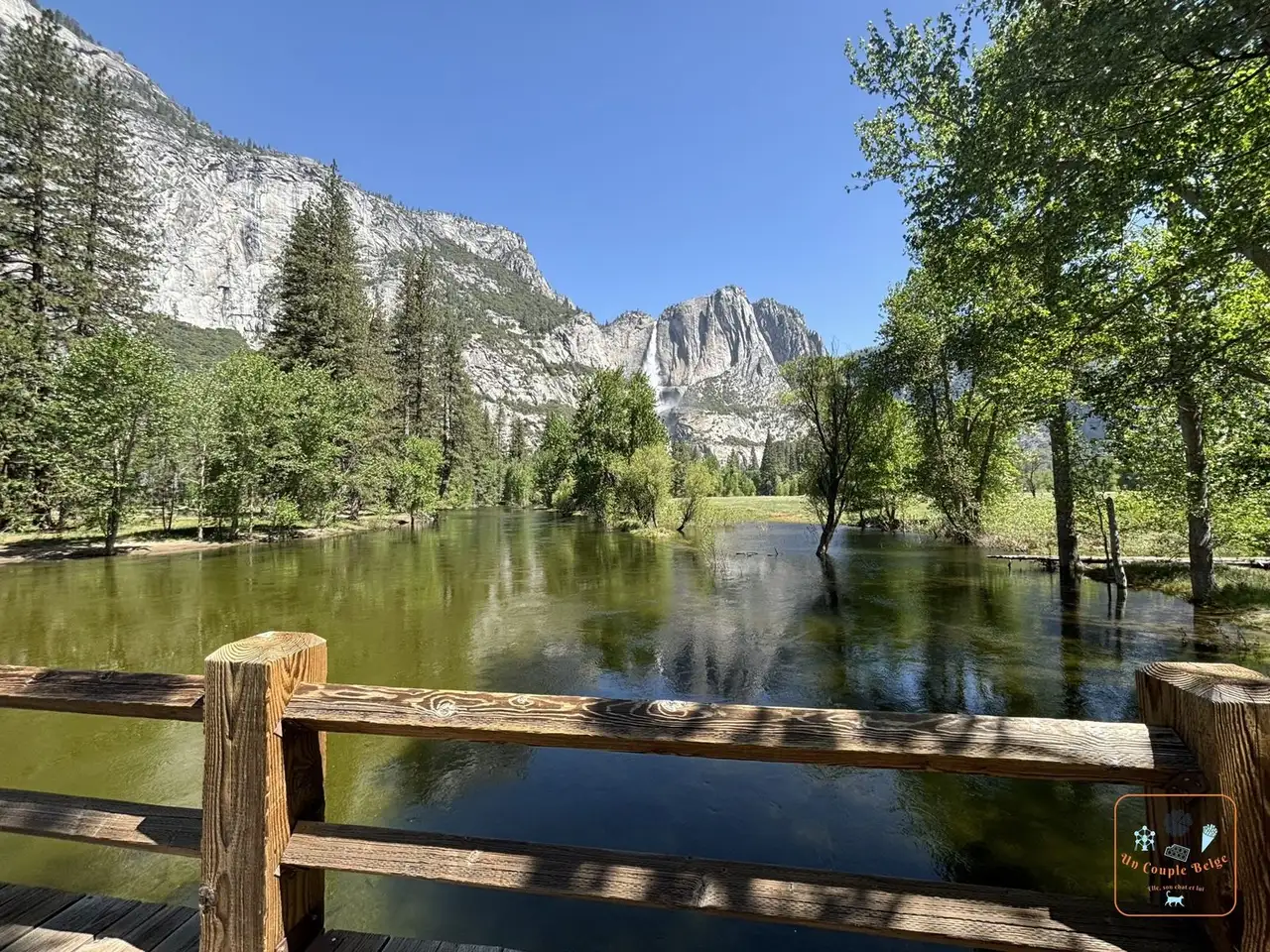 Yosemite Falls reflected in the Merced River from the Swinging Bridge: 739 metres in three sections, among the tallest waterfalls in the world. An easy loop leads to the foot of the lower fall. The best overall view is from the Swinging Bridge, with the river in the foreground.
 - The Upper Yosemite Fall trail
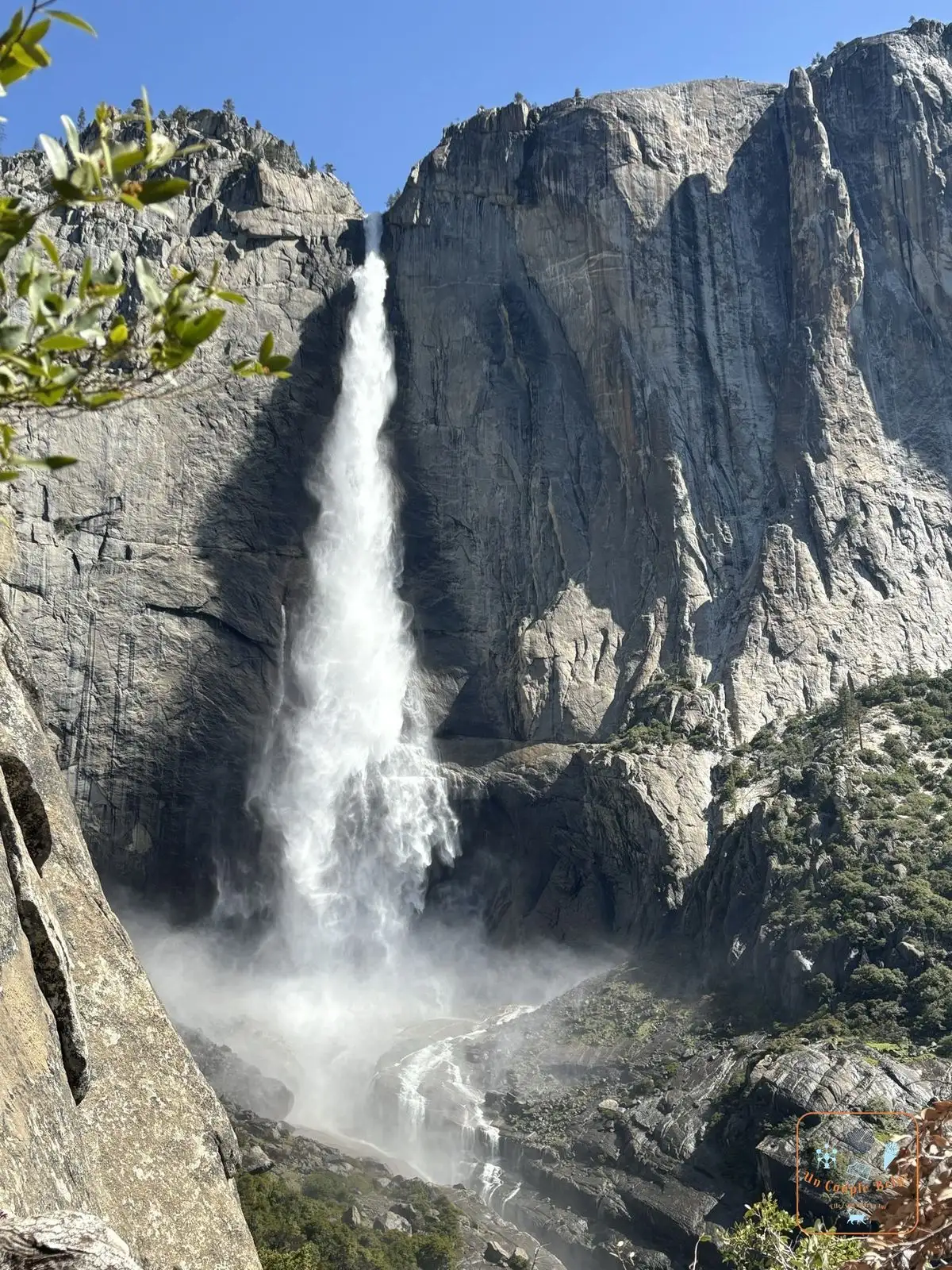 Upper Yosemite Falls in full flow in spring: a steep climb in switchbacks from Camp 4 to the top of the fall. Halfway up, Columbia Rock
 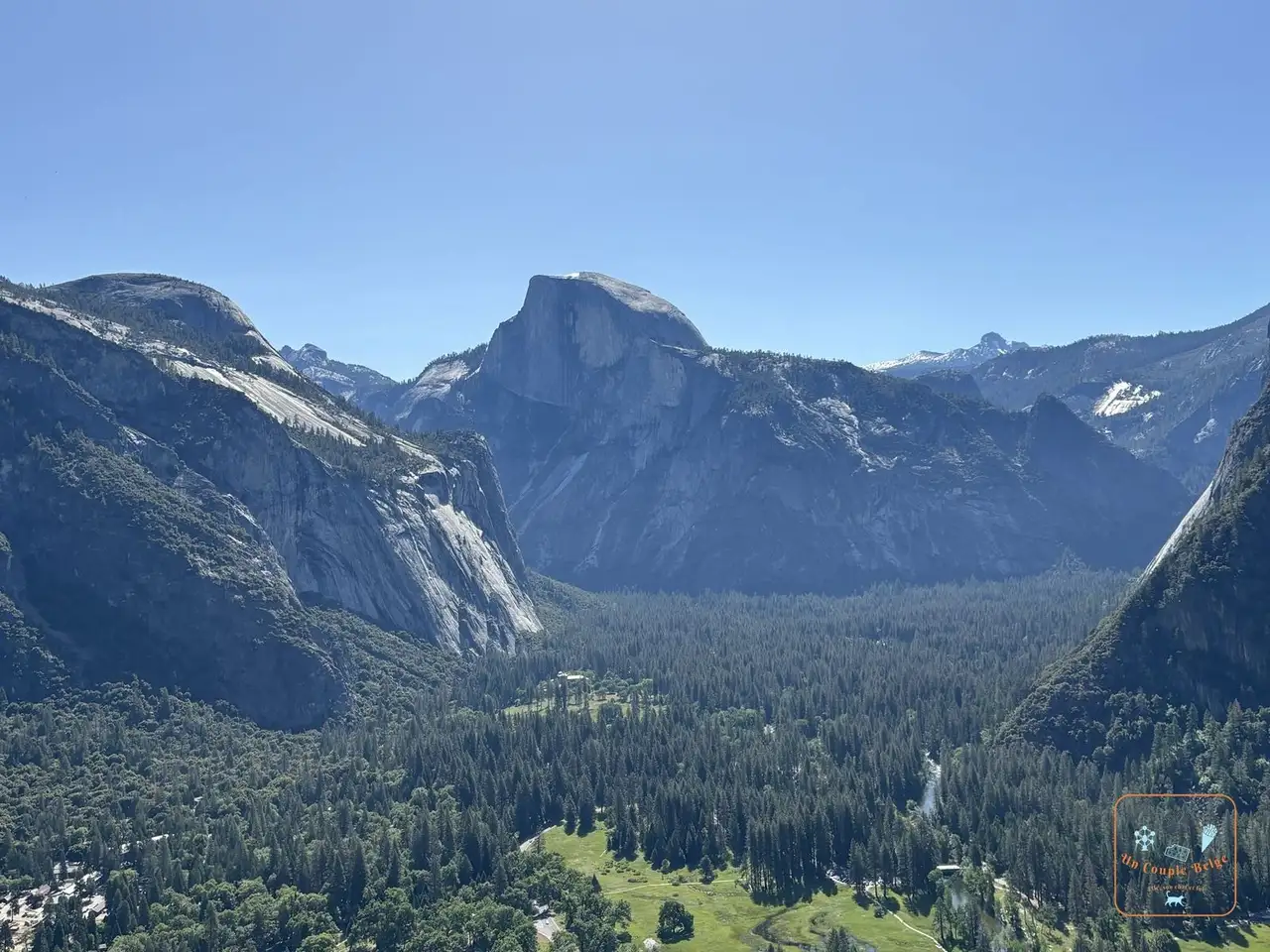 Half Dome above Yosemite Valley from Columbia Rock already offers a superb view, and is enough for many people. We went all the way to the top, where the river tips over into the void
 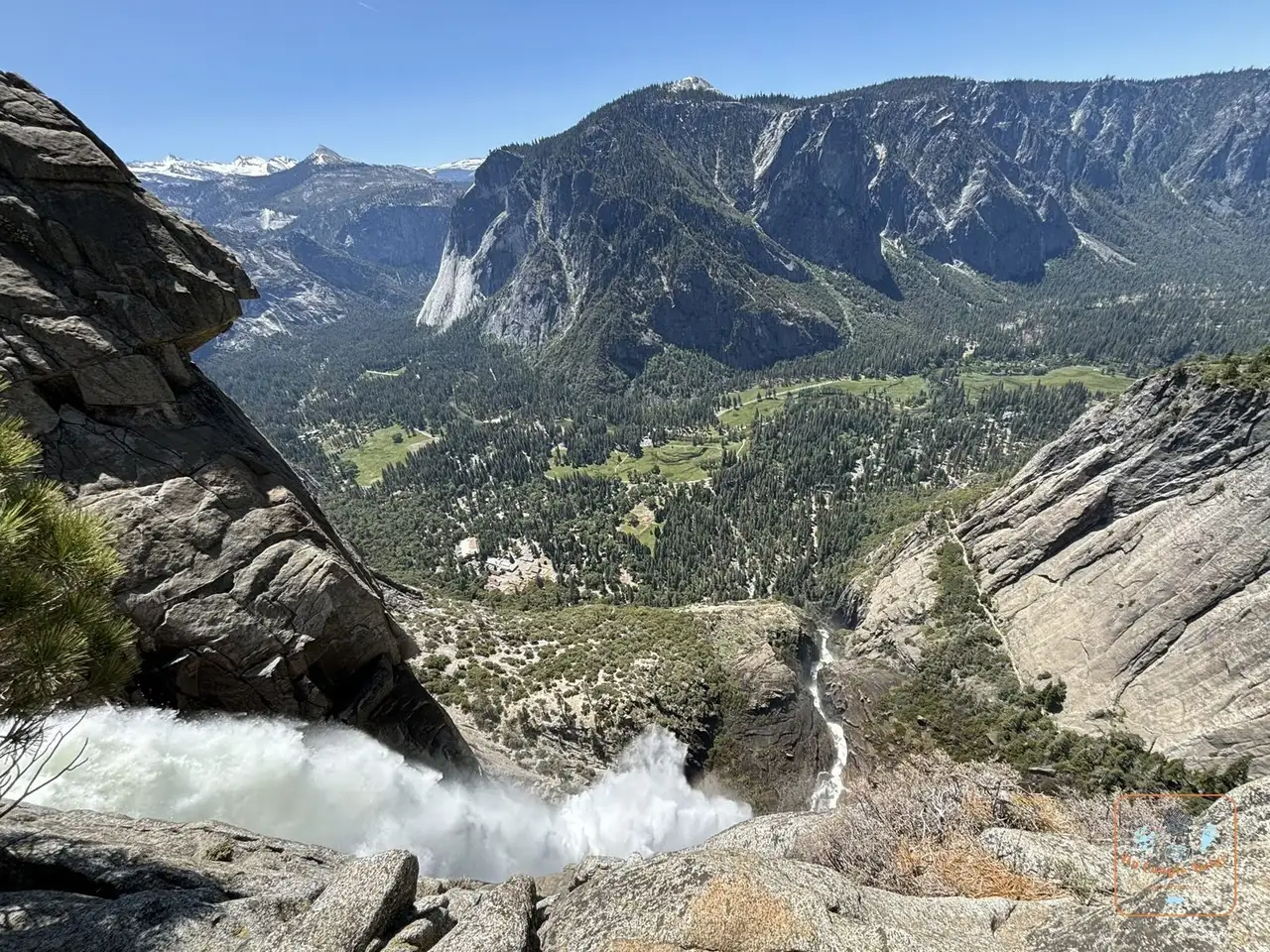 The water of Yosemite Creek plunging into the void at the top of the falls, with the valley below.
 - The Mist Trail
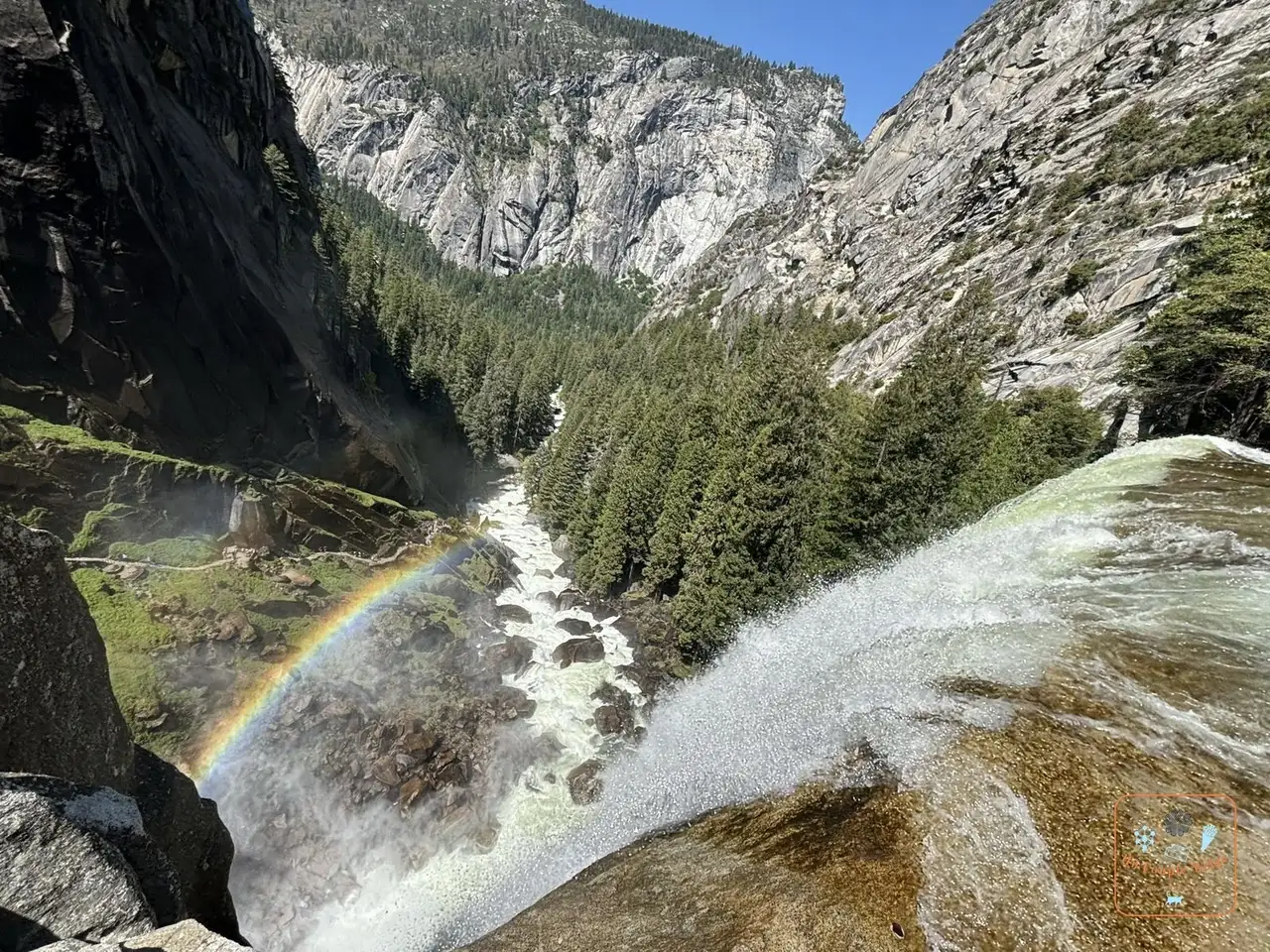 The top of Vernal Fall with a rainbow in the spray: the most famous trail in the park. It follows the Merced River up to Vernal Fall, by a staircase of more than 600 granite steps where the spray gives you a shower. Higher up is Nevada Fall
 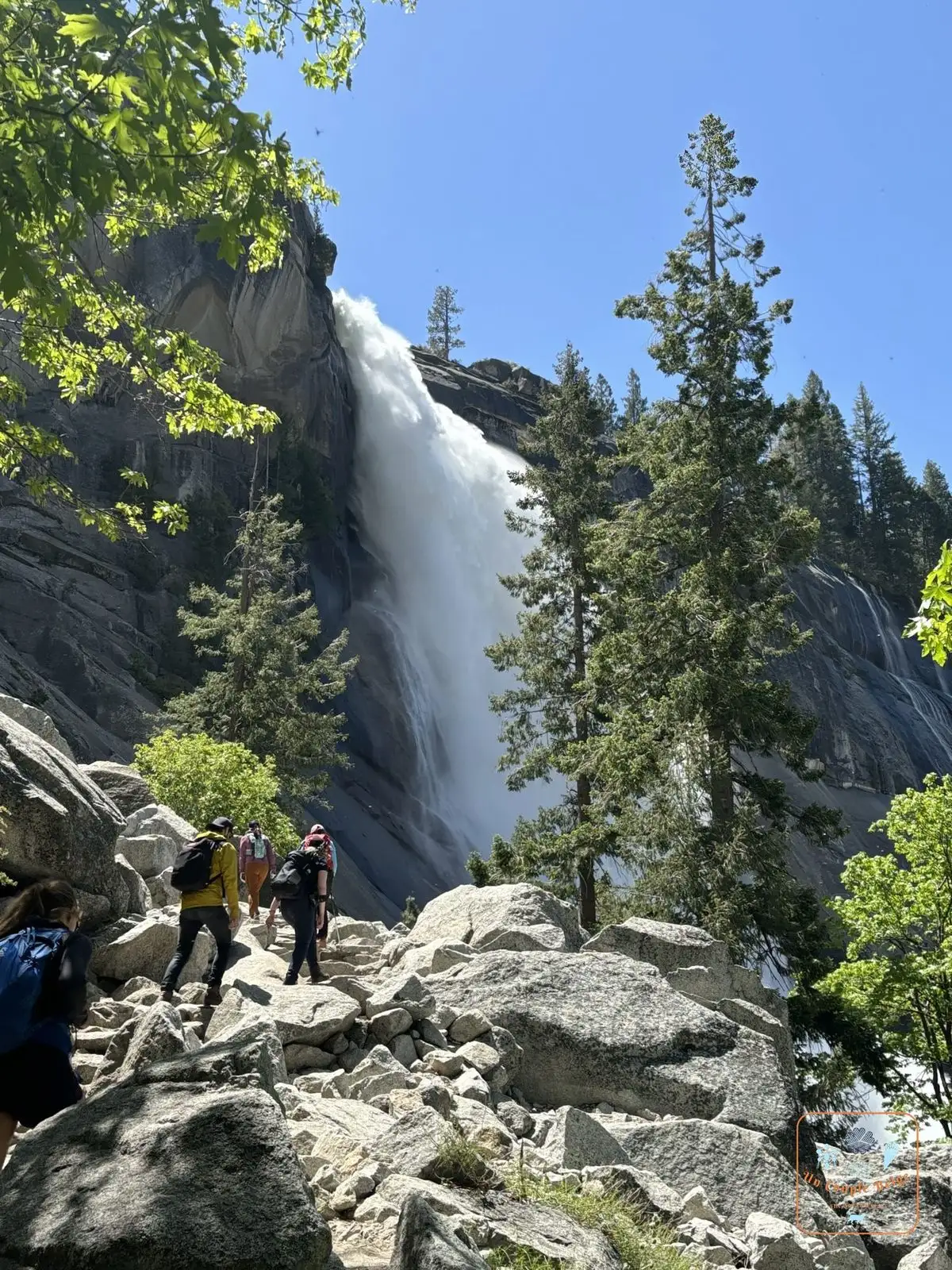 Nevada Fall tumbling down the rock face with hikers on the trail, twice as tall. We came back down by the John Muir Trail, longer but kinder to the knees.
 - Glacier Point
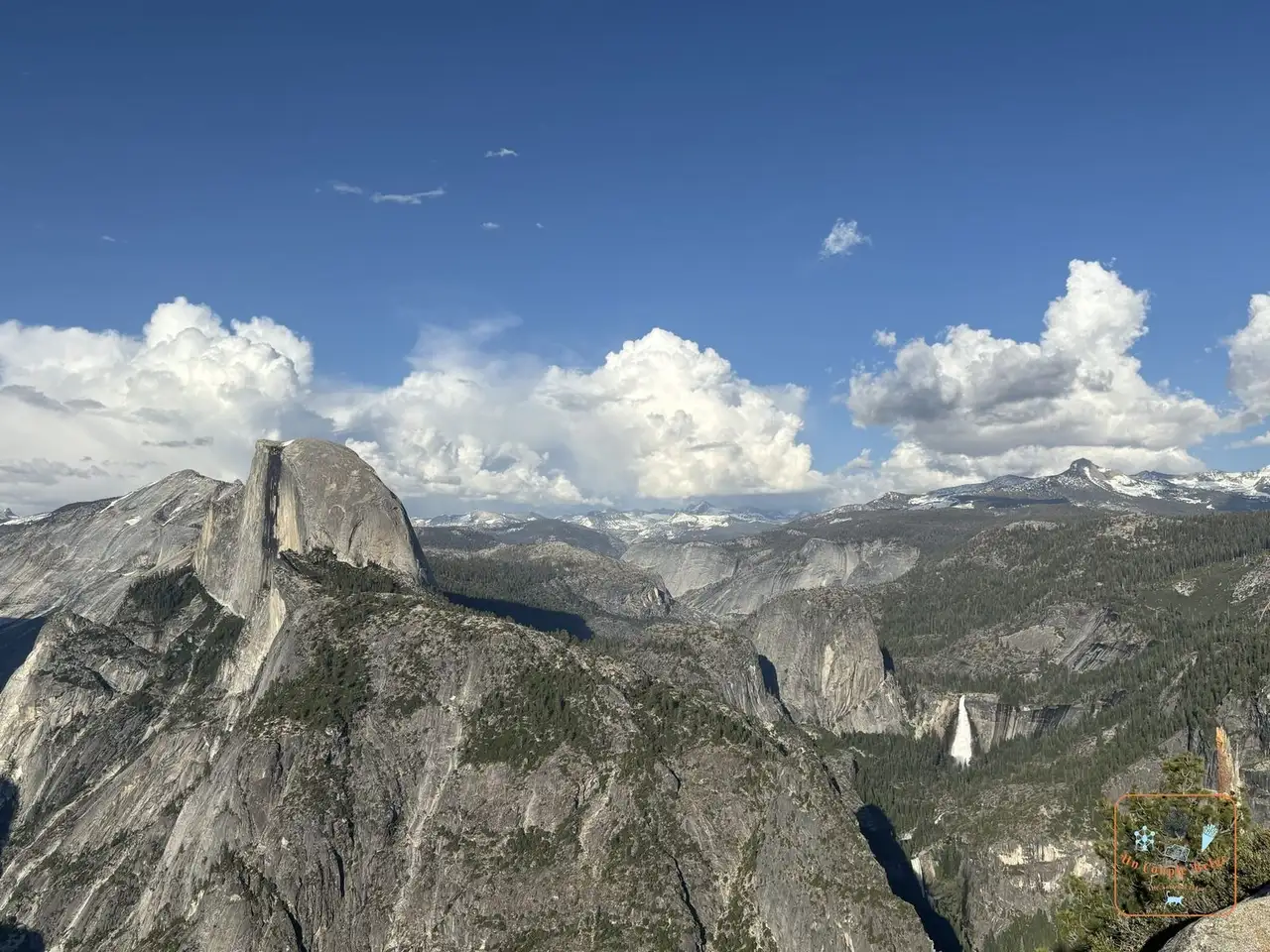 Half Dome, Nevada Fall and the High Sierra late in the day from Glacier Point: a viewpoint nearly 1,000 metres above the valley, which you can drive to. Half Dome opposite, the waterfalls, the High Sierra behind. Just before it, Washburn Point
 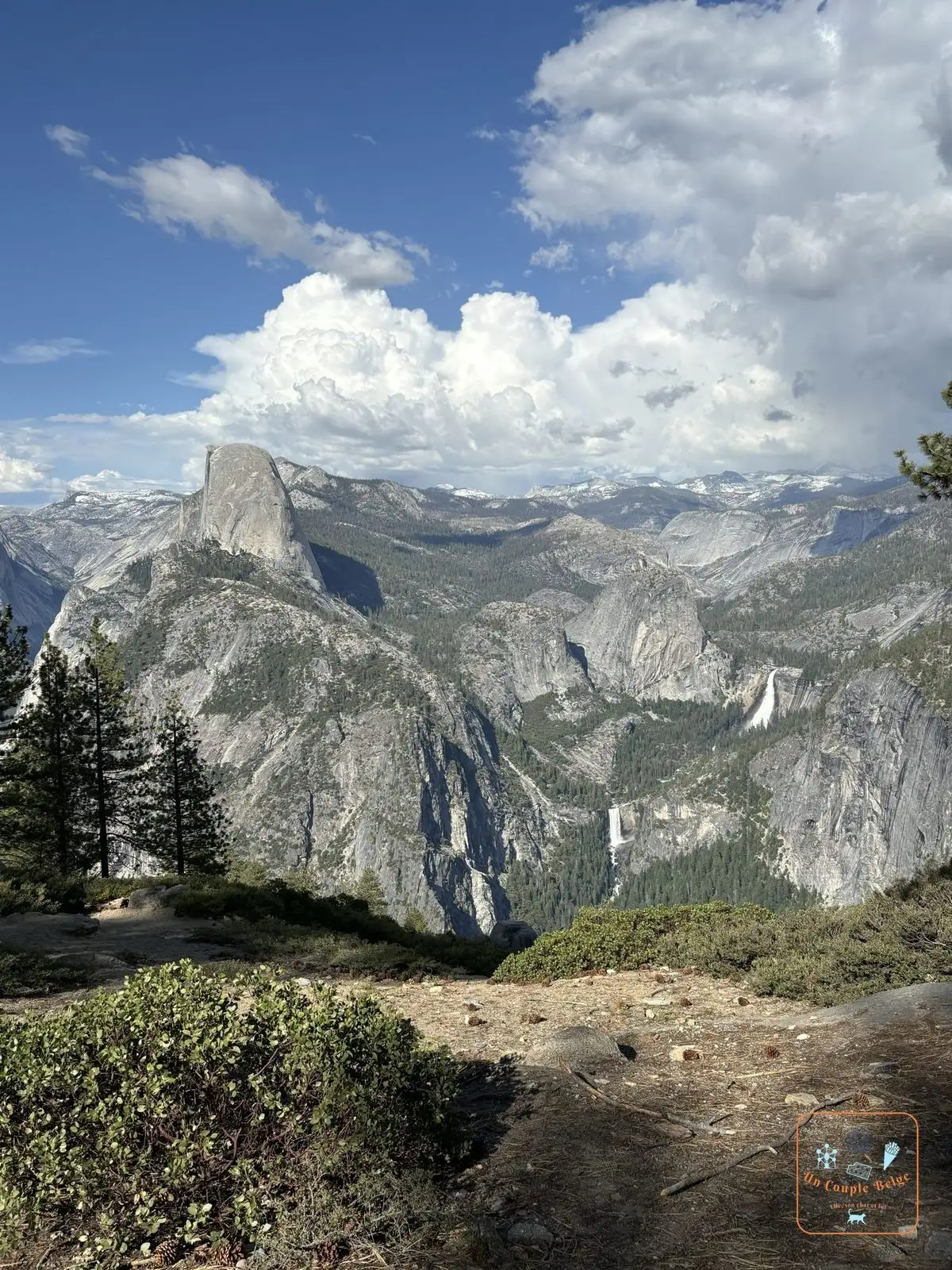 Half Dome, Vernal Fall and Nevada Fall from Washburn Point shows Vernal Fall and Nevada Fall one above the other.
 - Mirror Lake
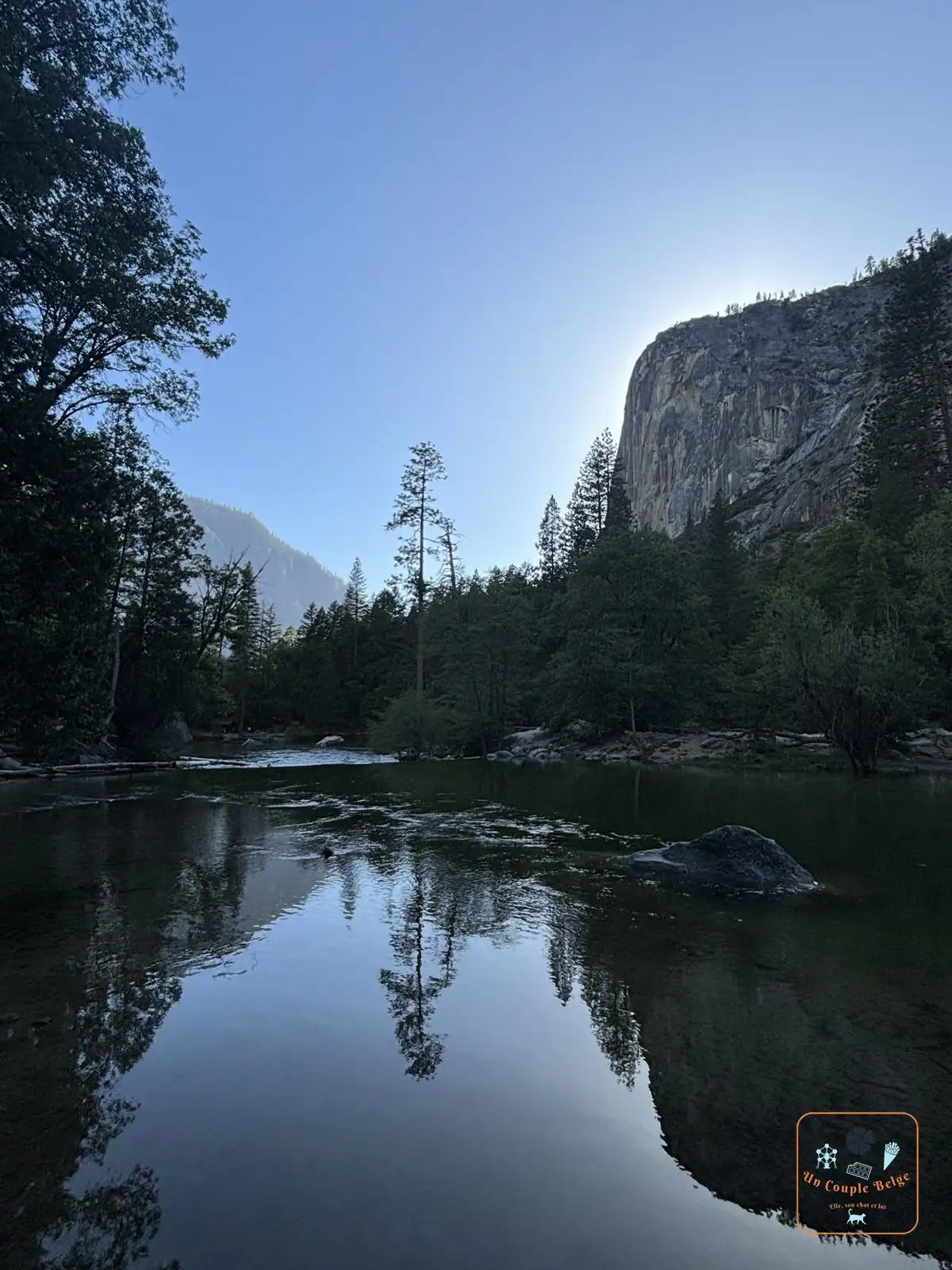 The cliffs reflected in the still water of Mirror Lake at dusk: a widening of the river at the foot of Half Dome, where the cliffs are reflected in spring. In summer it dries up.
 - Valley View
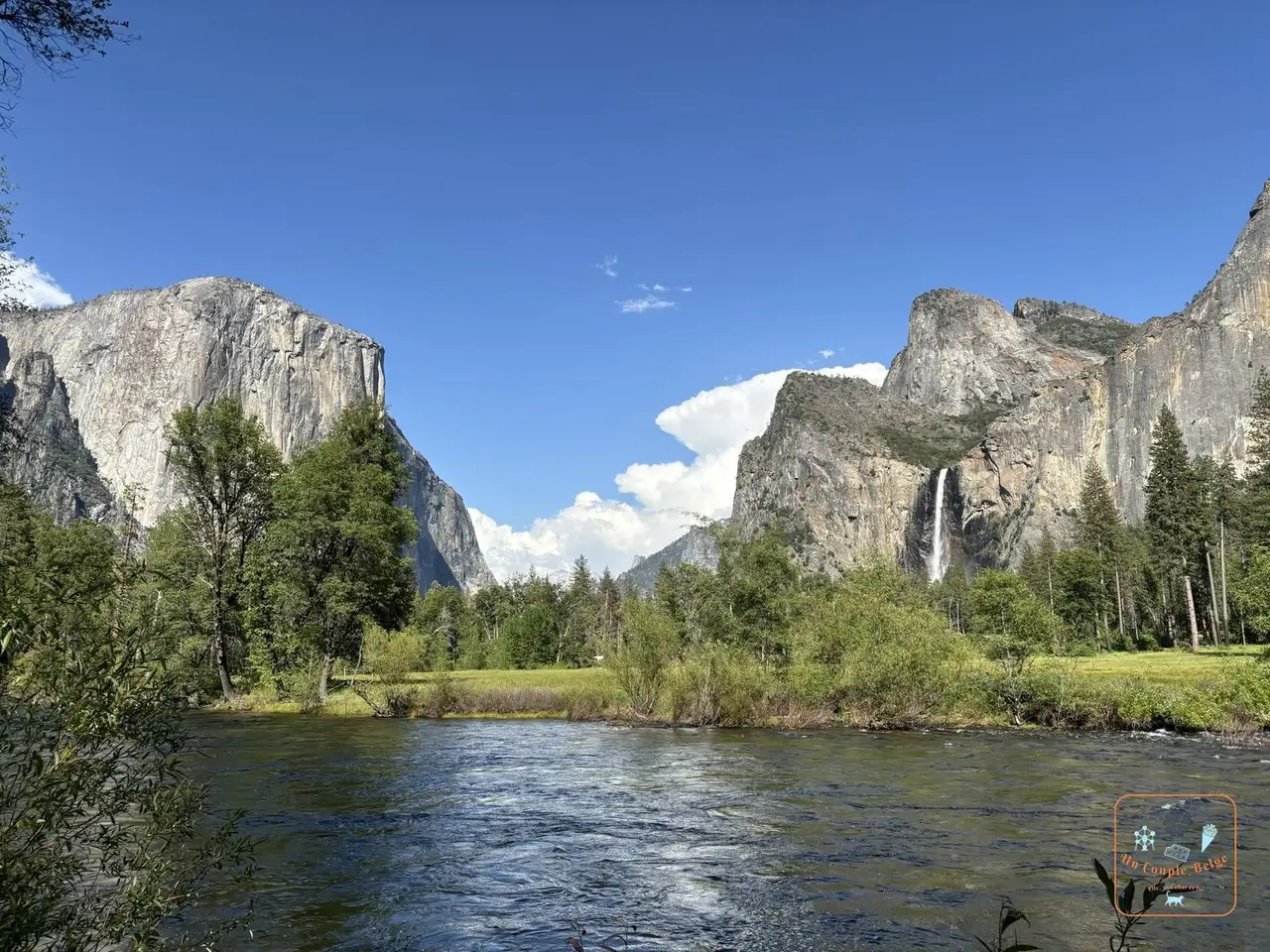 El Capitan, Bridalveil Fall and the Merced River from Valley View: on the riverbank, at the exit from the valley. Less well known than Tunnel View, and quieter.
 - Half Dome
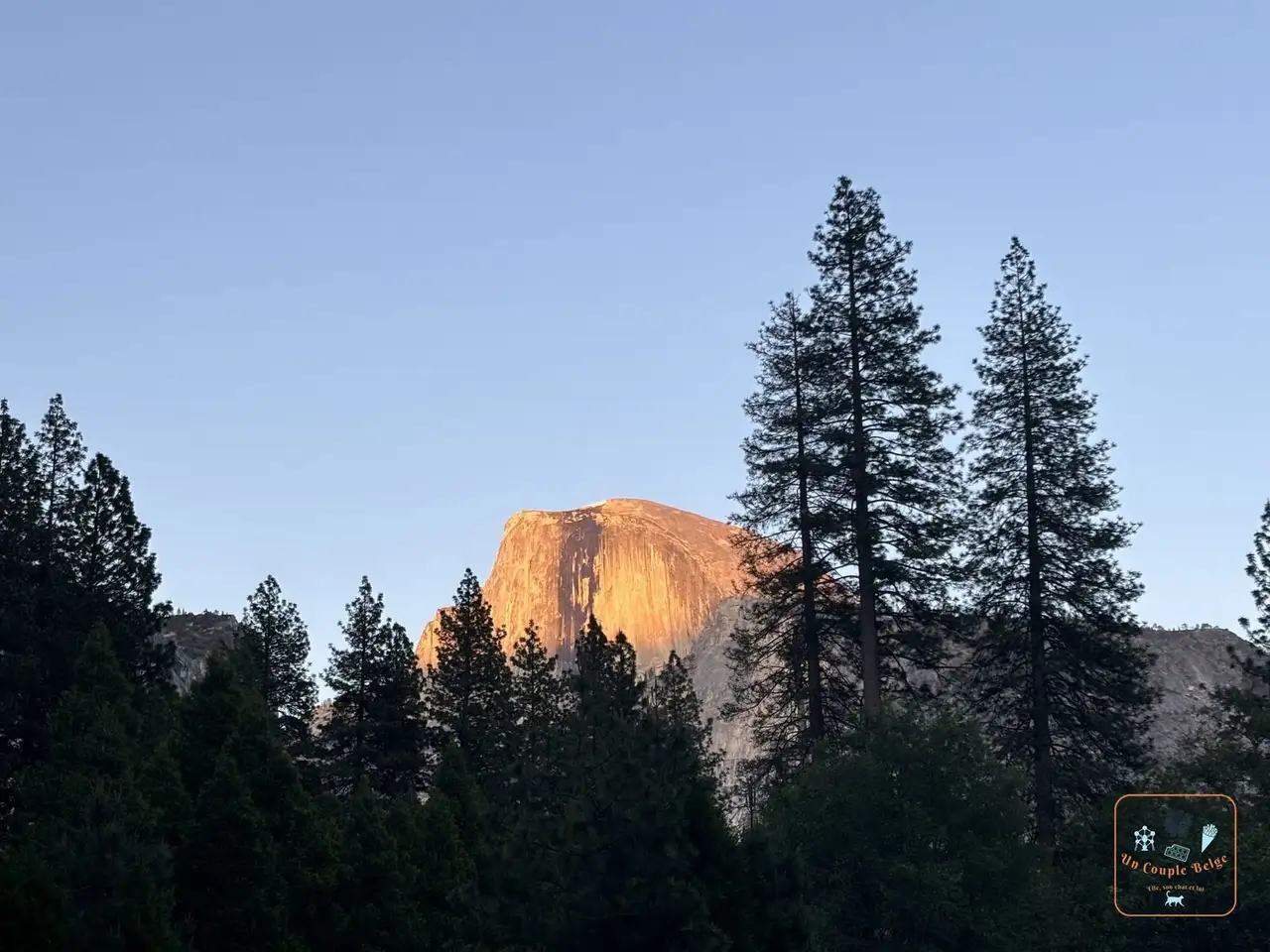 The summit of Half Dome lit orange by the sunset above the pines: the symbol of the park. You see it from everywhere, and it turns orange at sunset. Climbing to the top is quite another matter: 22 to 26 km round trip, with cables at the end.
 - Mariposa Grove
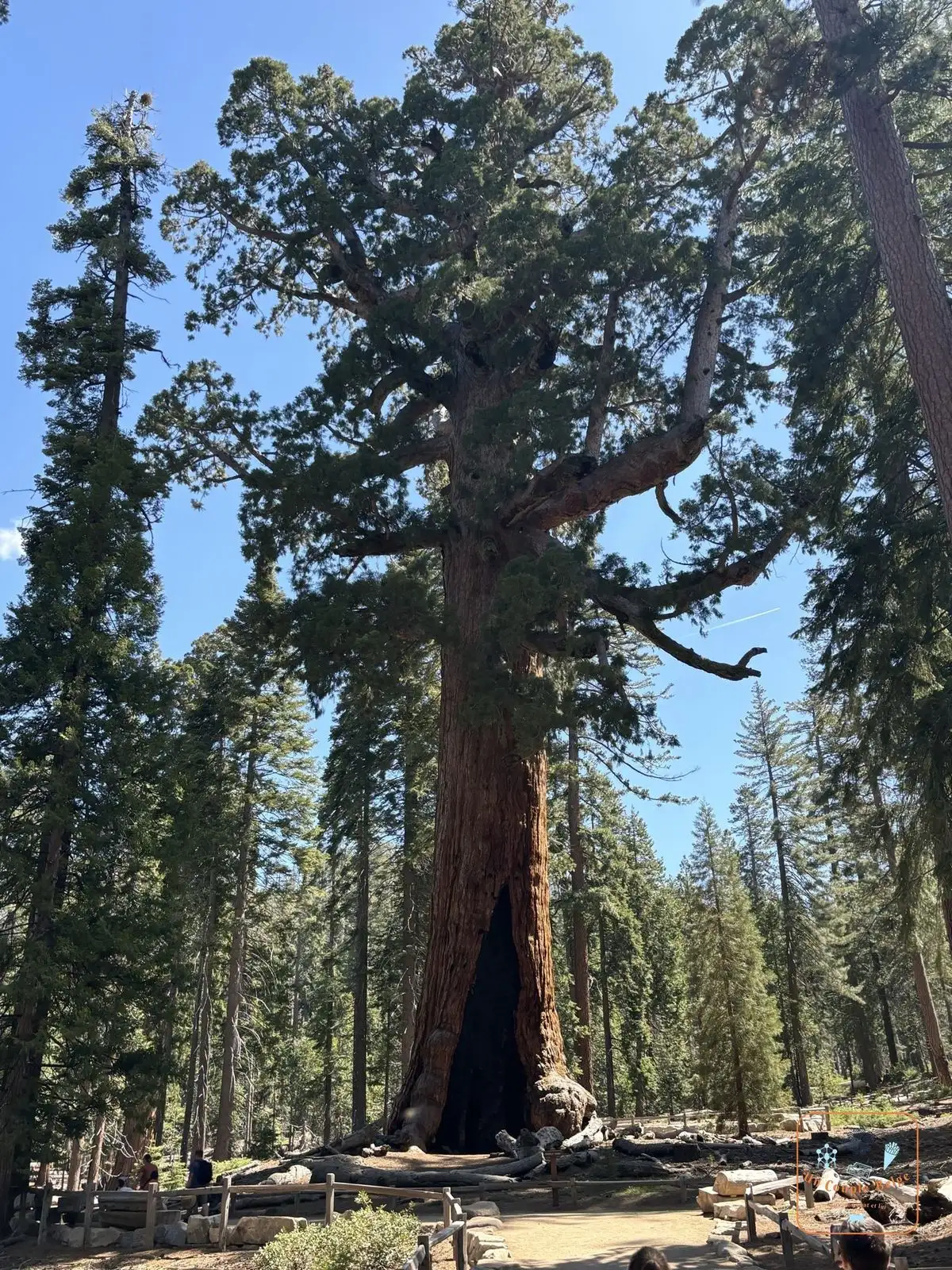 The Grizzly Giant, a massive sequoia with thick, twisted branches: a grove of 500 giant sequoias at the south entrance. You reach it by a free shuttle, from spring to autumn. The star is the Grizzly Giant: an old, leaning tree about 2,000 years old, with branches thicker than many trunks. We walked up to the Wawona Point viewpoint.
 - Tuolumne Meadows and Tioga Road: the road crosses the upper part of the park, at over 2,600 metres, among meadows, lakes and granite domes. It only opens in summer.
Stories and good to know
- By late summer, Yosemite Falls is often dry. If you’re coming for the waterfalls, aim for May or June.
- At Curry Village you sleep in a canvas tent on a wooden platform
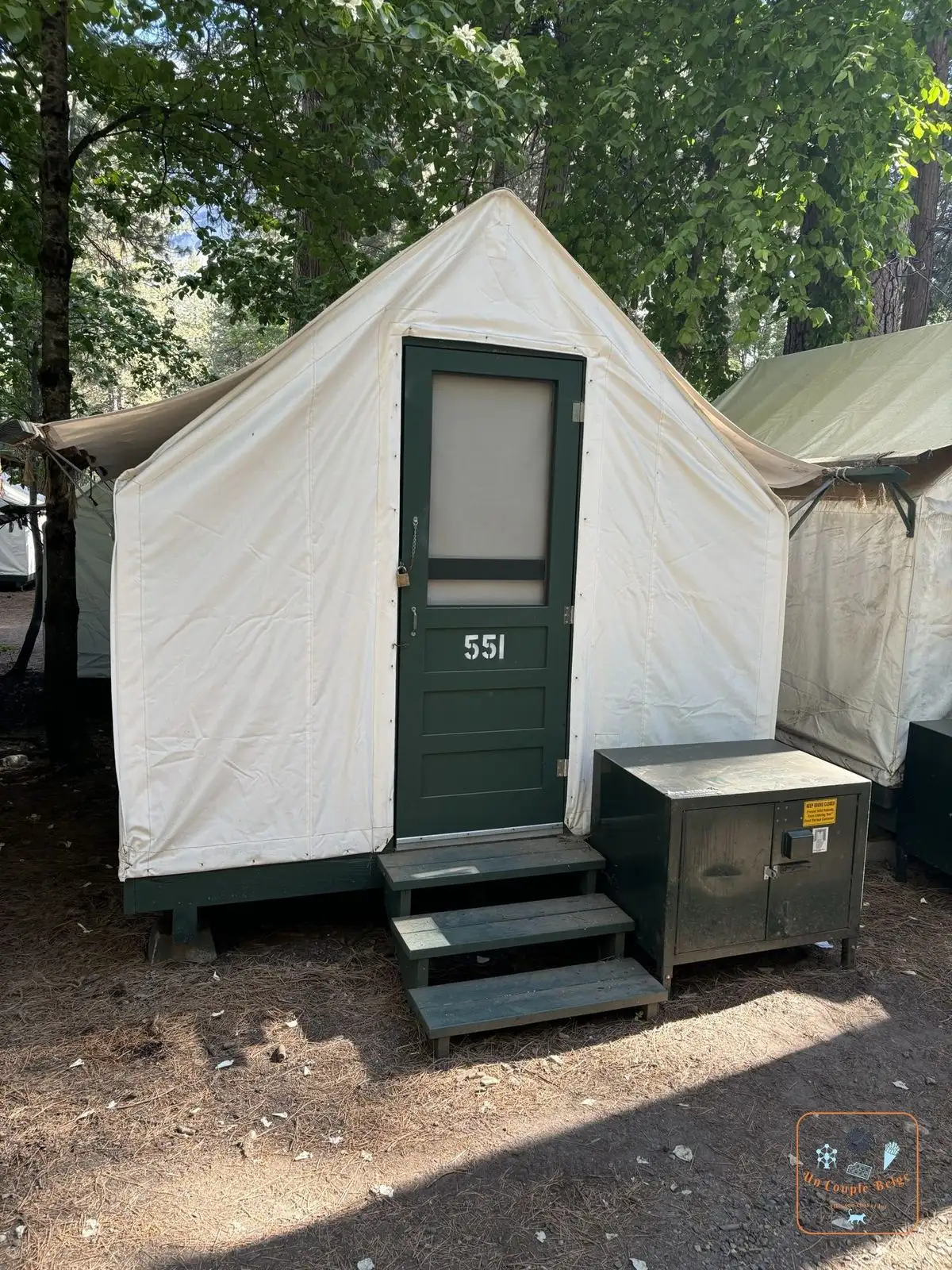 Our canvas tent number 551 and its bear locker at Curry Village. It’s basic: a bed, a light bulb, shared bathrooms. But you wake up at the foot of the cliffs, already in the valley. We spent two nights there in 2024, and three in 2026.
 - In front of every tent is a metal locker. Anything with a smell has to spend the night in it, toothpaste included, because of the bears.
- Above the waterfalls, the river looks calm. The current is very strong, and there are accidents every year. Stay away from the water, and never swim upstream of a waterfall.
- Half Dome never had another half. No glacier cut it in two: the rock came away in slabs, over time.
- For two weeks in February, at sunset, the little Horsetail Fall lights up orange like a flow of lava. It’s known as the “Firefall”.
Practical information for your road trip
- Pass: we got in with our America the Beautiful pass. At the current rates, it pays for itself with this park alone: everything is explained in our guide to the national parks pass.
- Entry reservation: there isn’t one in 2026. The rule has changed almost every year since 2020. In May 2024 we needed one; in 2026, no longer. Check the park’s website before your trip.
- Getting there: the valley is about 4 hrs from San Francisco and 1 hr 30 from Oakhurst, to the south. From Kings Canyon, allow 2 hrs 30 to Oakhurst.
- Parking: arrive before 9am, park once and for all, then get around on foot and on the free valley shuttle.
- Fuel: there’s no petrol station in the valley. Inside the park, you’ll find fuel at Wawona, Crane Flat and El Portal.
- Water: there’s no drinking water on the big trails. Take at least 3 litres per person for Upper Yosemite Fall or Nevada Fall.
- Where to stay: in the valley, Curry Village, Yosemite Valley Lodge and The Ahwahnee, to be booked very early. Outside the park, Oakhurst to the south, Mariposa or El Portal to the west, Oakdale on the road to San Francisco. In that case, allow one to two hours’ driving a day. We’ve done both: Oakhurst the night before and the night after, the valley in between, and we recommend spending at least one night on site.
- Combine it with: Sequoia and Kings Canyon before, San Francisco after, as we did on our road trip 1.
Our experience in Yosemite
Yosemite is our favourite national park. We feel a little at home there, and we go back whenever we can.
The first time was in late May 2024, for four days. We spent one night in Oakhurst, south of the park, then two nights in a tent at Curry Village, then another night in Oakhurst, before a stop in Oakdale on the road to San Francisco. We came back in 2026, this time with three nights at Curry Village.
Our day-by-day journals are coming soon.
Quick quiz
Question 1 / 3
Where to stay near Yosemite: a valley of granite, waterfalls and great hikes
Stay22 affiliate links: if you book through here, we earn a small commission at no extra cost to you. Thanks for your support!
On the ground

Sponsored by UnCoupleBelge
Follow us on Instagram
Box sponsored by a partner
Other places nearby
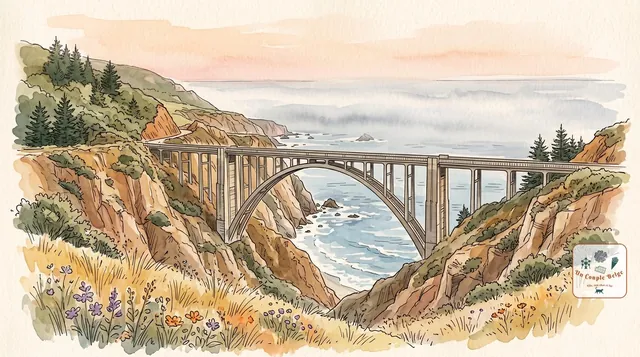
Big Sur: 145 km of cliffs between the mountains and the Pacific
The most beautiful stretch of Highway One: a road clinging to the cliffs, a postcard bridge, a waterfall that drops onto a beach and redwoods beside the ocean.
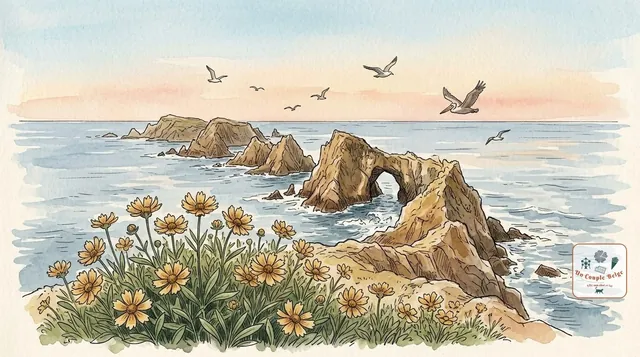
Channel Islands: the Californian Galápagos, a world apart
Five wild islands off the coast of Southern California, with no roads or hotels, but with cliffs, sea caves and a fox found nowhere else.
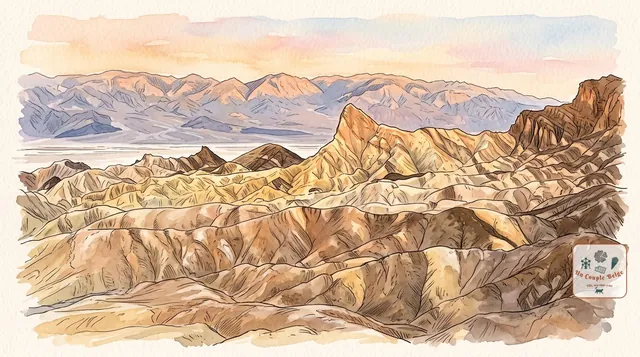
Death Valley: salt, dunes and the lowest point in North America
A vast desert of salt flats, dunes and hills in every colour. Superb from October to April, dangerous at the height of summer.
Comments