Utah: the Mighty 5, the salt desert and Salt Lake City
Updated on
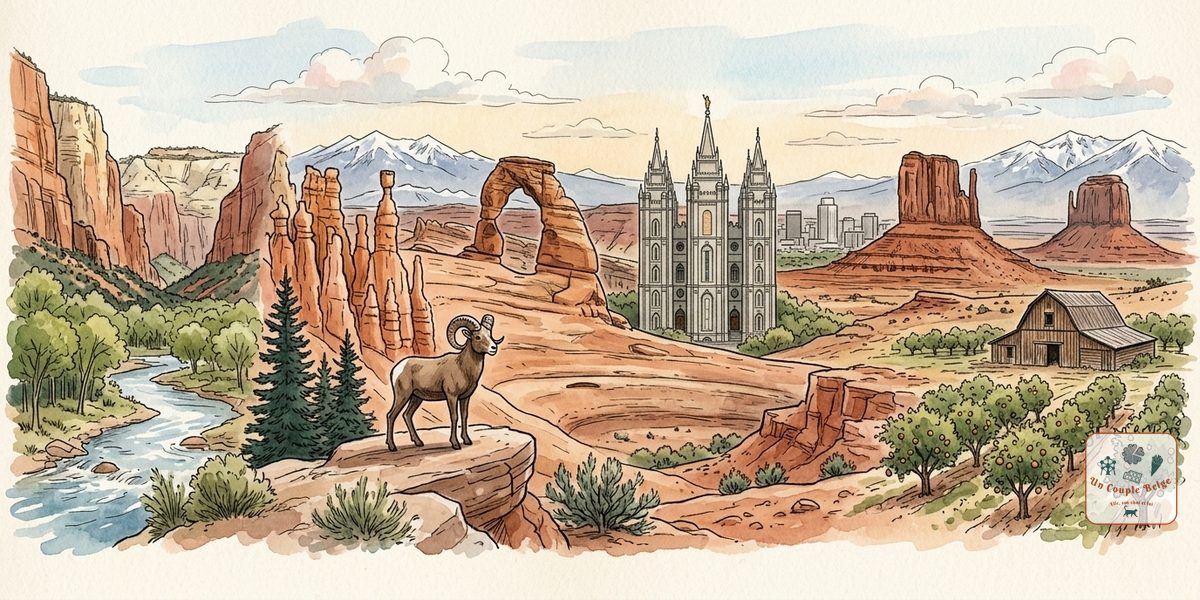
Utah suffers from a rather reductive image: for many people, it comes down to Salt Lake City and the Mormon Church. That overlooks the fact that it holds the highest concentration of spectacular scenery in the United States. Five national parks, the “Mighty 5” (Zion, Bryce Canyon, Capitol Reef, Arches and Canyonlands), follow one another over a few hundred kilometres, not counting the national monuments, the state parks and Monument Valley, on the Arizona border.
Southern Utah is a world of red, orange and white sandstone, narrow canyons, arches and hoodoos. The north, by contrast, is mountainous, with the ski resorts of the Wasatch Range, among the best in the country, and the Great Salt Lake. The state’s name comes from the Ute, one of the peoples who lived here along with the Navajo, the Paiute, the Shoshone and the Goshute. For a first road trip in the American West, it’s hard to do anything more impressive.
Utah at a glance
- Capital and largest city: Salt Lake City
- Population: about 3.5 million, one of the youngest populations in the country
- Area: about 220,000 km², a little over seven times Belgium
- Joined the Union: 1896, 45th state
- Time zone: Mountain Time (8 hours behind Brussels). Unlike neighbouring Arizona, Utah observes daylight saving time.
- Nickname: Beehive State, a symbol of hard work for the Mormon pioneers
- Highest point: Kings Peak, 4,123 metres, in the Uinta Mountains
Geography: from the mountains to the Colorado Plateau
The north is dominated by the Wasatch Range, at the foot of which stretches the valley where the great majority of the inhabitants live, from Provo to Ogden by way of Salt Lake City. Further east, the Uinta Mountains are one of the few American ranges that run east-west.
The west belongs to the Great Basin: a flat, arid desert, with the Great Salt Lake and the Bonneville Salt Flats, remnants of the immense Lake Bonneville of the last ice age.
The south and the east are part of the Colorado Plateau, a high plateau cut by the Colorado and its tributaries, where the five national parks, the canyons and Monument Valley are found.
A bit of history
The Ancestral Puebloans and the Fremont culture left cliff dwellings and petroglyphs throughout the south. The Ute, the Navajo, the Paiute, the Shoshone and the Goshute occupied the region when the first Spanish explorers arrived, in 1776.
In 1847, the pioneers of the Church of Jesus Christ of Latter-day Saints, the Mormons, fleeing persecution in Illinois, arrived in the Salt Lake Valley, led by Brigham Young. They founded Salt Lake City and settled the whole territory. In 1869, the first transcontinental railroad was completed at Promontory Summit, in northern Utah. The practice of polygamy delayed entry into the Union: the Church had to renounce it officially, in 1890, before Utah could become a state in 1896. In the 20th century, the national parks made its reputation, and Salt Lake City hosted the Winter Olympics in 2002. It will host them again in 2034.
The must-sees
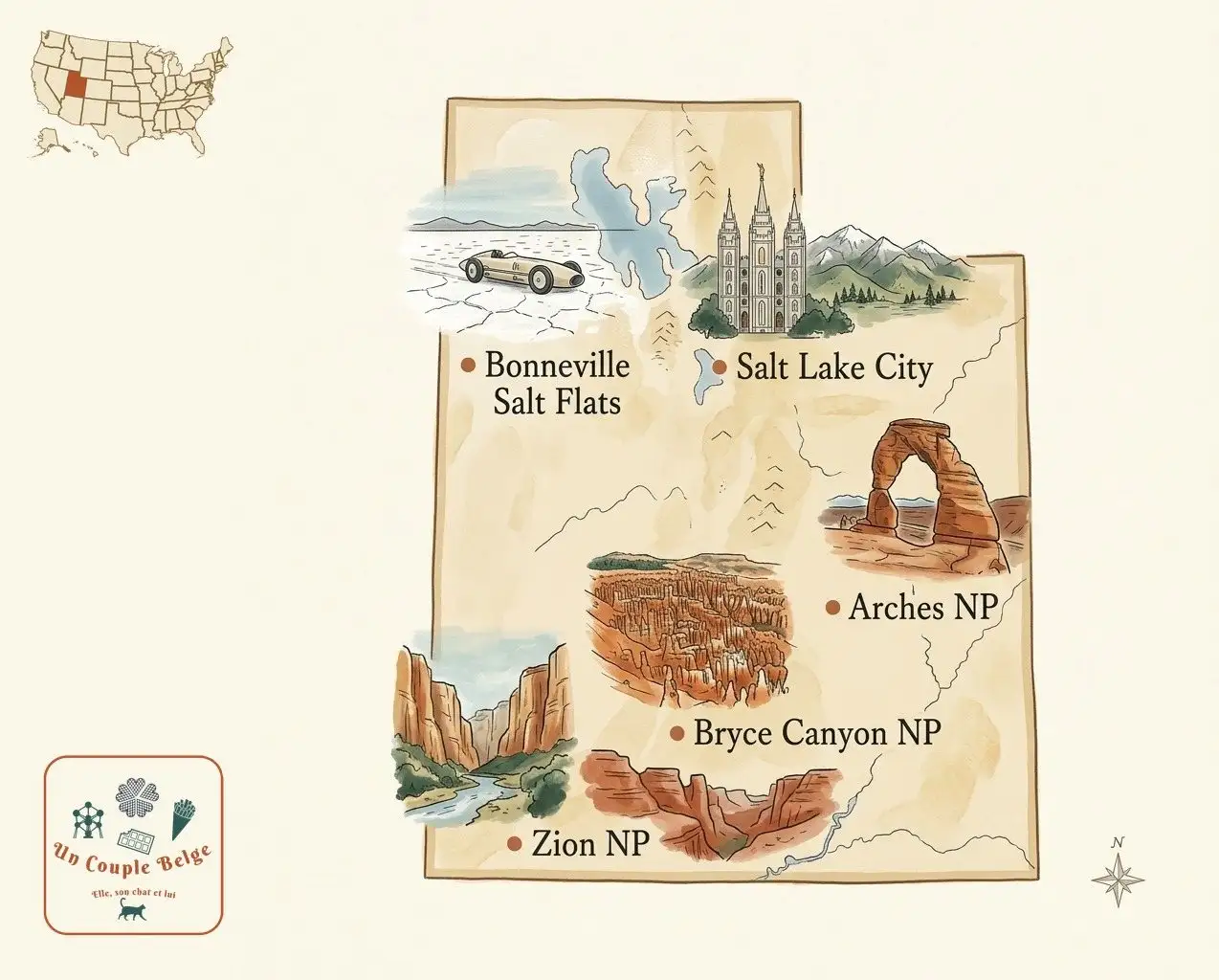
Zion
Zion National Park, in the south-west, is the most visited of the five. Its walls of red and cream sandstone rise up to 600 metres above the canyon. The most famous hike, Angels Landing, climbs along a dizzying ridge fitted with chains: it requires a permit awarded by lottery. The other classic, The Narrows, goes up the Virgin River on foot, in the water, between walls that close in. From March to November, the canyon road is closed to cars and served by a free shuttle. Our day there: day 14 of road trip 1.
Bryce Canyon
Two hours’ drive away, Bryce Canyon isn’t really a canyon, but a series of amphitheatres filled with thousands of hoodoos, orange and pink rock spires sculpted by frost and thaw. The spectacle is extraordinary at sunrise, from Sunrise Point or Inspiration Point. The Navajo Loop and Queen’s Garden trail goes down among the hoodoos. The park tops out at more than 2,700 metres: nights are cool even in summer, and snow is frequent in winter. Our travel diaries: day 12 and day 13 of road trip 1.
Scenic Byway 12 and Capitol Reef
Scenic Byway 12, one of the most beautiful roads in the United States, links Bryce Canyon to Capitol Reef over about 200 kilometres. It crosses Grand Staircase-Escalante National Monument, with its slot canyons and the waterfall of Lower Calf Creek Falls, then runs along the Hogback, a narrow ridge with a drop on either side, near Boulder.
At the end of the road, Capitol Reef National Park is the least visited of the five. It follows the Waterpocket Fold, a wrinkle in the Earth’s crust about 160 kilometres long. In the Fruita valley, the orchards planted by the Mormon pioneers are still there, and you can pick the fruit in season. Don’t leave without a pie from the Gifford House. Our visit: day 11 of road trip 1.
Moab, Arches and Canyonlands
To the east, Moab is the adventure capital: mountain biking, four-wheel driving, rafting on the Colorado and climbing. It’s also the base for two national parks.
Arches National Park has more than 2,000 natural arches, including Delicate Arch, the symbol of the state, reached by a trail of about 5 kilometres round trip, with no shade. Go at sunset if you can. Landscape Arch, Double Arch and The Windows are easier to reach. In recent years, entry to the park has required a timed reservation in high season: check before you set off.
Canyonlands is immense and wild, cut up by the Colorado and the Green River. The Island in the Sky district offers dizzying panoramas, notably at Mesa Arch, at sunrise. Right nearby, Dead Horse Point State Park has one of the finest views in the American West.
Monument Valley and the south-east
On the Arizona border, Monument Valley, on the Navajo reservation, is the backdrop to dozens of westerns. A 27-kilometre dirt road, the Valley Drive, passes at the foot of the sandstone buttes. For the more remote areas, you need a Navajo guide. Close by, Valley of the Gods is a miniature version, free and almost deserted, and the Moki Dugway, a switchback gravel road cut into a cliff, offers a vast view. In the same area, Goosenecks State Park shows the very tight meanders of the San Juan River, and Natural Bridges is home to three great natural bridges. Our travel diaries in this area: day 9, day 10 and day 11 of road trip 1.
Salt Lake City and the north
Salt Lake City deserves more than a stopover. Temple Square, the centre of the Mormon Church, is free to visit. The temple, under renovation since 2019, is normally reserved for members: exceptionally, it is due to open its doors to everyone from April to October 2027, before it reopens. In the meantime, the gardens, the Tabernacle (with its famous choir) and the visitor centres are open to all. The city also has a scene of bars, breweries and restaurants far livelier than its reputation.
To the west, the Great Salt Lake is the largest salt lake in the Western Hemisphere. Its salinity lets you float effortlessly, and Antelope Island is home to free-roaming bison. The lake has dropped sharply in recent years, under the effect of drought and water withdrawals. Further on, the Bonneville Salt Flats are a perfectly flat expanse of white salt, where land speed records have been broken since the beginning of the 20th century.
Forty minutes from the city, the Wasatch resorts (Park City, Alta, Snowbird) are renowned for their very light snow. In summer, Park City turns to mountain biking and hiking.
Itinerary ideas
10-14 days, the Mighty 5. Las Vegas (Nevada) → Zion (2 days) → Bryce Canyon (1-2 days) → Scenic Byway 12 and Escalante (1 day) → Capitol Reef (1 day) → Moab, Arches and Canyonlands (3 days) → Monument Valley (1 day) → back via the Grand Canyon (Arizona). This is the circuit that Visit Utah describes in detail under the name “Road to Mighty”.
One week, from Salt Lake City. Salt Lake City and the Great Salt Lake (1 day) → Moab, Arches and Canyonlands (3 days) → Capitol Reef → Bryce Canyon → Zion, then a flight from Las Vegas.
The Grand Circle. Utah is the heart of the “Grand Circle”, a big two- to three-week circuit with the Grand Canyon, Page and Lake Powell, and Mesa Verde (Colorado).
On the plate
- Fry sauce, a mix of ketchup and mayonnaise served with fries and burgers. The locals are very proud of it.
- Funeral potatoes, a casserole of potatoes with cheese and cream, topped with cornflakes, served at meals after funerals (hence the name) and at celebrations.
- Jell-O, the colourful jelly, the state’s official snack.
- Utah scones, which have nothing to do with English scones: fried dough served with honey butter.
- Dirty soda, a soda jazzed up with syrup, coconut cream or lime, sold at drive-through soda shops such as Swig. The phenomenon was born here, partly because practising Mormons avoid coffee.
- Pastrami burgers, a Salt Lake City speciality.
Culture and trivia
- The alcohol laws are among the strictest in the country. For a long time, restaurants had to mix cocktails behind an opaque partition, the “Zion Curtain”, abolished in 2017. Beer sold in supermarkets is limited to 5% alcohol, and wine and spirits are only sold in state liquor stores.
- The Mormon Church is very present: more than half of the state’s inhabitants are members, according to estimates.
- The Sundance Film Festival, founded by Robert Redford, was held for decades in Park City. It is due to move to Boulder, Colorado, from 2027.
- Delicate Arch appears on the state’s licence plates.
- The “Golden Spike”, which marked the completion of the transcontinental railroad in 1869, is commemorated at the historic site at Promontory Summit.
When to go
- Spring (April-May): one of the best times for the southern parks, with mild temperatures. The Narrows are sometimes closed by snowmelt.
- Autumn (September-October): ideal, with pleasant temperatures and the colours of the aspens in the mountains.
- Summer (June to August): very hot in the southern parks, often above 38 °C at Zion, Arches and Moab. Hike early in the morning. Violent thunderstorms and flash floods are possible in July-August. The northern mountains and Bryce stay pleasant.
- Winter (December to March): ski season in the Wasatch. The southern parks are quiet and magnificent under snow, but some roads close.
Practical information
- Recommended length of stay: 10 to 14 days for the five national parks and Monument Valley.
- Getting there: Salt Lake City is a major airport, with a few direct flights to Europe. For the south, Las Vegas is often more convenient, 2 hrs 30 from Zion.
- Getting around: a car is essential. A 4x4 is only useful for the remote tracks.
- Budget: moderate. Take the annual America the Beautiful pass: since 2026 it has cost foreign visitors 250 dollars, but Zion and Bryce Canyon charge a 100-dollar surcharge per person without it, so for two people it pays for itself at the first park. It’s all explained in our guide to the national parks pass. Accommodation is expensive near the parks in high season.
- Things to watch out for: carry plenty of water, protect yourself from the sun and never enter a narrow canyon if storms are forecast, even in the distance: flash floods are deadly. Fill up whenever you can; petrol stations are rare.
- One more tip: for Angels Landing, enter the seasonal lottery several months ahead, or the day-before lottery. And check the Arches reservation system for your dates.
Our place guides in Utah
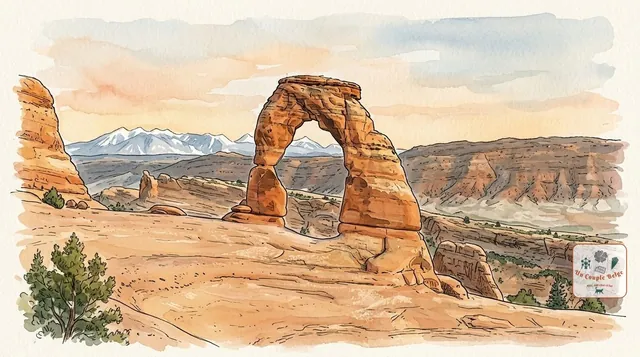
Arches: more than 2,000 sandstone arches under the open sky
The highest concentration of stone arches in the world, including Delicate Arch, the symbol of Utah. A compact park, ten minutes from Moab.
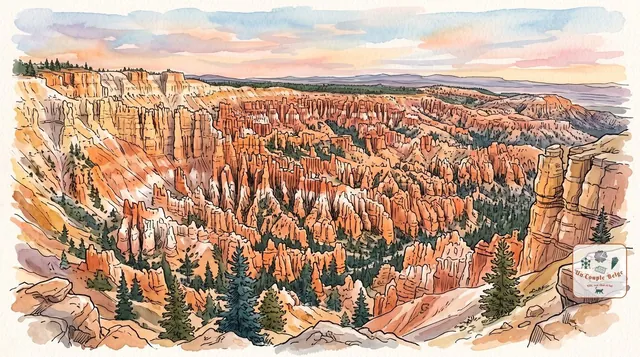
Bryce Canyon: an orange stone army at the edge of the plateau
Thousands of orange rock spires packed tightly together, which you look at from above before walking down among them.
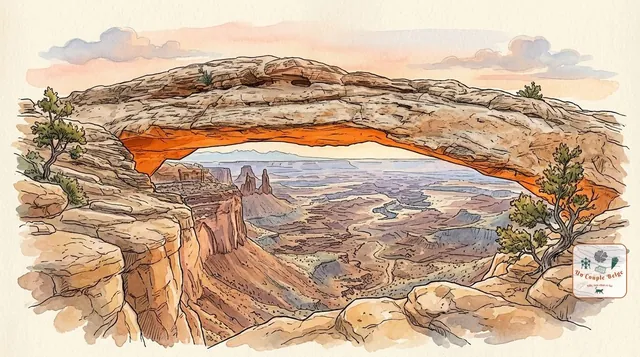
Canyonlands: canyons as far as the eye can see, viewed from above
Utah's largest national park: a maze of canyons carved by the Colorado and the Green River, which you look down on from the Island in the Sky plateau.
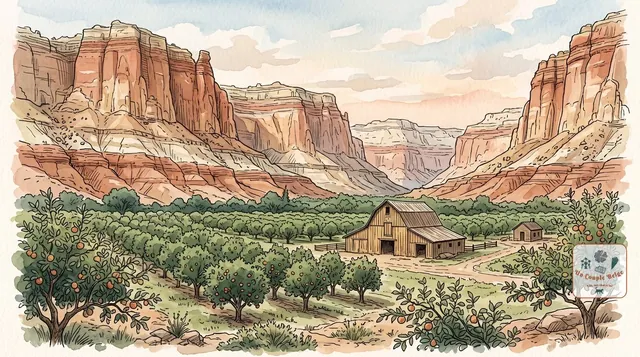
Capitol Reef: Utah's quietest national park
Red, grey and white cliffs along a 160 km fold of rock, pioneer orchards in the middle of the desert, and far fewer people than at Zion or Arches.
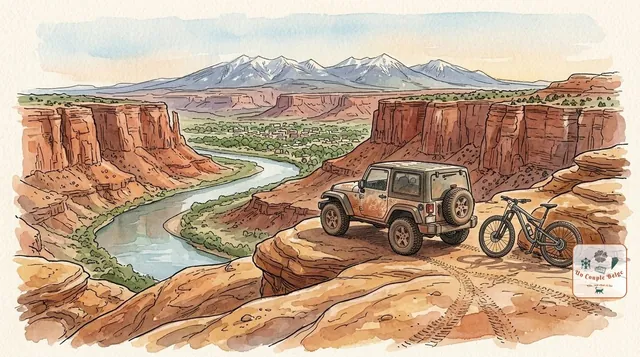
Moab: the base for Arches, Canyonlands and the Colorado River
A small town in the Utah desert, ten minutes from Arches and an hour from Canyonlands, surrounded by red cliffs, tracks and trails.
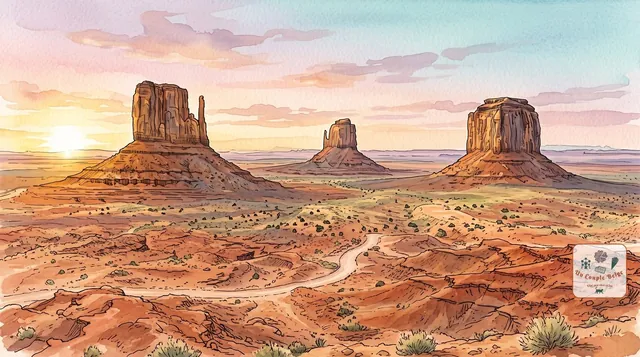
Monument Valley: the red buttes of Navajo country
Red sandstone buttes on a vast plain, on Navajo land: the Western backdrop everyone has in mind, best seen at sunrise.
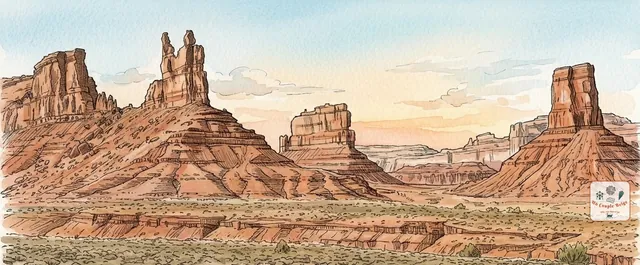
Valley of the Gods: a Monument Valley without the crowds
The same red buttes as Monument Valley, half an hour's drive away, but with no ticket booth, no guide and almost nobody around.
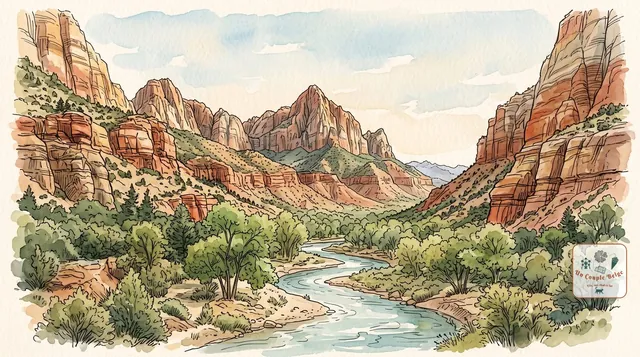
Zion: on the canyon floor, between the Narrows and Angels Landing
A narrow canyon between 600-metre cliffs, which you travel by shuttle and then on foot: along the ridge of Angels Landing or in the river through the Narrows.