California: ocean, sequoias, desert and big cities
Updated on
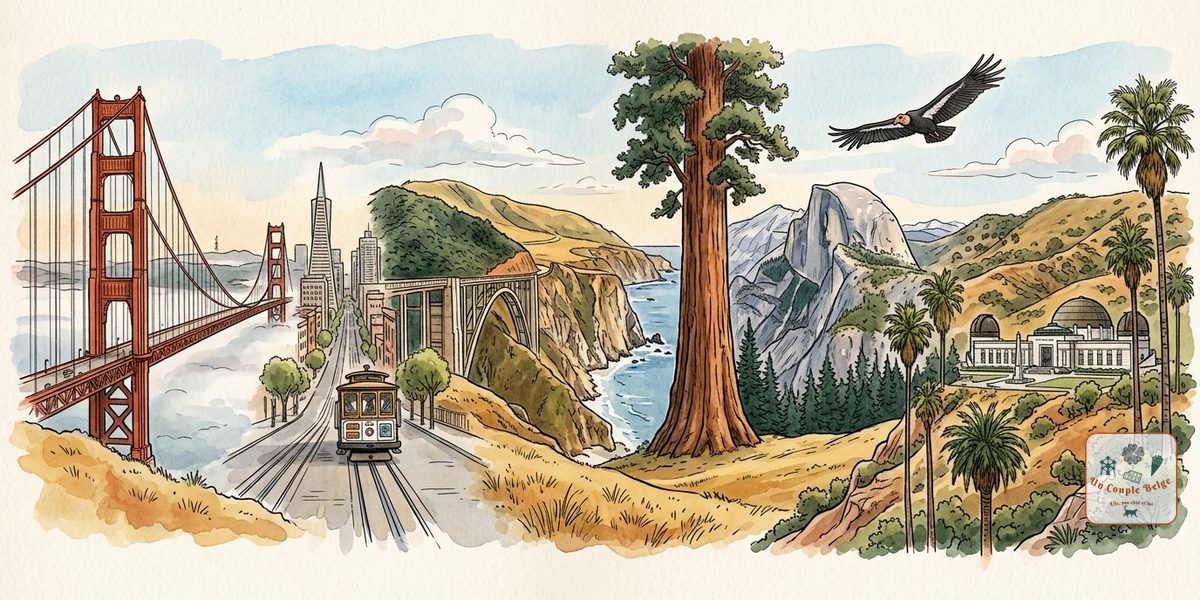
There are few places in the world where you can ski in the morning and swim in the ocean in the afternoon, cross a scorching desert and then walk beneath trees two thousand years old, without ever leaving the same state. California does it without trying. It stretches more than 1,200 kilometres from north to south and brings together the lowest point in North America, Badwater, in Death Valley, and the highest peak in the 48 contiguous states, Mount Whitney, barely 140 kilometres away as the crow flies.
It’s also the state that manufactured a good part of the modern imagination, from Hollywood to Silicon Valley, and that keeps drawing dreamers from all over the world with the same promise as in the days of the gold rush: here, everything can start again. For a first trip to the United States, this is often where people begin. And they almost always come back.
California at a glance
- Capital: Sacramento
- Largest city: Los Angeles
- Population: about 39 million, the most populous state in the country
- Area: about 424,000 km², nearly fourteen times Belgium
- Joined the Union: 1850, 31st state
- Time zone: Pacific Time (9 hours behind Brussels)
- Nickname: The Golden State
- Highest point: Mount Whitney, 4,421 metres
- Good to know: if it were a country, California would be among the five largest economies in the world
Geography: seven Californias in one
The north coast, from San Francisco to Oregon, is wild, misty and covered in forests of coast redwoods, the tallest trees in the world.
The San Francisco Bay Area takes in San Francisco, Oakland, Berkeley and, to the south, Silicon Valley. Just to the north, the vineyards of Napa and Sonoma.
The Sierra Nevada, the great mountain range that runs along the east of the state, is home to Lake Tahoe, Yosemite, Sequoia and Kings Canyon. On the other side, Route 395 follows a spectacular eastern slope, with Mono Lake and Mount Whitney.
The Central Valley, between the coast and the Sierra, is an immense agricultural plain that produces a huge share of the fruit, vegetables and nuts of the United States. Not very touristy, but you’re bound to cross it.
The Central Coast, from Santa Cruz to Santa Barbara, with Monterey, Carmel and Big Sur.
Southern California: Los Angeles, Orange County and San Diego, the surf beaches and car culture.
The deserts, finally, to the east and south-east: the Mojave, Joshua Tree, Palm Springs, Anza-Borrego and Death Valley.
A bit of history
Before Europeans arrived, California had hundreds of Native American groups and more than a hundred languages. From 1769 the Spanish founded a chain of 21 missions along the coast, linked by the Camino Real, many of which can still be visited (Carmel, Santa Barbara, San Juan Capistrano…). The territory became Mexican in 1821, then American in 1848, at the end of the Mexican-American War.
That same year, gold was discovered at Coloma, in the foothills of the Sierra. The 1849 gold rush made the population explode within a few years, and California became a state as early as 1850. Then came the transcontinental railroad, agriculture, and, in the 20th century, cinema in Hollywood, aerospace, the 1960s counterculture in San Francisco and finally computing in Silicon Valley. For the Indigenous peoples, on the other hand, the gold rush was a catastrophe: their population collapsed in the 19th century.
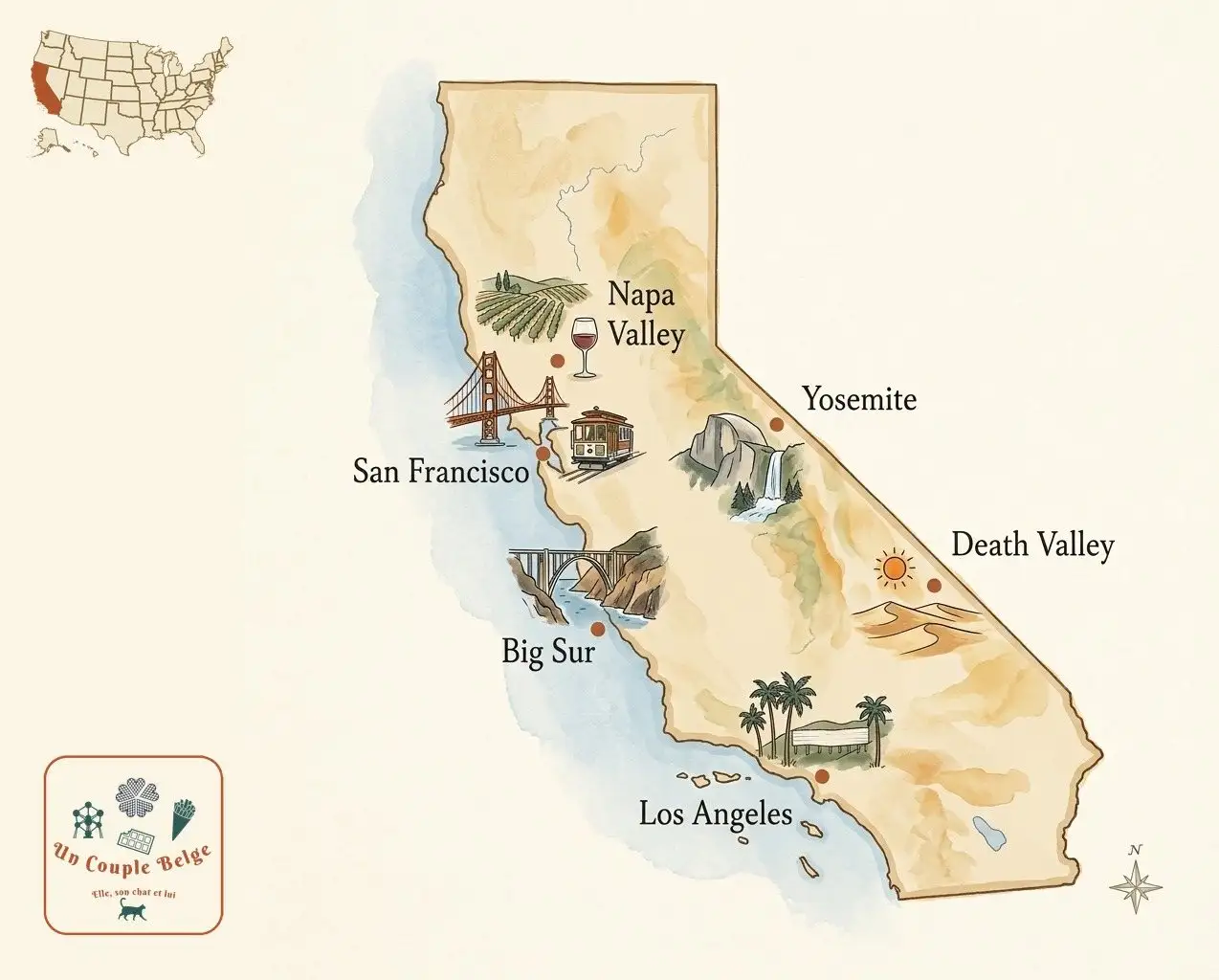
The must-sees
San Francisco
San Francisco is a compact, hilly city that is a pleasure to explore on foot, by tram and by cable car, those little cable-hauled cars that still climb the hills. The Golden Gate Bridge, opened in 1937 in its “International Orange” colour, is best seen from Battery Spencer, on the far side of the bridge, or by cycling across it to Sausalito. Book well in advance for the ferry to Alcatraz, the former federal prison in the middle of the bay: the audio tour is excellent. Our days there: from day 24 to day 28 of road trip 1.
For the rest, choose according to your tastes: Chinatown, the Mission district and its murals, Haight-Ashbury, cradle of the hippie movement, the Ferry Building and its local produce, or Golden Gate Park. Bring a jacket even in July: the summer fog is a local institution.
Yosemite
Yosemite Valley, carved by glaciers and ringed by granite cliffs such as El Capitan and Half Dome, is one of the most beautiful landscapes in the United States. Ansel Adams’s photographs made it famous, and John Muir fought here the battle that gave birth to the national parks. The waterfalls are at their peak in spring, with the snowmelt, and sometimes shrink to a trickle by late summer. In the south of the park, Mariposa Grove shelters giant sequoias several thousand years old. Our travel diaries: from day 20 to day 23 of road trip 1.
In summer the park is very busy. Some years, a reservation is required to drive in at peak hours: check the year’s rules on the park’s website. The Tioga Pass road, which crosses the park to the east, is only open from roughly June to October.
Sequoia and Kings Canyon
Further south, Sequoia and Kings Canyon national parks are home to General Sherman, the largest tree in the world by volume. Less visited than Yosemite, they also offer fine high-altitude hikes and, in Kings Canyon, one of the deepest canyons in the country. Our day there: day 19 of road trip 1.
Big Sur and Highway 1
Between Carmel and San Simeon, the coast turns wild: cliffs drop sheer into an often misty Pacific. Big Sur means Bixby Bridge, McWay Falls dropping onto a beach, the redwoods of Pfeiffer Big Sur State Park and the elephant seals of Piedras Blancas, to the south. Right at the end, Hearst Castle, a press baron’s folly, can be visited by reservation. Our day on this coast: day 30 of road trip 1.
The road is regularly cut by landslides, sometimes for months. Check the state of Highway 1 with Caltrans before you set off.
Los Angeles
You can hate Los Angeles for its traffic jams and its sprawl, and love it at the same time. You simply have to accept that you don’t “visit” a city here, but a series of neighbourhoods linked by freeways. Hollywood and its Walk of Fame, Griffith Observatory for the view of the Hollywood sign and the sunset, the Getty Center (free, somewhere between architecture and gardens), Santa Monica and its pier, Venice Beach and its canals, Malibu… For cinema, the Warner Bros. and Universal studios offer tours. Our travel diaries: day 1 (coming out on December 20, 2026), day 2 and, on the way back, from day 34 to day 36 of road trip 1.
San Diego
More laid-back, San Diego is often the favourite city of those who have done the whole circuit. Balboa Park and its museums, the zoo (one of the most renowned in the world), the aircraft carrier USS Midway turned into a museum, and the seals and sea lions of La Jolla. The climate is mild all year round. Mexico (Tijuana) is just across the border.
Death Valley
Its name is frightening, and that’s rather the point. Death Valley holds the official record for the highest temperature ever measured on Earth: 56.7 °C in 1913. But the landscape is worth the detour: the Mesquite dunes, the colours of Artist’s Palette, the view from Zabriskie Point and the cracked salt of Badwater Basin, 86 metres below sea level. In winter, it’s also one of the best places for stargazing. Our two days there: day 17 and day 18 of road trip 1.
Joshua Tree and Palm Springs
Two hours east of Los Angeles, Joshua Tree National Park mixes piles of rounded boulders with the twisted silhouettes of Joshua trees. Perfect for climbing, easy walks and starry skies. Palm Springs, right next door, is the city of swimming pools and the modernist architecture of the 1950s and 1960s. Our day in Joshua Tree: day 4 of road trip 1.
Lake Tahoe and the Eastern Sierra
Straddling the Nevada border, Lake Tahoe is one of the clearest alpine lakes in the world, with beaches in summer and ski resorts in winter. To the south, Route 395 runs along the eastern flank of the Sierra: Mono Lake and its tufa formations, the ghost town of Bodie, and the villages of Mammoth Lakes and Lone Pine, at the foot of Mount Whitney.
Napa, Sonoma and the north coast
The worldwide reputation of the Napa Valley owes something to the “Judgment of Paris” of 1976: at a blind tasting, French judges ranked Californian wines ahead of great Burgundies and Bordeaux. Today the valley has hundreds of wineries, from the grandiose château to the small family barn. Tastings are expensive here: Sonoma, right next door, is often more relaxed.
Further north, Redwood National Park protects the tallest trees in the world (over 110 metres), along a wild and little-visited coast. And inland, Lassen Volcanic brings together fumaroles, mountain lakes and volcanoes.
And more…
The Channel Islands, off Ventura, nicknamed the Galápagos of California. The volcanic rock spires of Pinnacles, where condors soar. The Monterey Bay Aquarium, one of the finest in the world. And gold country, along Route 49, with Coloma, where it all began. And Route 66, which crosses the Mojave Desert before ending on Santa Monica Pier.
Itinerary ideas
10-12 days, the great classic. San Francisco (3 days) → Yosemite (2 days) → down to the coast → Monterey and Big Sur (2 days) → Santa Barbara → Los Angeles (2-3 days). About 1,500 kilometres.
Two weeks with the American West. Los Angeles → Joshua Tree → Las Vegas → Grand Canyon and the Utah parks → Death Valley → Yosemite (if Tioga Pass is open) → San Francisco. A very popular itinerary, but a dense one.
The coast from end to end. Redwoods → San Francisco → Big Sur → Los Angeles → San Diego, in 10 to 14 days. The coast road from San Francisco to Los Angeles is about 750 kilometres: allow at least four days to enjoy it.
On the plate
California launched or popularised a good part of today’s American cooking.
- The Mission-style burrito, enormous, filled with rice, beans and meat, born in the taquerias of San Francisco’s Mission district.
- San Diego’s fish tacos, inspired by neighbouring Baja California.
- San Francisco sourdough bread (the Boudin bakery has been making it since 1849) and cioppino, a fish and seafood stew.
- In Los Angeles, the French dip sandwich (Philippe’s and Cole’s both claim to have invented it), Korean tacos and the Cobb salad, created at the Brown Derby restaurant.
- Burgers from In-N-Out, a must for many travellers.
- Wine from Napa and Sonoma, avocados, almonds, artichokes from Castroville and garlic from Gilroy.
Culture and trivia
- The gold rush gave its name to San Francisco’s American football team, the 49ers, a reference to the prospectors of 1849.
- McDonald’s invented its fast-service system in San Bernardino in 1948, and the first Apple computer was assembled in a garage in Los Altos.
- The line “The coldest winter I ever spent was a summer in San Francisco” is almost always attributed to Mark Twain. He probably never wrote it.
- The Hollywood sign originally read “Hollywoodland”, a property advertisement from 1923. It was rebuilt in 1978 thanks to donations from celebrities.
- California shakes, regularly but most often without consequences. Hotels display instructions for what to do in an earthquake.
When to go
- Spring (April to June): Yosemite’s waterfalls are at their peak and the desert blooms in March-April. On the coast, “May Gray” and “June Gloom” often bring grey skies in the morning.
- Summer (July-August): ideal for the Sierra and Tahoe, but very hot in the deserts (Death Valley often exceeds 45 °C). San Francisco stays cool and foggy. It’s high season, with prices to match.
- Autumn (September-October): often the best time on the coast, sunny and mild. It’s also harvest season in Napa. Be aware of wildfire risk.
- Winter (November to March): perfect for Death Valley, Joshua Tree, Palm Springs and San Diego. Snow closes some roads in the Sierra, including Tioga Pass.
Practical information
- Recommended length of stay: 10 to 12 days for a first trip, two to three weeks to combine coast, mountains and desert.
- Getting there: There’s no direct flight from Brussels: San Francisco and Los Angeles are reached with one stop, in Europe or on the East Coast. An “open jaw” (arriving in one, leaving from the other) saves you retracing your steps.
- Getting around: a car is almost essential outside San Francisco. Watch out for drop-off fees on a one-way rental.
- Budget: high. California is one of the most expensive states: hotels, restaurants and petrol, often the dearest in the country. Since 2026, the national parks pass has cost foreign visitors 250 dollars, and Yosemite, like Sequoia and Kings Canyon, charges a 100-dollar surcharge per person without it: see our guide to the national parks pass.
- Things to watch out for: check road conditions (landslides on Highway 1, snow in the Sierra, wildfires in summer and autumn). Never leave anything visible in the car in San Francisco and Los Angeles: car break-ins are common there.
- One more tip: book the Alcatraz ferry and accommodation in or near Yosemite several months ahead.
Our place guides in California
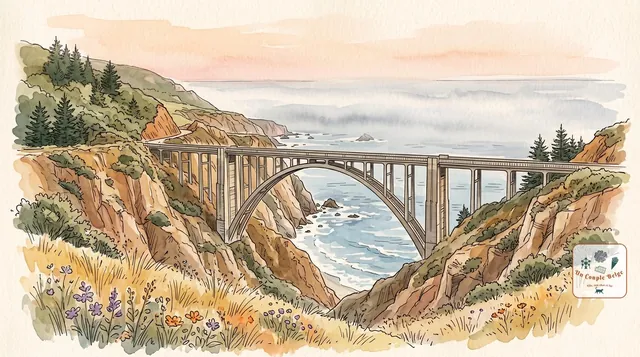
Big Sur: 145 km of cliffs between the mountains and the Pacific
The most beautiful stretch of Highway One: a road clinging to the cliffs, a postcard bridge, a waterfall that drops onto a beach and redwoods beside the ocean.
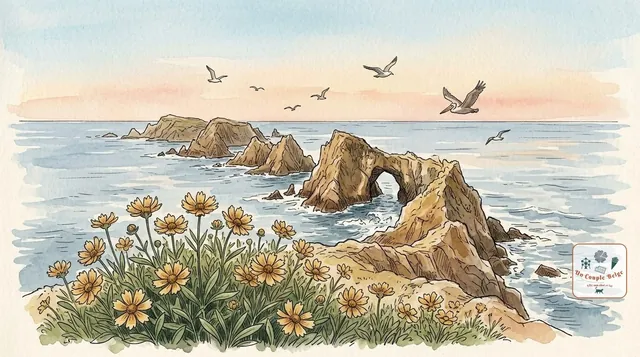
Channel Islands: the Californian Galápagos, a world apart
Five wild islands off the coast of Southern California, with no roads or hotels, but with cliffs, sea caves and a fox found nowhere else.
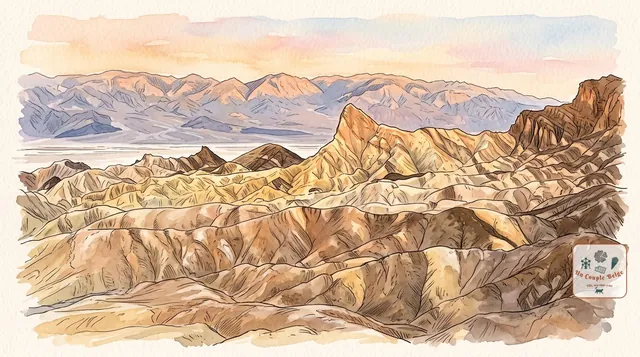
Death Valley: salt, dunes and the lowest point in North America
A vast desert of salt flats, dunes and hills in every colour. Superb from October to April, dangerous at the height of summer.
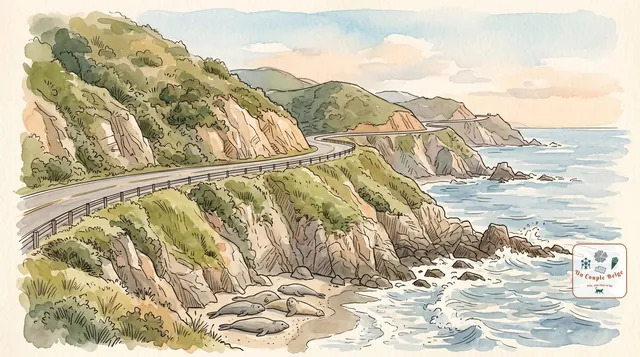
Highway One: the Californian coast road, from San Francisco to Los Angeles
More than 1,000 km along the Pacific: cliffs, beaches, elephant seals, smart little towns and, in the middle, the bends of Big Sur.
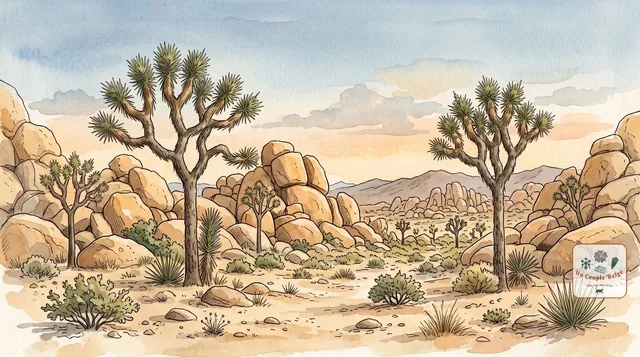
Joshua Tree: giant boulders and Joshua trees between two deserts
Enormous granite boulders, thousands of Joshua trees with twisted branches and cacti as far as the eye can see, two and a half hours from Los Angeles.
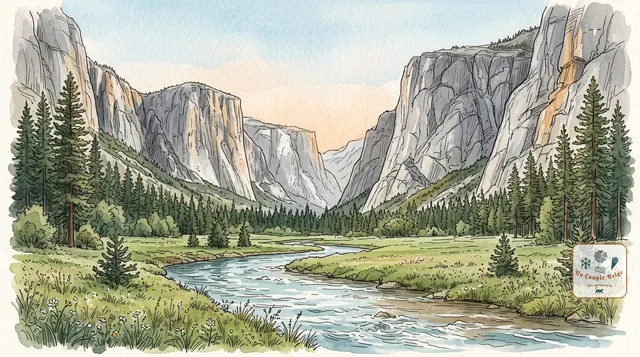
Kings Canyon: General Grant and a canyon deeper than the Grand Canyon
Sequoia's neighbour, in two parts: the sequoias of Grant Grove, open all year, and a granite canyon at the end of a road that only opens in the warmer months.
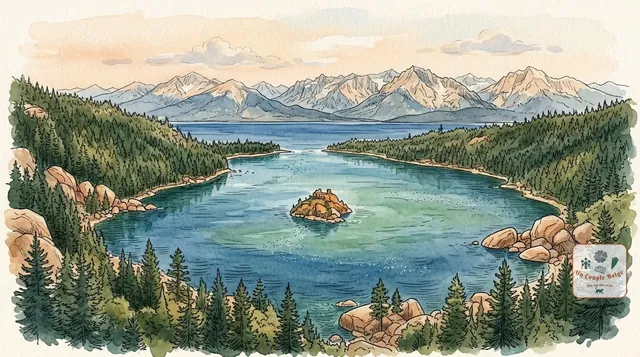
Lake Tahoe: the blue jewel between California and Nevada
A large mountain lake of deep blue, at an altitude of 1,900 metres, between California and Nevada. Beaches, coves and trails in summer, and skiing in winter.
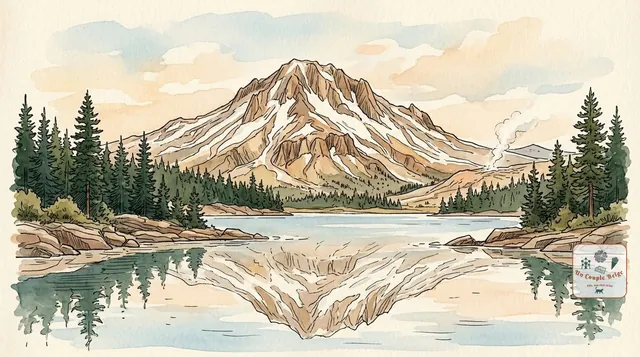
Lassen Volcanic: the planet's four types of volcano in a single park
A volcano that is still hot in northern California, surrounded by bubbling mud pots, steam vents and mountain lakes. A small Yellowstone without the crowds.
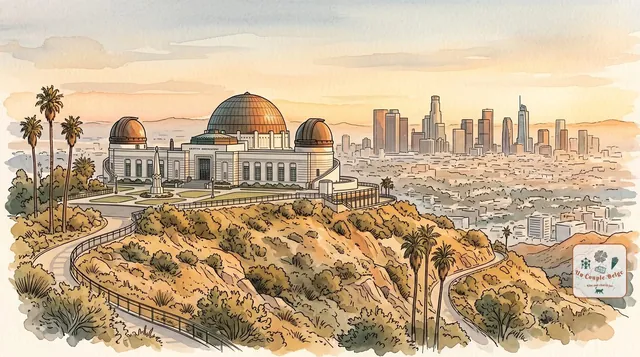
Los Angeles: Hollywood, Griffith Observatory and the Pacific beaches
A huge city with no real centre: the Hollywood Sign, Griffith Observatory, Santa Monica beach and the Venice canals, provided you choose your neighbourhoods well.
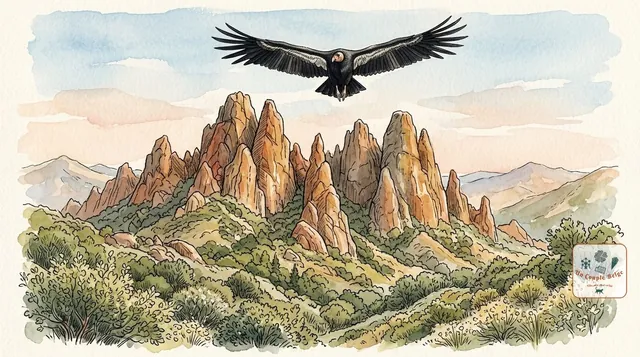
Pinnacles: towers of volcanic rock where California condors soar
The remains of an old volcano in central California: rock spires, talus caves to walk through by torchlight and condors soaring overhead.
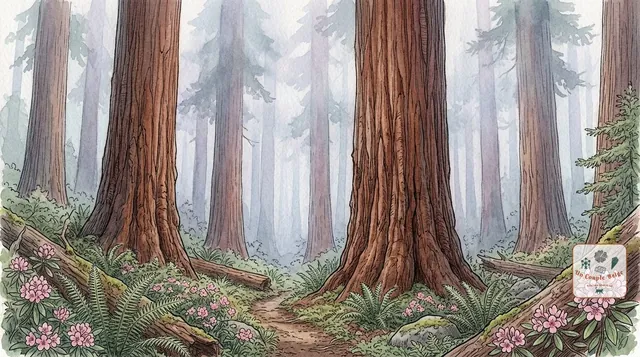
Redwood: walking among the tallest trees in the world
The tallest trees in the world, on the north coast of California: redwoods more than 100 metres high in the fog, giant ferns and wild beaches.
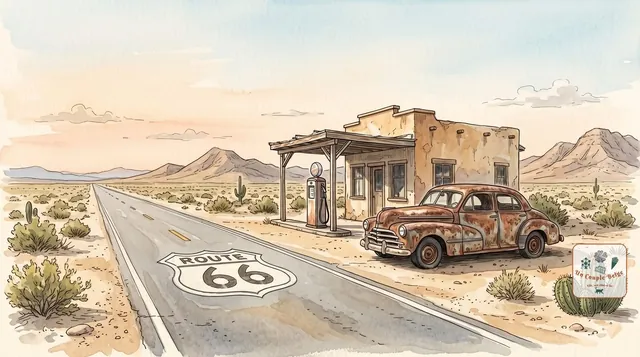
Route 66: from Chicago to Santa Monica, America's legendary road
The most famous road in the United States, from Chicago to Santa Monica: 3,940 km, eight states, neon-lit motels and villages that have stayed in the 1950s.
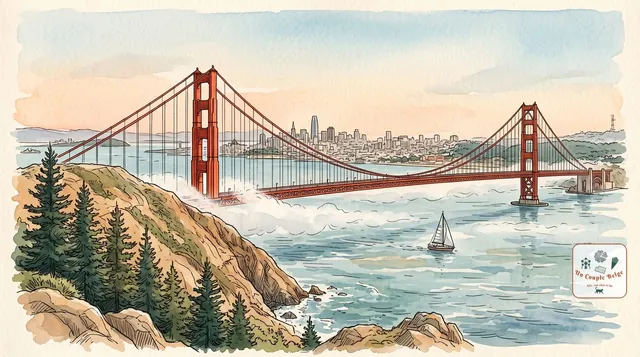
San Francisco: the Golden Gate, Alcatraz and hills beside the bay
A city of hills set beside a bay, with an orange bridge, a prison on an island, sea lions on a dock and fog in the middle of summer.
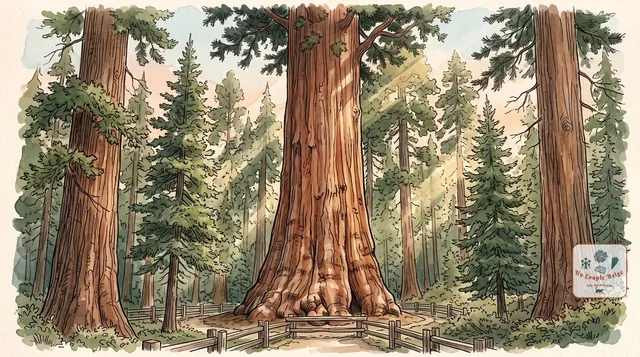
Sequoia: at the foot of the biggest trees in the world
A forest of giant sequoias at an altitude of 2,000 metres, including General Sherman, the biggest tree in the world, and a granite dome you climb by a staircase.
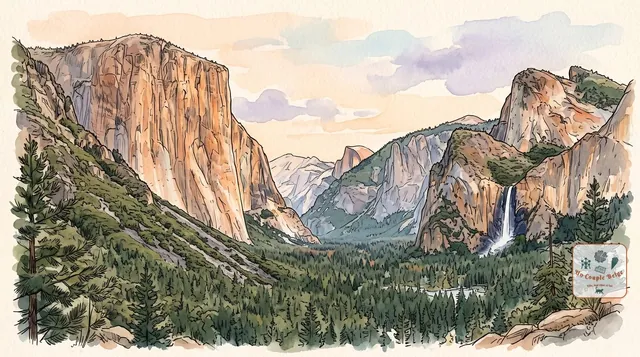
Yosemite: a valley of granite, waterfalls and great hikes
A glacial valley lined with cliffs nearly 1,000 metres high, some of the tallest waterfalls in the world, and trails that climb all the way to the top of them.