State parks and national monuments: the sites the pass doesn't tell you about
Updated on
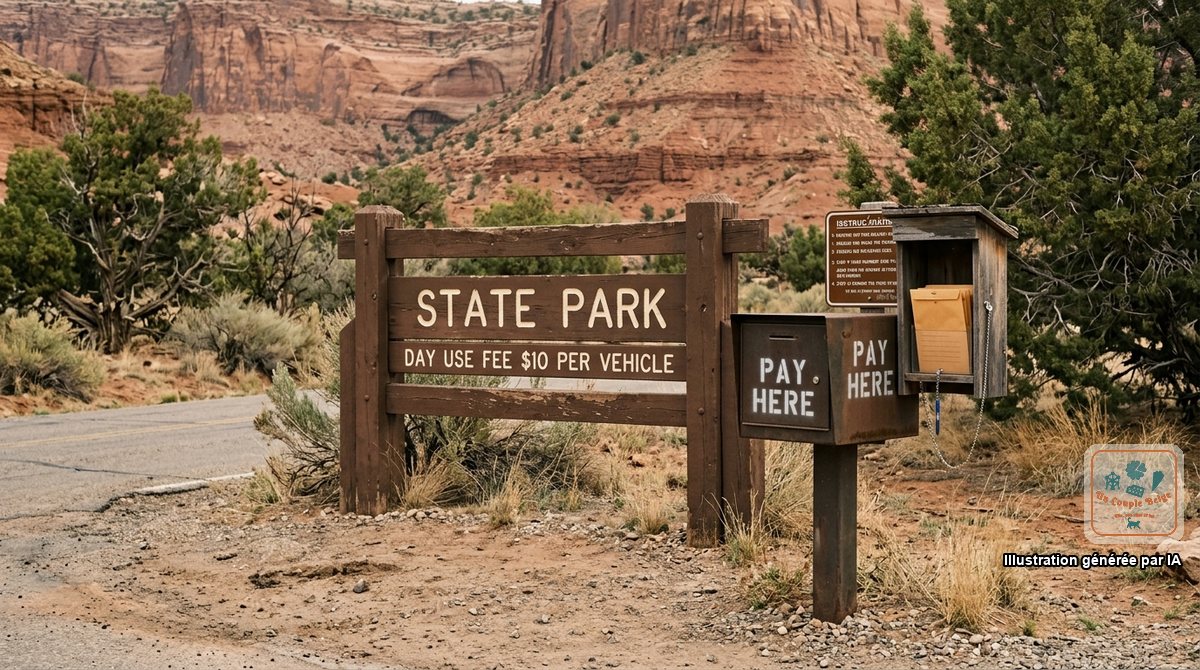
The 63 national parks get all the attention, and most of the visitors. Around them, thousands of other protected sites are sometimes just as beautiful, often cheaper and almost always quieter.
You still need to find your way through the designations, because they decide whether your pass is accepted or not.
Who manages what?
| Designation | Managed by | America the Beautiful pass |
|---|---|---|
| National Park | The federal government (National Park Service) | Accepted |
| National Monument | The federal government (NPS, BLM or Forest Service) | Accepted where there’s an entrance fee |
| National Recreation Area, National Seashore, National Historic Site | The federal government | Accepted |
| National Forest | The federal government (Forest Service) | Accepted for day-use fees |
| BLM land | The federal government (Bureau of Land Management) | Accepted, and access is often free |
| State Park | Each of the 50 states | Not accepted |
| Tribal Park | The Native American nations | Not accepted |
| County or city parks | Local authorities | Not accepted |
Since 2026, the pass has cost 250 dollars for foreign visitors. All the details are in our guide to the national parks.
State parks
Each state runs its own network, more than 6,000 parks in all. Some are simple beaches with a car park, others would be at home among the national parks.
What you need to know
- Entry is paid per vehicle, generally 5 to 20 dollars for the day. Some states charge more for cars registered elsewhere, which is the case for any rental car picked up in another state.
- You pay at the entrance booth, by card, or at a self-service station with an envelope to slip into a box when nobody is there. Keep a few 5- and 10-dollar notes for those cases.
- Each state’s annual pass is only worth it for a long stay in the same state.
- Campgrounds there are often better equipped than in the national parks, with showers.
- Dogs are more often allowed on the trails.
The ones we’ve visited
- Valley of Fire (Nevada), an hour from Las Vegas: red, striped rocks and petroglyphs. Entry is 15 dollars for a vehicle registered outside Nevada. We went through on day 15 of the first road trip, before arriving in Las Vegas.
- Goosenecks (Utah), near Monument Valley: an overlook above the meanders of the San Juan River.
- Point Lobos and Julia Pfeiffer Burns (California), on Highway 1: coves with sea lions and McWay Falls.
- Bahia Honda (Florida), in the Keys: a beach, an old railway bridge and transparent water, for 8 dollars per car.
- Bill Baggs Cape Florida (Florida), at the tip of Key Biscayne, with its lighthouse.
- Fort Zachary Taylor (Florida), a 19th-century fort and a beach in Key West.
Others worth the detour
- Dead Horse Point (Utah), near Moab: a bend in the Colorado seen from 600 metres up, for 20 dollars per vehicle. Many prefer it to the neighbouring viewpoints in Canyonlands.
- Goblin Valley and Kodachrome Basin (Utah).
- Custer State Park (South Dakota), with its herds of bison.
- Anza-Borrego (California), the largest state park in California.
- Slide Rock and Red Rock (Arizona), in Sedona.
- Niagara Falls (New York), the oldest state park in the United States.
National monuments
A National Monument is created by a simple decision of the president, where a national park requires a vote in Congress. It’s often the antechamber to park status: the Grand Canyon, Zion, Arches and Death Valley all started out as monuments.
There are more than 130 of them. Some are tiny, such as a fort or a historic house, others immense.
A few examples
- Natural Bridges (Utah): three natural stone bridges linked by a small loop road. We went through between Monument Valley and Capitol Reef.
- The Statue of Liberty (New York): entry is free, but you pay for the ferry.
- Muir Woods (California), the redwoods on San Francisco’s doorstep: parking has to be booked in advance.
- Devils Tower (Wyoming), the country’s first national monument, created in 1906.
- Cedar Breaks (Utah), an amphitheatre of red rock at 3,000 metres, like a small Bryce Canyon without the crowds.
- Grand Staircase-Escalante and Bears Ears (Utah): immense wild territories, with no entrance station.
- Canyon de Chelly (Arizona), on Navajo land (see our guide).
National forests and BLM land
These are the great forgotten ones, and the van traveller’s best friends.
- National forests surround most of the parks in the West. You’ll find trails, lakes, scenic roads and cheap campgrounds. Access is free, except at a few developed sites.
- BLM land covers a large part of Nevada, Utah and Arizona. Access is open, and wild camping generally allowed (see where to sleep in a van).
A few well-known sites
- Valley of the Gods (BLM, Utah): a 27 km dirt road among red buttes, free. It’s described as Monument Valley’s little sister (our guide).
- Red Rock Canyon (BLM, Nevada), on Las Vegas’s doorstep: a paying loop road, covered by the pass, with a timed-entry reservation from October to May.
- The Wave and the Vermilion Cliffs (BLM, Arizona), by permit (see hiking in the parks).
- The forests around Sedona (Arizona): parking requires a Red Rock Pass, which the America the Beautiful pass replaces.
The cases that catch people out
- Horseshoe Bend is in a federal area, but the car park belongs to the city of Page: it’s charged for (around ten dollars per car), and the pass is worth nothing there.
- Monument Valley and Antelope Canyon are Navajo tribal parks, with their own fees (see Navajo lands).
- Hoover Dam can be visited for free from the bridge. The car parks higher up are free; only the one at the bottom, level with the dam, is charged for. So are the tours.
- The Grand Canyon Skywalk (Grand Canyon West) belongs to the Hualapai Nation: it’s outside the national park, and expensive.
- Shuttles, guided tours and campgrounds are never included in the pass, even in a national park.
Why make room for them in your itinerary
- Fewer people. No entry reservation, empty car parks, quiet trails.
- Stops along the way. They break up a long day between two big parks nicely.
- A lighter budget, especially since the price rise for foreigners in the eleven busiest parks.
- Different landscapes: dunes, caves, hot springs, beaches.
How to find them
- On Google Maps, the green areas around your route are almost all public land. Zoom in and read the names.
- State park websites: search for “state parks” followed by the name of the state.
- The NPS App lists the national monuments managed by the National Park Service.
- Our state pages point out the sites worth a stop: for example Utah, Arizona, California or Florida.