Safety in the United States: theft, scams and good habits when travelling
Updated on
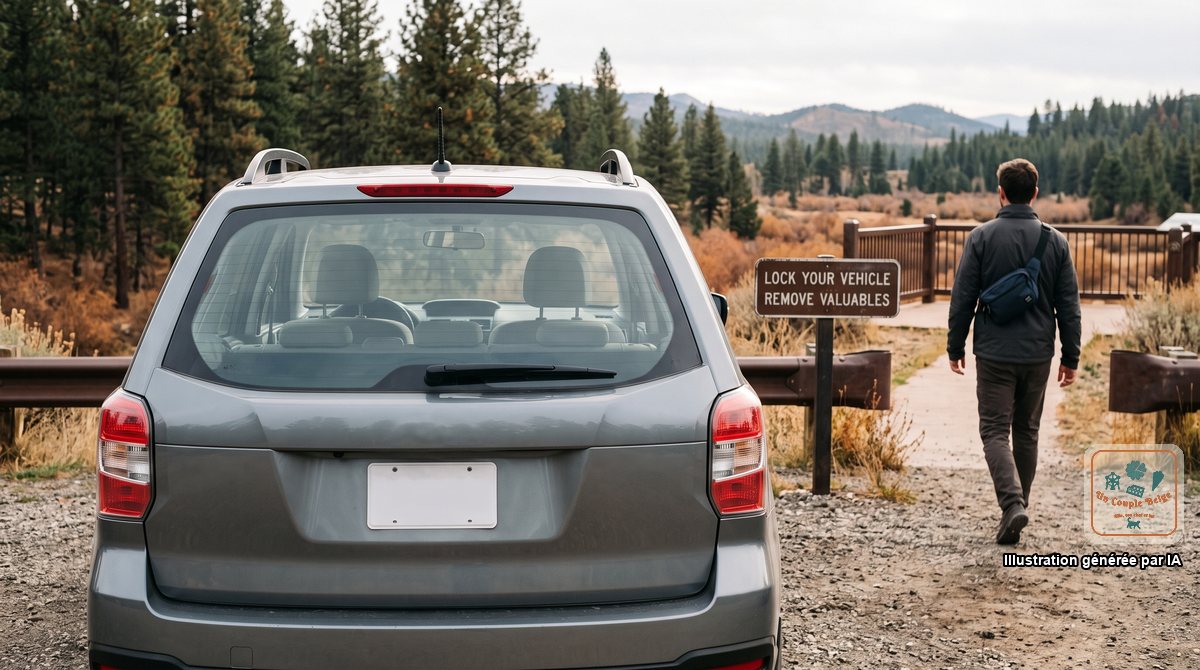
Seen from Europe, the United States can seem frightening, because of TV series and the news. Once there, in the parks, on the road and in the tourist districts, you feel safe, and people are disarmingly kind.
The trouble that really does befall travellers is the same as anywhere else: a break-in to the car, a street scam, a lost passport.
The numbers to know
| Number | What for |
|---|---|
| 911 | Any emergency: police, fire, ambulance. Free, from any phone |
| 311 | City services and non-emergency police, in the big cities |
| 988 | Helpline for psychological distress |
| Your insurer’s assistance line | To be saved in your phone and written down on paper |
On 911, you’ll first be asked where you are. In a park or on a road, look out for the mile markers and the name of the road.
Car break-ins
This is the number one risk for road trippers, especially in San Francisco and the Bay Area, Los Angeles, Seattle and Portland, and in the car parks at busy viewpoints and trailheads.
- Nothing visible inside the car, not even an empty bag or a cable.
- Suitcases in the boot before you arrive at the car park, never once you’re there.
- Go to the hotel first to drop off the luggage when you arrive in a big city.
- Passports, money and devices stay on you.
- In SUVs, pull the luggage cover across. If there isn’t one, ask the rental company for it.
If the car is broken into: call the police to get a report number, tell the rental company, then your insurer. Without a police report, there’s no reimbursement.
More advice in parking in cities.
In cities
American cities change character from one street to the next. A tourist district can sit right beside a rough one, like the Tenderloin a stone’s throw from Union Square in San Francisco, or Skid Row near downtown Los Angeles.
- Look at the map before setting off on foot, and ask for advice at the hotel reception.
- In the evening, take an Uber rather than walking through a neighbourhood you don’t know.
- On the subway, stay in the carriages where there are people, near the driver in the evening.
- Keep a firm grip on your phone near the subway doors, and your bag in front of you in a crowd.
- Don’t get involved in an argument in the street.
Homeless people are very numerous in the big cities of the West Coast. The situation can be uncomfortable, but they don’t go after passers-by. A “Sorry, not today” is enough if you’re asked for money.
Tourist scams
They’re concentrated around Times Square, Hollywood Boulevard, the Las Vegas Strip and the ferry piers.
- Costumed characters (superheroes, Elmo, living statues): the photo isn’t free, and they insistently demand 10 or 20 dollars. Say no beforehand, not afterwards.
- The “free” CD from an “artist” who signs it with your name and then demands payment. Don’t take anything in your hand.
- Fake monks who slip a bracelet onto your wrist before asking for a donation.
- Street ticket touts for the Statue of Liberty ferry or the sightseeing buses. Official tickets are sold online or at the ticket office.
- Unofficial taxis outside airports. Follow the signs to the taxi rank or order an Uber.
- Pedicabs that display a per-minute rate in small print.
- Fake car parks run by someone in a hi-vis vest near stadiums.
Money and cards
- Spread things out: one card on you, another in the suitcase or the hotel safe.
- Little cash: everything is paid for by card.
- At cash machines and fuel pumps, check that the card reader doesn’t wobble, and prefer contactless. Card skimmers exist.
- Turn on notifications from your bank so that you see every payment.
- Note the numbers for blocking your cards: Card Stop on +32 78 170 170 for Belgian cards.
See money and payments.
Documents
- Photograph passports, ESTA, licence and cards, and keep the photos in online storage and offline on your phone.
- Leave your passport in the hotel safe in cities, unless you plan to buy alcohol (see why).
- On a road trip, it stays on you or in the bag that never leaves your side, never in the car.
If your passport is lost or stolen:
- Report it to the local police and ask for a copy of the report.
- Contact the Belgian embassy in Washington or a consulate general (New York, Los Angeles, Atlanta). They issue a temporary travel document for getting home.
- Tell your travel insurer.
Before you leave, register your trip on Travellers Online, the service of the Belgian Foreign Affairs ministry: in a crisis, the embassy knows you’re in the country and can reach you.
Dealing with the police
American police officers are courteous and direct, and they expect their instructions to be followed to the letter.
- If a police car switches on its flashing lights behind you, pull over to the right, switch off the engine, lower the window and keep your hands on the steering wheel. Don’t get out, and don’t rummage in the glove compartment before you’re asked.
- Stay calm and polite, and answer simply.
- You never pay a fine in cash to an officer.
The details are in our driving guide.
Guns
They are legal and widespread, and you’ll see signs banning them at the entrance to certain businesses. As a traveller, you’ll probably never come up against them. Two practical consequences: you never go onto private property (No Trespassing signs are to be strictly respected), and you avoid arguments at the wheel.
Travelling alone as a woman
The United States is an easy destination for a woman on her own. The precautions are those of common sense: choose a hotel with interior corridors rather than an isolated motel, don’t announce that you’re travelling alone, keep your glass in sight in a bar, share your itinerary with someone close to you.
Hiking and in the parks
The danger there comes from nature far more than from people: heat, falls, storms, animals. We cover it in hiking in the parks, wildlife and extreme weather.
Health
The real financial risk of a trip to the United States is medical: a night in hospital can cost more than the whole trip. Don’t leave without insurance (see travel insurance and getting medical care there).